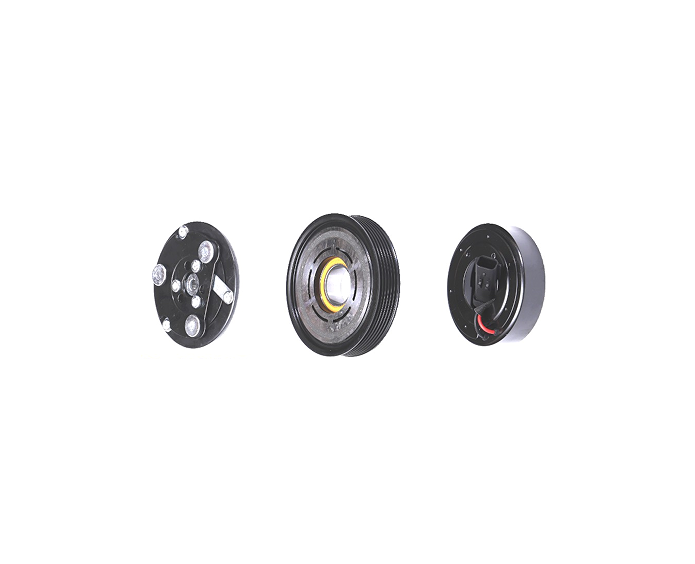

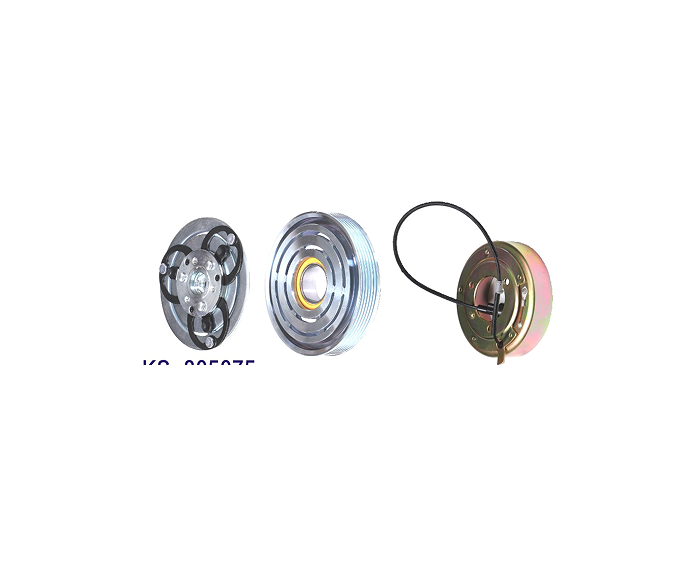
Friction Material Formulation Advancements in Automotive Air Conditioner Clutch
Why Friction Material Is the Real Performance Gatekeeper
While electromagnetic design initiates engagement, the friction interface determines whether torque transfer remains stable.
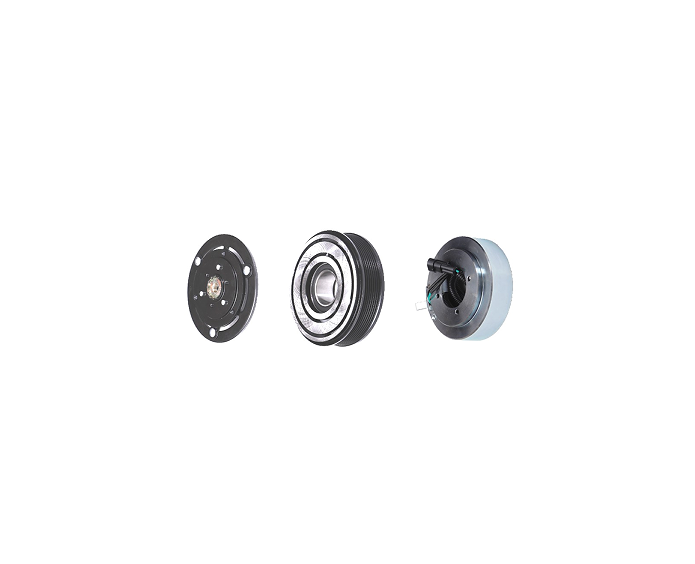
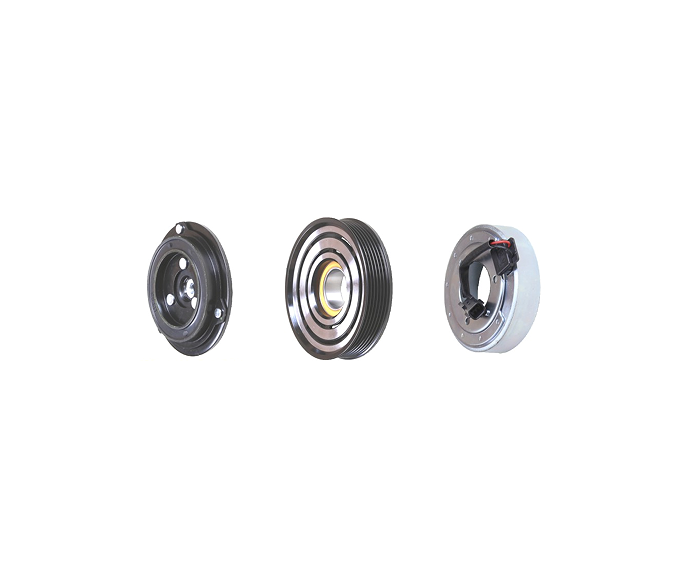
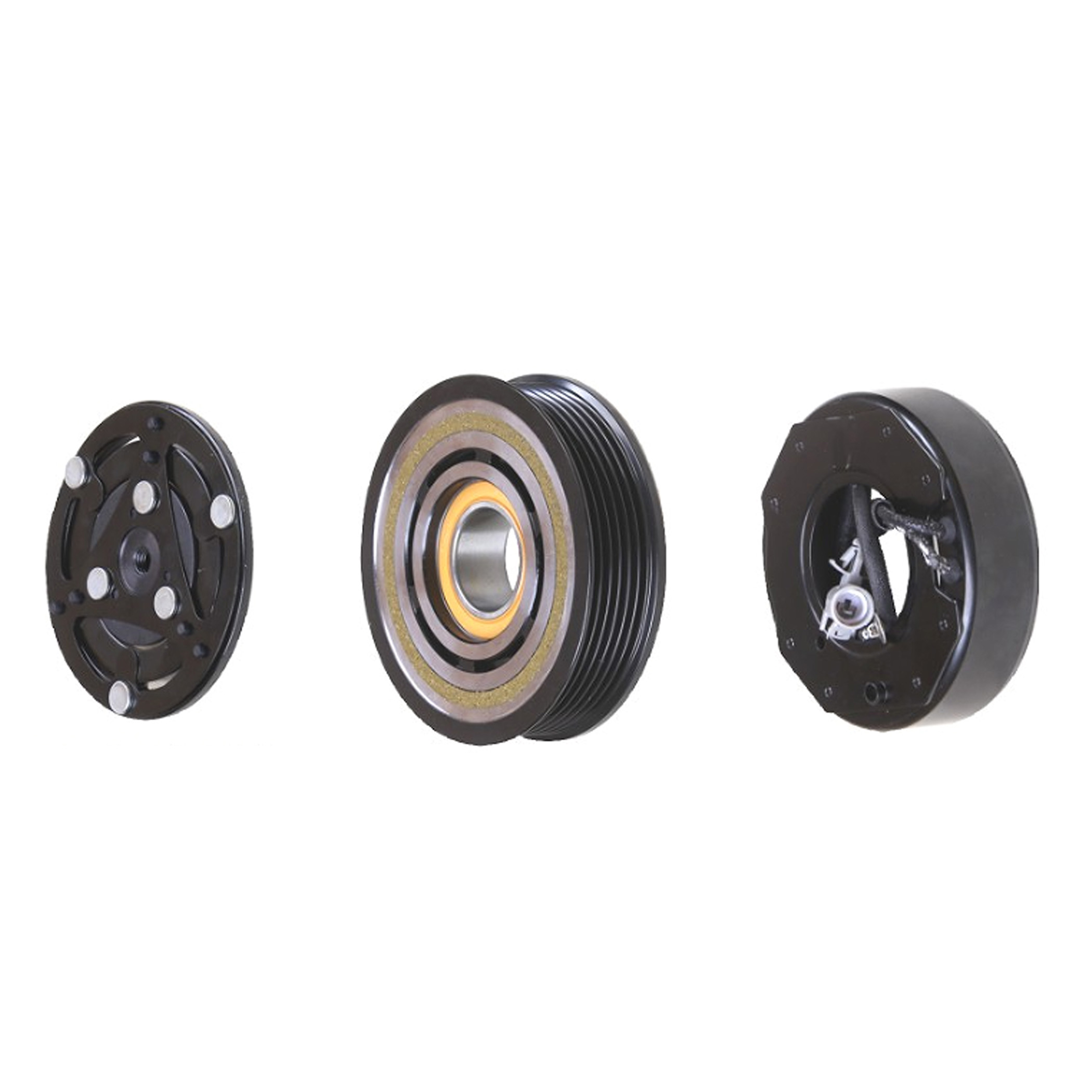
The automotive air conditioner clutch relies on a thin but highly engineered friction layer between the rotor and armature plate. This layer must:
- Withstand repeated engagement cycles
- Maintain stable coefficient of friction
- Resist glazing under heat
- Minimize dust generation
- Reduce vibration during contact
Small formulation changes dramatically influence field durability.
Material science drives reliability.
Resin System Evolution: Beyond Conventional Phenolic
Traditional phenolic resins offer cost efficiency but degrade under prolonged thermal cycling.
Modern formulations incorporate:
- Modified phenolic blends
- Epoxy-enhanced binders
- High-temperature thermoset hybrids
These systems improve:
- Thermal stability beyond 250°C
- Reduced micro-cracking
- Improved adhesion strength
- Lower volatile emission during engagement
In advanced automotive air conditioner clutch assemblies, upgraded resin matrices reduce fade under sustained load.
Heat resistance stabilizes performance curves.
Fiber Reinforcement Engineering
Fiber reinforcement determines structural cohesion within friction layers.
Common reinforcement options include:
| Fiber Type | Key Benefit |
|---|---|
| Aramid Fiber | High tensile strength |
| Glass Fiber | Thermal resistance |
| Carbon Fiber | Wear stability |
| Mineral Fiber | Cost-effective reinforcement |
Hybrid fiber blends balance cost, strength, and durability.
A reinforced automotive air conditioner clutch friction material improves:
- Crack resistance
- Shear stability
- Engagement smoothness
Mechanical integrity extends service life.
Thermal Filler Optimization
Heat dissipation is critical during clutch activation.
High-friction engagement generates localized temperature spikes.
Advanced filler materials include:
- Graphite particles
- Metallic micro-powders
- Ceramic heat-resistant compounds
- Silica-based stabilizers
These fillers improve:
- Heat conductivity
- Surface cooling rate
- Reduced glazing
- Stable friction coefficient retention
A thermally optimized automotive air conditioner clutch friction layer maintains torque consistency even under heavy urban usage.
Thermal control reduces degradation speed.
Coefficient Stability Under Variable Load
Friction materials must maintain predictable torque transfer across:
- Cold starts
- High-RPM activation
- High humidity conditions
- Repeated engagement cycles
Advanced formulation engineering aims to reduce coefficient fluctuation within a narrow tolerance band.
Stable engagement reduces:
- Slippage
- NVH irregularities
- Surface scoring
A performance-tuned automotive air conditioner clutch benefits from friction consistency rather than peak friction values.
Predictability outweighs aggressiveness.
Wear Rate Control and Dust Reduction
Material erosion directly affects lifespan.
Excessive wear generates debris, potentially contaminating bearing systems or magnetic surfaces.
Formulation improvements now focus on:
- Micro-particle bonding enhancement
- Surface densification
- Controlled abrasive balancing
- Reduced particulate emission
Low-wear friction compounds extend automotive air conditioner clutch replacement intervals.
Cleaner wear improves magnetic efficiency retention.
NVH and Engagement Smoothness
Friction surface texture affects acoustic response.
Irregular contact surfaces cause:
- Chatter during activation
- Vibration pulses
- Audible clicking
Advanced surface finishing techniques combined with optimized friction formulation create:
- Gradual torque ramp-up
- Even pressure distribution
- Reduced micro-slip
In refined systems, the automotive air conditioner clutch engages quietly, supporting modern cabin comfort expectations.
Material formulation directly influences NVH performance.
Environmental Compliance and Sustainability Considerations
Modern regulatory standards increasingly restrict certain additives and heavy metals.
Friction material engineering now considers:
- Copper-free formulations
- Low-VOC binder systems
- RoHS compliance
- Reduced environmental residue
Future-ready automotive air conditioner clutch friction systems must balance performance with regulatory adaptability.
Sustainability influences formulation pathways.
Engineering Implications for Next-Generation Platforms
Vehicle platforms are evolving toward:
- Higher efficiency targets
- Reduced parasitic loss
- Improved durability expectations
- Broader climate adaptation
Friction material optimization remains central.
Performance gains no longer rely solely on mechanical design. They depend on chemistry, composite science, and thermal modeling.
The automotive air conditioner clutch continues to evolve as material science advances.
Material refinement defines the next reliability threshold.
Collaborate on Advanced Friction Engineering
If you are evaluating high-durability friction solutions or seeking performance upgrades in automotive air conditioner clutch assemblies, our engineering team provides customized formulation and testing support.
Explore our product portfolio at
👉 https://www.gzkasen.com/
For technical collaboration and specification development, connect directly at
👉 https://www.gzkasen.com/contact-us
Performance begins at the material layer.