
What Does “Compressor Bearing” Mean in Automotive AC?
The term compressor bearing can create confusion because buyers may use the same phrase for different components around an automotive air-conditioning compressor.
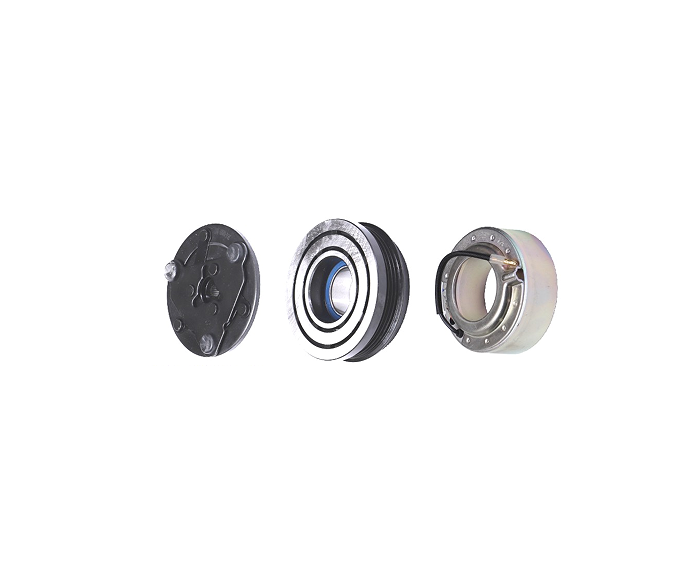
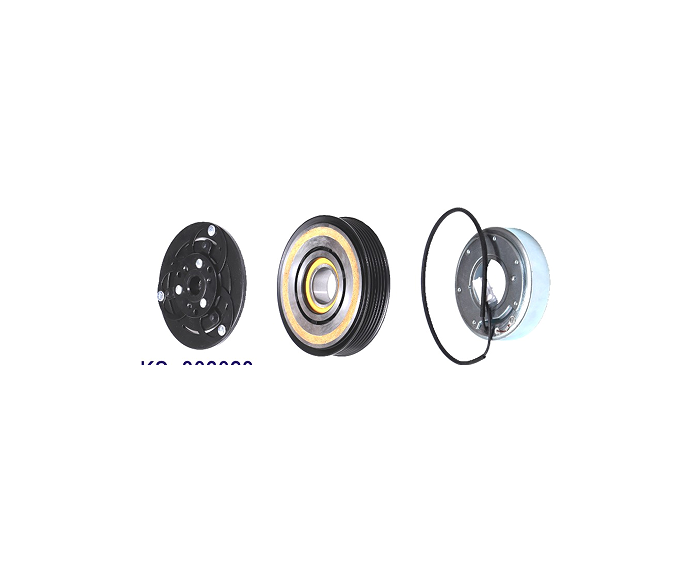
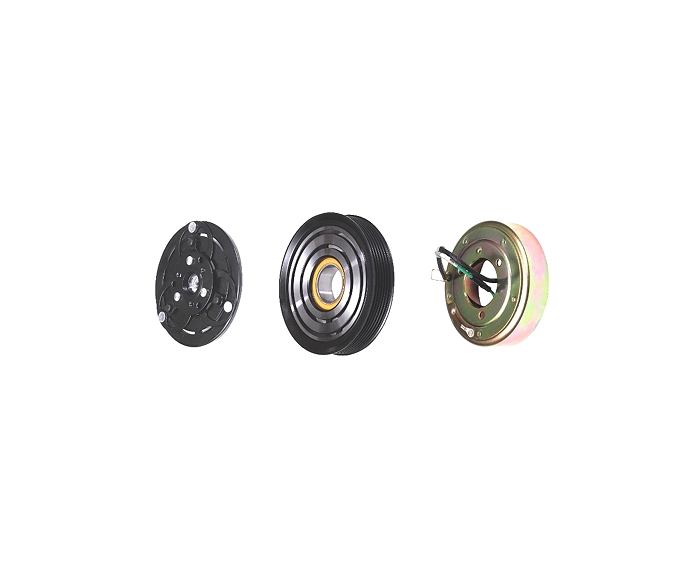
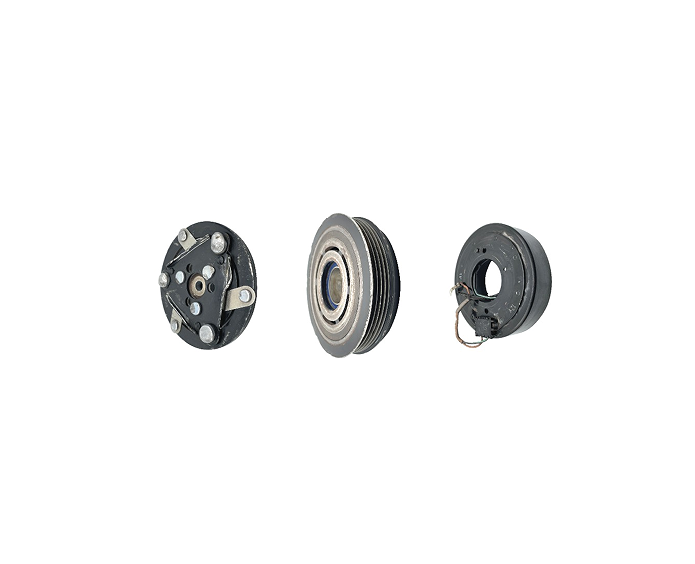
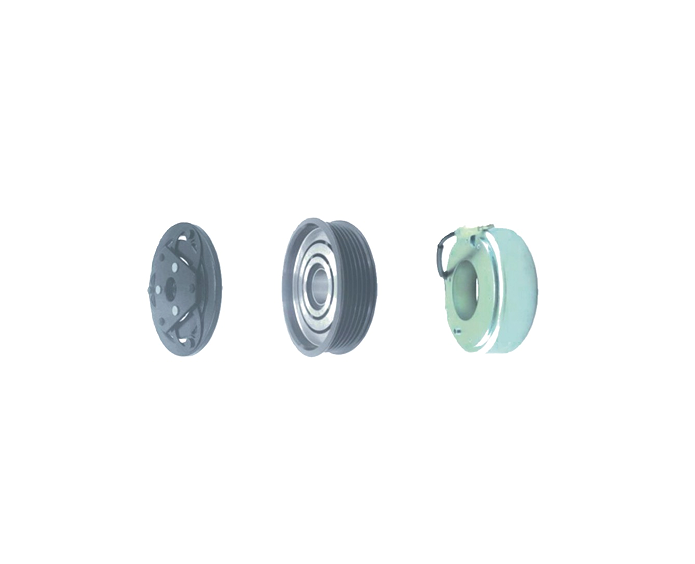
In conventional belt-driven automotive AC systems, the term most commonly refers to the bearing installed inside the compressor clutch pulley. However, compressors can also contain internal bearings or bearing surfaces that support rotating components.
These parts are not automatically interchangeable or independently serviceable.
For professional buyers, the first question should therefore not be:
“What size bearing do I need?”
It should be:
“Which bearing location has failed, and what replacement level does this compressor actually require?”
That distinction can prevent incorrect quotations, unsuitable inventory, repeated repairs, and unnecessary complete compressor replacement.
KASEN supplies automotive AC bearings together with compressor clutches, complete compressors, electric compressors, valves, and related components. Buyers can review the KASEN bearing range or browse the complete automotive AC product portfolio.
Which Compressor Bearing Are You Actually Looking For?
For automotive AC sourcing, bearing requests can generally fall into three different situations.
| Bearing Area | Typical Location | Common Buyer Request | Replacement Approach |
|---|---|---|---|
| Clutch Pulley Bearing | Inside belt-driven pulley | Compressor pulley bearing | Often replaceable separately |
| Compressor Internal Bearing | Inside compressor mechanism | Internal compressor bearing | Depends heavily on compressor design |
| Electric Compressor Bearing | Inside electrically driven compressor | EV compressor motor bearing | Different architecture and service strategy |
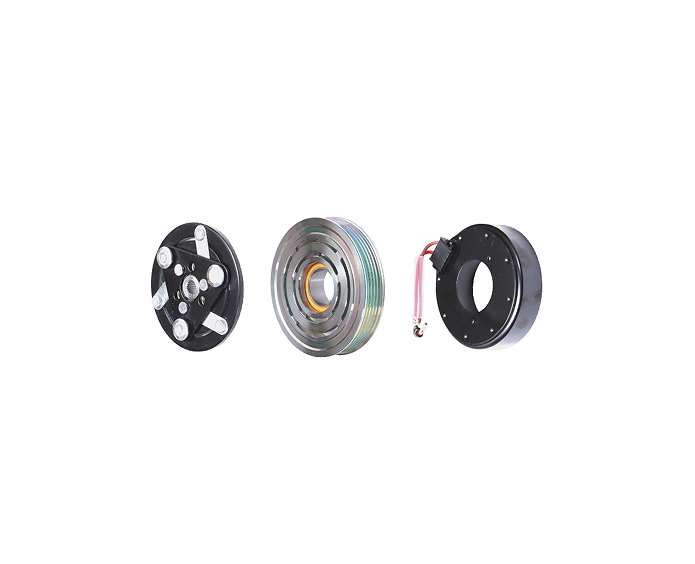
Compressor Pulley Bearing
This is the most common aftermarket interpretation of compressor bearing.
The bearing sits within the pulley assembly and allows the pulley to rotate around the compressor front structure while the engine belt is moving.
In many clutch-driven systems, the pulley rotates even when the AC clutch is disengaged.
For this reason, pulley bearing problems may create noise whether or not the compressor is actively producing cooling.
Internal Compressor Bearings
Some compressors contain internal rotating supports associated with the shaft or compression mechanism.
These components require much more careful identification.
A buyer should not assume that an internal bearing can be replaced independently simply because an external pulley bearing can.
Depending on compressor design and damage level, a complete compressor replacement or specialist rebuild may be more appropriate.
Electric Compressor Bearings
Electric compressors used in EVs and hybrid vehicles do not use the same conventional engine belt and electromagnetic clutch architecture.
Their bearing requirements belong to a different compressor system.
Buyers sourcing those applications should evaluate the complete electric compressor design rather than treating the request as a conventional clutch pulley bearing problem.
KASEN's electric compressor range covers this separate product category.
Who Should Use This Compressor Bearing Buying Guide?
This guide is written primarily for professional automotive AC buyers rather than consumers looking for a one-time DIY repair.
Typical buyers include:
- Automotive AC parts distributors
- Importers and wholesalers
- Repair network suppliers
- Aftermarket brands
- Fleet maintenance suppliers
- Regional auto parts dealers
- OEM/private-label buyers
Their purchasing problem is different from repairing one vehicle.
A distributor may need to confirm hundreds of units, manage several visually similar bearing sizes, maintain cross-reference data, reduce customer returns, and reorder the exact same specification months later.
That makes fitment control and repeatability more important than simply finding the lowest quoted unit price.
What Information Is Required to Identify a Compressor Bearing?
The strongest bearing identification process combines physical measurements with compressor application data.
Essential Bearing Dimensions
Buyers should normally provide:
- Inner diameter
- Outer diameter
- Width
- Existing bearing marking
These are the starting points, not the complete identification process.
Compressor Identification
Also provide:
- Compressor manufacturer or series
- Compressor model
- Compressor label photo
- OE or cross-reference number where available
This is especially useful because similar vehicle models may use different compressor configurations.
Pulley Information
For clutch pulley applications, confirm:
- Pulley diameter
- Groove number
- Pulley structure
- Bearing seating position
- Clear photos
Vehicle Information
Vehicle data provides another matching layer:
- Make
- Model
- Production year
- Engine
- Market or region
Vehicle data should support compressor identification rather than replace it.
Compressor Bearing Specification Checklist
| Buyer Information | Why It Matters |
|---|---|
| Inner Diameter | Determines fit on mating structure |
| Outer Diameter | Determines pulley/housing compatibility |
| Width | Determines axial fit |
| Bearing Marking | Supports cross-reference identification |
| Compressor Model | Connects bearing to compressor family |
| OE Number | Helps confirm application |
| Pulley Structure | Confirms clutch pulley use |
| Vehicle Application | Provides supporting fitment data |
| Original Photos | Helps identify similar references |
| Physical Sample | Reduces uncertainty |
| Quantity | Required for commercial quotation |
| Packaging | Important for wholesale/private label |
Why Matching Only ID × OD × Width Can Fail
It is tempting to treat bearings as dimensional commodities.
That can be risky.
Two bearings with similar outside dimensions may differ in areas such as:
- Internal construction
- Sealing arrangement
- Internal clearance
- Load capability
- Speed capability
- Manufacturing tolerance
A product that physically installs is not automatically the correct bearing for the application.
For professional sourcing, the safer logic is:
Bearing dimensions + compressor model + pulley application + approved sample
rather than dimensions alone.
What Bearing Design Factors Matter in Automotive AC?
Exact bearing construction varies by compressor and pulley design, so buyers should avoid assuming that all compressor bearings are identical.
Important factors include several areas.
Sealing
Automotive compressor pulley areas operate in an environment exposed to:
- Dust
- Moisture
- Road contamination
- Heat
- Vibration
Sealing configuration therefore matters to contamination protection.
Clearance and Fit
Incorrect bearing fit can affect:
- Running temperature
- Noise
- Alignment
- Service life
Both overly tight and overly loose conditions can create operating problems.
Load and Speed
The bearing must handle the operating conditions created by:
- Belt tension
- Rotational speed
- Pulley geometry
- Vibration
- Temperature
A dimensional match without appropriate operating characteristics may still create premature failure.
What Causes Compressor Bearing Failure?
A noisy bearing does not automatically prove that the bearing itself was defective.
According to NSK's bearing damage guidance, premature bearing damage can be associated with improper mounting, poor assembly, lubrication problems, contamination, incorrect clearance, excessive load, and unsuitable operating conditions. NSK also recommends considering changes in noise, vibration, and temperature when investigating damage.
SKF similarly identifies operating load, contamination, lubrication, mounting procedures, incorrect fits, misalignment, storage, transportation, and bearing selection among factors associated with bearing damage modes.
For automotive AC buyers, this matters commercially because warranty analysis should separate:
product defect
from
application, installation, pulley, belt, compressor, or operating-condition problems.
Common Risk Areas
Possible causes include:
- Improper installation
- Damaged pulley
- Incorrect bearing fit
- Contamination
- Excessive heat
- Belt-related load
- Compressor misalignment
- Long-term wear
A supplier or workshop should therefore inspect the surrounding compressor clutch system rather than replacing parts blindly.
What Are Common Signs of a Bad Compressor Bearing?
Typical complaints may include abnormal noise, rough pulley rotation, heat, looseness, or vibration.
Grinding or Humming Noise
Noise from the compressor pulley area can be associated with bearing wear, contamination, incorrect clearance, or adjacent component problems.
Rough Rotation
A removed bearing or pulley that does not rotate smoothly should be investigated further.
Pulley Play
Excessive movement may indicate bearing or fit-related wear.
Abnormal Heat
Heat can result from incorrect fit, load, lubrication condition, or other mechanical problems.
Belt or Pulley Instability
A damaged bearing can affect pulley alignment and may contribute to abnormal belt movement.
These symptoms are diagnostic clues rather than proof that the bearing is the only damaged part.
Compressor Bearing vs Clutch Bearing: Are They the Same?
In automotive aftermarket language, compressor bearing, compressor pulley bearing, and compressor clutch bearing are often used to describe the same clutch pulley bearing.
However, technically the term “compressor bearing” is broader.
That is why an RFQ stating only:
“Need compressor bearing”
can be ambiguous.
A more useful request would state:
“Need compressor clutch pulley bearing for compressor model XXX, bearing marking XXX, dimensions XX × XX × XX.”
The more precise inquiry reduces unnecessary correspondence and improves quotation accuracy.
Should You Replace the Bearing, Pulley, Clutch, or Compressor?
This is one of the highest-value decisions in automotive AC repair and parts sourcing.
| Condition | Likely Replacement Scope | Buyer Consideration |
|---|---|---|
| Bearing failure isolated | Bearing | Lowest component cost |
| Bearing + pulley damage | Pulley/bearing assembly | Reduces pulley-related risk |
| Coil,hub and pulley issues | Complete clutch | Simplifies multi-part repair |
| Internal compressor damage | Complete compressor | Bearing alone will not solve problem |
| Electric compressor fault | Diagnose complete electric compressor | Different system architecture |
Bearing-Only Replacement
This can make sense when:
- Bearing failure is clearly isolated
- Pulley remains usable
- Clutch remains functional
- Compressor internals are healthy
- Workshop has appropriate installation capability
Pulley or Clutch Replacement
A wider replacement may reduce repair risk when there is:
- Pulley damage
- Hub wear
- Coil failure
- Multiple clutch faults
Buyers can compare complete KASEN auto AC compressor clutch products when bearing-only replacement is insufficient.
Complete Compressor Replacement
A complete compressor may be more appropriate if the problem involves:
- Internal seizure
- Serious mechanical damage
- Internal contamination
- Major compressor wear
For those cases, buyers can review the KASEN auto AC compressor range.
Why Bearing-Only Replacement Is Not Always the Cheapest Option
Bearing replacement has a lower component cost than replacing a complete clutch or compressor.
But unit price is only one part of the decision.
For B2B buyers, the real cost can include:
Part cost + labor + returns + replacement freight + warranty handling + vehicle downtime + inventory risk
A bearing that costs less but generates repeated installation problems can create a higher total cost.
Compare Replacement Strategies
| Option | Component Cost | Repair Scope | Fitment Risk | Best Use |
|---|---|---|---|---|
| Bearing Only | Lowest | Narrow | Higher if identification is weak | Isolated bearing failure |
| Pulley Assembly | Low–Medium | Moderate | Lower than separate repair | Pulley/bearing damage |
| Clutch Assembly | Medium | Broader | Simplifies clutch repair | Multiple clutch faults |
| Compressor | Highest | Complete | Simplifies major replacement | Internal compressor failure |
This decision table is especially valuable for distributors serving different repair markets.
What Should Buyers Check Before Bulk Ordering?
One approved sample is more valuable than a large catalog of unverified cross-references.
Confirm Dimensions
Measure the original and sample:
- ID
- OD
- Width
Confirm Application
Verify the bearing against the actual:
- Compressor
- Pulley
- Original reference
Check Rotation
Evaluate:
- Smoothness
- Roughness
- Abnormal resistance
- Unusual sound
Establish a Product Code
Create a stable relationship between:
Buyer SKU → supplier code → bearing size → compressor model → OE reference
Confirm Packaging
Check:
- Label
- Part number
- Barcode
- Quantity per box
- Private-label requirement
How Can Distributors Reduce Compressor Bearing Returns?
Many return problems begin before shipment.
Avoid Vehicle-Only Matching
A vehicle name may not uniquely identify the compressor.
Always request compressor information where possible.
Separate Similar SKUs
Bearing products can look almost identical.
Packaging and warehouse labels should clearly distinguish them.
Approve Samples Before High-Volume Orders
This is especially important for uncertain cross-references.
Keep Original Matching Data
Save:
- Photos
- Measurements
- Compressor label
- OE number
- Supplier reference
Classify Warranty Reasons
Separate returns into categories such as:
- Wrong size
- Wrong application
- Noise
- Installation damage
- Pulley damage
- Packaging error
Without that classification, buyers cannot determine whether the real problem is product quality, catalog data, warehouse handling, or installation.
What QC Should a Compressor Bearing Supplier Explain?
“High quality” is not a useful QC statement by itself.
Professional buyers should ask what is actually controlled.
Dimensional Consistency
Key dimensions should remain consistent with the approved reference.
Rotation Condition
Obvious roughness, abnormal resistance, or unusual noise should be identified before shipment where applicable.
Product Identification
Similar references must be clearly separated throughout:
- Storage
- Inspection
- Packing
- Shipment
Packaging Protection
Packaging should prevent mixing, contamination, and unnecessary transport damage.
Traceability
For repeat orders and complaints, stable supplier references or batch information improve investigation efficiency.
Documentation
If your market requires specific certificates, test records, declarations, or other documentation, confirm availability for the exact bearing and order.
Do not assume documentation applies to every product in a supplier's catalog.
How to Compare Compressor Bearing Suppliers
A B2B supplier evaluation should examine more than quotation price.
| Evaluation Point | What a Buyer Should Verify |
|---|---|
| Application Knowledge | Can supplier connect bearing to compressor/pulley? |
| Matching Support | Can they work from markings,photos and samples? |
| Dimensional Control | How are critical sizes confirmed? |
| SKU Control | Can similar products be separated reliably? |
| Sample Support | Can product be approved before bulk order? |
| Related AC Products | Can supplier provide clutch/compressor if needed? |
| Packaging | Wholesale/private-label options |
| Repeat Supply | Stable reference for future orders |
| After-Sales Support | Clear complaint identification process |
A strong supplier should be willing to ask technical questions before providing a final quotation.
Fast quotation is useful.
Correct quotation is more valuable.
What Does a Compressor Bearing Really Cost?
For professional buyers, purchasing cost should be viewed as total procurement cost rather than bearing price alone.
The calculation can include:
Unit Price + Freight + Inspection + Packaging + Inventory Cost + Return Cost + Warranty Cost
This explains why a slightly higher unit price may still create a better commercial result if the supplier provides stronger fitment support and repeat-order consistency.
High-Risk Low-Cost Purchasing
Typical warning signs include:
- Matching from appearance only
- No compressor information requested
- No stable part reference
- Generic packaging for similar sizes
- Bulk order encouraged before sample verification
Those conditions increase commercial risk even when the initial price looks attractive.
What Should You Send for a Compressor Bearing Quotation?
A technically complete inquiry can shorten quotation time and improve matching accuracy.
Send the supplier:
- Bearing marking
- Inner diameter
- Outer diameter
- Width
- Compressor model
- Compressor label photo
- Pulley photo
- Original bearing photos
- OE number if available
- Vehicle application
- Required quantity
- Target market
- Packaging requirement
- Private-label requirement
- Sample requirement
If the part number is unknown, do not guess.
Clear photos, measurements, compressor information, and an original sample can often provide a much stronger identification basis.
Buyers can submit these details through the KASEN contact page.
OEM and Private-Label Compressor Bearing Sourcing
For aftermarket brands, bearing sourcing should become a controlled product program rather than a series of disconnected orders.
Build an Approved Reference Database
Record:
Customer SKU → supplier SKU → dimensions → compressor application → OE reference
This reduces dependence on individual employees remembering previous orders.
Confirm Private-Label Packaging
Requirements may include:
- Brand name
- Barcode
- Internal SKU
- Bearing reference
- Application data
- Box quantity
Control Repeat Orders
Future purchases should reference the approved SKU instead of restarting identification from a generic description.
Confirm MOQ and Lead Time by Product
MOQ, sample availability, production lead time, packaging lead time, and delivery schedule can vary by bearing reference, customization requirement, and order quantity.
These figures should therefore be confirmed for the actual inquiry rather than published as universal promises.
Why Automotive AC Specialization Matters
A general bearing supplier may have extensive bearing knowledge.
An automotive AC supplier adds an additional layer:
understanding where the bearing sits inside the compressor/clutch replacement system.
That can be valuable when the initial request changes from:
“bearing”
to:
“pulley”
to:
“complete clutch”
or eventually:
“complete compressor.”
KASEN's automotive AC portfolio includes all of these related product categories, allowing buyers to evaluate replacement scope rather than treating every request as an isolated bearing transaction.
Buyers can browse the KASEN bearing range, compressor clutch range, and automotive AC compressors.
Why Consider KASEN for Compressor Bearing Sourcing?
KASEN focuses on automotive air-conditioning components and provides bearings alongside compressor clutches, compressors, electric compressors, valves, and related parts.
For distributors, importers, repair networks, and aftermarket brands, this makes it possible to discuss the actual replacement requirement rather than simply purchasing a bearing reference in isolation.
Depending on the inquiry, buyers can provide:
- Bearing dimensions
- Existing markings
- Compressor model
- OE number
- Photos
- Physical sample
- Target quantity
- Packaging requirements
For company and product background, visit About KASEN.
For pricing, MOQ, samples, lead time, documentation, packaging, or private-label requirements, send the actual compressor and bearing information through the KASEN contact page for confirmation.
Frequently Asked Questions About Compressor Bearings
What is a compressor bearing in an automotive AC system?
In many aftermarket automotive AC applications, it refers to the bearing installed inside the belt-driven compressor clutch pulley. However, compressors may also contain internal bearings, so buyers should confirm the exact bearing location.
Is a compressor bearing the same as a compressor pulley bearing?
Often yes in aftermarket terminology. “Compressor bearing,” “pulley bearing,” and “clutch bearing” are frequently used for the pulley bearing, but the terms should not be assumed to mean the same component in every compressor design.
What dimensions are needed to identify a compressor bearing?
Inner diameter, outer diameter, and width are the basic dimensions. Bearing marking, compressor model, pulley information, OE reference, photos, and a sample improve identification accuracy.
Can I choose a compressor bearing only by size?
It is not recommended for professional bulk sourcing. Similar dimensions do not always guarantee identical internal design, sealing, fit, operating characteristics, or application.
What causes compressor bearing noise?
Potential causes include wear, contamination, incorrect mounting, unsuitable fit, excessive load, pulley problems, or other operating conditions. The complete compressor clutch area should be inspected before blaming the bearing alone.
Can the compressor bearing be replaced separately?
In some pulley applications, yes. Bearing-only replacement is most appropriate when the bearing is the isolated fault and the pulley, clutch, and compressor remain serviceable.
When should I replace the whole compressor clutch?
A complete clutch can be more practical when the pulley, electromagnetic coil, hub, or several clutch components are damaged at the same time.
When is complete compressor replacement better?
Complete replacement may be required when the compressor has internal seizure, serious mechanical damage, contamination, or other internal failures that cannot be solved by replacing an external bearing.
What should distributors check before buying compressor bearings in bulk?
Verify dimensions, compressor application, sample fitment, product identification, QC controls, packaging, supplier reference, and repeat-order consistency before high-volume purchasing.
Can KASEN support OEM or private-label compressor bearing requirements?
KASEN can evaluate automotive AC bearing, packaging, OEM-related, and bulk sourcing requirements according to the specific reference and order. Buyers should submit the target dimensions, compressor information, quantity, and customization requirements for confirmation.
Conclusion
A compressor bearing may be one of the smallest components in an automotive AC system, but incorrect identification can create large commercial consequences.
The most important purchasing decision is not simply choosing a bearing size.
Professional buyers should first identify whether the problem involves:
pulley bearing → pulley → compressor clutch → internal compressor → complete compressor
Then confirm the exact dimensions, compressor model, pulley application, sample, product code, QC expectations, and repeat-order requirements.
For distributors and aftermarket brands, this process reduces the three costs that matter most:
- Wrong fitment
- Warranty and returns
- Dead inventory
KASEN supplies automotive AC bearings together with compressor clutches, compressors, electric compressors, valves, and related components, helping buyers evaluate the correct replacement level within one automotive AC sourcing portfolio.
Browse the KASEN compressor bearing products or contact KASEN with your bearing dimensions, compressor model, OE reference, photos, sample, target quantity, and packaging requirements for more accurate product matching and quotation.