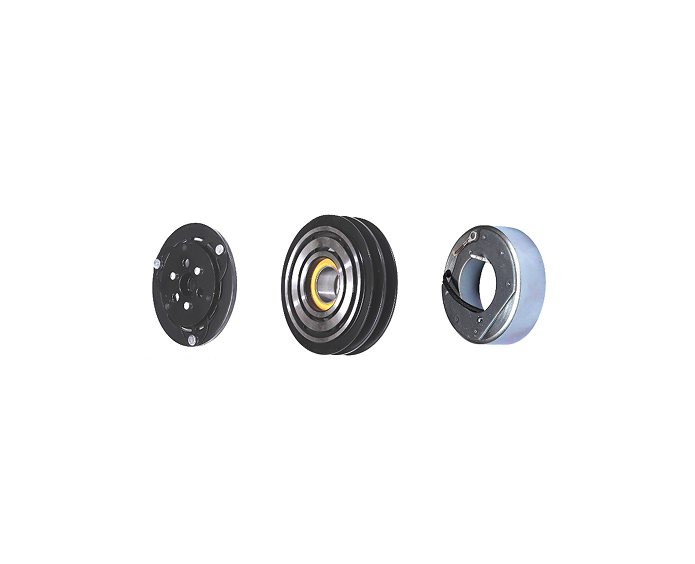

Why the Manufacturer Matters When Buying Car AC Compressor Clutches
A car AC compressor clutch is small compared with the complete air conditioning system, but it is not a component buyers should select from a photo alone.
For distributors, importers, aftermarket brands, repair-part wholesalers, and OEM customers, the real question is whether a car AC compressor clutch manufacturer can consistently produce the required configuration and maintain that configuration across repeat orders.
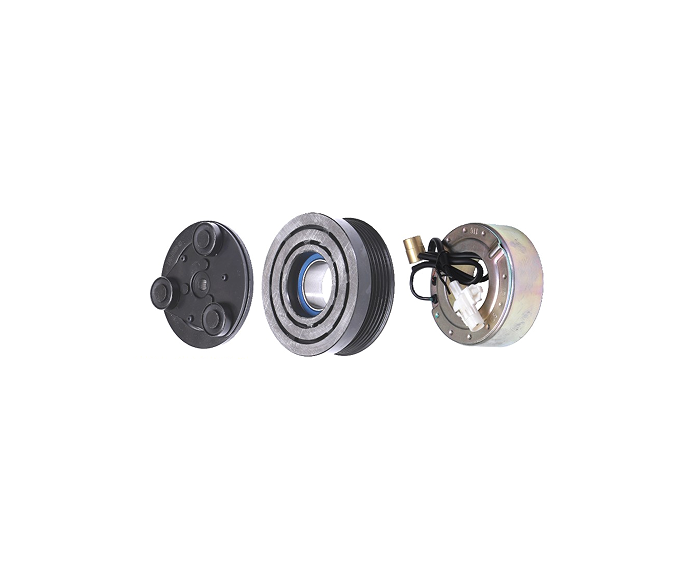
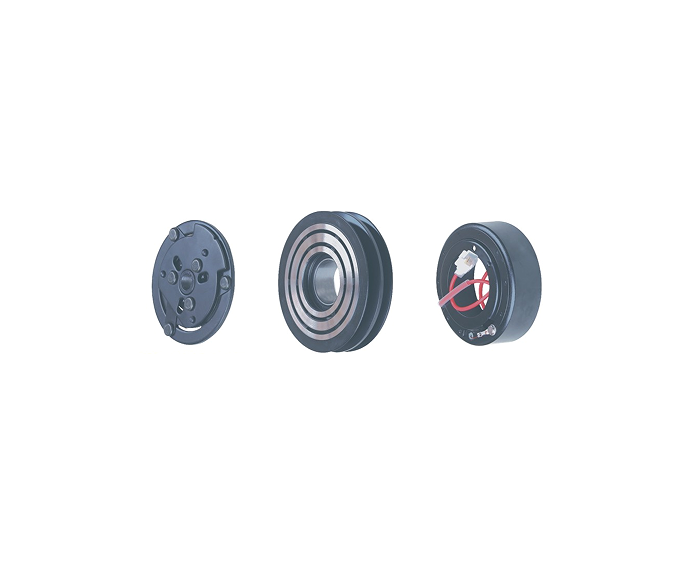
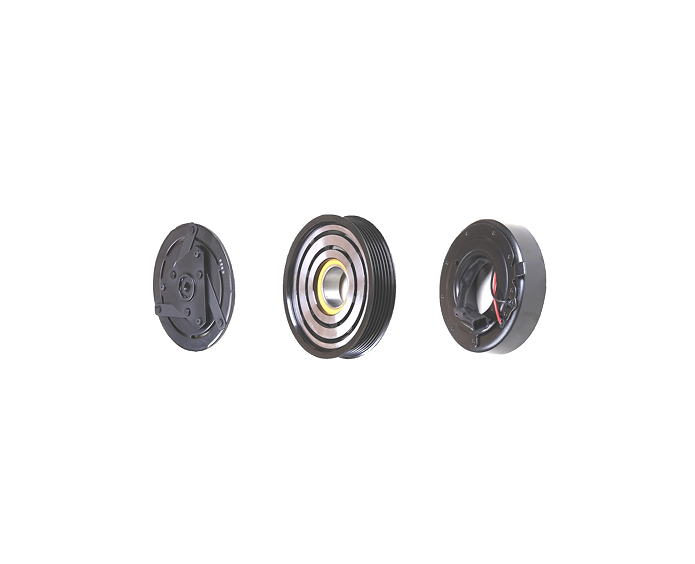
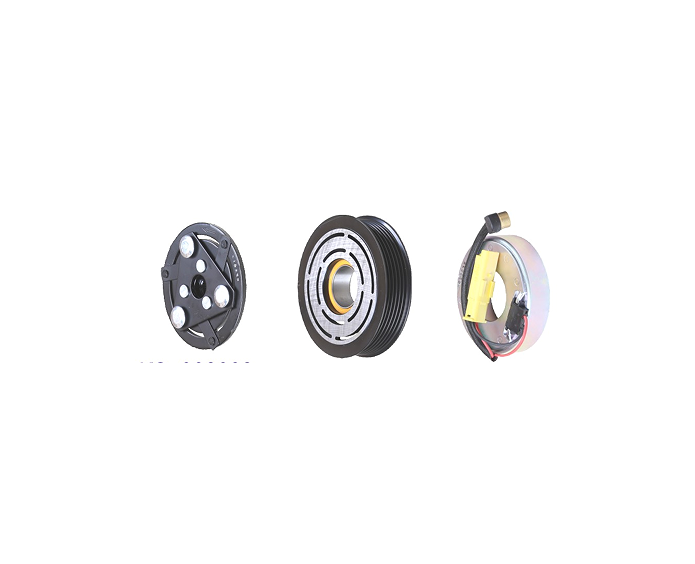
A clutch may look almost identical to another model while differing in pulley dimensions, groove configuration, bearing dimensions, coil voltage, hub design, connector arrangement, or mounting details.
That is why the sourcing process should begin with fitment and technical identification, then move to sample approval, production control, commercial terms, and long-term supply.
KASEN positions itself as a manufacturer and exporter of automotive air-conditioning components, including compressors, clutches, electric compressors, valves, and bearings. Its published company information states that it has focused on automotive air-conditioning products since 2007 and serves aftermarket and OEM customers.
For buyers evaluating suppliers, the useful question is therefore not simply “Who sells AC clutches?”
It is:
Who can manufacture the right clutch, control the critical dimensions, document the approved configuration, and reproduce it when the next order arrives?
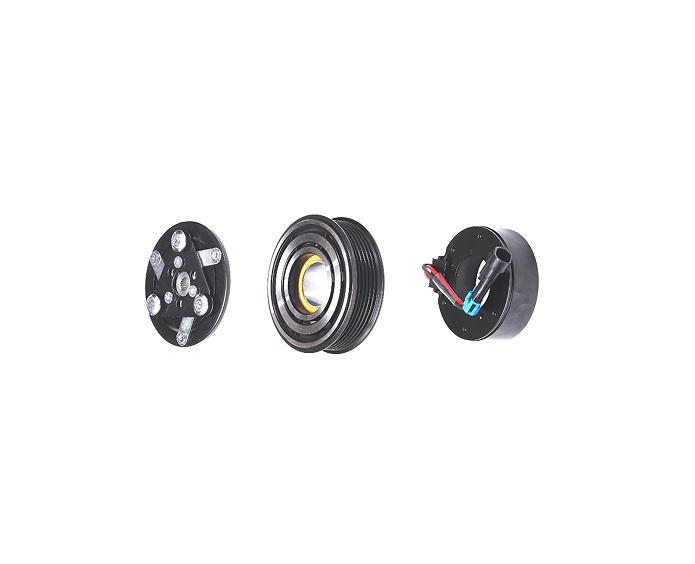
Who Should Buy From a Car AC Compressor Clutch Manufacturer?
The manufacturer model is particularly useful when the buyer needs repeated supply rather than a one-time replacement.
Distributors and Importers
Distributors normally need a stable product range that can be ordered repeatedly.
Their main concerns include:
- Correct vehicle or compressor fitment
- Stable product quality
- Packaging and labeling
- Repeat-order consistency
- Competitive landed cost
- Availability of multiple configurations
A supplier that can provide only one popular clutch may not be enough for a distributor building a broader automotive AC portfolio.
Automotive Aftermarket Brands
Private-label and aftermarket brands have a different concern: the product must work commercially as well as technically.
The buyer may need:
- Custom packaging
- Brand labels
- Product identification
- Barcode or artwork support
- Consistent appearance
- Approved reference samples
- Repeat production according to the approved configuration
This is where working directly with a manufacturer can become more valuable than comparing generic catalog listings.
Repair Parts Wholesalers
Wholesale buyers often purchase according to compressor models, OE references, or established aftermarket references.
For them, the most expensive mistake is often not a slightly higher unit price. It is receiving a batch that does not match the application.
Wrong fitment can create returns, technician complaints, warehouse handling costs, and lost customer confidence.
OEM and Custom-Project Buyers
OEM-related projects may require tighter control of drawings, samples, specifications, production changes, and documentation.
The supplier should be able to clarify which requirements are standard, which can be customized, and which details need engineering confirmation before production.
What Does a Car AC Compressor Clutch Manufacturer Actually Produce?
A conventional automotive AC compressor clutch transfers mechanical power from the engine drive system to the compressor when the clutch engages.
A typical assembly can include:
- Pulley
- Pulley bearing
- Electromagnetic coil
- Hub or armature
- Clutch plate
- Mounting components
- Electrical connector or related hardware
KASEN's published product information identifies compressor clutches as one of its core automotive AC product categories.Its current site also provides a dedicated auto AC compressor clutch product category.
The exact construction varies according to compressor application.
This distinction matters when sourcing because “car AC compressor clutch” is a product category, not a complete technical specification.
A buyer should identify the required configuration before requesting a quotation.
Key Specifications Buyers Should Confirm
Before comparing manufacturers, prepare a technical specification sheet.
| Specification | What to Confirm | Why It Matters |
|---|---|---|
| Compressor model | Exact compressor/model reference | Determines basic compatibility |
| OE/reference number | OE or aftermarket reference | Helps identify intended application |
| Voltage | Commonly application-specific | Affects electromagnetic coil operation |
| Pulley diameter | Actual required dimension | Influences belt alignment and fitment |
| Groove count | Number and type of grooves | Must match the belt system |
| Bearing | ID, OD,width and configuration | Critical for pulley operation |
| Hub/armature | Design and dimensions | Determines compressor-side engagement |
| Connector | Type and position | Must match the electrical system |
| Mounting | Hole pattern and related dimensions | Required for correct installation |
| Air gap | Application-specific requirement | Influences clutch engagement |
| Packaging | Bulk,retail or private label | Affects warehouse and sales requirements |
These values should be verified against the actual compressor or approved technical reference.
KASEN's published clutch listings, for example, use product-level information such as voltage, pulley configuration and bearing-related dimensions rather than treating every clutch as interchangeable.
Why Visual Similarity Is Not Enough
This is one of the most common problems in aftermarket sourcing.
Two clutch assemblies can have:
- Similar pulley appearance
- Similar overall diameter
- Similar hub shape
- Similar electrical connector
- Similar bearing appearance
and still be unsuitable for the same compressor.
The difference may be hidden in a dimension that is difficult to see in a product photograph.
For this reason, a serious automotive AC clutch manufacturer should be willing to work from technical references rather than asking buyers to identify a part only by appearance.
A useful RFQ can include:
- Compressor model
- OE number
- Existing clutch photos
- Pulley diameter
- Groove count
- Bearing dimensions
- Coil voltage
- Connector information
- Required quantity
- Destination market
If an old clutch is available, sending clear photos and measurements can reduce unnecessary back-and-forth.
How the Main Components Affect Clutch Performance
Pulley and Bearing
The pulley rotates continuously with the engine-driven belt on traditional clutch-type systems, while the compressor is connected when the electromagnetic clutch engages.
The bearing therefore has to support the pulley rotation under the relevant operating conditions.
Bearing problems can develop from improper mounting, contamination, lubrication problems, excessive load, incorrect fit, or other operating conditions. NSK identifies improper mounting, handling, lubrication, contamination, and abnormal heat generation among common causes of premature bearing failure.
This is important for buyers because bearing quality should not be judged only by whether a new pulley spins smoothly by hand.
Electromagnetic Coil
The coil creates the magnetic field used to engage the clutch.
The buyer should confirm the intended electrical specification rather than assuming that all automotive AC clutch coils use the same voltage.
Coil configuration, resistance, connector arrangement and operating conditions should be evaluated according to the application.
Hub and Armature
The hub or armature transfers torque to the compressor shaft when the clutch engages.
Its dimensions and engagement relationship with the compressor are therefore part of the fitment requirement.
A replacement clutch should not be considered suitable simply because the hub appears visually similar.
Manufacturing Quality: What Should Buyers Ask About?
A professional manufacturer should be able to explain how critical characteristics are controlled during production.
For a car AC compressor clutch, buyers can ask about:
Dimensional Control
Critical dimensions can include:
- Pulley diameter
- Bearing seat dimensions
- Hub dimensions
- Mounting dimensions
- Groove geometry
- Axial dimensions
- Relevant clearances
The exact inspection method and tolerance should be agreed according to the product specification.
Bearing and Pulley Rotation
Buyers should pay attention to:
- Abnormal noise
- Rough rotation
- Excessive play
- Pulley wobble
- Visible damage
- Abnormal resistance
These checks are particularly relevant because bearing and mounting conditions can affect operating life. NSK recommends attention to cleaning, dimensional checks, mounting, inspection, lubrication, and running tests as part of bearing handling and installation practices.
Clutch Engagement
The manufacturer should be able to explain how clutch engagement-related characteristics are controlled for the specific design.
Depending on the application, buyers may need confirmation of:
- Coil electrical characteristics
- Air gap
- Engagement behavior
- Pulley alignment
- Rotation condition
- Assembly integrity
Sanden also provides dedicated compressor service manuals for diagnosis and service procedures, illustrating why compressor/clutch servicing should be evaluated using application-specific technical information rather than visual inspection alone.
Car AC Compressor Clutch Manufacturer vs Trading Supplier
Not every supplier needs to own every production process.
The important issue is who controls the product specification and manufacturing result.
| Supplier Type | Potential Advantage | Buyer Should Verify | Best Fit |
|---|---|---|---|
| Direct manufacturer | Direct production communication | In-house processes and QC responsibility | Repeated bulk orders |
| Trading company | Broad sourcing network | Actual factory and change control | Mixed-product purchasing |
| Sourcing company | Supplier discovery and coordination | Factory ownership and responsibility | Buyers without local sourcing resources |
| Manufacturer with outsourced processes | Specialized production resources | Critical outsourced processes and approval control | Complex projects |
A direct manufacturer can be particularly useful when the project involves custom packaging, private labeling, repeated specifications, or product development.
But “factory” should not automatically mean “better.”
The buyer still needs evidence.
How to Evaluate an AC Compressor Clutch Manufacturer
Instead of asking only for the lowest price, use a practical supplier scorecard.
| Evaluation Area | Evidence to Request | Risk if Weak |
|---|---|---|
| Product identification | Model/OE/reference mapping | Wrong fitment |
| Technical capability | Drawings, specifications,sample details | Specification gaps |
| Sample quality | Representative production sample | Sample-to-bulk variation |
| Quality control | Inspection process and checkpoints | Uncontrolled defects |
| Bearing quality | Bearing specification and inspection | Noise or premature failure |
| Clutch assembly | Engagement-related checks | Operating problems |
| Change control | Notification procedure | Unexpected specification changes |
| Packaging | Sample packaging and labels | Damage or wrong identification |
| Production consistency | Repeat-order records | Batch variation |
| After-sales | Complaint and corrective-action process | Slow issue resolution |
This approach follows the broader B2B sourcing principle in the quality framework: buyers should evaluate evidence, not simply accept statements such as “high quality” or “best price.” The reference framework specifically emphasizes technical depth, QC, risk mitigation, commercial logic, and clear conversion paths.
What Should Be Included in an RFQ?
A good RFQ saves time for both sides.
Instead of writing:
“Please quote car AC compressor clutch.”
send a structured request.
Recommended RFQ Format
Product: Car AC compressor clutch
Compressor model: [model]
OE/reference number: [number]
Voltage: [requirement]
Pulley diameter: [measurement]
Groove count: [measurement]
Bearing specification: [ID × OD × width]
Quantity: [initial order]
Annual demand: [estimated]
Packaging: Bulk / Neutral / Private Label
Destination: [country/port]
Required documents: [if applicable]
Target delivery: [date]
Customization: [logo / packaging / product modification]
This gives the manufacturer enough information to identify whether an existing model can be used or whether additional confirmation is necessary.
How to Compare Manufacturer Quotes
The cheapest quotation is not necessarily the cheapest purchasing decision.
Suppose Supplier A quotes a lower unit price but has:
- Higher return exposure
- Weak packaging
- Longer replenishment time
- Inconsistent labeling
- Unclear product identification
Supplier B may have a higher unit price but provide better consistency and lower downstream risk.
For aftermarket distributors, the relevant calculation is closer to:
Total sourcing cost = product cost + freight + duties/fees + inspection + inventory cost + expected return/replacement cost
The exact formula will depend on the buyer's market and commercial terms.
This is why supplier evaluation should consider total landed cost rather than unit price alone.
OEM, ODM and Private-Label Support
A capable car AC compressor clutch manufacturer can become more valuable when the buyer wants to build a branded product line.
Potential customization may include:
- Brand labeling
- Product identification
- Packaging design
- Carton markings
- Instruction materials
- Approved product configuration
- Drawing-based development
- OEM-number-based sourcing
- Sample approval
- Repeat-order control
KASEN states that it supports OEM-level customization and invites buyers to discuss custom production using drawings or OEM numbers.
For a private-label project, however, buyers should define exactly what is being customized.
Changing packaging is very different from changing the clutch construction.
The quotation should clearly separate standard product supply from engineering or customization work.
How to Reduce Wrong-Fitment Risk
Wrong fitment is one of the biggest commercial risks in automotive aftermarket parts.
A simple prevention process is:
Reference → Specification → Sample → Approval → Bulk Production → Inspection → Shipment
Do not skip the sample stage when the application is uncertain or the order value is significant.
The approved sample should be documented with the relevant:
- Product reference
- Dimensions
- Electrical specification
- Bearing information
- Pulley configuration
- Hub configuration
- Connector
- Packaging
- Labeling
This becomes the reference point for repeat orders.
Capacity and Lead Time: What Should You Confirm?
Buyers should not rely on a generic statement such as “fast delivery.”
Ask for the actual order situation.
Useful questions include:
- Is the requested model a regular production item?
- Are the components currently available?
- Is a new sample required?
- Is tooling involved?
- Does custom packaging require additional preparation?
- What is the estimated production schedule?
- Which milestones require buyer approval?
- What happens if the forecast changes?
For standard products, the commercial process may be relatively simple.
For OEM or private-label projects, artwork approval, sampling, packaging preparation, and technical confirmation can change the schedule.
Therefore, MOQ and lead time should be confirmed for the exact SKU and order configuration, rather than treated as universal manufacturer specifications.
Existing Product vs Custom Clutch: Which Should You Choose?
| Option | Development Effort | Main Advantage | Main Risk | Suitable For |
|---|---|---|---|---|
| Existing model | Low | Faster sourcing | Limited customization | Standard aftermarket demand |
| Existing model + private label | Low–Medium | Branded sales program | Packaging coordination | Distributors and brands |
| Modified configuration | Medium | Better application fit | Additional validation | Specific market requirements |
| New OEM/ODM development | High | Purpose-built solution | Longer development process | Larger long-term programs |
For most aftermarket buyers, starting with an existing verified model is more efficient.
Custom development makes more sense when the required configuration cannot be adequately covered by an existing product.
Why KASEN Can Be Considered for Automotive AC Clutch Sourcing
KASEN presents itself as a Guangzhou-based automotive air-conditioning manufacturer and exporter focused on compressors, compressor clutches, electric compressors, valves and bearings. Its company information states that the business has focused on automotive AC products since 2007 and serves global aftermarket and OEM customers.
Its product portfolio also includes dedicated automotive AC compressor clutch products rather than treating the clutch as an incidental accessory.
For buyers evaluating a potential supplier, the next step should still be product-specific verification.
A useful enquiry should include the compressor model or OE number, technical dimensions, required quantity, target market, packaging requirements and any private-label requirements.
You can review KASEN auto AC compressor clutch products and use Contact KASEN to submit the requirements.
A Practical Checklist Before Placing a Bulk Order
Before approving a car AC compressor clutch manufacturer,check these points:
- Is the manufacturer able to identify the exact compressor application?
- Has the OE or aftermarket reference been confirmed?
- Are pulley dimensions documented?
- Is groove configuration confirmed?
- Is the bearing specification documented?
- Is the coil voltage confirmed?
- Has the connector been checked?
- Has the sample been approved?
- Are critical dimensions controlled during production?
- Is packaging clearly defined?
- Are private-label requirements documented?
- Is the production schedule confirmed for the actual order?
- Is the approved sample retained as the reference?
- Is there a clear process for handling quality claims?
- Are repeat-order specifications controlled?
A manufacturer that can answer these questions clearly is easier to qualify than one that simply sends a large product catalog.
Frequently Asked Questions
What is a car AC compressor clutch manufacturer?
A car AC compressor clutch manufacturer produces clutch assemblies or their major components for automotive air-conditioning compressor applications. Depending on the company, manufacturing may include assembly, machining, bearing integration, coil production, inspection, packaging, and customized supply.
What is the difference between a manufacturer and an AC clutch supplier?
A manufacturer performs defined production activities, while a supplier refers more broadly to the company providing the product commercially. A manufacturer can also be a supplier. Buyers should verify who actually produces the proposed clutch and who controls its specifications.
How do I choose the right car AC compressor clutch manufacturer?
Start with product identification and technical capability.Then compare sample quality, QC procedures, customization support, packaging, delivery planning, commercial terms, and after-sales handling. Price should be evaluated after the technical scope has been normalised.
What information should I send when requesting a quotation?
Send the compressor model, OE/reference number, photos, pulley diameter, groove count, bearing dimensions, voltage, connector details, quantity, destination market and packaging requirements whenever available.
Can an AC compressor clutch be customized?
Potentially, yes. Depending on the manufacturer and application, customization may cover labeling, packaging, product configuration or OEM/ODM development. The supplier should confirm which changes are standard and which require engineering validation.
How important is the clutch bearing?
Very important. The pulley bearing supports pulley rotation and can affect noise, smoothness and service performance. Bearing problems can result from factors such as improper mounting, contamination, lubrication issues, excessive load or incorrect fit.
Should I buy a complete compressor or only the clutch?
It depends on the failure and the compressor condition.If the compressor itself remains serviceable and the clutch is the failed component, a suitable replacement clutch may be appropriate. If the compressor has internal damage or other major problems, replacing only the clutch may not solve the underlying issue.
What is more important: price or quality?
Both matter, but they should be evaluated together with fitment and total sourcing cost. A low-price clutch that produces repeated returns can cost more than a higher-priced product with stable quality and correct application.
How can I reduce wrong-fitment problems?
Use OE references, compressor models, measurements and photographs to identify the product. Approve a representative sample before bulk production and keep the approved specification as the reference for future orders.
What should I ask an OEM AC compressor clutch manufacturer?
Ask about product range, technical identification, sample approval, critical-dimension control, bearing specification, electrical testing, production consistency, packaging, OEM/private-label options, MOQ, lead time and quality-claim procedures.
Conclusion
Choosing a car AC compressor clutch manufacturer should be treated as a technical sourcing decision, not a simple price comparison.
The strongest supplier evaluation combines four things: correct fitment, controlled manufacturing, commercial reliability, and clear communication.
For aftermarket distributors and wholesalers, the priority is repeatable product quality and accurate application coverage. For private-label brands, packaging and specification control become equally important. For OEM projects, engineering communication, sample approval and change control deserve even more attention.
Before requesting a quotation, prepare the compressor model, reference number, dimensions, electrical requirements, quantity and packaging expectations. Then ask manufacturers to quote against the same specification.
That approach makes supplier comparisons more meaningful and gives both sides a much better chance of building a stable long-term automotive AC parts program.