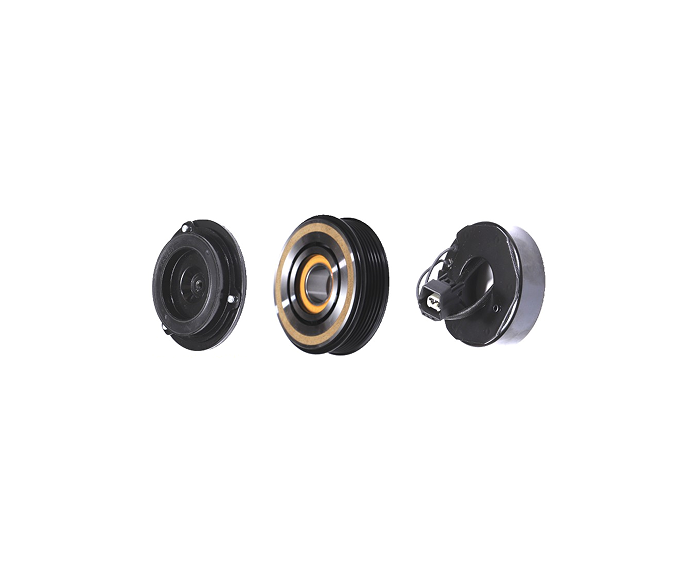

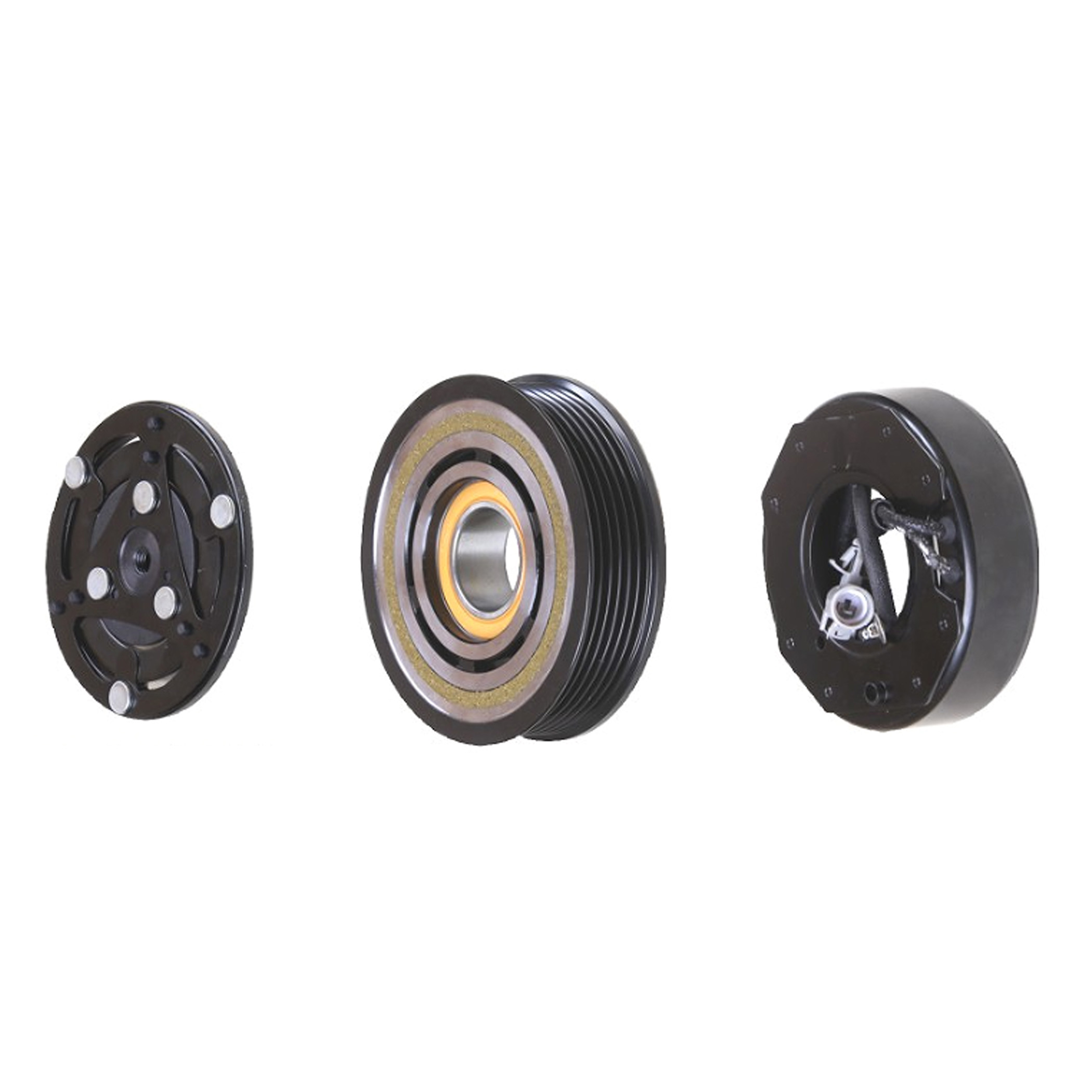
Integration Accuracy Determines Cooling Stability
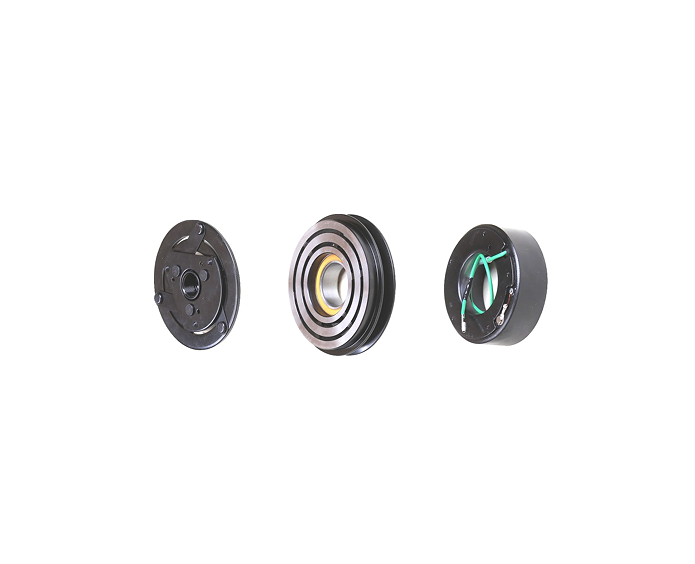
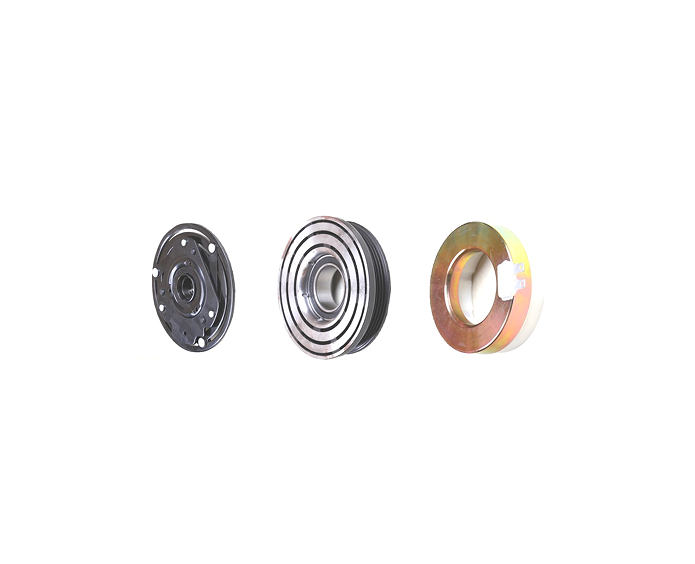
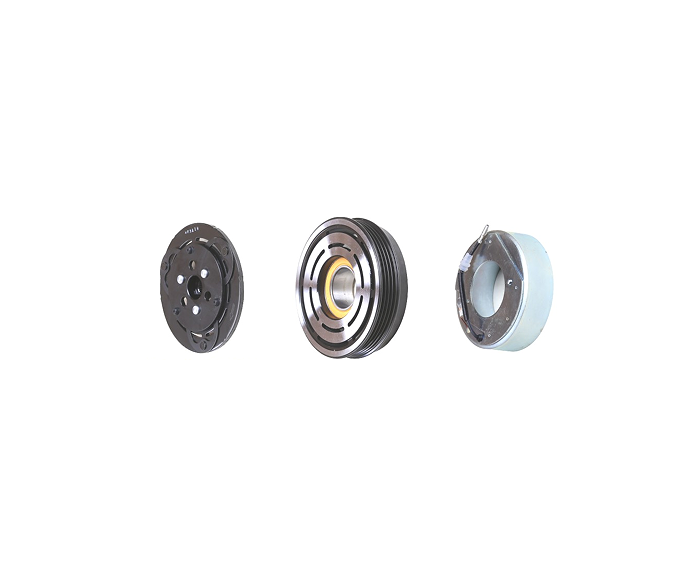
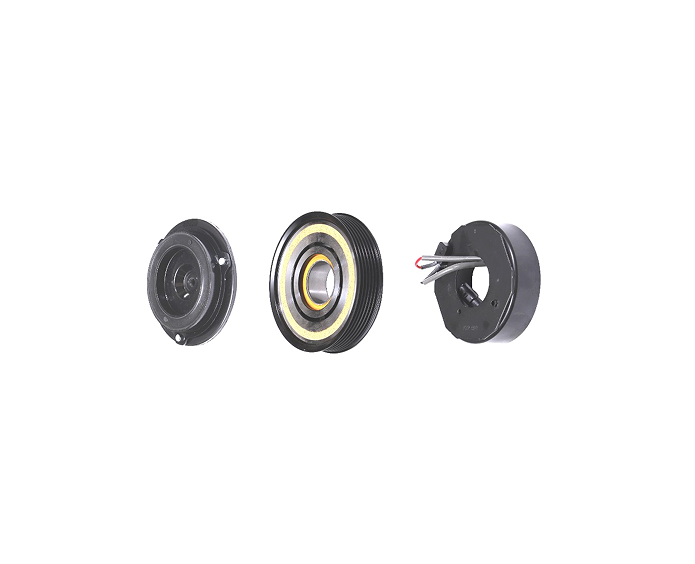
An automotive air conditioner clutch does not operate independently. It functions as a dynamic interface between engine torque output and compressor load demand.
Mismatch in torque rating, magnetic pull force, pulley ratio, or response timing can create subtle but measurable inefficiencies—slight vibration, delayed engagement, marginal fuel loss. Individually minor. Cumulatively significant.
For OEMs and Tier-1 suppliers, clutch integration is a system-level engineering decision, not merely a component selection.
Compressor Torque Curve Alignment
Different compressor models present different torque demand profiles. Fixed displacement units, variable displacement compressors, and hybrid electric compressors all behave differently under load.
Proper automotive air conditioner clutch selection must consider:
| Parameter | Fixed Displacement | Variable Displacement | Hybrid System |
|---|---|---|---|
| Peak Engagement Torque | High | Moderate | Low |
| Engagement Frequency | Intermittent | Continuous modulation | Electronic control |
| Thermal Load | Higher spikes | Stable | Electrically regulated |
| Recommended Pull Force | ≥ 450 N | ≥ 400 N | 350–400 N |
A clutch calibrated for high torque spikes may generate unnecessary drag in systems designed for smoother modulation. Conversely, under-rated pull force can cause micro-slip during peak load.
Matching torque curves prevents early wear and compressor inefficiency.
Pulley Ratio and Belt Drive Coordination
Drive ratio selection influences rotational stress.
A pulley with slight diameter variation alters compressor RPM significantly, especially under high engine speed.
For optimal automotive air conditioner clutch integration, engineers evaluate:
-
Engine idle RPM
-
Maximum operating RPM
-
Belt tension profile
-
Crankshaft vibration amplitude
Typical ratio design ensures compressor speed remains within safe operational limits between 1,000–6,000 RPM without overspeed risk.
Misalignment or ratio mismatch results in belt noise, accelerated bearing fatigue, and fluctuating load distribution.
Engagement Timing and Control Logic
Modern vehicles rely on ECU-controlled clutch activation. Engagement must synchronize with engine load and throttle input.
Delayed magnetic response increases transient torque shock. Over-aggressive engagement creates audible click under cabin conditions.
High-performance automotive air conditioner clutch systems are tuned to:
-
Engage within ≤0.04 seconds
-
Maintain stable current draw
-
Avoid voltage drop below 10.5V during activation
-
Coordinate with idle speed compensation algorithms
Integration testing on vehicle dynamometers ensures engagement smoothness under real acceleration patterns.
Thermal Interaction with Engine Bay Environment
Under-hood temperatures can exceed 120°C during prolonged traffic.
Clutch placement relative to exhaust manifolds, radiator airflow, and engine mount vibration zones affects longevity.
Engineering assessment includes:
| Factor | Risk if Ignored |
|---|---|
| Airflow obstruction | Coil heat buildup |
| Proximity to turbocharger | Premature insulation aging |
| Mount rigidity | Increased vibration stress |
| Heat soak after shutdown | Residual magnet fatigue |
Vehicle platform adaptation requires localized thermal modeling to validate clutch placement.
Compatibility Across Global Vehicle Platforms
Automotive platforms differ across markets. Compact sedans in Southeast Asia face prolonged heat exposure. European fleets prioritize fuel efficiency. Commercial vehicles demand extended operation hours.
A scalable automotive air conditioner clutch solution must provide:
-
Multi-voltage compatibility (12V / 24V)
-
Region-specific corrosion protection
-
Variable torque calibration
-
Custom mounting offsets
OEM cooperation often involves pilot integration batches followed by platform-specific validation.
Validation Through Real Vehicle Testing
Laboratory simulation cannot replace road data.
KASEN conducts:
-
Urban stop-and-go cycle testing
-
Highway sustained load simulation
-
High-altitude performance trials
-
Desert climate exposure
The goal is not peak specification—it is stable behavior across fluctuating real-world conditions.
Each automotive air conditioner clutch selected for integration passes vehicle-level verification before mass production approval.
Platform-Oriented Supply Partnership
System matching requires early-stage engineering dialogue between supplier and vehicle manufacturer.
KASEN supports OEM integration by providing:
-
3D CAD models
-
Magnetic force curves
-
Torque performance data
-
Thermal dissipation modeling
-
Prototype sampling for validation
This reduces redesign risk and shortens development cycles.
Integrated Performance Starts With the Right Supplier
Selecting an automotive air conditioner clutch based solely on nominal specification overlooks the broader system interaction.
Integration accuracy, torque harmony, and engagement timing collectively determine real-world cooling performance and long-term durability.
If you are evaluating clutch solutions for new vehicle platforms or compressor upgrades, visit our homepage at
👉 https://www.gzkasen.com/
Or connect directly with our engineering team through
👉 https://www.gzkasen.com/contact-us
System-level stability begins with correct integration.