
Why Automotive AC Clutch Coil Wholesale Requires More Than a Bulk Price
An automotive AC clutch coil wholesale order should begin with verified product identity, not with the largest quantity that produces the lowest unit price. Clutch coils are compact and often visually similar, which makes them easy to stock in volume but also easy to misidentify. A distributor can receive hundreds of technically sound coils and still have a commercial problem if voltage, resistance, dimensions, mounting structure or connector configuration do not correspond with the intended compressor applications.
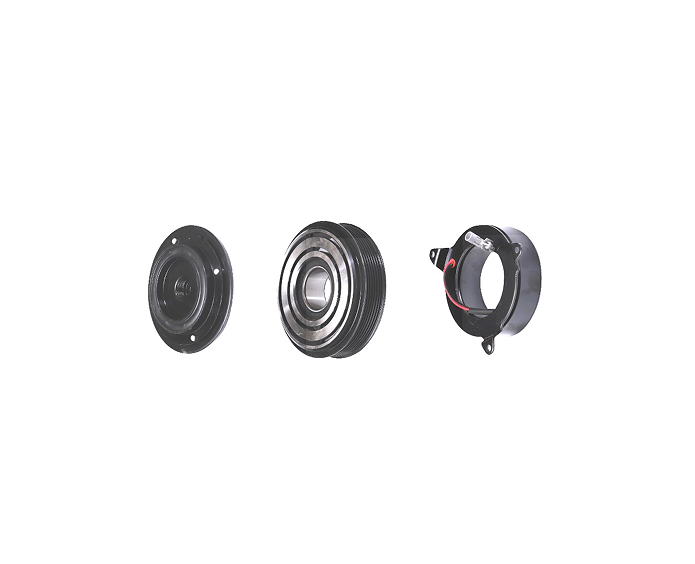
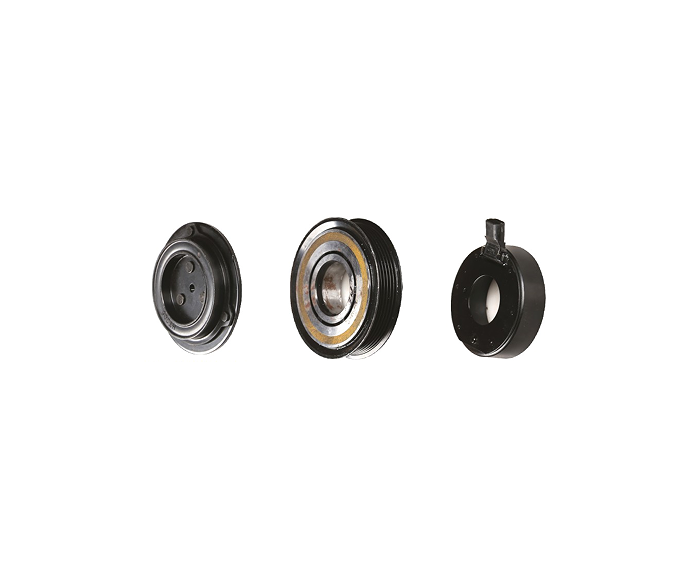
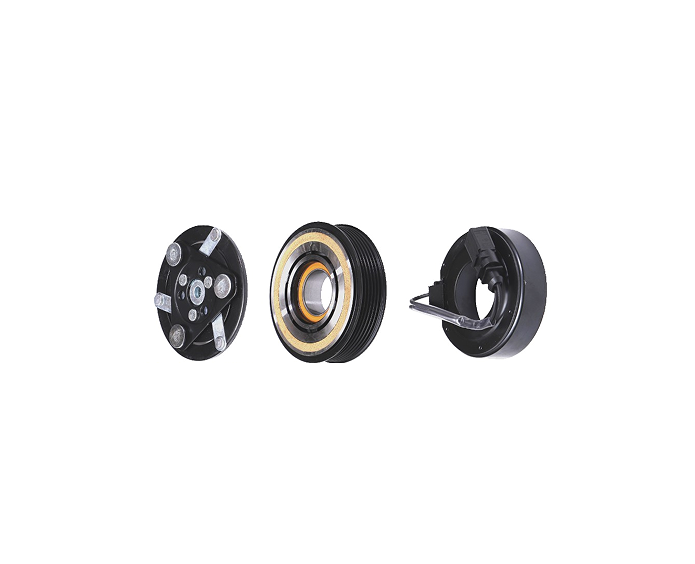
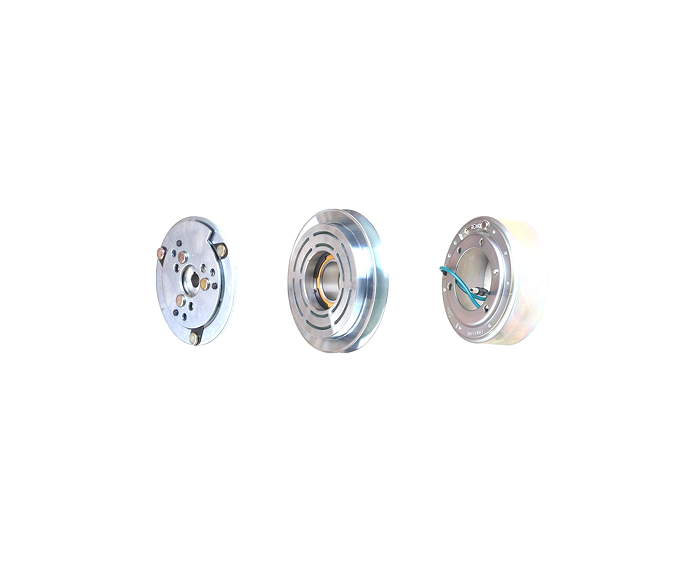
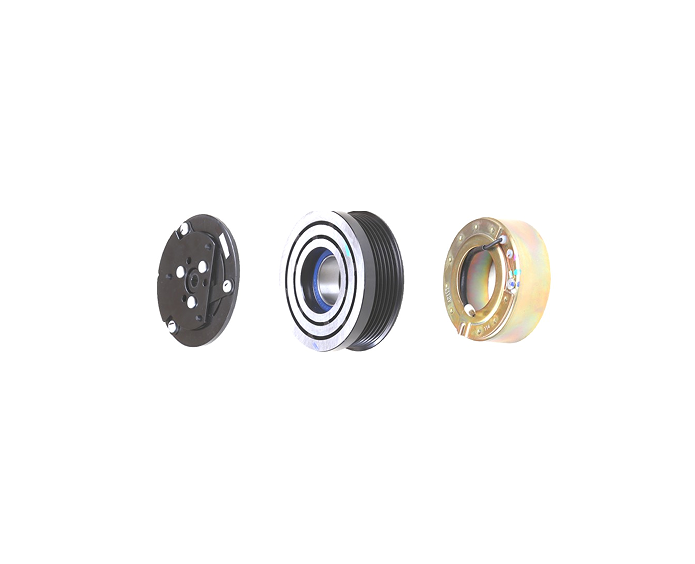
The electromagnetic coil is one component of a conventional compressor clutch. When energized, it creates the magnetic force used to engage the clutch so that the pulley can transmit drive to the compressor. That means a replacement coil has to be considered in relation to the clutch and compressor rather than simply treated as a generic electrical ring. KASEN's current clutch coil product category lists multiple KS-Q references, while its broader automotive AC guidance identifies voltage, coil dimensions, connector design, mounting structure, compressor application and resistance as important matching factors.
For distributors, the wholesale objective is therefore straightforward: buy a coil that can be identified, sold, installed and reordered under the same controlled SKU.
Who Should Purchase AC Clutch Coils in Bulk?
Bulk coil sourcing is most relevant to automotive AC parts importers, compressor rebuilders, regional distributors, workshop supply networks and aftermarket brands that already see recurring demand for individual clutch components. A compressor rebuilder may need coils for known compressor families, while a distributor may carry multiple references so workshops can replace individual clutch components instead of purchasing a complete assembly for every repair.
A bulk programme is less suitable when the application is still unidentified. If the buyer has only one old coil photograph and does not know the compressor, voltage or dimensions, increasing the order quantity only increases the cost of uncertainty. Start with identification and sample verification instead. The same applies when fault diagnosis has not established that the coil is the component requiring replacement. KASEN's current supplier guide also stresses that coil selection needs electrical and dimensional information rather than appearance alone. Read the KASEN AC clutch coil supplier guide.
Define Each Wholesale SKU Before Negotiating Quantity
A professional automotive AC clutch coil wholesale order should use one technical record for each SKU. The record should connect the buyer's internal code with the supplier reference, compressor information, sample status and packaging. If one field is uncertain, mark it for confirmation instead of copying information from another visually similar coil.
The following table is a purchasing framework rather than a universal KASEN specification.
| Wholesale Control Item | Information to Confirm | Why It Matters |
|---|---|---|
| Buyer SKU | Distributor's internal code | Links purchasing, warehouse and sales records |
| Supplier reference | Exact KASEN or supplier model | Supports correct replenishment |
| Compressor identity | Compressor manufacturer/model/reference | Establishes fitment context |
| Existing part number | OE or aftermarket cross-reference where verified | Supports product identification |
| Rated voltage | Required electrical system | Prevents basic electrical mismatch |
| Resistance | Approved range plus measurement conditions | Supports production consistency |
| Inner diameter | Confirmed dimension | Controls installation fit |
| Outer diameter | Confirmed dimension | Controls surrounding clearance |
| Overall height | Axial dimension | Prevents interference |
| Mounting design | Tabs, housing or locating features | Controls mechanical fit |
| Connector/lead wire | Connector form, position and lead arrangement | Supports electrical installation |
| Sample status | Approved, pending or rejected | Controls production release |
| Quantity | Required units per SKU | Supports stock planning |
| Packaging | Buyer code, carton quantity and label | Reduces warehouse mix-ups |
| Revision | Current approved specification/sample | Protects repeat orders |
A supplier quotation should refer to the same product definition. Otherwise, two offers at different prices may not represent equivalent coils.
Do Not Build a Wholesale Range Around Voltage Alone
“12V AC clutch coil” is useful as a broad search description, but voltage alone is not enough for a purchase order. Two coils operating at the same nominal voltage may still have different resistance specifications, diameters, mounting structures, connectors and compressor applications.
Resistance also requires context. Electrical resistance changes with conductor temperature, so a wholesale buyer should avoid comparing readings taken under undefined conditions. If resistance is part of incoming inspection or production acceptance, the supplier and buyer should agree on the measurement conditions as well as the acceptable range.
KASEN's automotive AC spare-parts guidance lists voltage, coil dimensions, connector design, mounting structure, compressor compatibility and resistance among the main matching factors for clutch coils. This makes electrical information one part of identification rather than a shortcut that replaces the complete fitment record.
Check Mechanical Dimensions and Connector Configuration Together
Mechanical mismatch can make an electrically correct coil unusable. Depending on the design, inner diameter, outer diameter, height, locating structure and wire exit can affect whether the coil fits into the intended clutch arrangement. Connector style and lead orientation can also affect installation even when the coil body itself appears suitable.
For a new reference, request measured dimensions or a drawing where available. If the old part is being used as the identification basis, provide photographs from several angles together with actual measurements. Do not estimate dimensions from an image.
For importers handling many models, save a photograph of the approved connector and the coil's mounting features in the SKU record. These visual references support receiving inspection and warehouse identification, but they should supplement rather than replace numerical specifications.
Use Demand Tiers to Plan Automotive AC Clutch Coil Wholesale Quantities
A distributor does not need the same quantity of every coil. Divide the proposed range according to actual demand.
Core-stock references should be products supported by repeated enquiries, sales history or established compressor-repair demand. Trial references can be technically approved products for which commercial demand is still being evaluated. Special-order references are low-frequency or application-specific coils that may not justify permanent stock.
This approach prevents a supplier's catalogue from automatically becoming the buyer's warehouse inventory. KASEN's broader bulk compressor clutch sourcing guide applies the same principle to clutch assemblies: volume should increase after product uncertainty falls, not merely because a larger quantity produces a lower quoted price.
For coil distributors, this principle is particularly useful because small components are physically easy to overstock. The space required may be limited, but every slow-moving SKU still consumes working capital and creates catalogue-management work.
Approve Samples Before Converting New References Into Bulk Stock
Sample approval gives purchasing and quality teams a technical baseline. For a new coil, record the supplier reference, buyer SKU, compressor application, voltage, agreed resistance information, dimensions, connector, photographs and approval status. Where installation testing is needed, record the clutch or compressor used for the evaluation.
Do not allow several revised coils to remain under one informal description such as “approved sample.” If a dimension, connector or electrical requirement changes, identify the new revision clearly.
The approval record should also state what was not verified. If the buyer checked dimensions and electrical information but did not conduct installation verification, the record should not imply that full vehicle fitment was established. This makes the approval useful for both production release and future complaint analysis.
Build Mixed-SKU Orders Around an Approval Matrix
An automotive AC clutch coil wholesale shipment may include many similar products. Before placing the order, create an approval matrix showing which references are ready for production, which still need samples and which lack technical information.
Only approved references should enter the final production-release list. For each line, include the product code, quantity, packaging requirement and current specification revision.
This is especially important when several KS-Q codes are included in one shipment. KASEN's public clutch coil category currently lists models including KS-Q0339, KS-Q0382, KS-Q0044, KS-Q0091, KS-Q0489, KS-Q0158, KS-Q0271, KS-Q0412 and KS-Q0344. The public category page primarily exposes model references rather than complete technical specifications, so these codes should be used as enquiry identifiers until the corresponding application and electrical data are confirmed.
How Should Wholesale Buyers Compare Current KASEN Coil References?
Because complete public specifications are not currently shown for every listed KS-Q model, a responsible comparison should highlight the information gap rather than invent values.
| KASEN Coil Reference | Publicly Listed | Useful as Wholesale Identifier | Still Needs Product-Specific Confirmation |
|---|---|---|---|
| KS-Q0339 | Yes | Yes | Voltage, resistance, dimensions, connector, compressor application |
| KS-Q0382 | Yes | Yes | Voltage, resistance, dimensions, connector, compressor application |
| KS-Q0044 | Yes | Yes | Voltage, resistance, dimensions, connector, compressor application |
| KS-Q0091 | Yes | Yes | Voltage, resistance, dimensions, connector, compressor application |
| KS-Q0489 | Yes | Yes | Voltage, resistance, dimensions, connector, compressor application |
| KS-Q0158 | Yes | Yes | Voltage, resistance, dimensions, connector, compressor application |
| KS-Q0271 | Yes | Yes | Voltage, resistance, dimensions, connector, compressor application |
These references should not be ranked by performance, life or quality when the corresponding evidence is not published. They also should not be treated as interchangeable merely because they appear in the same product category.
For a distributor, this table has a practical purpose: it identifies which code to include in the RFQ and which specification fields must be completed before the product becomes regular stock.
Separate Routine QC From Validation Testing
Quality control for wholesale supply should distinguish routine production checks from separate validation work. Routine checks answer whether the manufactured coil conforms to the approved specification. Validation answers whether a particular design meets defined performance or environmental requirements under specified test conditions.
Depending on the product, routine checks may include identification, dimensions, connector condition, continuity or resistance. The actual inspection plan should be agreed with the supplier for the specific reference rather than copied from a generic checklist.
If the buyer requires thermal, insulation, endurance, moisture or vibration evidence, ask which coil was tested, how the test was conducted and what acceptance criteria applied. A technical article or factory-level process description should not automatically be treated as proof that every KS-Q reference has passed identical testing.
KASEN publishes technical information about coil design and magnetic performance, but model-level purchasing decisions should remain tied to the model-level evidence available for the proposed product. Read KASEN's coil design article.
Define Incoming Inspection Before the Wholesale Shipment Arrives
A receiving plan should be prepared before shipment rather than improvised after cartons reach the warehouse. Start by checking carton labels, buyer SKU, supplier reference and quantity against the purchase order. Then perform the agreed product checks according to the risk and inspection plan established for the order.
For products that are highly similar visually, label accuracy deserves particular attention.One correctly manufactured coil placed in the wrong box can create the same commercial outcome as the wrong coil.
When a discrepancy is found, isolate the affected stock and preserve the shipment, carton and batch information needed for investigation. Do not distribute the remaining products until the scope of the issue is understood.
This creates a direct link between factory QC and distributor QC: the supplier verifies conformity before shipment, while the importer verifies that the received products correspond with the approved order.
Ask About MOQ at SKU Level, Not Only at Order Level
Wholesale buyers should distinguish the minimum order quantity for each coil from any total mixed-order requirement. A supplier may be able to combine multiple models into one shipment while still applying a minimum to individual SKUs.
Packaging may create another minimum. Standard packaging, buyer labels and fully printed private-label boxes can have different commercial conditions. Ask for these separately so a packaging minimum is not mistaken for a product MOQ.
The relevant question is not simply “What is your minimum order?” A better wholesale enquiry asks:
What is the minimum for each reference, what can be combined in one order, and what additional minimum applies to customized packaging?
This gives the distributor enough information to build a commercially realistic SKU mix.
Build Lead Time Around the Actual Mixed-SKU Order
A single lead-time number may hide several stages. For a first automotive AC clutch coil wholesale order, timing can involve product identification, sample preparation, approval, materials, production, inspection, packaging and dispatch.
Ask which event starts the quoted production time. Is it deposit receipt, final sample approval, technical release or approval of packaging artwork?
For mixed-SKU orders, also determine whether all references must be complete before shipment. A high-volume core SKU may be ready while a low-volume trial reference is delayed. Depending on freight strategy, the buyer may prefer either one consolidated shipment or an agreed partial shipment.
The correct arrangement depends on the distributor's inventory requirement, not on a universal rule.
Design Packaging for Warehouse Identification
Wholesale packaging should first make the product identifiable. Include the agreed supplier reference and buyer SKU in a way that warehouse staff can read without opening every package. If barcodes are used, test the printed code in the buyer's actual inventory system before approving mass packaging.
Where several coil models are shipped together, define whether cartons contain one SKU or mixed references. Single-SKU cartons can simplify receiving, while mixed cartons require stronger internal identification.
Private-label distributors should approve technical information and packaging artwork separately. A packaging revision should not change the product specification, while a technical coil change should not silently remain inside packaging approved for the previous revision.
Buyers developing a branded range can also review KASEN's AC compressor clutch OEM guide, which distinguishes product requirements from branding and packaging requirements.
Calculate Wholesale Cost Beyond the Unit Price
The lowest quoted coil price does not necessarily produce the lowest distribution cost. Compare the product price together with sample costs, packaging, inspection, freight, warehouse handling and inventory carrying cost.
Fitment mistakes add another layer of commercial risk. An incorrect coil may generate a product return, technician time, international reshipping and loss of confidence in the distributor's catalogue. A technically correct coil with poor SKU identification can also cause picking errors inside the distributor's own warehouse.
For new references, do not invent an expected failure rate just to calculate a theoretical saving. Use your own return and sales data once sufficient history exists.
The more useful wholesale question is:
What does it cost us to stock and repeatedly deliver the correct coil—not just to purchase one unit from the supplier?
Keep Standard Wholesale, Private Label and OEM Coil Projects Separate
There are three different purchasing routes. A standard wholesale project uses an existing approved coil and supplier packaging. A private-label project can retain the technical product while adding buyer codes, branding or packaging. An OEM project changes the technical configuration and therefore requires additional engineering review.
Technical changes may involve dimensions, mounting features, connector configuration or electrical characteristics. They should not be bundled casually into a packaging request.
KASEN states that it welcomes custom-production discussions using customer drawings or OEM numbers. For a coil project, that establishes a basis for technical discussion but does not prove that every modification is available for every KS-Q reference. Actual feasibility, samples, MOQ and timing should be confirmed for the specific requirement.
Prepare an Automotive AC Clutch Coil Wholesale RFQ
A useful RFQ should contain one line per reference. Include the current KASEN, OE or other known number, compressor information, existing coil photographs, voltage, available dimensions, connector information, quantity, target market and packaging requirement. Identify which SKUs are repeat purchases and which require sample approval.
If annual demand is provided, distinguish a forecast from a committed purchase quantity. This allows the supplier to understand potential scale without treating an estimate as a confirmed order.
Buyers can begin with the KASEN clutch coil product range and submit the required models through the KASEN enquiry page. KASEN states that it has focused on automotive air-conditioning products since 2007 and serves aftermarket and OEM customers from Guangzhou, China.
Frequently Asked Questions About Automotive AC Clutch Coil Wholesale
1. What information should I provide for an automotive AC clutch coil wholesale quote?
Provide the compressor or old coil reference, photographs, voltage, relevant dimensions, connector information, required quantity, destination and packaging requirement. For multiple models, use one line per SKU so unresolved references can be separated from approved products.
2. Can I wholesale clutch coils using only a vehicle model?
Vehicle information can help identify the application, but professional sourcing should use compressor and coil information where available. Different compressors or clutch configurations may exist within similar vehicle applications.
3. Can all 12V clutch coils be grouped as one product type?
No. Coils with the same nominal voltage can differ in dimensions, resistance, connector arrangement, mounting design and compressor compatibility. Voltage is only one specification field.
4. Should I approve a sample before buying clutch coils in bulk?
For new or uncertain references, sample approval is a useful risk-control step. Connect the approved sample to the supplier reference, buyer SKU and technical record before turning it into regular stock.
5. How should I decide bulk quantity for each coil model?
Use your own sales history, repair-shop enquiries and verified application demand. Keep larger quantities for proven references, smaller trial quantities for new products and special-order sourcing for low-frequency applications where practical.
6. Can several KS-Q coil references be combined in one order?
Ask KASEN to confirm the current commercial conditions for the exact SKU list. Buyers should separately confirm the MOQ per reference, total mixed-order conditions, packaging and expected readiness dates.
7. What QC should I request for wholesale coil orders?
Start with the approved product specification and identify the dimensions, electrical characteristics, connector condition and identification checks that apply. Separate routine production inspection from any specialized validation testing.
8. Can wholesale clutch coils use my own brand packaging?
Private-label packaging can be discussed separately from the technical coil specification. Confirm available packaging options, minimum quantities, artwork requirements, buyer SKU and barcode data for the selected project before placing the order.
9. How can distributors prevent similar clutch coils from being mixed?
Use stable supplier references, buyer SKUs, clear labels and controlled carton identification. Retain approved connector and product photographs as supporting references, but keep technical identification tied to the complete SKU record rather than appearance alone.
10. How do I contact KASEN about a bulk coil project?
Review the KASEN car air-conditioning clutch coil category, prepare your reference list and send product details, quantities and packaging requirements through Contact KASEN.
Conclusion
Successful automotive AC clutch coil wholesale purchasing depends on scaling confirmed SKUs rather than scaling assumptions. Distributors and compressor rebuilders should verify electrical and dimensional fitment, approve new references, separate core stock from trial inventory, define QC and incoming inspection, and keep packaging tied to clear product codes. KASEN's current clutch coil category lists multiple KS-Q references, but complete model-specific electrical and dimensional data should be confirmed for the selected products instead of inferred from another coil. For a model-specific wholesale programme, review the KASEN clutch coil range and send your reference list, quantities, destination market and packaging requirements through KASEN Contact Us.