
Why AC Compressor Bearing Selection Matters More Than Its Unit Price
An AC compressor bearing is a relatively small component, but a wrong or inconsistent bearing can create disproportionately expensive problems for automotive parts distributors and repair networks.
In many belt-driven automotive AC systems, the pulley continues rotating whenever the engine belt is moving, even when the compressor clutch is disengaged. The pulley bearing therefore operates under repeated speed, belt load, heat, vibration, and environmental exposure.
For a workshop repairing one vehicle, a noisy bearing is a technical problem.
For an importer ordering hundreds or thousands of units, it becomes a commercial problem involving:
- Fitment complaints
- Abnormal noise
- Warranty returns
- Repeated workshop labor
- Emergency replacement shipments
- Unsellable inventory
- Distributor reputation
This is why professional buyers should evaluate an AC compressor bearing according to application accuracy + dimensional consistency + operating quality + repeat-order stability, rather than purchasing by price or visual appearance alone.
KASEN supplies bearings as part of its wider automotive air-conditioning portfolio. Buyers can review the KASEN bearing range or browse the complete automotive AC product catalog.
What Is an AC Compressor Bearing?
In aftermarket automotive AC purchasing, the term AC compressor bearing commonly refers to the bearing used in the compressor clutch pulley assembly of a belt-driven compressor.
Its main purpose is to allow the pulley to rotate smoothly around the compressor nose or clutch structure.
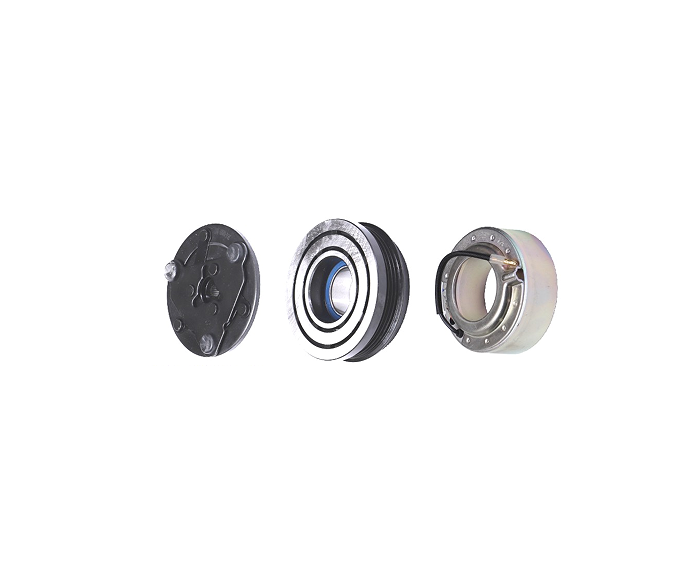
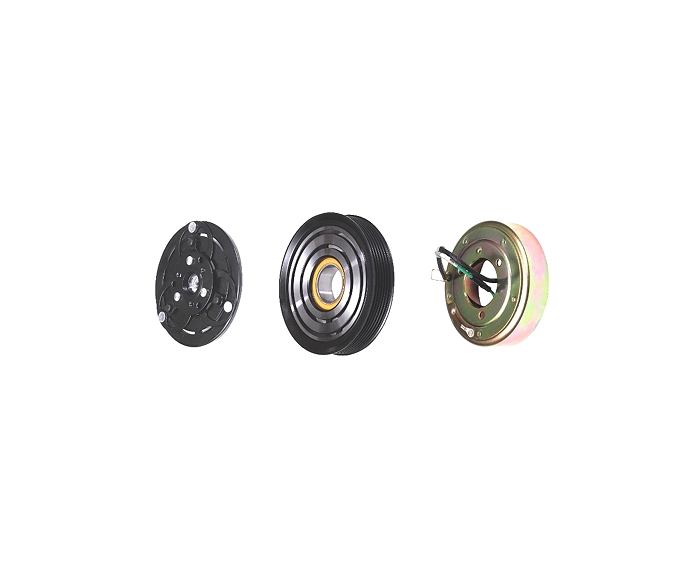
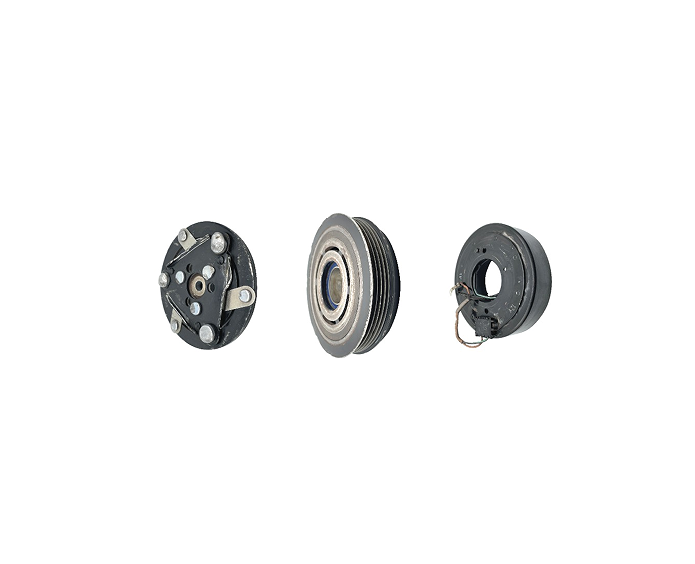
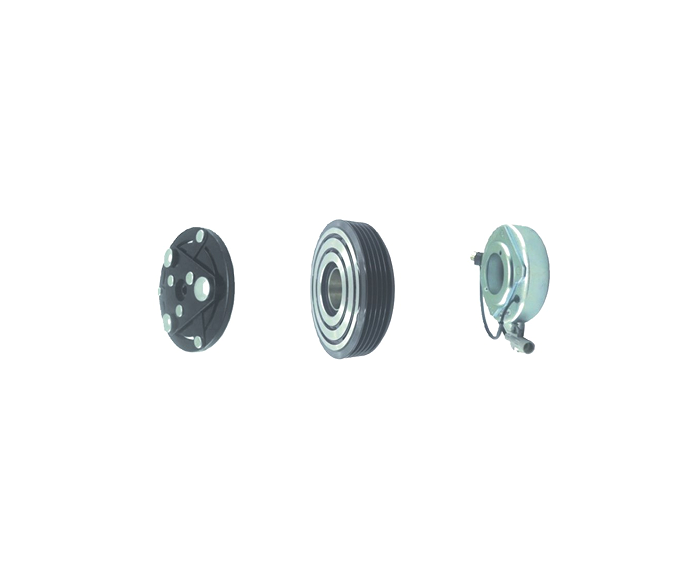
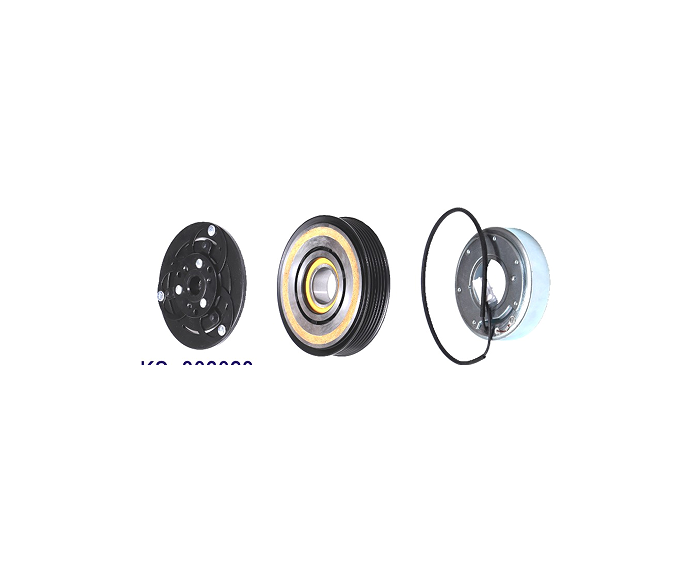
A typical compressor clutch area includes:
- Pulley
- Pulley bearing
- Electromagnetic coil
- Hub or armature plate
- Compressor shaft
- Retaining components
The bearing supports pulley rotation while helping maintain alignment between the pulley, belt, clutch, and compressor.
What This Guide Covers
This article focuses primarily on compressor clutch pulley bearings used in conventional belt-driven automotive AC systems.
It is not intended to imply that every internal bearing inside every compressor design is identical or independently serviceable.
Electric compressors also use a fundamentally different drive architecture and should be evaluated according to their specific compressor and vehicle design.
For buyers sourcing EV-related products, KASEN has a separate electric compressor range.
Why the Compressor Pulley Bearing Works Even When the AC Is Off
A common misconception is that a compressor bearing only works when the air conditioner is producing cold air.
In many clutch-driven systems, that is not the case.
When the AC Clutch Is Disengaged
The engine belt still rotates the pulley.
The pulley bearing allows this rotation while the compressor shaft itself is not being driven by the clutch.
When the AC Clutch Engages
The electromagnetic clutch connects the rotating pulley to the compressor shaft.
The bearing continues supporting pulley alignment and rotation while the compressor operates.
This explains why a damaged pulley bearing can produce noise even when the AC clutch is not actively engaged.
KASEN has also published a dedicated engineering article explaining how pulley bearings affect auto AC compressor clutch performance, which is useful for buyers who want deeper technical context.
Who Usually Buys AC Compressor Bearings in Bulk?
Different B2B customer groups have different purchasing priorities.
Automotive Parts Distributors
Typical concerns include:
- Broad compressor coverage
- Accurate dimensions
- Stable product codes
- Low return rates
- Repeat availability
Their biggest risk is buying several similar sizes and mixing them in inventory.
Importers and Wholesalers
They usually focus on:
- Landed cost
- Bulk availability
- Packaging
- Product identification
- Supplier consistency
For them, a small dimensional error multiplied across a large shipment can create significant dead stock.
Repair Networks
Repair businesses generally prioritize:
- Correct fit
- Smooth rotation
- Low noise
- Efficient installation
- Reliable replacement
Aftermarket Brands
Private-label customers may additionally require:
- Custom packaging
- SKU labels
- Cross-reference information
- Barcode requirements
- Stable repeat production
Fleet Maintenance Suppliers
Fleet-oriented buyers typically prefer a narrower range of confirmed bearing references linked to the exact compressors used across their fleet.
What Specifications Should Buyers Confirm Before Ordering?
An AC compressor bearing should never be ordered simply because it “looks the same.”
A professional RFQ should define the bearing and its application as clearly as possible.
AC Compressor Bearing Specification Checklist
| Specification | Why It Matters |
|---|---|
| Inner Diameter (ID) | Determines shaft/nose fit |
| Outer Diameter (OD) | Determines pulley housing fit |
| Width | Controls axial fitment |
| Compressor Model | Identifies compressor family |
| Pulley Application | Confirms clutch/pulley use |
| Bearing Structure | Determines product construction |
| Seal Configuration | Influences contamination protection |
| OE / Cross Reference | Supports replacement matching |
| Vehicle Application | Helps verify use |
| Product Photo | Supports visual confirmation |
| Physical Sample | Useful for uncertain references |
| Quantity | Supports quotation and supply planning |
| Packaging | Important for wholesale/private label |
Why ID, OD, and Width Are Not Enough
Three dimensions are essential, but professional buyers should not stop there.
Two bearings may share similar dimensions while differing in:
- Internal design
- Seal configuration
- Clearance
- Load capability
- Speed suitability
- Manufacturing tolerance
The safest purchasing method combines bearing dimensions with compressor or pulley application information.
Compressor Model Is Often More Valuable Than Vehicle Name
A request such as:
“I need a Toyota AC compressor bearing”
is usually too broad for professional sourcing.
The same vehicle brand can use different compressor families.
A stronger inquiry provides:
- Compressor manufacturer/model
- OE reference
- Pulley dimensions
- Bearing dimensions
- Vehicle application
- Photos of the original component
Why This Reduces Wrong Orders
The bearing belongs to a compressor and pulley system.
Therefore, identifying the actual compressor assembly often provides better matching information than relying only on the vehicle name.
This is particularly important for distributors carrying parts across many vehicle brands.
Sealed Bearing Design and Contamination Control
Compressor pulley bearings operate in an automotive environment where they may be exposed to:
- Dust
- Moisture
- Road contamination
- Heat
- Vibration
Protection against contamination therefore matters.
Bearing manufacturer NSK identifies contamination, poor lubrication, incorrect mounting, unsuitable clearance, and excessive load among the possible causes of premature bearing damage.
For automotive buyers, the commercial implication is straightforward:
bearing performance depends not only on the bearing itself, but also on correct selection, installation, sealing, and operating conditions.
This is why warranty investigation should avoid automatically treating every noisy bearing as a manufacturing defect.
Common Signs of AC Compressor Bearing Problems
Understanding typical symptoms helps distributors communicate more effectively with repair customers.
Bearing Noise
Possible complaints include:
- Grinding noise
- Humming
- Rough rotation
- Metallic noise
Noise can indicate bearing damage, but it should be diagnosed rather than assumed.
NSK notes that abnormal bearing noise can be associated with factors including poor lubrication, foreign matter, improper clearance, mounting conditions, and damage to rolling surfaces.
Pulley Vibration
Excessive bearing wear or poor fit may contribute to pulley instability.
This can affect:
- Belt tracking
- Clutch alignment
- Noise
- Adjacent component wear
Excessive Heat
Abnormal bearing temperature may result from conditions such as inappropriate clearance, excessive load, lubrication problems, or incorrect mounting.
Rough Manual Rotation
A bearing that feels rough, catches, or produces unusual noise during inspection may require further evaluation.
However, technicians should inspect the complete pulley and clutch system before concluding that the bearing is the only failed component.
What Commonly Causes Premature Bearing Failure?
For B2B buyers, understanding failure causes is important because it improves supplier evaluation and warranty decisions.
Incorrect Installation
Improper mounting can damage raceways or create misalignment.
Bearing manufacturers recommend appropriate tools, correct centering, and avoiding damaging impact loads during installation.
Contamination
Dirt or foreign material entering the bearing can damage rolling surfaces and increase wear.
Incorrect Fit
Improper shaft or housing fit can affect bearing alignment and operating clearance.
Excessive Load
Incorrect belt conditions or application mismatch can place abnormal load on the bearing.
Heat
High operating temperatures can affect lubrication and accelerate damage.
Existing Pulley Damage
Replacing a bearing inside a damaged or distorted pulley may not solve the original problem.
This is why the replacement decision should include inspection of the pulley, clutch, and mounting condition.
AC Compressor Bearing vs Pulley Assembly vs Complete Clutch
One of the highest-value purchasing decisions is determining how much of the assembly should be replaced.
| Replacement Option | Best When | Main Advantage | Buyer Consideration |
| Bearing Only | Bearing failure is isolated | Lowest component cost | Requires skilled installation and exact fit |
| Pulley + Bearing | Pulley is worn or damaged | Reduces pulley-related risk | Higher cost than bearing alone |
| Complete Clutch Assembly | Multiple clutch components are worn | Easier matching and repair | Higher unit value |
| Complete Compressor | Internal compressor damage exists | Replaces complete compressor | Highest replacement cost |
Choose Bearing-Only Replacement When
It may make sense when:
- The pulley remains dimensionally sound
- The clutch components remain serviceable
- The compressor is functional
- The bearing is clearly identified as the failed part
- Proper installation capability is available
Choose a Pulley or Clutch Assembly When
A broader replacement may be more suitable if there is:
- Pulley wear
- Clutch plate damage
- Coil failure
- Multiple related component problems
- Uncertain fit after previous damage
Buyers can compare complete KASEN compressor clutch products when bearing-only repair is not the best option.
Choose a Complete Compressor When
Complete compressor replacement may be required when diagnosis identifies:
- Internal seizure
- Serious internal mechanical wear
- Housing damage
- Compressor leakage or other major internal problems
For those applications, review the KASEN auto AC compressor range.
Why Bearing-Only Price Comparisons Can Be Misleading
An inexpensive AC compressor bearing does not necessarily create the lowest repair cost.
The real B2B cost can include:
Unit cost + installation labor + returns + replacement freight + warranty handling + customer downtime
For example, saving a small amount on a bearing provides little value if poor fit or unstable rotation causes a workshop to remove the compressor clutch twice.
Compare Total Procurement Risk
| Supplier Factor | Low-Price-Only Purchase | Controlled B2B Purchase |
| Size verification | Basic | ID/OD/width + application |
| Compressor matching | Limited | Compressor/model reference |
| Sample approval | Optional | Confirmed before bulk |
| Noise/rotation check | Unclear | Defined |
| Product identification | Generic | Stable SKU/reference |
| Repeat order consistency | Uncertain | Controlled |
| After-sales traceability | Limited | Batch/reference based |
Professional distributors should therefore ask:
“What is the cost of a failed transaction?”
not only:
“What is the bearing price?”
What Should a Sample Approval Process Include?
A successful first sample should become the technical reference for future orders.
Dimensional Confirmation
Verify:
- Inner diameter
- Outer diameter
- Width
- Pulley fit
Rotation Check
Evaluate:
- Smoothness
- Abnormal resistance
- Unusual noise
Application Confirmation
Record:
- Compressor model
- Pulley application
- Vehicle reference where relevant
- Buyer SKU
Packaging Confirmation
For distributors, verify:
- Product label
- Part number
- Quantity per package
- Barcode if required
- Private-label details
Repeat-Order Reference
The approved sample should be connected to a stable product code so the buyer does not need to restart identification with every order.
What Quality Control Should Buyers Ask About?
The phrase “high-quality bearing” has little value unless the supplier can explain what is controlled.
Dimensional Inspection
Buyers should ask how key dimensions are verified.
Rotation and Noise
For pulley applications, smooth rotation and abnormal-noise screening are commercially important because noise is a common customer complaint.
Fit and Assembly Consistency
A bearing can meet its own dimensions but still create problems if the pulley or mating assembly is inconsistent.
Product Identification
Similar sizes must be clearly separated to prevent warehouse errors.
Batch Traceability
For repeat B2B purchasing, the supplier should be able to link complaints and repeat orders to the correct product reference or production batch.
These controls matter because your customer does not experience a bearing as a laboratory specification. They experience it as:
Does it fit? Is it quiet? Does it last? Can I reorder the same part?
How to Choose an AC Compressor Bearing Supplier
A high-conversion supplier decision usually comes down to five factors.
1. Automotive AC Specialization
A supplier working with compressor clutches, pulleys, compressors, and related AC parts is better positioned to understand application matching than a seller working only from generic bearing dimensions.
2. Matching Capability
A useful supplier should be able to evaluate information such as:
- Compressor model
- Bearing dimensions
- OE reference
- Product photos
- Pulley details
- Physical sample
3. Related Product Coverage
A distributor may sometimes discover that bearing-only replacement is not appropriate.
Working with a supplier that can also provide:
- Compressor clutch assemblies
- Compressors
- Valves
- Other AC components
can simplify replacement decisions.
KASEN's automotive AC products include bearings alongside compressors, clutches, electric compressors, and valves.
4. OEM and Private-Label Support
Aftermarket brands may require:
- Customized labels
- Packaging
- Buyer SKU
- Barcode
- Bulk packaging
- Long-term repeat supply
5. Communication Before Quotation
A strong B2B supplier should ask for missing technical information rather than immediately quoting a visually similar bearing.
That extra verification can prevent a much larger problem after shipment.
What Information Should Buyers Send for an AC Compressor Bearing Quotation?
If you want a faster and more accurate quotation, prepare the following information before contacting a supplier.
RFQ Checklist
- Bearing inner diameter
- Bearing outer diameter
- Bearing width
- Compressor model
- Pulley/clutch application
- OE or cross-reference number
- Vehicle application if available
- Clear photos
- Existing bearing markings
- Physical sample availability
- Required quantity
- Packaging requirement
- Target market
- Private-label requirement
Best Practice
If you only know the vehicle model, send photos of:
- Compressor label
- Pulley
- Original bearing
- Clutch assembly
This gives the supplier more information to verify the correct product.
Buyers can send these details directly through the KASEN contact page.
OEM and Bulk AC Compressor Bearing Programs
For importers and aftermarket brands, a long-term bearing program should be more structured than a series of one-off quotations.
Build a Confirmed Cross-Reference List
Create records connecting:
Buyer SKU → bearing specification → compressor model → supplier reference
Lock the Approved Sample
Use the approved product as the reference for future orders.
Standardize Packaging
Define:
- Label content
- Barcode
- Quantity
- Brand information
Review Return Reasons
Track whether returns relate to:
- Wrong dimensions
- Wrong application
- Noise
- Installation
- Pulley damage
- Misidentification
This information helps both buyer and supplier improve future orders.
Why KASEN Is Relevant for AC Compressor Bearing Buyers
KASEN focuses on automotive air-conditioning components and supplies bearings alongside compressor clutches, compressors, electric compressors, valves, and related products.
For distributors and aftermarket buyers, this provides an advantage when a repair cannot be solved by an isolated bearing replacement.
For example, a customer may initially request a bearing but later discover that the pulley or clutch assembly is also damaged. Having related product categories available makes it easier to evaluate the correct replacement scope.
Buyers can:
- Browse KASEN bearing products
- Review auto AC compressor clutch products
- Explore auto AC compressors
- Learn more about KASEN
- Contact KASEN with dimensions, compressor models, photos, samples, quantities, or private-label requirements
For buyers still evaluating bearing performance rather than purchasing specifications, KASEN's technical guide on compressor pulley bearing performance provides complementary engineering information.
Frequently Asked Questions About AC Compressor Bearings
What is an AC compressor bearing?
In many belt-driven automotive AC applications, the term refers to the bearing inside the compressor clutch pulley that allows the pulley to rotate smoothly around the compressor nose or clutch structure.
Is an AC compressor bearing the same as a clutch bearing?
In many aftermarket contexts, “compressor bearing,” “compressor pulley bearing,” and “clutch bearing” can refer to the bearing used in the clutch pulley assembly. Buyers should still confirm the exact compressor application before ordering.
What dimensions are needed to order a compressor bearing?
At minimum, buyers commonly provide inner diameter, outer diameter, and width. Compressor model, pulley application, bearing markings, photos, and OE references improve matching accuracy.
Why does an AC compressor bearing make noise?
Possible causes can include wear, contamination, lubrication problems, incorrect fit, mounting problems, excessive load, or damage to adjacent components. The complete pulley and clutch system should be inspected before replacement.
Can I replace only the compressor bearing?
Yes, in some applications, if the bearing is the isolated failure and the pulley, clutch, and compressor remain serviceable. Proper tools and installation procedures are important.
Should I replace the bearing or the whole compressor clutch?
Bearing-only replacement can reduce component cost when the failure is isolated. A complete clutch assembly may be more practical when the pulley, coil, hub, or multiple clutch components are also worn.
How do I avoid ordering the wrong AC compressor bearing?
Do not rely on vehicle name or bearing appearance alone. Verify dimensions, compressor model, pulley application, bearing markings, OE references, and sample fit before bulk ordering.
What should distributors check before buying compressor bearings in bulk?
Confirm application matching, dimensions, product identification, rotation quality, sample consistency, packaging, repeat-order reference, and supplier after-sales processes.
Can KASEN support private-label or bulk bearing requirements?
KASEN can evaluate B2B automotive AC sourcing requirements including product matching, bulk purchasing, packaging, and OEM-related requirements. Specific customization should be confirmed according to the target product and order.
How can I get an accurate AC compressor bearing quotation?
Send the bearing dimensions, compressor model, markings, clear photos, target quantity, and packaging requirements through the KASEN contact page. If identification is uncertain, provide a physical sample or additional pulley/compressor information.
Conclusion
A reliable AC compressor bearing is inexpensive compared with many complete automotive AC components, but an incorrect bearing can create expensive fitment, noise, labor, warranty, and inventory problems.
For distributors, importers, repair networks, and aftermarket brands, the strongest purchasing process is to verify:
- Bearing ID, OD, and width
- Compressor and pulley application
- Product markings and cross-reference
- Smooth rotation and noise performance
- Sample fitment
- Packaging and identification
- Repeat-order consistency
Buyers should also decide whether bearing-only replacement is commercially and technically appropriate or whether a pulley assembly, compressor clutch, or complete compressor provides a lower-risk repair solution.
KASEN supplies automotive AC bearings together with compressor clutches, compressors, electric compressors, valves, and related components, helping buyers source the replacement scope that fits their actual market requirements.
Browse the KASEN bearing range or contact KASEN with your bearing dimensions, compressor model, OE reference, photos, sample, quantities, and packaging requirements for product matching and quotation.