

Car AC Compressor Valve Assemblies for Application Review
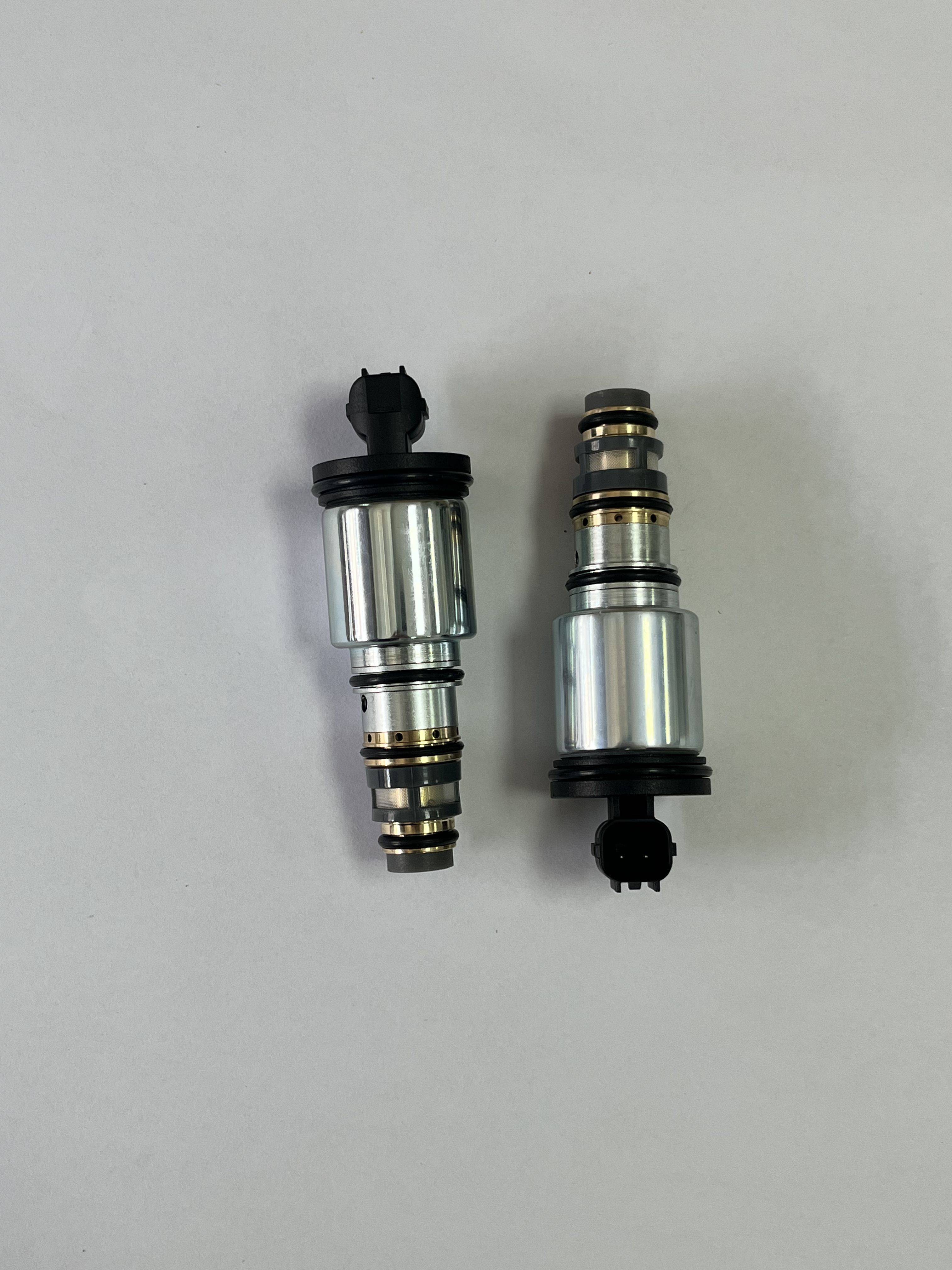
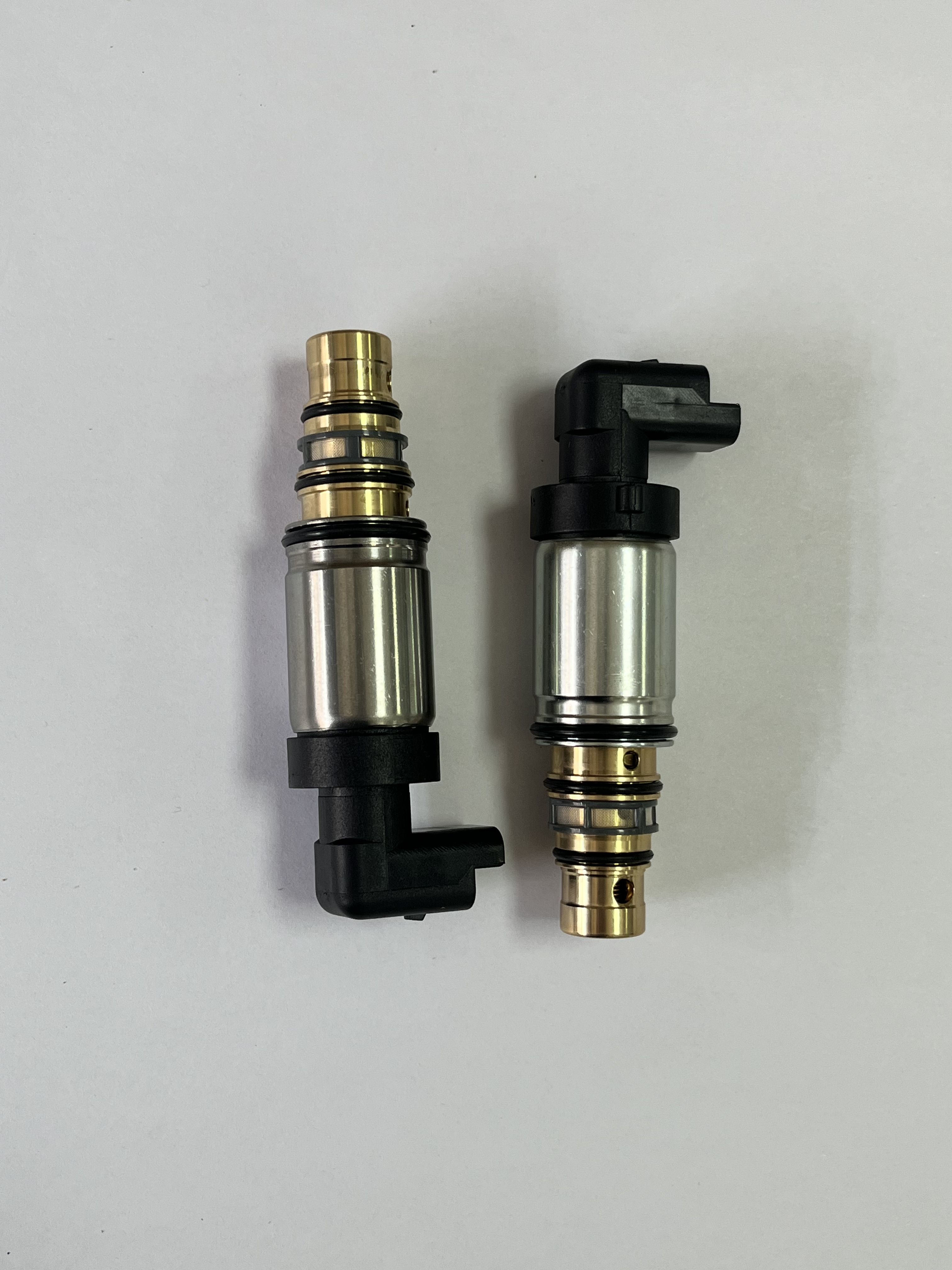
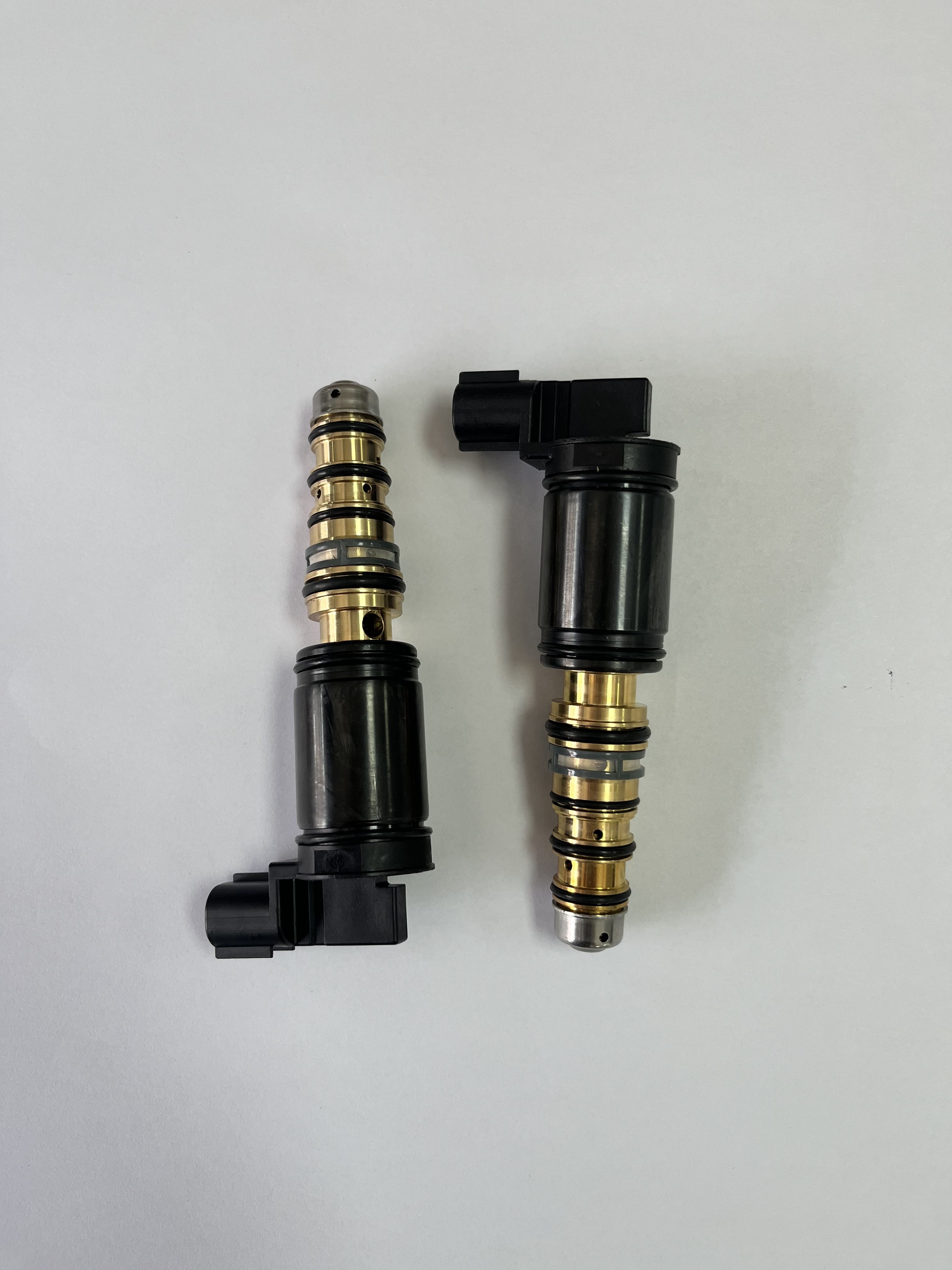
A car AC compressor valve can help regulate refrigerant flow and compressor operation when its geometry, electrical characteristics, sealing system, and pressure range match the vehicle’s air-conditioning circuit. The pictured components are two cylindrical, solenoid-operated cartridge valve assemblies that may be relevant to an automotive AC valve program, but the image alone does not confirm automotive use. Their likely buyer problem is the need to replace or source a compact electrically actuated valve that installs into a manifold or compressor-related control block while maintaining fluid sealing in a confined space.
Because no markings, dimensions, wiring, or test data are visible, these parts should be treated as reference assemblies rather than confirmed drop-in car AC spare parts. A supplier should verify the fluid, system pressure, coil specification, valve function, and mating bore before approving them for a vehicle air-conditioning application.
Product Overview
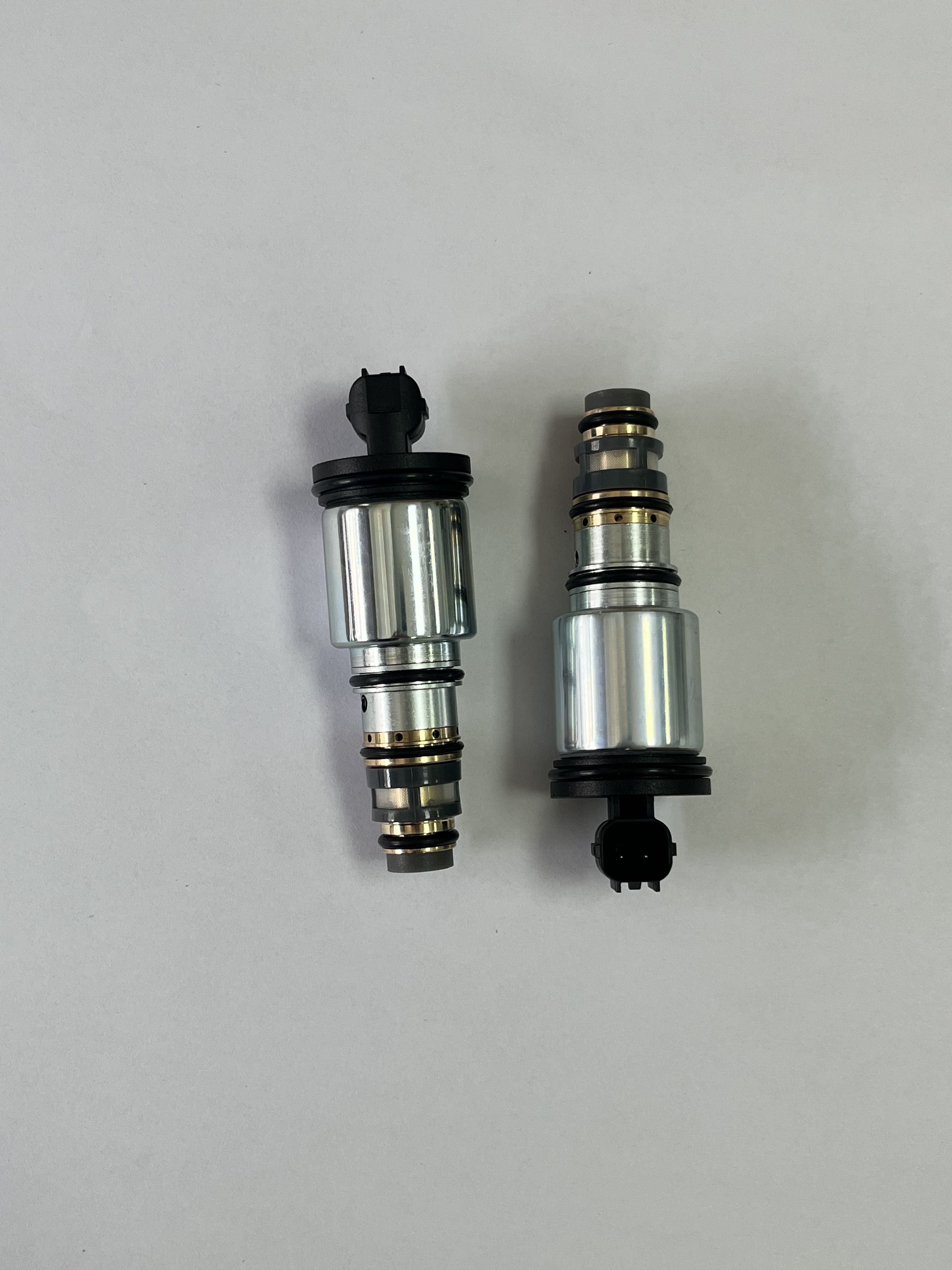
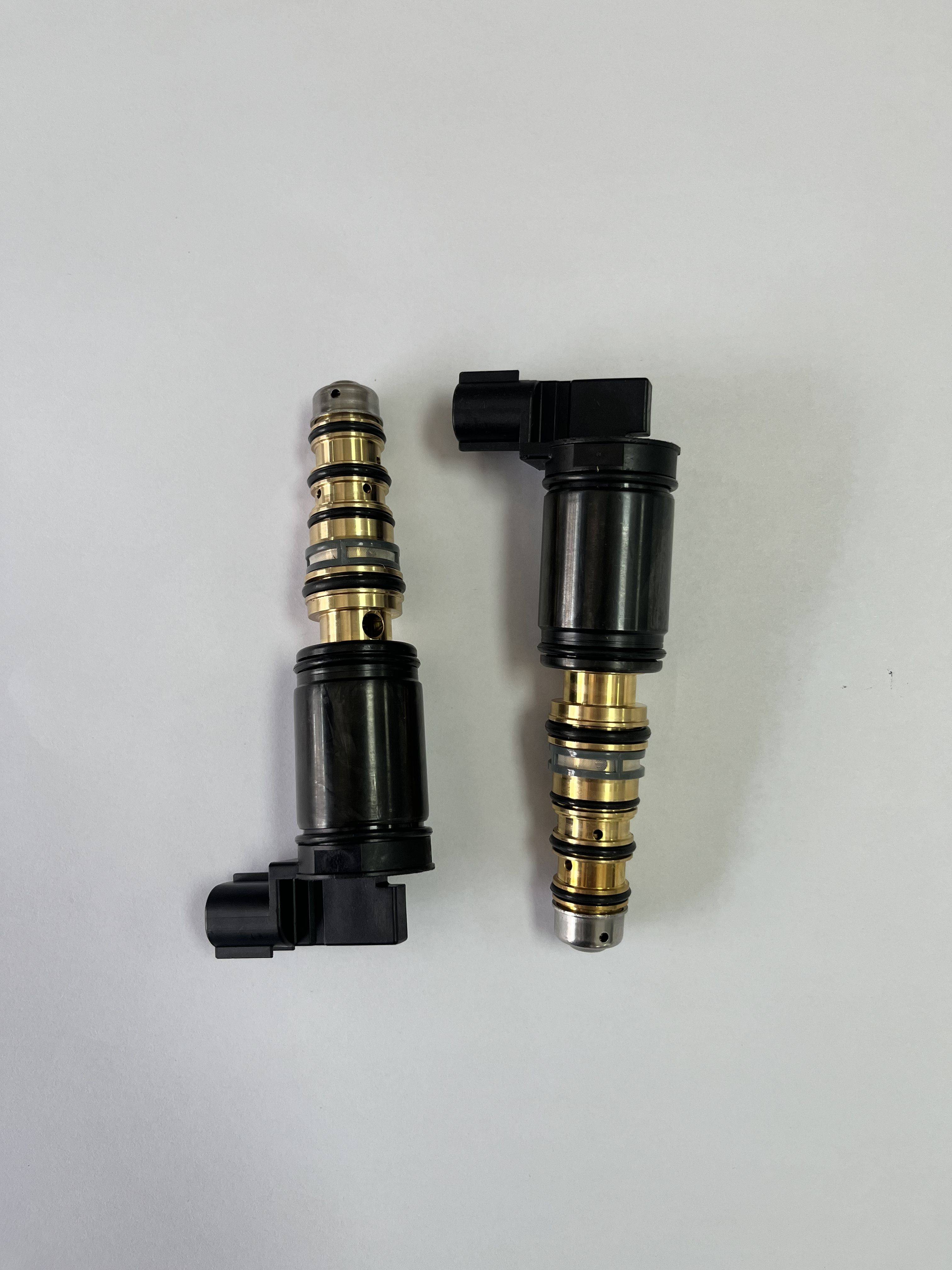
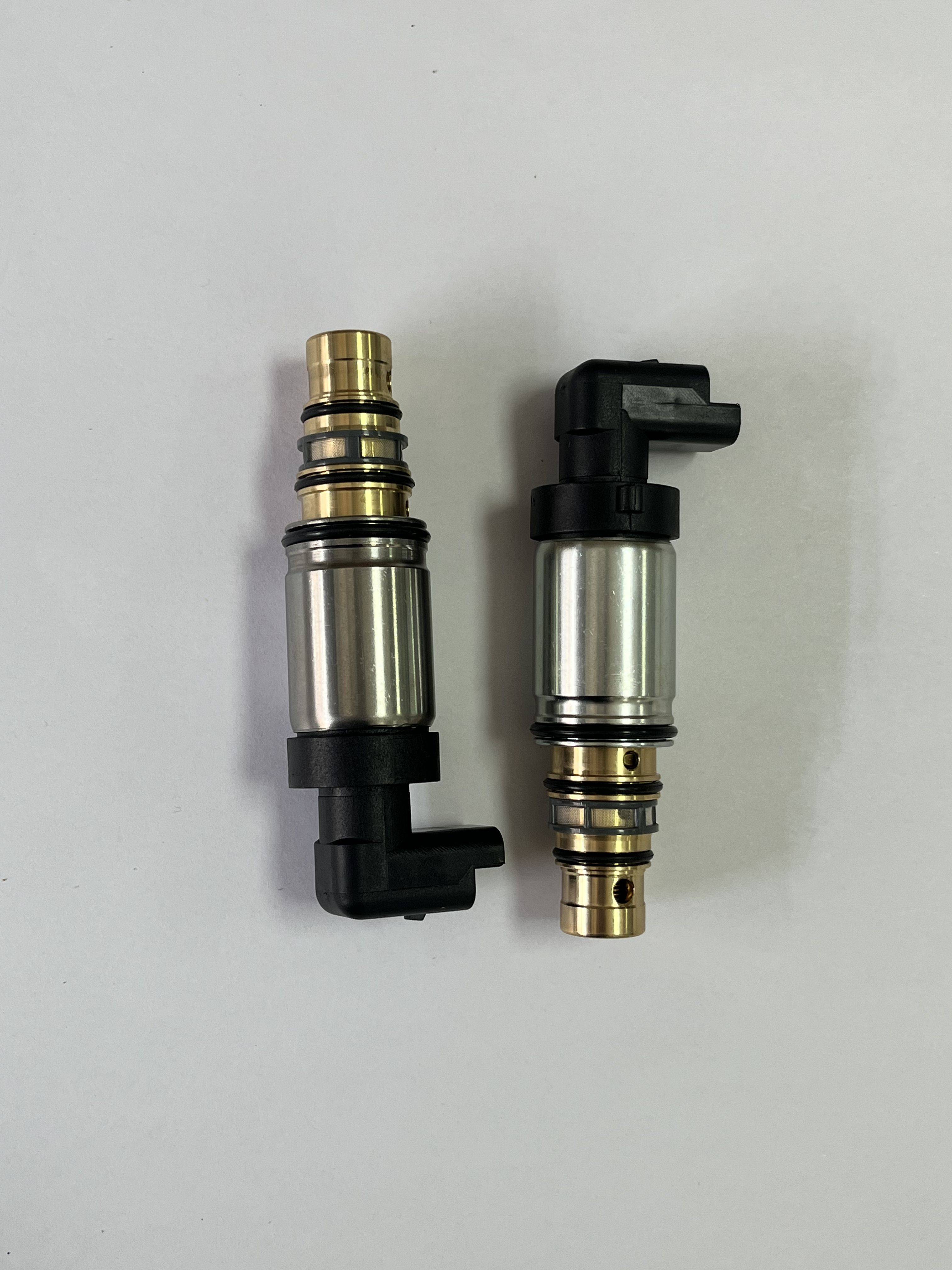
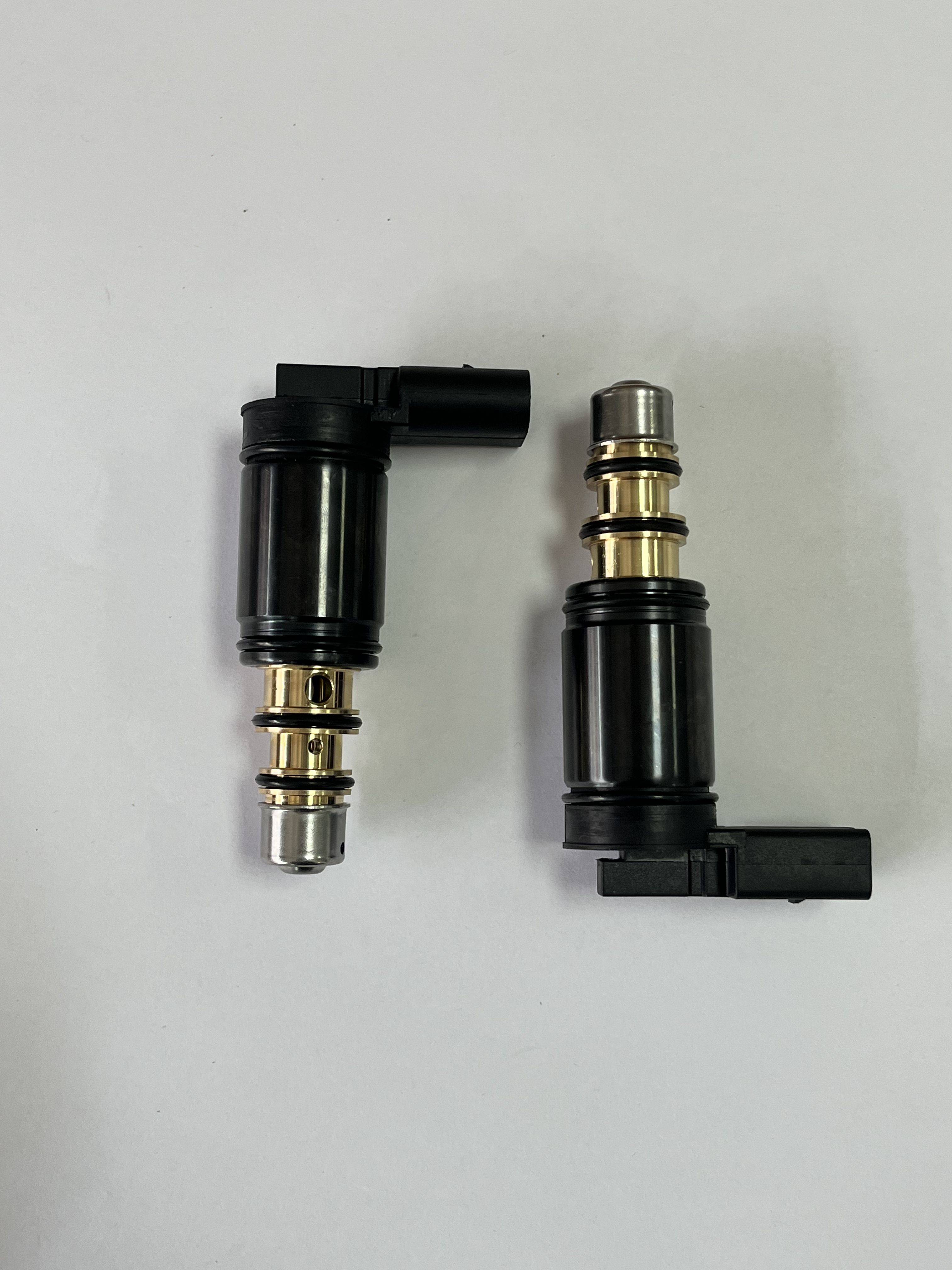
The visible products consist of brass-colored machined cartridges combined with black molded electrical actuator housings. The two assemblies are not identical: one appears to have a longer cartridge and solenoid housing, while the other has a shorter cartridge and a more compact actuator arrangement. This difference may indicate separate circuit functions, installation depths, flow paths, or manifold configurations.
Several stepped diameters, shoulders, grooves, and radial openings can be seen on the brass sections. These features are consistent with a cartridge designed to enter a precision-machined manifold bore. Multiple black elastomer O-rings are installed around the cartridge bodies, suggesting that sealing occurs between the valve and the surrounding valve block rather than through external threaded ports.
Visible Specifications and Capabilities
- Cylindrical cartridge format intended, or likely intended, for manifold installation.
- Solenoid-operated actuation suggested by the black upper housings and connector-like molded features.
- Machined shoulders, grooves, and radial holes that may support fluid routing or internal valve movement.
- Multiple O-ring locations for sealing against a mating bore.
- Two visible body configurations for possible differences in installation length or circuit design.
The image does not establish nominal dimensions, refrigerant compatibility, flow rate, pressure rating, leakage class, response time, operating temperature, coil voltage, current, connector standard, or duty cycle. It also does not confirm whether the actuator is an on/off design or a proportional compressor control solenoid. These values must come from a drawing, sample inspection, or supplier specification sheet.
Materials and Finish Options
The cartridge bodies appear to be brass-colored and have smooth, reflective machined surfaces. The exact brass alloy, surface treatment, and corrosion protection are not visible. Depending on the application, buyers may request a defined copper alloy, protective plating, or another approved material, but the correct choice depends on the fluid, pressure, temperature, and environmental exposure.
The upper sections appear to use molded black polymer around an electromagnetic coil and actuator mechanism. The polymer grade, coil encapsulation method, connector material, and insulation system remain unconfirmed. O-rings are visible, but their elastomer compound, hardness, temperature range, and compatibility with refrigerant or hydraulic fluid have not been identified. For an automotive compressor application, seal and material compatibility should be reviewed together with refrigerant, lubricant, moisture, and thermal-cycle requirements.
Likely Manufacturing Process
The brass cartridges are likely produced by CNC turning or another precision machining process. Secondary operations may include drilling radial holes, forming grooves, deburring, cleaning, and dimensional inspection. The concentric stepped geometry and visible cross-holes support this interpretation, although the exact process sequence requires supplier confirmation.
The black actuator sections are likely injection-molded polymer components assembled around an electromagnetic coil and moving actuator mechanism. Final assembly may include O-ring installation, coil connection, cleanliness control, and functional inspection. If the parts are intended for direct insertion into a manifold, bore fit and surface condition are important because small damage, contamination, or incorrect seal positioning can affect leakage and actuation.
Application Scenarios
Potential uses include compressor control systems, compact fluid-control manifolds, mobile equipment, industrial automation, process machinery, machine tools, and replacement valve assemblies. In vehicle air-conditioning systems, a compatible air conditioning compressor control valve may regulate compressor displacement or another refrigerant control function, but that application cannot be confirmed from the visible construction alone.
The assemblies may also suit hydraulic or pneumatic equipment if their internal design and material selection support those media. The image does not identify the working fluid. Buyers should not assume that a general solenoid cartridge is suitable for refrigerant service, hydraulic oil, compressed air, or a particular vehicle platform without engineering validation.
Quality Control and Inspection Points
A practical inspection plan should cover cartridge dimensions, groove geometry, radial-hole position, surface condition, O-ring presence, and actuator assembly. Functional checks may include electrical continuity, coil resistance, actuation at the specified voltage, flow direction, and leakage in the intended manifold or test fixture. Pressure and temperature testing should be defined by the final application rather than assumed from the photograph.
For an automotive AC valve project, request documented verification of refrigerant and lubricant compatibility, pressure performance, sealing behavior, thermal cycling, electrical durability, and cleanliness requirements. No certification, test result, service-life figure, or leakage classification is supplied for these parts, so none should be treated as confirmed.
Customization Guidance
To develop a matching automotive AC valve or other cartridge assembly, provide a part drawing, sample component, manifold-bore dimensions, installation depth, fluid information, pressure range, temperature range, and required flow behavior. Electrical data should include coil voltage, current, connector type, duty cycle, and control strategy. O-ring requirements should identify the compound, hardness, and compatibility standard where applicable.
Manufacturers may then review cartridge diameter, shoulder locations, port geometry, groove design, actuator length, housing shape, and connector orientation. If two configurations are needed, separate part numbers and controlled drawings can help prevent installation errors during service or assembly.
Buyer Decision Factors
Before selecting a compressor pressure control valve, compare the complete interface rather than appearance alone. Key questions include whether the cartridge fits the existing bore, whether the radial ports align with the fluid circuit, whether the seal material is compatible, and whether the electrical connector and coil match the vehicle or control module. Confirming these details is more reliable than choosing by external size or brass finish.
For sourcing teams, request a dimensional drawing, material declaration, electrical specification, application limits, inspection method, and sample approval process. If the intended product is for vehicle air conditioning, clarify the exact compressor or valve-block model and verify the replacement procedure before placing a production order.
Request a Technical Review
Share your existing valve, drawing, manifold interface, or application requirements for a technical review. The visible assemblies suggest a compact solenoid cartridge platform, but final suitability for a car AC compressor valve must be confirmed through dimensions, materials, electrical data, fluid compatibility, and performance testing. This approach helps buyers distinguish a true replacement from a visually similar but incompatible component.