
What a Replacement Automotive AC Compressor Must Match
A replacement automotive AC compressor must match the vehicle's compressor reference and installation conditions at the same time. The correct unit is not simply a compressor with a similar body or a product title that contains the right vehicle name. It needs to agree with the OE or OEM reference, mounting geometry, refrigerant-line ports, pulley or clutch arrangement, electrical connection, belt alignment, and the service requirements of the vehicle. For a buyer, the practical answer is straightforward: approve a replacement automotive AC compressor only when the supplier can connect the proposed part number to a documented fitment file, an inspected sample, and written commercial assumptions for the exact order.
This is a commercial investigation and RFQ question. Importers, aftermarket distributors, repair networks, fleet purchasing teams, and private-label brands are usually deciding whether a supplier can turn a list of compressor references into a repeatable supply program. They need more than a price. They need to know what is included in the assembly, which evidence supports the match, which details remain open, and how the same approved specification will be protected in the next shipment.
Guangzhou Kasen Auto Airconditioner CO:LTD presents itself as a Guangzhou-based manufacturer and exporter of automotive air-conditioning parts. For company identity and stated capabilities, review Kasen's About Us page. For the current compressor range, start with the auto AC compressor category and then verify each requested reference with the technical and sales team.
Who Should Use This Replacement Compressor Sourcing Guide
This guide is intended for buyers who need replacement compressors for more than one vehicle or who need a reliable answer before importing a new reference. It is useful for an aftermarket importer building a launch range, a distributor replacing an inconsistent source, a workshop group standardizing parts for recurring repairs, a fleet operator reducing downtime, and a private-label brand that needs a controlled carton and label program.
It is not a substitute for the vehicle manufacturer's service procedure. Refrigerant recovery, oil quantity, flushing, receiver-drier or accumulator replacement, evacuation, charging, and commissioning must follow the requirements for the vehicle and refrigerant circuit. Supplier qualification reduces sourcing and fitment risk before the part reaches the workshop; it does not authorize a shortcut around safe service practice.
Define the Replacement Scope Before Comparing Quotations
The phrase "replacement compressor" can describe different purchasing objects. One buyer may need a complete belt-driven compressor assembly. Another may need a compressor body without a clutch, a clutch and pulley repair set, or a replacement for a specific electric compressor. If the scope is not fixed before quotation, two suppliers can quote different assemblies and still appear to be competing on price.
Complete Compressor Assembly
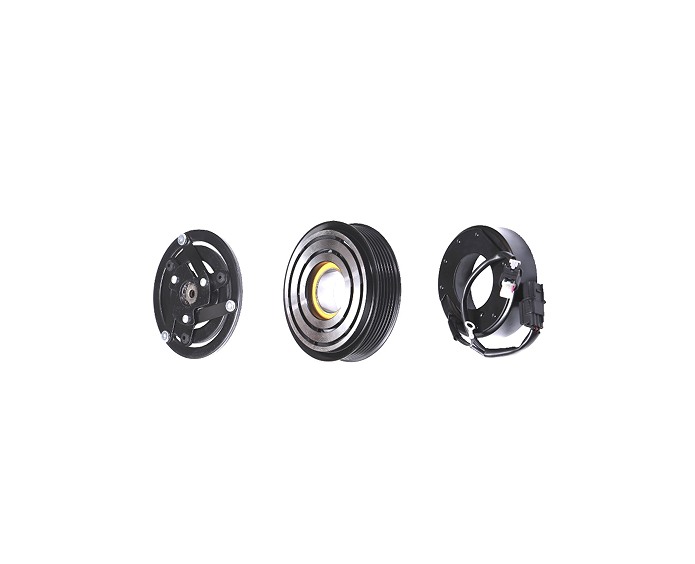
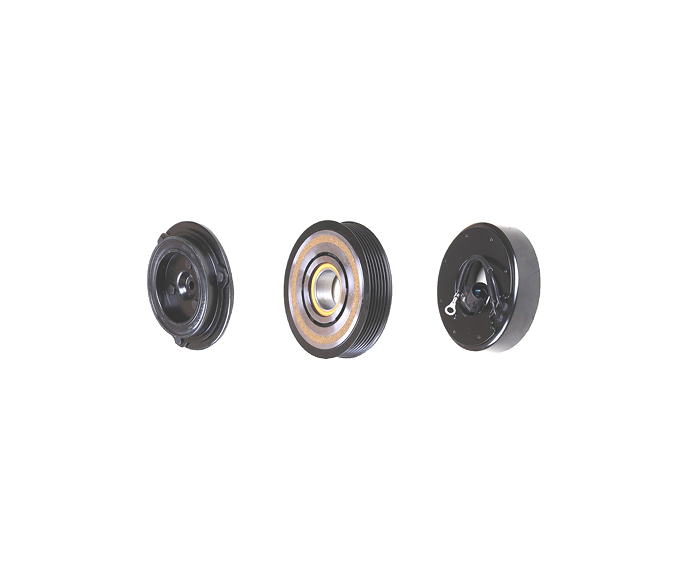
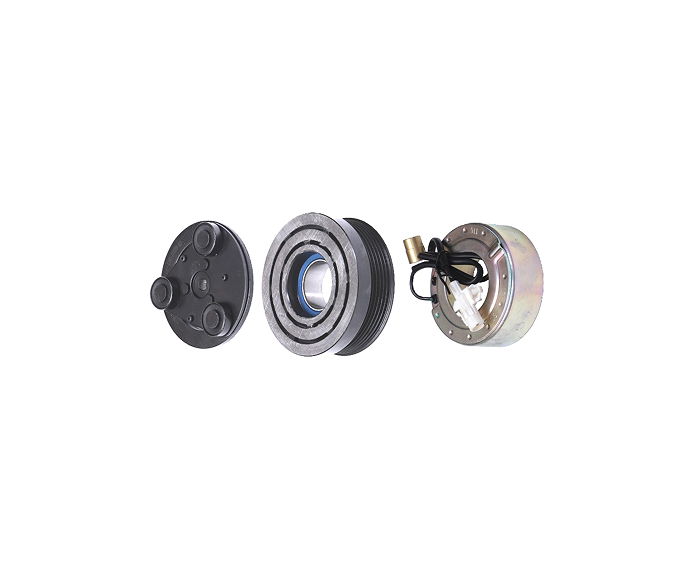
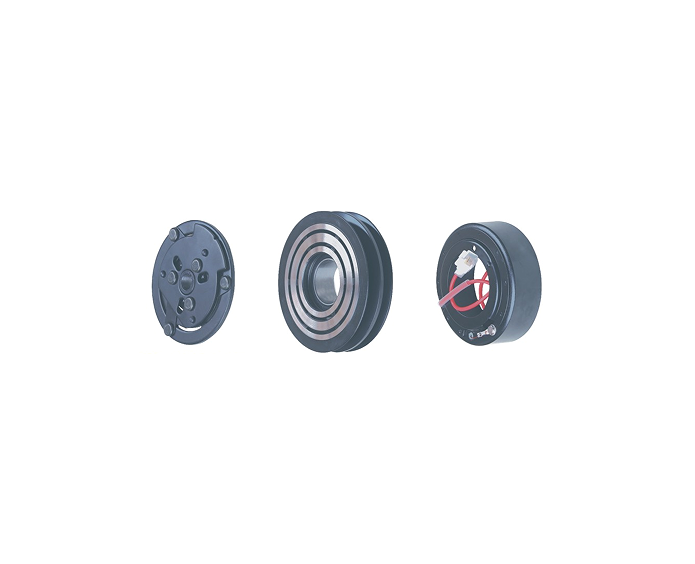
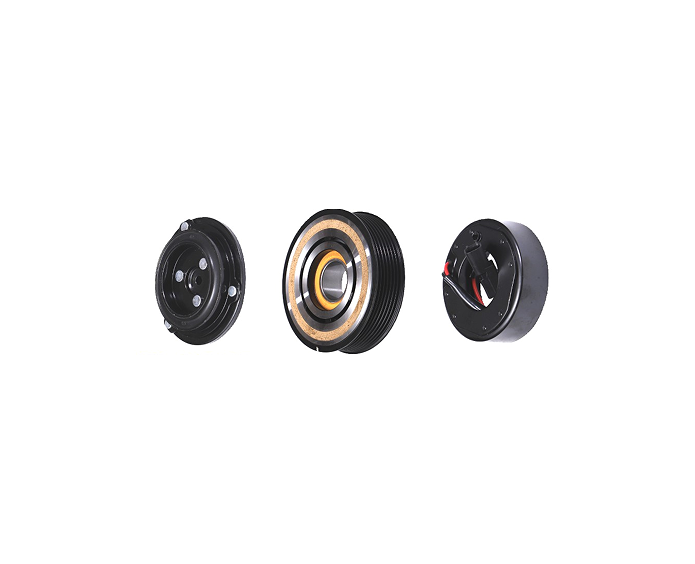
A complete belt-driven replacement normally includes the compressor body, shaft and drive section, pulley or clutch when applicable, ports, electrical connection, protective fittings, and the packaging required for shipment. The quotation should say whether the unit is supplied with a pulley, clutch, sensor, mounting hardware, oil, caps, or any other item that affects installation. "Complete" should be defined in the quotation, not assumed from a product photograph.
Compressor Body or Service Replacement
Some repair programs replace the compressor body while reusing an existing pulley, clutch, bracket, or control component. This can be valid for a documented repair route, but the buyer must confirm which parts are reused and which are supplied. A body that looks close to the old unit may still have a different shaft interface, port position, or mounting ear arrangement.
Clutch-Only or Related Component
A clutch, pulley, bearing, or coil is not the same commercial item as a replacement compressor. If a workshop is diagnosing a clutch fault while the compressor internals remain serviceable, a clutch-only solution may be more appropriate. Link the part decision to the failure mode and the approved repair procedure. Kasen's auto AC compressor clutch category is a useful comparison point when the requested repair is limited to the front drive assembly.
New, Remanufactured, or Used Supply
Ask the supplier to state whether the unit is new, remanufactured, or used, and which components are replaced or inspected. Do not let the word "OEM replacement" hide the condition of the product. The status affects warranty assumptions, traceability, packaging, and the inspection plan. If a supplier proposes an equivalent rather than an exact reference, record that difference before the sample is approved.
Build a Reference File From OE Number to Vehicle Evidence
A controlled replacement program begins with one row per requested compressor reference. Vehicle make and model are useful context, but they are not a complete fitment key. A vehicle family can contain different engines, production years, compressors, brackets, port layouts, belt systems, and refrigerant circuits. The supplier should return a proposed reference, the matching basis, missing information, and the evidence available for that row.
| Reference-file field | Why it matters | Buyer evidence to attach |
|---|---|---|
| OE or OEM number | Anchors the proposed replacement to a specific reference family | Label photograph, service record, or approved cross-reference |
| Compressor model | Connects the request to body, shaft, ports, and mounting layout | Old-unit label and clear front, rear, and side photographs |
| Vehicle and model year | Detects year or engine changes that can alter fitment | Vehicle record, fleet list, or catalogue reference |
| Engine and drive system | Helps distinguish belt-driven and electric configurations | Engine code, drive photograph, or vehicle specification |
| Port and connector layout | Prevents a similar-looking unit from failing at installation | Annotated port, connector, and line-connection photographs |
| Pulley or clutch data | Protects belt alignment and electrical compatibility | Rib count, diameter, connector view, and front-side photograph |
| Quantity and destination | Controls MOQ, packaging, documents, and freight assumptions | Opening order, annual forecast, country, and delivery point |
Ask the supplier to label the result as an exact match, an equivalent replacement, or a possible alternative. These descriptions have different risk levels. An exact match still needs a sample or documentary check for the commercial program. An equivalent replacement needs a written basis for the equivalence and buyer approval. A possible alternative should remain in technical review until the missing evidence is closed.
Verify Mechanical Fitment at Compressor Level
Fitment is a system of dimensions and interfaces. A buyer should review each interface separately rather than accepting a single "fits model X" statement. The following checks also create short, extractable answers for a sales or engineering team that must decide whether to request a sample.
Mounting Geometry and Bracket Orientation
Confirm the number and position of mounting ears, bolt-hole spacing, bracket orientation, body clearance, and the relationship between the compressor body and the accessory belt. A compressor can have a similar housing shape while using a different mounting pattern. Request a dimensional drawing or an annotated photograph when the OE number is incomplete or the application contains multiple compressor variants.
Refrigerant Ports and Line Connections
Check high-side and low-side port location, connection type, sealing surface, angle, and spacing. The replacement must allow the vehicle's lines to reach the ports without forcing a bend or changing the service connection. Protective caps should remain fitted during storage and transport, but a cap itself does not prove leak performance. The supplier should identify the inspection or sealing evidence available for the exact reference.
Pulley, Clutch, and Belt Alignment
For a belt-driven compressor, verify the pulley or clutch face, rib or groove count, outside diameter, belt line, offset, shaft interface, and rotation direction where applicable. A pulley that is one size or offset away from the approved reference can create belt noise, misalignment, or premature wear even when the compressor body bolts into place. If a clutch is included, record its connector, coil arrangement, and engagement requirements separately from the compressor body.
Electrical Connection and Control Interface
Confirm voltage, connector housing, wire exit direction, sensor or control lead, and the electrical function expected by the vehicle. A mechanically correct compressor can still fail as a replacement if its control connector or clutch circuit is different. Ask the supplier to mark the voltage as confirmed, pending, or not applicable rather than leaving an empty field to be filled by assumption.
Refrigerant and Oil Requirements
Ask the supplier to state the documented refrigerant and oil requirements for the proposed reference or to mark them as requiring buyer confirmation. Do not transfer an oil or refrigerant assumption from another vehicle because the housing looks similar. The workshop must follow the vehicle-specific service instruction, and the buyer should keep that requirement in the SKU file.
Kasen's public page for an auto AC compressor for vehicle air-conditioning repair describes a visible cast-aluminum-looking housing, machined mounting areas, a front serpentine pulley or clutch area, protected refrigerant ports, and an electrical connection. The same page states that exact make, model, displacement, and refrigerant information should be confirmed by part number, connector, port shape, and mounting pattern. That is the correct boundary for using a product page: visible construction and stated guidance can start the review, while fitment approval still requires the buyer's reference file.
Read Product Evidence Without Overclaiming
Product pages often combine visible features, supplier statements, and application language. A professional buyer should separate three evidence levels. First, visible evidence is what a photograph or drawing can show, such as a port cap, mounting ear, pulley shape, or connector. Second, stated product information includes an OE number, vehicle application, material description, or replacement positioning written on the page. Third, verification evidence includes a drawing revision, sample measurement, leak record, electrical check, functional test, or batch inspection document.
These levels should not be merged. A photograph can show that a port is capped, but it cannot prove leak performance. A product title can contain a vehicle reference, but it cannot prove every model-year variant. A visible aluminum housing can support a description of external construction, but it cannot establish an alloy grade, internal wear life, or universal refrigerant compatibility.
The current Kasen compressor category displays several application entries, including a compressor for vehicle air-conditioning repair, references associated with OEM numbers such as 88320-04060, and an application-specific Nissan X-Trail entry. These pages are useful starting points for an RFQ because they show how product references are organized. The buyer should still match the proposed unit to the old compressor label, ports, mounting points, drive arrangement, and vehicle information.
The Nissan X-Trail compressor page states that the housing uses a sand-cast aluminum alloy, that copper and steel windings are used in the described construction, and that precision-machined parts support the product's replacement positioning. Those are page-level claims for that reference. They should be confirmed against the quotation, sample, drawing, or inspection documents for the buyer's actual order and should not be generalized to every compressor in the catalogue.
Document Materials and Workmanship by Component
"Good quality" is not a purchasing specification. Ask material and workmanship questions by component so that the answer can be compared across suppliers and checked against the approved sample. When a material grade is confidential or not provided, request a controlled material description and the inspection criteria that protect fitment, sealing, and service function.
Housing and Machined Surfaces
Ask which material family is used for the housing, which mounting and sealing surfaces are machined, and how the supplier controls casting defects, burrs, surface damage, and dimensional variation. The buyer does not need a proprietary recipe to make a useful decision. The buyer needs a stable reference, a drawing or inspection range, and a method for identifying a deviation before shipment.
Shaft, Bearings, and Sealing Elements
Request the shaft interface, bearing reference or approved dimensional range, seal arrangement, lubrication information when applicable, and rotation checks. The answer should identify what is inspected on the incoming component and what is checked after assembly. A bearing label alone does not prove that the shaft, seal, and housing work together in the requested compressor.
Clutch and Pulley Components
Where the replacement includes a clutch, ask for the pulley groove or rib count, diameter, offset, bearing arrangement, coil or connector details, and any engagement check used for the reference. The clutch can be purchased separately from a compressor, so the quotation should state whether it is part of the assembly or an optional replacement component. For a clutch-only repair, the OE-number matching guide provides a useful internal reference for keeping the compressor and clutch decisions distinct.
Ports, Plugs, and Contamination Protection
Ask how the supplier protects refrigerant ports and sealing surfaces during storage and transport, how contamination is prevented before packaging, and how plugs or caps are checked. A clean cap is useful visible evidence of handling, but it does not replace a sealing or leak check. Include port protection in the sample approval and packaging inspection rather than treating it as a cosmetic detail.
Electrical and Control Parts
For a compressor with a clutch, sensor, or control valve, request the relevant voltage, continuity or resistance check, connector retention, wire protection, and inspection record. The supplier should identify the connection and compatibility basis instead of describing an electrical arrangement as universal. If the vehicle uses an electric compressor, create a separate high-voltage review; do not merge it with a belt-driven reference without a documented technical reason.
Approve a Sample Before Bulk Replacement Orders
Sample approval is the point where a catalogue description becomes a controlled purchasing reference. It is especially important when the part is new to the buyer, the supplier proposes an equivalent, the vehicle has more than one compressor option, the destination has high return costs, or the order will use a private-label carton.
Use a written sample checklist. Record the supplier part number, OE or OEM number, vehicle and year, package contents, mounting dimensions, port layout, pulley or clutch data, connector, visible materials, protective caps, labels, and any tests required by the buyer. Photograph the received sample from the same angles used in the RFQ. If the sample differs from the proposed drawing, stop the approval and ask for a corrected reference.
| Approval stage | Buyer action | Record to keep |
|---|---|---|
| Reference review | Compare part number, OE number, vehicle data, and package contents | Approved SKU row and open-question list |
| Dimensional review | Check mounting, ports, pulley or clutch, connector, and clearance points | Marked drawing and photographs |
| Service review | Confirm refrigerant, oil, installation, and workshop requirements | Service-note acknowledgement and test responsibility |
| Commercial review | Confirm MOQ, packaging, label, warranty route, and delivery assumptions | Quotation revision and packaging approval |
| Release review | Freeze the approved reference before production | Signed sample approval and change-control rule |
A sample is not only a physical object. It is the approved combination of part number, configuration, evidence, packaging, and commercial assumptions. A supplier change to a pulley, bearing, connector, port cap, or carton should be communicated and re-approved when it affects the fitment or warehouse identity of the SKU.
Compare Replacement Supply Options by Risk
Replacement buyers often compare new, remanufactured, used, or component-level solutions. The best choice depends on the customer's service requirement, return exposure, documentation, and ability to inspect. Avoid a generic claim that one option is always better.
| Supply option | Questions to ask | Main purchasing risk |
|---|---|---|
| New replacement compressor | What reference, configuration, materials, tests, and package contents are approved? | A new unit can still be wrong if the reference or ports do not match |
| Remanufactured compressor | Which parts are replaced, measured, tested, and traceable? | Condition and process can vary between sources or batches |
| Used compressor | What is the known history, storage condition, leak status, and return route? | Unknown wear, contamination, and inconsistent availability |
| Clutch or bearing repair | Is the compressor body still serviceable, and does the replacement match the shaft and drive? | A component repair may not address internal compressor failure |
| Equivalent alternative | What evidence supports equivalence, and who approves the deviation? | Vehicle, port, control, or warranty expectations may differ |
Keep the comparison tied to a specific SKU. "New" is a condition, not a fitment proof. "OEM replacement" describes a market position unless the supplier provides the evidence and authorization required for the buyer's claim. When a compressor has seized or contaminated the circuit, the repair plan may need additional service parts and procedures; the purchasing file should record those requirements rather than promising that one unit solves every failure.
Plan MOQ, Lead Time, and Packaging for Mixed SKUs
Aftermarket programs normally contain fast-moving references, seasonal items, and long-tail applications. That makes mixed-SKU planning more useful than one catalogue-wide MOQ. Ask for MOQ by reference and for the rule that allows different compressors to be combined in an order. The answer can change for neutral packaging, private-label cartons, barcode labels, special documents, new development, or sample-dependent references.
| Commercial field | Buyer should provide | Supplier should return |
|---|---|---|
| SKU mix | Reference list, opening quantity, annual forecast, and priority SKUs | MOQ per SKU and mixed-model rule |
| Sample program | Sample count, approval date, and test responsibility | Availability, cost, dispatch date, and evidence package |
| Production window | Required delivery window and destination | Production, inspection, packing, and shipping-handoff assumptions |
| Repeat orders | Expected reorder frequency and seasonal demand | Capacity assumptions and change-notification process |
| Private label | Artwork, carton, label, barcode, and language requirements | Approval sequence, cost assumptions, and carton quantity |
| Export documents | Invoice, packing list, origin, inspection, and market requirements | Available documents and quotation conditions |
Lead time should be divided into sample preparation, drawing or label approval, production, inspection, packing, and shipping handoff. A single number without assumptions can create a dispute when a buyer expects the clock to begin before the reference or artwork is approved. Ask the supplier to identify which SKUs are existing production items, which require sample confirmation, and which require development so one new reference does not delay all established items.
Packaging deserves its own approval. A compressor has machined surfaces, ports, pulley or clutch components, connectors, and protective fittings that can be damaged or contaminated during handling. Confirm internal support, port protection, carton quantity, label position, barcode format, pallet rules, and any destination-specific moisture or corrosion requirement. The custom packaging guide can support the planning discussion, but the final carton and label must remain specific to the compressor references in the order.
Compare Suppliers by Responsibility and Evidence
A manufacturer may offer direct access to drawings, production, inspection, and change control. A trading company may consolidate references but must identify the actual factory and the document owner. A marketplace listing can make price comparison easy while the image, source, or batch changes. A local distributor may shorten delivery for established items but may not control customization or technical records. The buyer should ask the same questions of every supplier.
| Approval field | Pass condition | Status to record |
|---|---|---|
| Company identity | Legal entity, address, contact route, and responsible sales contact are clear | Website stated; verify commercial documents |
| Reference match | OE number, compressor model, vehicle data, and photos point to the same unit | Complete, open, or rejected |
| Mounting and ports | Drawing or sample confirms mounting points, port layout, and connector | Complete, open, or rejected |
| Construction | Housing, shaft, bearing, seals, pulley, clutch, and protection are identified | Complete, open, or rejected |
| Testing | Applicable inspection or functional records are available for the reference | Complete, open, or rejected |
| Batch control | Lot or batch identification can be traced to the approved specification | Complete, open, or rejected |
| MOQ and lead time | Values are quoted for the exact mixed-SKU program with assumptions | Sales confirmation required |
| Packaging | Port protection, carton, label, quantity, and destination rules are approved | Complete, open, or rejected |
| Claims response | Fitment questions, defects, and replacement responsibilities are written | Commercial confirmation required |
If a high-risk field is open, keep the supplier in technical review. This is particularly important for a private-label launch, a fleet program with high downtime costs, or a market where international returns are expensive. A low price should not be allowed to close an unresolved fitment or traceability question.
Prepare an RFQ That Produces a Technical Answer
A message that says only "Please quote replacement automotive AC compressor" usually produces a catalogue reply. A structured RFQ gives the supplier enough information to return a matching response and makes quotations comparable.
- List every OE or OEM number and the compressor reference requested.
- State vehicle make, model, year, engine, market, and belt-driven or electric configuration when available.
- Attach photographs of the old unit: label, mounting side, pulley or clutch, ports, connector, and overall orientation.
- State whether the request is for a complete compressor, a compressor body, or a component repair.
- Provide opening quantity, annual forecast, destination, carton, label, barcode, and private-label requirements.
- Ask the supplier to return proposed part number, matching basis, open questions, sample plan, material notes, tests, MOQ, lead time, documents, and quotation assumptions.
- Ask the supplier to distinguish existing production references from new-development or sample-dependent references.
Kasen's message page provides a contact form for name, company, email, and phone or WhatsApp details and states that buyers can request a quote. Send the reference file rather than a product name alone. The contact page lists the Guangzhou address, telephone number, WhatsApp route, and company email addresses for keeping the RFQ connected to a responsible communication channel.
How Kasen's Public Product Range Fits the Review
Kasen's public website presents Guangzhou Kasen Auto Airconditioner CO:LTD as a Guangzhou-based manufacturer and exporter of automotive air-conditioning products. The visible product scope includes traditional auto AC compressors, compressor clutches, electric compressors, control or expansion valves, bearings, coils, hubs, and service equipment. The company information also describes global aftermarket supply, OEM customization, and matching by OEM number, drawing, sample, or photograph.
The compressor category contains application entries for vehicle air-conditioning repair and model-specific replacement references. That gives an importer a practical starting point for a mixed-SKU enquiry. The category should be used as a navigation source, not as a guarantee of current stock, universal compatibility, fixed MOQ, fixed lead time, or a complete test record for every displayed item.
For a buyer, the productive next step is to select the exact reference and send the compressor label, old-unit photographs, port and mounting views, quantity, destination, and packaging requirements. The supplier can then identify what is confirmed, what needs a sample, and what must be verified by the workshop. This keeps the public catalogue, technical approval, and commercial quotation connected without turning general company information into a model-specific promise.
Frequently Asked Questions About Replacement Automotive AC Compressors
What is the first detail to provide when sourcing a replacement automotive AC compressor?
Start with the OE or OEM number and a clear photograph of the old compressor label. Add the vehicle make, model, year, engine information when available, and photographs of the mounting points, ports, pulley or clutch, connector, and overall orientation. The more complete the reference file, the less likely a visually similar but incompatible unit will be quoted.
Can a replacement compressor be selected by vehicle model alone?
Usually not. One vehicle family can use different engines, compressor models, port layouts, brackets, drive systems, and production-year variants. Vehicle data is useful context, but the compressor reference, old-unit label, mounting pattern, port arrangement, and connector should be checked before approval.
What should "complete compressor" mean in a quotation?
The quotation should list the body, shaft and drive section, pulley or clutch, ports, connector, protective caps, mounting hardware, oil or other included items, and packaging. If a component is optional or reused from the old unit, state that explicitly. The word "complete" should never be left to a product photograph.
What is the difference between an exact match and an equivalent replacement?
An exact match is proposed against a specific reference and still needs evidence for the buyer's program. An equivalent replacement is a deviation that needs a stated technical basis and buyer approval. A possible alternative remains in review until the missing dimensions, interfaces, or service evidence are closed.
Which material information should a buyer request?
Request component-level information for the housing, machined surfaces, shaft, bearings, seals, pulley or clutch, ports, connectors, and protective finish. If a grade is not disclosed, ask for a controlled material description and the inspection criteria that protect fitment and sealing. Do not turn a visible metal surface into an unsupported alloy or durability claim.
What tests are relevant before approving a replacement compressor?
The applicable tests depend on the design and buyer requirement. Possible records include dimensional inspection, mounting and port verification, sealing or leak checks, rotation checks, electrical continuity or resistance checks, and final visual and packaging inspection. Ask the supplier which checks are performed for the exact reference and which require buyer-side confirmation.
Should MOQ be published as one number for the whole compressor range?
No. MOQ can change by reference, production status, component availability, mixed-SKU basket, private-label packaging, and development requirement. Ask for MOQ per SKU and the rule for combining models in one order. Keep the quoted value tied to the destination and packaging assumptions.
How should lead time be confirmed?
Ask the supplier to separate sample preparation, drawing or label approval, production, inspection, packing, and shipping handoff. A single number without assumptions is difficult to manage because the production clock may not start until technical and packaging approvals are complete.
What packaging details matter for imported compressors?
Confirm port protection, internal support, pulley or clutch protection, carton quantity, label and barcode position, batch identification, pallet rules, and destination requirements. Packaging should protect machined and sealed areas and allow warehouse staff to identify the SKU without opening every carton.
Conclusion
Choosing a replacement automotive AC compressor is a fitment and supply-control decision. The correct supplier is not merely the one with the most product thumbnails or the lowest first quote. It is the supplier that can connect the compressor reference to mounting and port evidence, identify the configuration and materials, provide applicable inspection records, approve a sample, quote MOQ and lead time for the actual SKU basket, protect the unit in export packaging, and respond when a fitment question remains open.
Start with a structured reference file and RFQ. Provide the OE or OEM number, compressor model, vehicle and year, old-unit photographs, ports, mounting details, quantity, destination, packaging, and document requirements. Approve a sample when evidence is incomplete, freeze the approved reference before bulk production, and compare repeat shipments against the same specification.
To review available replacement compressor references, visit the Kasen auto AC compressor category. To request a reference-specific quotation, send the SKU file and photographs through the Kasen message form so fitment, evidence, packaging, MOQ, and delivery assumptions can be evaluated together.