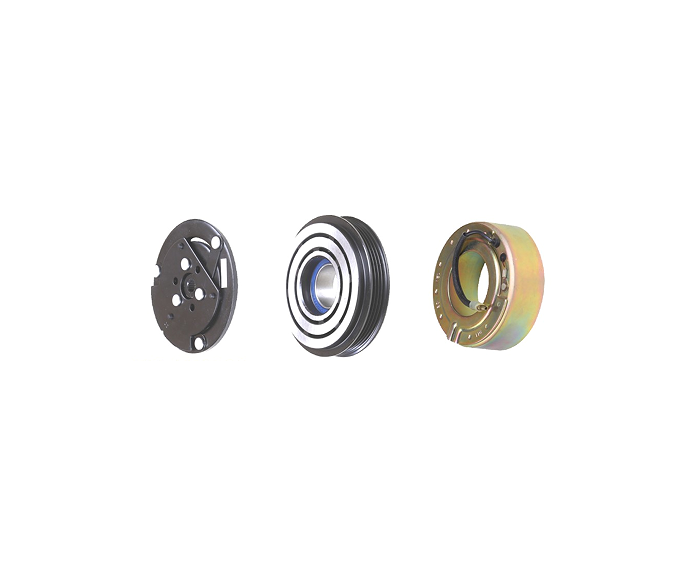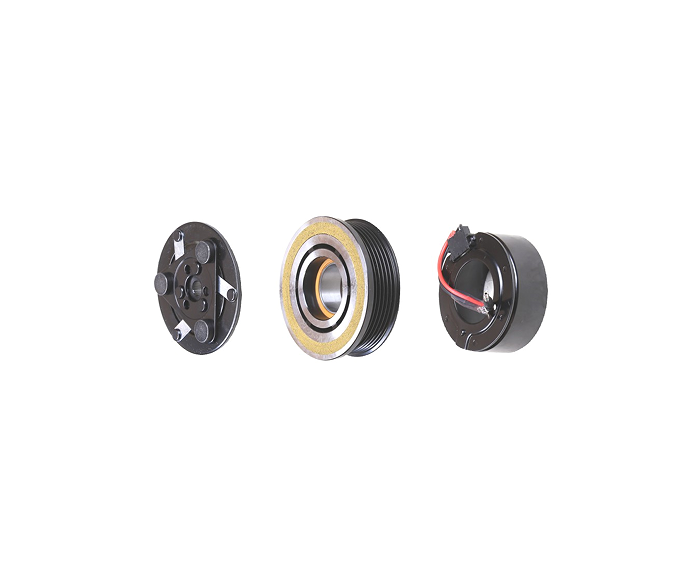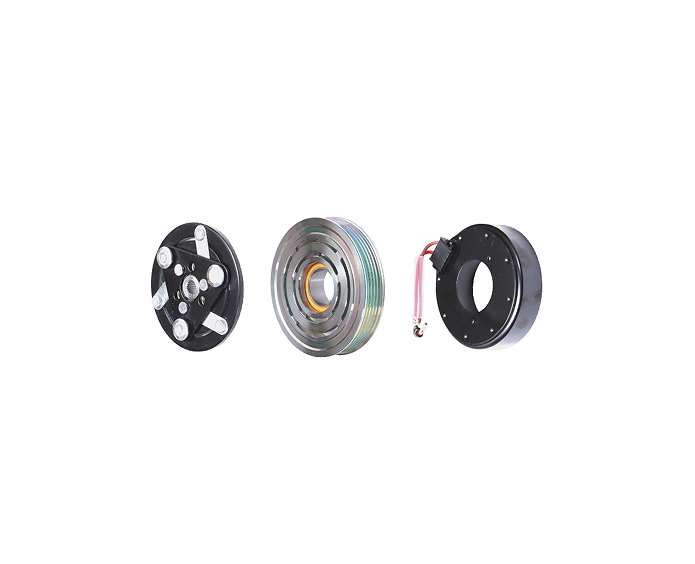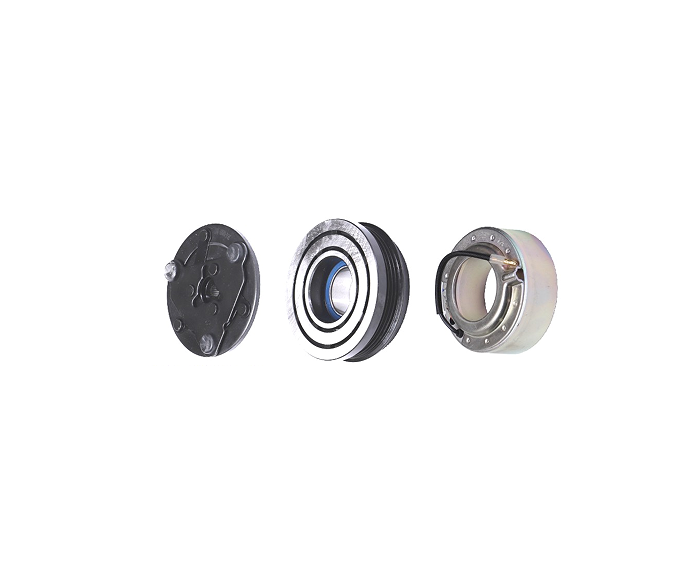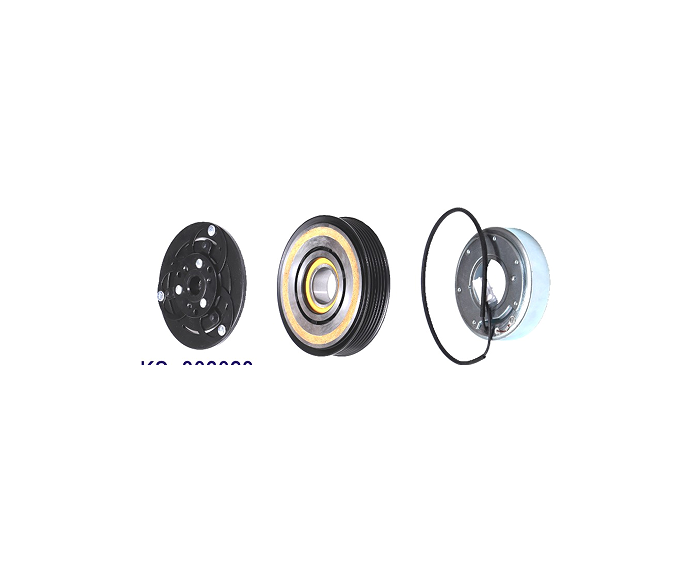

What Is an Automotive AC Bearing?
An automotive AC bearing is a precision mechanical component used in vehicle air conditioning systems to support rotating parts, reduce friction, and maintain stable operation under continuous working conditions.
In automotive air-conditioning applications, bearings are mainly associated with:
- AC compressor clutch pulley systems
- Compressor rotating assemblies
- Belt-driven AC components
- Electric compressor systems
Although an automotive AC bearing is a relatively small component compared with a complete compressor, its performance directly affects:
- Rotation smoothness
- Operating noise
- Component lifespan
- Repair reliability
- Customer experience
For automotive parts distributors and aftermarket suppliers, bearing selection is not only a technical issue. It is also a supply-chain decision.
A wrong bearing reference can result in:
- Incorrect inventory
- Installation problems
- Warranty claims
- Customer complaints
- Additional logistics costs
Therefore, professional buyers need a reliable identification and purchasing process before placing bulk orders.
KASEN focuses on automotive air-conditioning components and supplies products including bearings, compressor clutches, compressors, electric compressors, and related AC parts.
Explore the KASEN automotive AC products.
Why Automotive AC Bearing Selection Matters for B2B Buyers
Many buyers initially compare automotive AC bearings mainly by price.
However, professional sourcing requires more than a low quotation.
A suitable bearing must match:
- Compressor application
- Pulley structure
- Installation dimensions
- Operating conditions
- Replacement requirements
For a repair shop, a wrong bearing may cause one failed repair.
For a distributor importing thousands of pieces, the same mistake becomes a commercial risk.
A reliable automotive AC bearing purchasing process helps buyers achieve:
- Lower return rates
- Better inventory accuracy
- Faster quotation response
- More stable repeat orders
- Higher customer confidence
The goal is not simply to purchase a bearing.
The goal is to purchase the correct bearing that can be supplied consistently over time.
Main Types of Automotive AC Bearings
The term automotive AC bearing covers several different applications.
Understanding these categories helps buyers avoid incorrect product matching.
Compressor Clutch Bearing
The compressor clutch bearing is one of the most common automotive AC bearing applications.
It is normally installed inside the pulley assembly of a belt-driven AC compressor.
Its main functions include:
- Supporting pulley rotation
- Reducing friction
- Maintaining pulley alignment
- Handling belt-driven operating conditions
Because the pulley can rotate even when the AC clutch is disengaged, this bearing operates continuously while the engine is running.
Compressor Pulley Bearing
In many aftermarket markets, compressor pulley bearing and compressor clutch bearing are used interchangeably.
However, buyers should still confirm:
- Compressor model
- Pulley design
- Bearing dimensions
- Original reference
A similar-looking pulley bearing does not always mean it is suitable for the same application.
Internal Compressor Bearing
Some compressors contain internal bearings supporting rotating mechanisms.
These applications require additional confirmation because internal compressor structures vary by design.
Before purchasing an internal compressor bearing, buyers should confirm:
- Compressor construction
- Repair possibility
- Replacement method
In many cases, replacing the complete compressor may be more practical than replacing internal components.
Electric Compressor Bearing
Electric compressors used in EV and hybrid vehicles operate differently from traditional belt-driven compressors.
They do not use the same clutch pulley structure.
Therefore, buyers should avoid applying traditional automotive AC bearing references directly to electric compressor applications.
KASEN provides electric compressor solutions for new-energy vehicle applications.
View KASEN electric compressor products.
Who Needs Automotive AC Bearing Solutions?
Different buyers have different requirements when sourcing automotive AC bearings.
Automotive Parts Distributors
Distributors usually focus on:
- Product coverage
- Stable references
- Accurate catalog information
- Low return rates
- Long-term availability
For distributors, product identification is especially important because many bearing models look similar.
Importers and Wholesalers
Importers usually evaluate:
- Bulk pricing
- Packaging
- Shipping efficiency
- Supplier reliability
- Repeat-order consistency
A supplier that can provide accurate matching information helps reduce inventory risks.
Repair Network Suppliers
Repair suppliers usually care about:
- Correct installation
- Fast replacement
- Stable quality
- Reduced customer complaints
Aftermarket Brands
Private-label brands may require:
- Custom packaging
- Product labels
- Buyer SKU management
- Barcode systems
- Long-term OEM cooperation
How to Identify the Correct Automotive AC Bearing?
Correct identification is the foundation of successful purchasing.
A professional buyer should not rely only on the vehicle model or product appearance.
Confirm Bearing Dimensions
The basic bearing dimensions include:
- Inner diameter
- Outer diameter
- Width
These measurements provide the starting point for matching.
Check Compressor Information
Compressor information is often more valuable than vehicle information alone.
Recommended details include:
- Compressor model
- Compressor manufacturer
- OE reference
- Compressor label photo
Confirm Pulley Application
For clutch pulley bearings, buyers should provide:
- Pulley photo
- Bearing installation position
- Original assembly information
Provide Original Sample Information
When identification is uncertain, an original sample can greatly improve accuracy.
Useful sample information includes:
- Bearing marking
- Dimensions
- Photos
- Physical sample availability
Automotive AC Bearing Specification Checklist
| Specification | Importance |
|---|---|
| Inner Diameter | Confirms mounting fit |
| Outer Diameter | Confirms pulley/housing fit |
| Width | Confirms installation space |
| Bearing Marking | Helps cross-reference |
| Compressor Model | Confirms application |
| OE Number | Improves matching accuracy |
| Pulley Information | Confirms bearing location |
| Vehicle Information | Provides additional verification |
| Photos | Helps identify similar products |
| Sample | Supports final approval |
For B2B buyers,combining multiple identification methods is much safer than relying on a single parameter.
Why Similar Bearing Sizes May Not Be Interchangeable
A common purchasing mistake is assuming:
“Same size means same product.”
However, bearings with similar external dimensions may still differ in:
- Internal design
- Clearance
- Sealing structure
- Load capability
- Operating suitability
Automotive AC systems operate in demanding environments involving:
- Heat
- Vibration
- Dust
- Moisture
- Continuous rotation
Therefore, the correct automotive AC bearing must match both physical dimensions and application requirements.
Common Automotive AC Bearing Failure Causes
Bearing problems are not always caused by the bearing itself.
Possible contributing factors include:
Incorrect Installation
Improper installation methods can damage bearing surfaces or affect alignment.
Contamination
Dust, moisture, and foreign particles can accelerate wear.
Incorrect Fit
Incorrect clearance or mounting conditions may create abnormal operation.
Excessive Load
Belt tension, pulley problems, or system issues may increase bearing stress.
Surrounding Component Damage
A damaged pulley or clutch component can affect bearing performance.
For this reason, professional diagnosis should evaluate the complete AC clutch and pulley system rather than replacing only one component without inspection.
Automotive AC Bearing Replacement Options
The correct replacement solution depends on the actual failure condition.
| Condition | Recommended Solution |
|---|---|
| Bearing failure only | Replace bearing |
| Bearing and pulley damage | Replace pulley assembly |
| Multiple clutch problems | Replace clutch assembly |
| Compressor internal failure | Replace compressor |
Bearing Replacement
Bearing-only replacement can be suitable when:
- The bearing is confirmed as the failed component
- The pulley remains usable
- The clutch system is still functional
This option usually provides lower component cost.
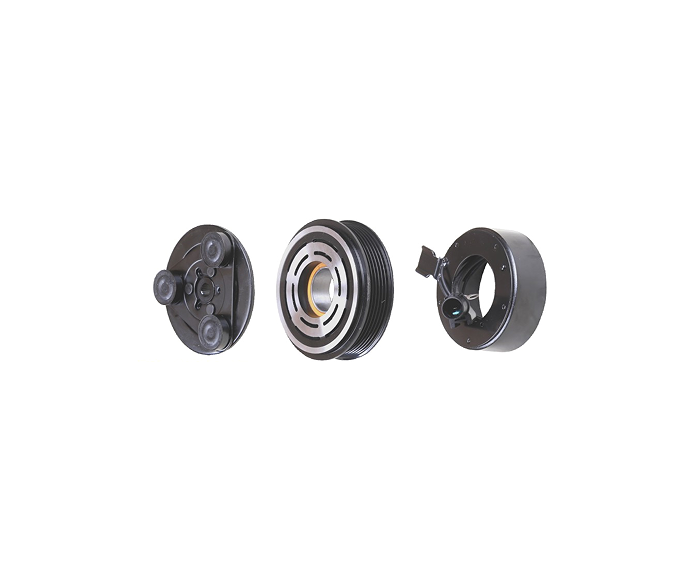
Compressor Clutch Replacement
A complete clutch assembly may be a better choice when:
- Pulley damage exists
- Coil failure occurs
- Hub damage exists
- Multiple components are worn
View KASEN compressor clutch products.
Compressor Replacement
If the compressor has internal mechanical damage, replacing only the bearing will not solve the underlying problem.
View KASEN auto AC compressor products.
How to Control Automotive AC Bearing Quality?
For distributors and aftermarket brands, quality control should focus on measurable factors.
Dimensional Inspection
Critical dimensions should be checked to ensure consistency between:
- Approved sample
- Production batch
- Repeat orders
Rotation Testing
Inspection should consider:
- Smooth rotation
- Abnormal resistance
- Unusual noise
Product Identification
Clear product identification helps prevent:
- Warehouse mistakes
- Wrong shipments
- SKU confusion
Packaging Control
For wholesale buyers,packaging should support:
- Product protection
- Easy identification
- Inventory management
Traceability
Reliable suppliers should maintain product references that allow buyers to review previous orders when problems occur.
How to Choose an Automotive AC Bearing Supplier?
Selecting a supplier requires evaluating more than price.
Automotive AC Knowledge
A supplier familiar with AC systems can better understand:
- Compressor matching
- Clutch applications
- Replacement decisions
Product Range
A broader AC product range can help buyers solve different repair requirements.
KASEN supplies:
- Automotive AC bearings
- Compressor clutches
- AC compressors
- Electric compressors
- Valves
Technical Support
Useful supplier support includes:
- Product identification
- Sample confirmation
- Specification review
- Application analysis
OEM and Private Label Capability
Aftermarket brands may require:
- Custom packaging
- Product labeling
- Bulk production
- Long-term supply planning
What Should Buyers Include in an Automotive AC Bearing RFQ?
A detailed inquiry helps suppliers provide faster and more accurate quotations.
Recommended information:
- Bearing dimensions
- Bearing marking
- Compressor model
- OE reference
- Photos
- Vehicle information
- Quantity requirement
- Packaging requirements
- Private-label requirements
A simple message such as:
“Need automotive AC bearing price”
usually requires multiple follow-up questions.
A complete RFQ allows suppliers to evaluate the requirement immediately.
Send your requirements through the KASEN contact page.
OEM and Bulk Automotive AC Bearing Supply
For aftermarket distributors and brands, a successful supply program requires consistency.
Important elements include:
- Approved samples
- Stable product codes
- Packaging standards
- Repeat-order references
- Quality feedback tracking
A professional supplier relationship should support long-term purchasing rather than only one-time transactions.
Why Choose KASEN for Automotive AC Bearing Supply?
KASEN specializes in automotive air-conditioning components and supports global aftermarket buyers with integrated AC solutions.
Advantages include:
Automotive AC Specialization
KASEN focuses on automotive AC systems instead of treating bearings as isolated industrial products.
Complete Product Support
Customers can evaluate different replacement options including:
- Bearings
- Clutches
- Compressors
- Electric compressors
- Related AC components
B2B Cooperation
KASEN supports:
- Wholesale purchasing
- OEM requirements
- Custom packaging
- Long-term supply cooperation
Learn more about the company on the KASEN About Us page.
Frequently Asked Questions About Automotive AC Bearings
What is an automotive AC bearing?
An automotive AC bearing is a bearing component used in vehicle air-conditioning systems, commonly supporting compressor pulley or clutch rotation.
Is automotive AC bearing the same as compressor bearing?
Automotive AC bearing is a broader term. It may include compressor clutch bearings, pulley bearings, and other AC-related bearing applications.
How do I choose the correct automotive AC bearing?
Confirm bearing dimensions, compressor model, OE reference, pulley information, and original product details before purchasing.
Can I replace only the automotive AC bearing?
Yes, if the bearing is the only damaged component and the surrounding clutch, pulley, and compressor remain serviceable.
Why does an AC bearing make noise?
Possible causes include wear, contamination, incorrect installation, improper fit, or damage to surrounding components.
What information should I send for a quotation?
Provide dimensions, photos, compressor details, quantity, and packaging requirements.
Does KASEN provide OEM automotive AC bearings?
KASEN supports automotive AC component sourcing and OEM-related projects based on specific product requirements.
Can KASEN provide private-label packaging?
Private-label and packaging requirements can be evaluated according to order details.
How can distributors reduce wrong bearing orders?
Use complete matching information, approve samples, maintain SKU records, and confirm applications before bulk purchasing.
How can I contact KASEN?
Send your automotive AC bearing requirements through the KASEN contact page.
Conclusion
Automotive AC bearing sourcing requires more than finding a similar-looking component.
For distributors, importers, repair suppliers, and aftermarket brands, successful purchasing depends on:
- Correct identification
- Accurate specifications
- Application matching
- Quality control
- Reliable supplier support
A professional supplier should help buyers determine whether they need a bearing, pulley assembly, clutch assembly, or complete compressor solution.
KASEN provides automotive AC bearings together with compressor clutches, compressors, electric compressors, and related components to support different aftermarket requirements.
Explore the KASEN automotive AC products or contact KASEN with your bearing specifications, samples, OE references, and quantity requirements for product matching and quotation.