
Why a Small Compressor Bearing Can Create a Large Purchasing Problem
An air conditioning compressor bearing is not usually the most expensive item on an automotive AC purchase order.
That is exactly why it is easy to underestimate.
A distributor may save a small amount on the bearing itself, yet lose far more if the product is matched incorrectly. One wrong reference can lead to workshop complaints, double installation labor, replacement freight, warranty discussions and stock that cannot be sold to the intended application.
The bearing price is therefore only one part of the buying decision.
For a professional buyer, the better question is:
Can I identify this bearing accurately, approve it before volume purchasing, and reorder the same specification later without creating fitment problems?
That is the commercial problem this guide addresses.
KASEN supplies automotive AC bearings alongside compressor clutches, compressors, electric compressors, valves and related air-conditioning parts.Its current bearing category includes FEIBI references such as 324718, 305222 and 355020, and the site also presents bulk and custom-branding options for B2B buyers.
What Is an Air Conditioning Compressor Bearing?
In conventional belt-driven automotive AC systems, the phrase air conditioning compressor bearing commonly refers to the bearing fitted inside the compressor clutch pulley or rotor assembly.
The distinction matters.
The compressor contains several rotating components, but an aftermarket customer asking for a “compressor bearing” is often looking for the front pulley bearing rather than an internal compressor bearing.
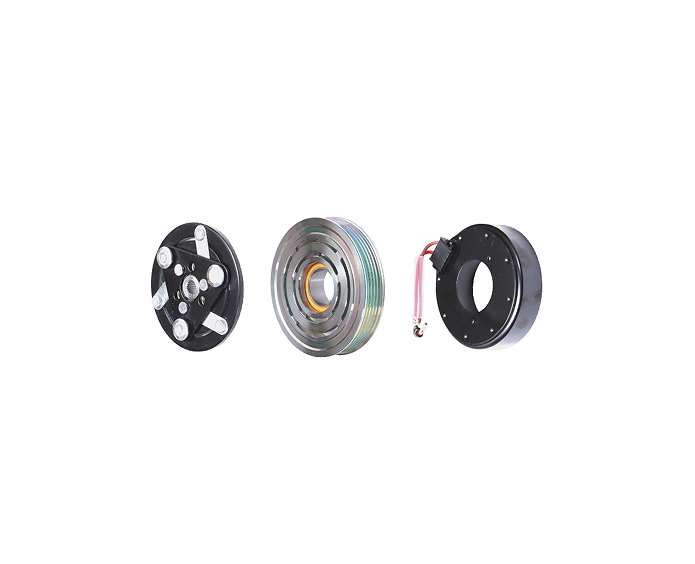
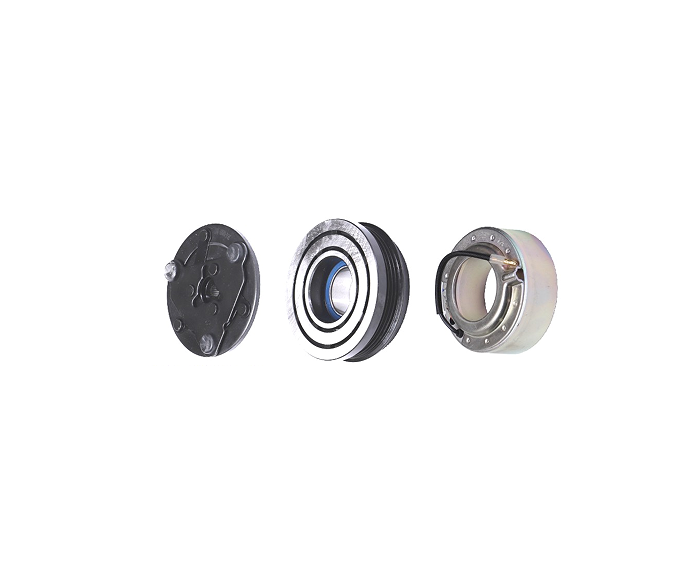
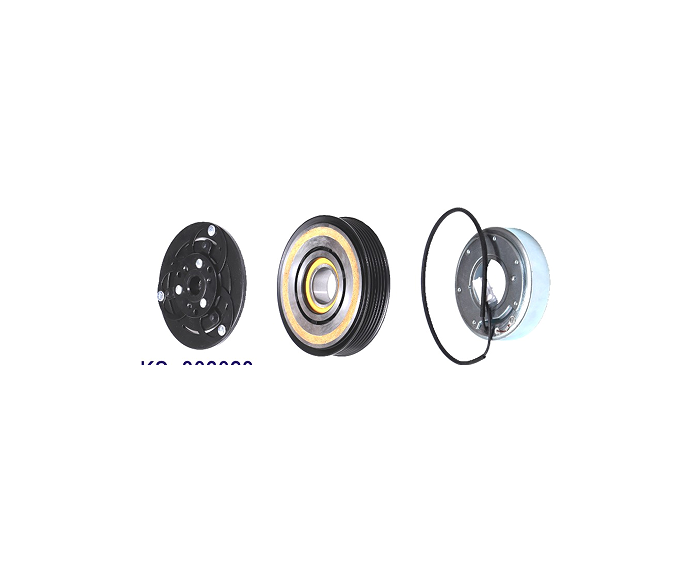
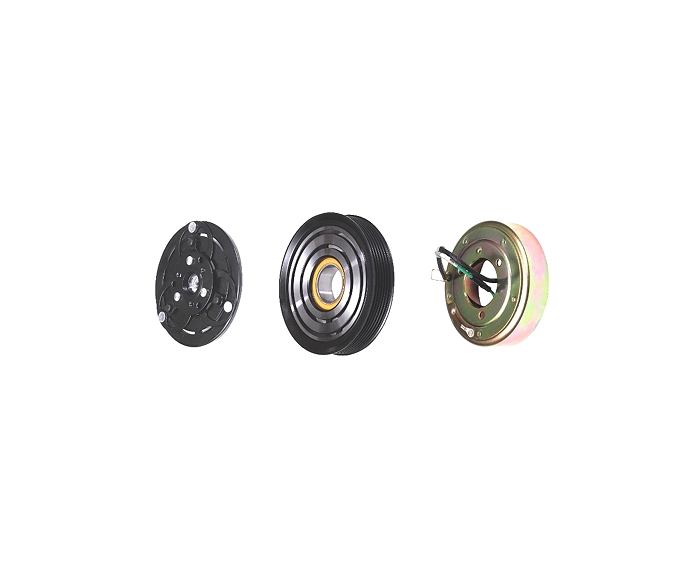
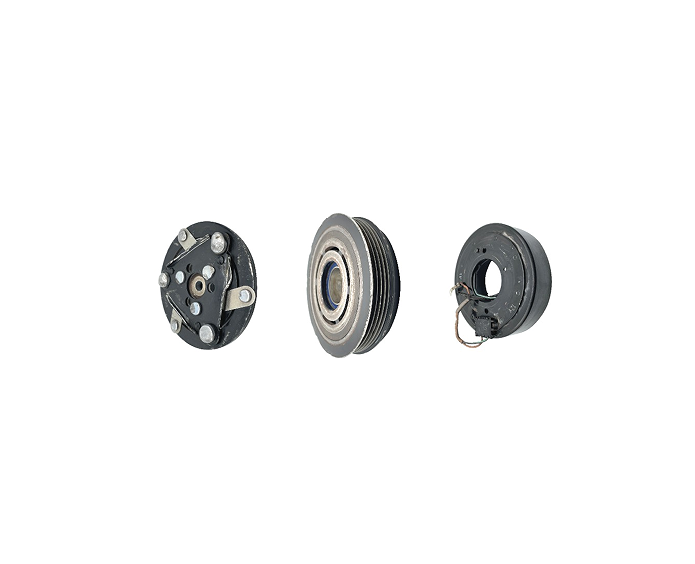
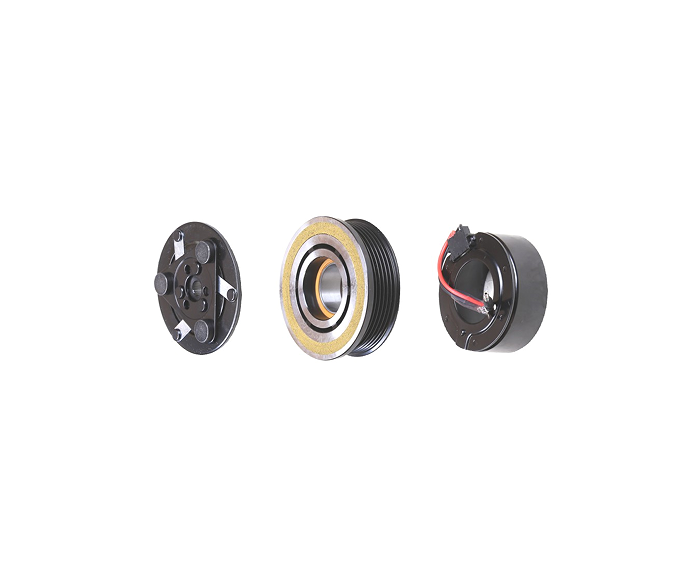
A typical front clutch area includes the pulley or rotor, bearing, electromagnetic coil, hub or armature plate, compressor shaft and retaining hardware.
When the engine is running, the belt can continue to rotate the compressor pulley even while the clutch is disengaged. The bearing therefore has work to do even when the compressor itself is not being driven.
Sanden service documentation specifically checks the clutch pulley for free rotation and the absence of wobble, roughness or vibration when the clutch is disengaged. This is a useful reminder that the pulley-bearing area should be evaluated independently from internal compressor operation.
Pulley Bearing, Clutch Bearing or Internal Compressor Bearing?
These terms are often mixed together in aftermarket inquiries.
That can create a bad quotation before the supplier has even discussed price.
| Buyer Term | What It Often Means | What Must Be Confirmed |
|---|---|---|
| Air conditioning compressor bearing | Usually pulley/clutch bearing | Exact compressor and pulley |
| Compressor pulley bearing | Bearing inside pulley/rotor | ID, OD, width,application |
| Compressor clutch bearing | Often same pulley bearing | Clutch and compressor model |
| Internal compressor bearing | Bearing inside compressor mechanism | Compressor design and serviceability |
| Electric compressor bearing | Internal electric-drive component | EV compressor architecture |
If a customer simply writes:
“Need air conditioning compressor bearing for Toyota”
there is still not enough information for a reliable bulk order.
A stronger inquiry identifies the compressor before the supplier selects the bearing.
Start With the Compressor, Not the Vehicle Name
Vehicle application matters, but it should rarely be the only identification point.
A vehicle family can use different compressor configurations depending on model year, engine, market or original equipment supplier.
For B2B sourcing, start with the compressor label whenever possible.
Useful information includes:
- Compressor model
- OE number
- Original bearing marking
- Bearing dimensions
- Pulley photo
- Compressor label photo
- Vehicle make, model, year and engine
- Physical sample when identification remains uncertain
This approach is slower than guessing from a vehicle name.
It is also much cheaper than discovering the mistake after a bulk shipment arrives.
Which Dimensions Matter When Matching a Compressor Bearing?
The basic bearing dimensions are straightforward:
ID × OD × Width
These three measurements tell the supplier a great deal, but not everything.
Compressor Bearing Specification Checklist
| Item | What the Buyer Should Confirm | Why It Matters |
|---|---|---|
| Inner Diameter | Exact measurement | Mating fit |
| Outer Diameter | Exact measurement | Pulley housing fit |
| Width | Exact measurement | Axial compatibility |
| Bearing Marking | Original code if visible | Cross-reference |
| Compressor Model | Label/model number | Application confirmation |
| Pulley Type | Original pulley structure | Bearing location |
| Seal Configuration | Match original requirement | Contamination protection |
| Vehicle Data | Make/model/year/engine | Secondary fitment check |
| OE Reference | If available | Cross-reference control |
| Sample | Original or approved sample | Bulk-order confidence |
Why the Same Size Does Not Always Mean the Same Bearing
This is where bearing sourcing becomes more technical.
Two products can share similar external dimensions and still differ in:
- Internal geometry
- Internal clearance
- Sealing arrangement
- Load capability
- Rotational suitability
- Manufacturing tolerance
NSK notes that bearing internal clearance is an important operating parameter and that different clearance ranges exist for different operating conditions.
So a supplier should not treat an air conditioning compressor bearing as a generic metal ring defined only by three dimensions.
For repeat B2B business, dimensions should be connected to a confirmed application.
A practical record looks like this:
Buyer SKU → Bearing Reference → Dimensions → Compressor Model → OE Reference → Approved Sample
Once that chain is established, future purchasing becomes much easier.
A Better Bearing Matching Workflow for Distributors
Instead of sending a photo and asking “Do you have this?”, use a staged identification process.
Step 1: Record the Existing Bearing
Before disposal, record the original:
- Marking
- Dimensions
- Seal appearance
- Photos
Step 2: Photograph the Compressor Label
A clear label image can eliminate several wrong options immediately.
Step 3: Record the Pulley Application
The supplier needs to know where the bearing is being installed.
Include photos of the complete clutch pulley when possible.
Step 4: Add the Vehicle Information
Vehicle data acts as a cross-check rather than the only identifier.
Step 5: Approve a Sample
When a reference is new or uncertain, approving one sample before a high-volume order is a sensible form of risk control.
Step 6: Give the Approved Product a Stable SKU
Do not repeat the same identification process six months later.
Save the approved supplier reference in the buyer's own catalog.
When Bearing Noise Does Not Automatically Mean a Defective Bearing
A common warranty discussion starts with one sentence:
“The bearing is noisy.”
That complaint matters, but it does not automatically identify the cause.
NSK's bearing-damage guidance lists improper mounting, poor assembly, lubrication problems, contaminants, unsuitable clearance, excessive load and abnormal operating conditions among possible contributors to premature bearing damage. It also recommends considering changes in sound, vibration and temperature during diagnosis.
For an automotive AC distributor, this is commercially important.
A noisy compressor pulley can involve the bearing, but it can also be influenced by:
- Poor installation
- Damaged pulley
- Incorrect fit
- Contamination
- Belt loading
- Misalignment
- Surrounding clutch damage
- Existing compressor problems
Good after-sales handling therefore starts with diagnosis, not automatic blame.
What Are Typical Signs of Compressor Pulley Bearing Trouble?
Common workshop observations include rough rotation, humming or grinding sounds, pulley movement, vibration or unusual heat around the pulley area.
Those symptoms should trigger inspection.
They should not automatically trigger a bearing-only replacement.
For example, if the pulley has already worn or deformed, installing a new bearing into a damaged pulley may not provide a reliable repair.
Likewise, if the clutch coil or hub has failed, the buyer may be better served by purchasing a complete clutch assembly.
This is where an automotive AC supplier can add more value than a seller who only quotes individual bearing references.
Bearing Only, Pulley, Clutch or Complete Compressor?
The cheapest individual part is not always the cheapest repair.
| Condition | Possible Replacement | Commercial Reason |
|---|---|---|
| Bearing failure isolated | Bearing only | Lowest component cost |
| Bearing and pulley both damaged | Pulley/bearing assembly | Avoids reusing damaged pulley |
| Several clutch components affected | Complete clutch | Simpler repair scope |
| Compressor internally damaged | Complete compressor | External bearing will not solve failure |
| Electric compressor fault | Diagnose electric compressor | Different drive architecture |
When Bearing-Only Replacement Makes Sense
A standalone air conditioning compressor bearing may be the logical choice when the bearing is clearly identified as the failed component and the surrounding pulley, clutch and compressor remain serviceable.
This approach is particularly attractive in markets with skilled repair capability because component cost is lower.
When the Pulley or Clutch Is the Better Buy
If there is pulley damage, hub wear, coil trouble or several worn clutch components, replacing a wider assembly may reduce labor and warranty risk.
View KASEN Auto AC Compressor Clutch Products
When the Complete Compressor Should Be Considered
Internal seizure, serious mechanical damage, major internal wear or other compressor failures cannot be corrected by replacing an external pulley bearing.
View KASEN Auto AC Compressors
The Real Cost of a Low-Priced Bearing
A purchasing manager sees the unit price.
The aftermarket sees the full chain of consequences.
The real cost may include:
Bearing price + freight + handling + installation labor + return freight + warranty administration + replacement stock + lost customer confidence
That changes how suppliers should be compared.
A five-cent or twenty-cent saving can quickly disappear if the part creates repeat workshop labor.
For distributors,the safer comparison is usually:
| Buying Approach | Initial Cost | Fitment Risk | Return Risk | Long-Term Value |
|---|---|---|---|---|
| Price-only buying | Lower | Higher | Higher | Uncertain |
| Application-confirmed buying | Moderate | Lower | Lower | Better |
| Sample-approved repeat program | Moderate | Lowest | Lower | Strong |
The objective is not to buy the most expensive bearing.
It is to remove avoidable uncertainty before the order becomes large.
What Should Buyers Ask About Quality Control?
“Good quality” is not a useful answer.
A serious B2B inquiry should ask what is actually controlled.
Dimensional Consistency
Ask how the supplier verifies critical bearing dimensions and maintains consistency between orders.
Product Identification
Similar bearings are easy to mix.
Ask how references are separated during storage, inspection and packing.
Rotation Condition
For compressor pulley applications, obvious roughness, unusual resistance or abnormal noise should be identified before shipment where relevant to the supplier's inspection process.
Packaging
Packaging should help prevent contamination, physical damage and SKU mixing.
Traceability
If a distributor reports a problem six months later, can the supplier identify which product reference was shipped?
Traceability is not glamorous, but it becomes very valuable during warranty discussions.
Documentation
Certificates, declarations and testing documentation should be confirmed for the exact product being purchased.
Do not assume that documentation shown for one bearing automatically applies to every reference in a supplier's range.
Sample Approval Is More Important Than a Long Product Catalog
A supplier may show hundreds of references.
That does not mean a buyer should immediately order all of them.
For a new air conditioning compressor bearing, approve the reference first.
A practical sample review can include:
- Dimensional comparison with the original bearing.
- Compressor and pulley application confirmation.
- Rotation and basic physical inspection.
- Verification of markings and supplier code.
- Installation confirmation by a qualified repair customer where appropriate.
- Packaging and label approval.
- Registration of the approved buyer SKU.
Once completed, the approved sample becomes a commercial reference rather than just a one-time test item.
Why SKU Control Matters in a Bearing Business
Bearings are particularly easy to confuse because many references look almost identical when sitting in a warehouse bin.
Suppose one distributor stocks three compressor bearings with only small dimensional differences.
Without clear packaging, an order can be correct at the purchasing stage and still become wrong at the warehouse-picking stage.
A useful product label can connect:
- Buyer SKU
- Supplier code
- Bearing reference
- Compressor application
- Barcode
- Box quantity
Private-label buyers should decide this system before the first major shipment rather than after mistakes begin appearing.
How to Compare Air Conditioning Compressor Bearing Suppliers
Price is one line in the comparison sheet.
It should not be the whole sheet.
| Supplier Question | Why It Matters |
|---|---|
| Can you match from compressor model? | Reduces application mistakes |
| Can you work from samples and photos? | Helps unclear references |
| How are dimensions checked? | Controls fitment |
| How are similar SKUs separated? | Reduces packing errors |
| Can I approve samples first? | Reduces bulk-order risk |
| Can you supply related clutch parts? | Supports wider repair needs |
| Can packaging be customized? | Useful for aftermarket brands |
| Is the reorder reference stable? | Important for repeat supply |
| What documents are available? | Market/compliance planning |
| What happens if fitment is uncertain? | Tests supplier professionalism |
A useful supplier is sometimes the one willing to delay a quotation until the application is clear.
That can feel slower at the RFQ stage.
It is usually faster than correcting a wrong shipment.
What Should You Send for a Faster, More Accurate Quotation?
A vague inquiry creates a vague quotation.
Instead of sending:
“Need compressor bearing, price please.”
send a technical RFQ.
Recommended RFQ Information
- Original bearing marking
- Inner diameter
- Outer diameter
- Width
- Compressor model
- Compressor label photo
- Pulley photo
- Original bearing photos
- OE reference, if available
- Vehicle make/model/year/engine
- Purchase quantity
- Target market
- Packaging requirement
- Private-label requirement
- Sample requirement
If you already have a physical sample, say so in the first inquiry.
That information helps the supplier decide whether identification can be completed from data or whether the sample should be checked.
Weak RFQ vs High-Quality RFQ
| Weak Inquiry | Better B2B Inquiry |
|---|---|
| “Need AC bearing.” | “Need pulley bearing for compressor model X.” |
| “For Toyota.” | Adds model/year/engine and compressor label |
| No dimensions | Provides ID × OD × width |
| One blurred photo | Clear bearing, pulley and label photos |
| “Best price?” | States quantity and target market |
| No packaging details | States bulk or private-label requirement |
| No sample discussion | Confirms whether original sample is available |
The second inquiry takes a few minutes longer to prepare.
It can save days of back-and-forth correspondence.
OEM and Private-Label Bearing Programs
For an aftermarket brand, the first order should ideally establish the framework for later orders.
Useful items to standardize include:
- Approved product reference
- Buyer SKU
- Supplier SKU
- Packaging artwork
- Barcode
- Box quantity
- Application reference
- Reorder procedure
KASEN's current bearing category states that custom branding and packaging are available for B2B partners, alongside bulk supply.
Specific MOQ, sample availability, lead time, documentation and packaging requirements should still be confirmed for the actual bearing reference and order rather than treated as universal figures.
Where KASEN Fits Into the Sourcing Process
The useful part of working with an automotive AC-focused supplier is not simply having another source for a bearing.
It is the ability to evaluate the surrounding replacement decision.
KASEN's site currently presents bearings alongside auto AC compressor clutches, conventional compressors, electric compressors and valves within the same automotive air-conditioning product range.
That matters when the buyer begins with:
“Send me a bearing.”
but diagnosis later shows that the customer actually needs a pulley, clutch or complete compressor.
Browse KASEN Automotive AC Products
For company background:
Before You Place a Bulk Order: One-Minute Buyer Check
Before confirming a production or wholesale order, make sure you can answer these questions:
- Do we know the original bearing marking?
- Have ID,OD and width been confirmed?
- Do we know the compressor model?
- Is the pulley application confirmed?
- Do we have clear reference photos?
- Has an uncertain reference been sampled?
- Does the supplier have a stable reorder code?
- Is our own SKU assigned?
- Is packaging confirmed?
- Are quantity and destination market clear?
- Have required documents been confirmed?
- Do we know whether bearing-only replacement is appropriate?
If several answers are still “no,” the order probably needs more verification before quantity increases.
Frequently Asked Questions About Air Conditioning Compressor Bearings
What is an air conditioning compressor bearing?
In many conventional automotive AC systems, the term refers to the bearing located in the compressor clutch pulley or rotor assembly. It allows the pulley to rotate smoothly around the compressor front structure.
Is an air conditioning compressor bearing the same as a clutch bearing?
Often, yes. In aftermarket terminology, compressor bearing, clutch bearing and pulley bearing may all refer to the clutch pulley bearing. The exact location should still be confirmed before ordering.
What bearing dimensions do I need?
The basic measurements are inner diameter, outer diameter and width. For more reliable B2B matching, also provide the bearing marking, compressor model, pulley information, OE reference and photos.
Can I order a compressor bearing using only the vehicle model?
That is risky. A vehicle application may use different compressors depending on year, engine, region or original supplier. Compressor identification gives an additional matching layer.
Why is my air conditioning compressor bearing noisy?
Possible causes include bearing wear, contamination, incorrect mounting, unsuitable fit, abnormal load or problems with surrounding pulley components. Bearing manufacturers such as NSK recommend investigating operating conditions rather than assuming every noise complaint has the same cause.
Can a compressor pulley bearing be replaced separately?
In some compressor designs, yes. A bearing-only repair is most appropriate when the bearing failure is isolated and the pulley, clutch and compressor remain serviceable.
When should I replace the complete compressor clutch?
A complete clutch may make more commercial sense when the pulley, coil, hub or several clutch components are damaged together.
Should distributors approve samples before buying in bulk?
For a new or uncertain reference, sample approval can significantly reduce fitment and inventory risk. The approved sample should then be connected to a stable buyer and supplier SKU.
Can KASEN supply different compressor bearing references?
KASEN's current bearing category lists multiple automotive AC compressor bearing references, including FEIBI 324718, 305222 and 355020. Buyers should confirm the exact reference required for their compressor application.
What information should I send KASEN for a bearing quotation?
Send the bearing marking, ID, OD, width, compressor model, label photos, OE reference if available, quantity, target market and packaging requirements. Providing an original sample can also help when identification is uncertain.
Send Your Bearing RFQ to KASEN
Conclusion
The most important part of sourcing an air conditioning compressor bearing happens before the supplier gives you a price.
First identify the exact bearing location. Then confirm the dimensions, compressor model, pulley application and original reference.For uncertain items, approve a sample before turning one bearing into hundreds or thousands of units.
Just as importantly, decide whether bearing-only replacement is really the correct repair.
Sometimes the lower-risk answer is a pulley assembly. Sometimes it is a complete clutch. If the compressor itself is damaged, the bearing is no longer the real purchasing problem.
For distributors, importers and aftermarket brands, that decision process reduces the costs that rarely appear on an initial quotation: wrong fitment, repeat labor, warranty claims, replacement freight and dead inventory.
KASEN offers automotive AC bearings together with compressor clutches, complete compressors, electric compressors and related parts, giving professional buyers several replacement levels within the same product portfolio.
For a more accurate quotation, send KASEN your bearing dimensions, original marking, compressor model, OE reference, clear photos, target quantity, market and packaging requirement rather than only asking for a general bearing price.