
What Should an AC Compressor Clutch Coil Manufacturer Help Buyers Confirm?
An AC compressor clutch coil manufacturer should help professional buyers confirm whether a coil is electrically and mechanically suitable for the intended compressor clutch—not simply whether it looks similar to the old part. For an importer, automotive AC distributor or compressor rebuilder, the critical purchasing questions usually involve rated voltage, resistance under defined conditions, coil dimensions, connector or lead configuration, mounting position and compatibility with the corresponding clutch assembly.
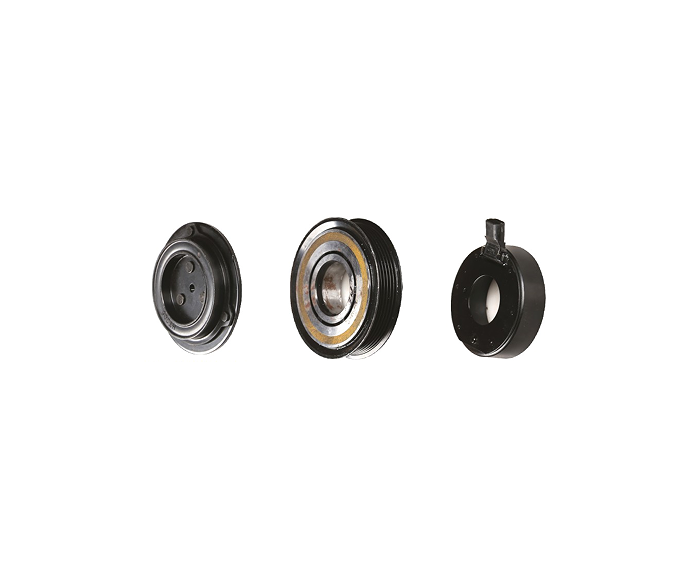
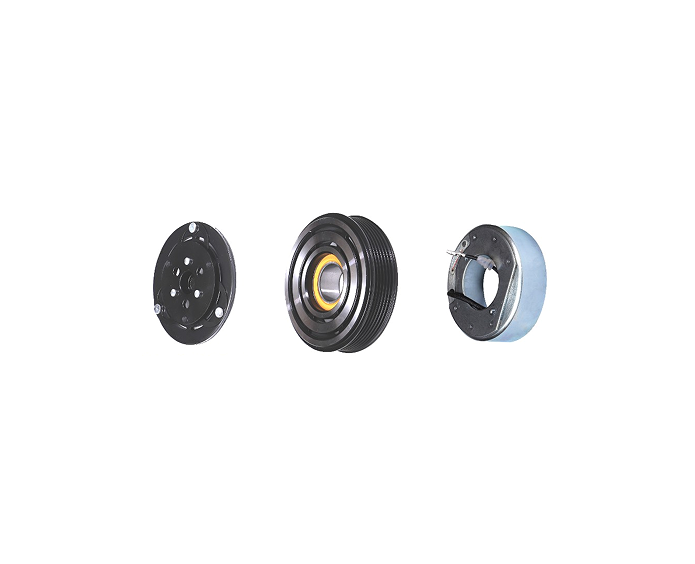
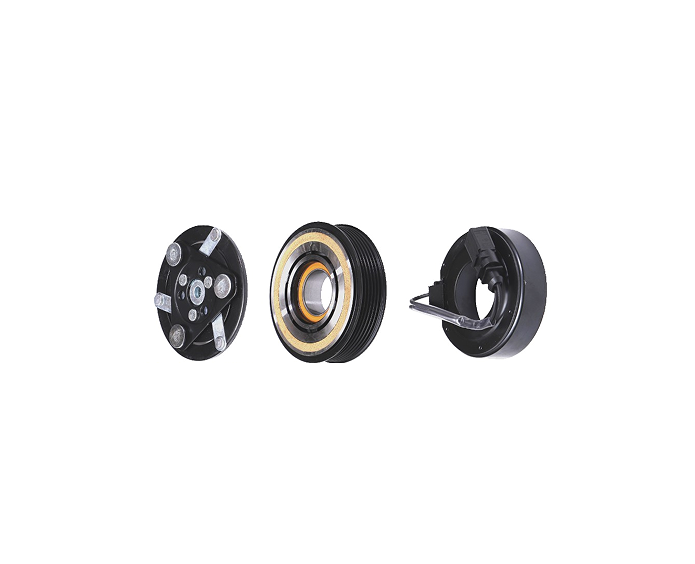
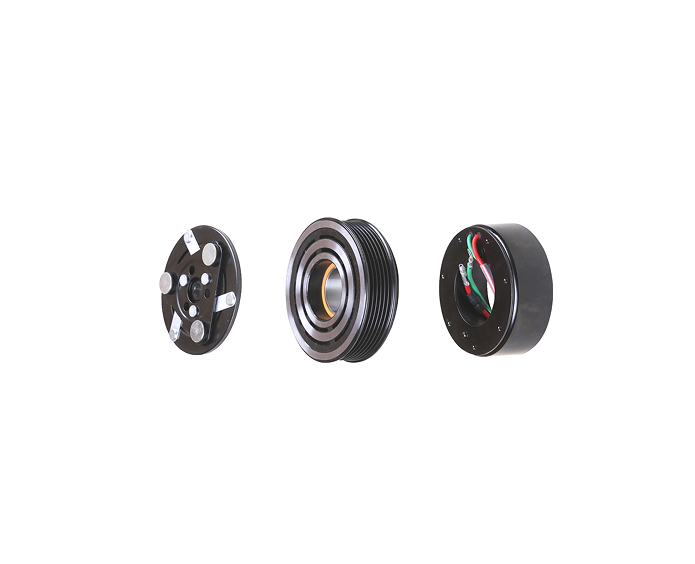
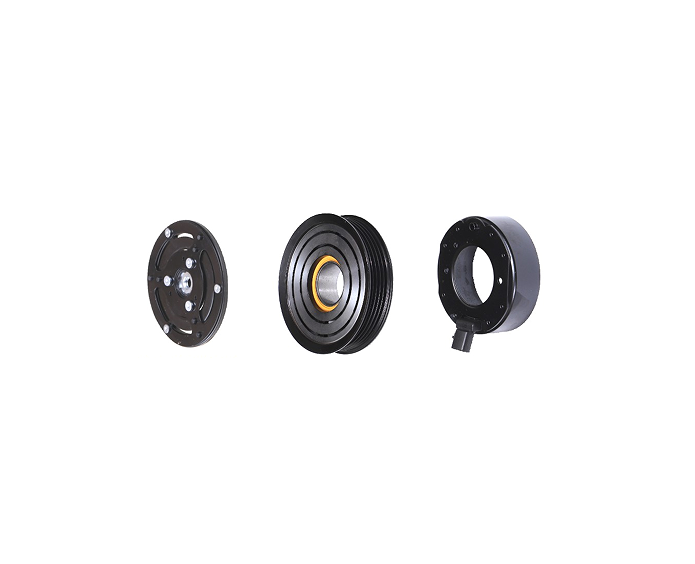
The coil is the electromagnetic component that creates the magnetic field needed to engage the clutch. When energized, it helps pull the armature or clutch plate toward the rotating pulley so torque can be transmitted to the compressor shaft. KASEN explains this relationship in its automotive compressor clutch guide, where the coil is identified as one of the key components of a conventional belt-driven compressor clutch.
For B2B sourcing, this creates an important rule: a coil should be approved against the compressor and clutch configuration, not against appearance alone.
Who Usually Buys Compressor Clutch Coils in Volume?
A dedicated coil supply programme is particularly relevant to compressor rebuilders, automotive AC specialists, regional replacement-parts distributors, importers, workshop supply businesses and aftermarket brands that sell individual clutch components.
Their purchasing needs differ. A rebuilder may need precise dimensions because the new coil must integrate with an existing pulley and compressor housing. A distributor needs clear product codes and application records so visually similar coils do not become mixed in inventory. A private-label brand must connect its own SKU to the correct technical configuration and packaging.
An individual repair shop buying one coil may not require a formal manufacturing programme, but it still needs accurate identification. Likewise, replacing a coil is not automatically the correct solution for every compressor-clutch fault. The pulley, bearing, hub, wiring, control circuit or compressor itself may also require inspection. Buyers can review the wider KASEN compressor clutch range when the repair requirement extends beyond the electromagnetic coil.
Start With the Compressor and Existing Coil, Not the Vehicle Name
Vehicle make and model can help narrow a search, but they should not be the only information sent to an AC compressor clutch coil manufacturer. Different compressors can appear within similar vehicle applications, and coils that share a general circular shape may differ electrically or dimensionally.
For a new enquiry, provide as much of the following as possible: compressor manufacturer or model, OE or existing reference number, clutch reference, vehicle information where known, clear photographs of the old coil, voltage marking, connector or lead-wire photographs and measured coil dimensions.
If a specification is unknown, mark it as to be confirmed. Do not copy a voltage, resistance or dimension from another coil simply because the outer housing appears similar.
KASEN currently maintains a dedicated car air-conditioning clutch coil category containing references such as KS-Q0339, KS-Q0382, KS-Q0044, KS-Q0091 and KS-Q0489. The category page currently exposes the model references but does not provide a complete electrical and dimensional specification for each item, so professional buyers should request the missing product-specific data before approving a purchase.
Build a Coil Specification Sheet Before Requesting a Bulk Quote
A quotation becomes more meaningful when every supplier is working from the same requirements. The following table is a recommended purchasing framework rather than a universal KASEN specification.
| Specification Item | What the Buyer Should Confirm | Why It Matters |
|---|---|---|
| Supplier reference | Exact coil model or KASEN code | Supports accurate repeat orders |
| Compressor reference | Compressor family/model | Connects the coil to the intended assembly |
| Rated voltage | Required operating voltage | Prevents incorrect electrical matching |
| Resistance | Approved range and measurement condition | Supports coil consistency checks |
| Inner diameter | Confirmed measurement | Affects physical installation |
| Outer diameter | Confirmed measurement | Affects fit inside the clutch structure |
| Height/thickness | Overall coil dimension | Controls axial fit |
| Mounting structure | Locating tabs, holes or housing features | Prevents installation mismatch |
| Connector/lead | Connector form, wire length and orientation | Supports vehicle-side connection |
| Protection component | Diode or other device, if applicable | Must match the intended electrical design |
| Product marking | Supplier code, buyer code or traceability | Supports warehouse identification |
| Revision status | Approved drawing/sample version | Protects repeat-order consistency |
This information should follow the coil through sample approval, purchasing and future replenishment. A distributor should not have to re-identify the same coil from photographs every time it places another order.
Voltage Is Only the First Electrical Check
A common purchasing shortcut is to describe a product only as a “12V compressor clutch coil” or “24V clutch coil.” Rated voltage is important, but it does not completely define the coil.
Buyers should also ask for the resistance specification and the conditions under which it is measured. Electrical resistance changes with conductor temperature, so comparing two resistance readings without recording measurement conditions can create unnecessary disagreement between buyer and supplier.
Where current draw or additional electrical checks form part of the approved specification, the test voltage and conditions should also be defined. Connector type, lead-wire routing and any integrated protective component should be checked separately rather than assumed from voltage.
A professional AC compressor clutch coil manufacturer should therefore be evaluated on its ability to supply an agreed electrical configuration repeatedly—not merely on whether it can wind a coil that operates when temporarily connected to power.
Mechanical Dimensions Matter as Much as Electrical Values
Even an electrically correct coil can be unsuitable if the housing does not install correctly in the intended compressor clutch.
Important dimensional questions can include inner diameter, outer diameter, axial height, mounting tabs, locating points and wire-exit position. Depending on the design, the relationship between the coil, pulley and surrounding compressor structure may also limit available clearance.
This is why buyers should avoid describing replacement coils only by voltage and vehicle application. A better record combines electrical information with dimensional drawings or a verified sample.
When an old component is being copied for aftermarket replacement, photographs should include a scale or separate measurement record. Perspective in a photograph can make two different coil housings appear almost identical.
Evaluate Winding and Insulation as Controlled Specifications
The winding determines the electromagnetic characteristics of the coil, but a buyer does not need to become a coil designer to evaluate a supplier. Instead, define which product characteristics the manufacturer is expected to control.
Useful questions include what conductor specification applies, what insulation requirement applies to the approved design, how winding consistency is maintained and how the completed winding is protected from the operating environment.
KASEN's published compressor clutch manufacturing process describes automated coil winding and subsequent sealing as part of its broader clutch-production process. The page also publishes specific winding and electrical values, but those values should not automatically be applied to every KASEN coil reference. Buyers should request the actual requirements and records for the selected model.
That distinction is important: a factory-level process description shows a claimed capability; the model specification tells the buyer what is actually being purchased.
Ask How the Coil Is Protected Against Heat and Moisture
A compressor clutch coil operates in the engine compartment, where temperature, vibration, contamination and moisture may all affect long-term performance. However, broad phrases such as “heat resistant” or “waterproof coil” are not sufficient purchasing specifications.
Ask what insulation system and sealing or encapsulation method apply to the actual coil being quoted. Where a temperature class or environmental test is commercially important, request the corresponding test basis and determine whether it applies to the material, completed coil or full clutch assembly.
KASEN has published technical articles discussing insulation, winding consistency and thermal management in its clutch coils, including Car A/C Clutch Coil and Car Air Conditioner Clutch Coil. These pages provide useful technical discussion, but buyers should still confirm model-specific values and supporting evidence before using those claims in their own catalogues.
Review the Coil Manufacturing Process Through One Actual SKU
Factory qualification becomes more useful when a buyer follows one specific coil through production.
Ask the manufacturer how the approved wire or winding material is identified, how winding parameters are controlled, how the lead or connector is assembled and how the finished coil is inspected. If encapsulation or sealing is used, ask what process applies to the selected model and what production checks are performed.
The purpose is not to require every operation to be performed in-house. The purpose is to understand who controls the requirement.
If a connector, wire, insulation material or another purchased component changes, who determines whether the change is acceptable? Does the buyer need to approve it? Does the new configuration require another sample?
These questions are particularly important for long-term aftermarket programmes because a distributor may continue selling the same product under one SKU for years.
Separate Incoming Materials, In-Process QC and Final Testing
A vague statement such as “100% quality inspection” tells a buyer very little unless the inspection items are defined.
For an AC compressor clutch coil, quality control can be divided conceptually into three stages. Incoming control may verify relevant winding materials, connectors or housings. In-process checks may monitor winding or assembly characteristics. Final inspection may include product identification, resistance, electrical continuity, dimensions, connector condition or other requirements defined for the particular product.
Not every test needs to be performed on every unit, and specialized validation testing should not be confused with routine production checks. The inspection plan should specify which characteristics are checked on each unit, which are sampled and which belong to separate qualification testing.
Where insulation withstand, thermal aging, environmental resistance or endurance claims influence the buying decision, ask for the applicable method, conditions, sample quantity and pass criteria.
Use Sample Approval to Establish the Product Baseline
For a new reference, approve the sample before treating the item as established stock.
Record the KASEN reference, buyer SKU, measured dimensions, voltage, resistance requirement, connector, photographs and approval date. If the coil will be fitted into an existing clutch or compressor during evaluation, record which assembly was used.
If changes are made after the first sample, identify the revised sample separately. Avoid a situation where the supplier, purchasing department and technician each retain a different version while all three call it “the approved sample.”
The approved product baseline can then support batch inspection and repeat ordering.
How Should Buyers Compare KASEN Coil References?
The current KASEN coil category lists multiple KS-Q references, including the following examples. At present, the category page primarily provides the model codes rather than a full public technical specification, so the correct purchasing approach is to use these references as enquiry identifiers and request confirmation of the relevant electrical and dimensional fields.
| KASEN Coil Reference | Listed in Coil Category | Public Category-Page Specification | Buyer Should Confirm Before Ordering |
|---|---|---|---|
| KS-Q0339 | Yes | Model reference shown | Voltage, resistance, dimensions, connector, compressor fitment |
| KS-Q0382 | Yes | Model reference shown | Voltage, resistance, dimensions, connector, compressor fitment |
| KS-Q0044 | Yes | Model reference shown | Voltage, resistance, dimensions, connector, compressor fitment |
| KS-Q0091 | Yes | Model reference shown | Voltage, resistance, dimensions, connector, compressor fitment |
| KS-Q0489 | Yes | Model reference shown | Voltage, resistance, dimensions, connector, compressor fitment |
This table deliberately does not invent missing specifications.If two coils eventually prove to share the same voltage, that still would not demonstrate interchangeability; their dimensions, connectors, mounting structure or compressor applications may differ.
For distributors, this is also a useful catalogue-management lesson. Product codes should be linked to technical records rather than supported only by photographs.
Plan Bulk Coil Orders Around Verified References
When purchasing coils in volume, separate established references from new trial models. Established references have confirmed fitment and an approved specification. Trial references may have passed initial identification but still need market validation. Low-demand or uncertain items may be better handled as special orders until sales justify permanent stock.
Do not allow a manufacturer's MOQ to decide your inventory strategy. The appropriate stock quantity depends on your own customer demand, order frequency and warehouse policy.
For a mixed-SKU order, request current minimum quantities for each reference as well as any overall order requirement. Ask whether multiple coil models can be consolidated into one shipment and how individual cartons will be identified.
The same discipline used for complete clutches in KASEN's bulk compressor clutch sourcing guide can be applied to individual coils: quantity should increase after fitment uncertainty has been reduced.
Control Packaging and Identification for Similar-Looking Coils
Clutch coils often have similar shapes and finishes, making warehouse identification especially important.
Use the supplier reference and buyer SKU on agreed labels. For private-label programmes, verify barcode information before production and make sure the box description does not claim wider vehicle compatibility than the technical record supports.
If the buyer wants its own packaging, separate packaging approval from product approval. A branded carton does not establish technical compatibility.
KASEN also supports broader OEM discussions for compressor-clutch products. Buyers developing a branded programme can review the AC compressor clutch OEM guide and clearly distinguish private-label packaging from changes to the actual coil design.
Evaluate Cost Through Fitment and Return Risk
A coil is relatively small, so purchasing teams can easily focus too heavily on unit price. For a distributor, however, the cost of a wrong-fitment coil can include international freight, warehouse handling, technician time, returns and loss of confidence in catalogue information.
Compare quotations on the same technical requirement. One supplier may quote a lower price but a different connector, winding specification or supply configuration.
Also consider the cost of slow-moving inventory. A large quantity is not automatically economical simply because the per-unit price is lower.
The most useful commercial question is:
How much will it cost to place the correct, repeatable coil in the customer's hands?
That total-cost perspective is more relevant to B2B purchasing than comparing unit price alone.
Define OEM Coil Requirements Before Requesting Modification
A buyer may need a coil based on an existing sample, drawing, connector requirement or specific compressor programme. In that case, define whether the request involves reproducing an existing configuration or modifying it.
For a technical modification, identify exactly what is changing: voltage, connector, dimensions, wire routing, mounting structure or another controlled characteristic. Ask whether the change affects tooling, validation, MOQ or lead time.
KASEN states that it welcomes custom-production discussions based on drawings or OEM numbers on its About Us page. That establishes a basis for project discussion, but specific coil customization, commercial conditions and technical feasibility should still be confirmed for the actual reference.
Prepare an RFQ an AC Compressor Clutch Coil Manufacturer Can Answer
A professional RFQ should include the existing coil or compressor reference, available vehicle information, clear photographs, measured dimensions, known voltage, connector or wire configuration, required quantity, destination and packaging requirements.
If your company already sells the product, include your buyer SKU and explain whether the enquiry is for an equivalent replacement, a private-label programme or a technically modified coil.
For uncertain references, send the old sample where practical or request a comparison sample before bulk purchasing. Avoid sending only the phrase “Need 12V clutch coil price.”
Buyers can begin with the KASEN clutch coil product category and submit their reference list through the KASEN enquiry page.
Frequently Asked Questions About AC Compressor Clutch Coil Manufacturers
1. What information is needed to identify an AC compressor clutch coil?
Start with the compressor or existing part reference, rated voltage, coil dimensions, connector or lead configuration and photographs. Vehicle information can support identification but should not automatically replace compressor-level matching.
2. Can I choose a clutch coil using voltage alone?
No. Two products can use the same rated voltage while having different dimensions, resistance requirements, connectors, mounting structures or compressor applications. Voltage should be one field in the complete product specification.
3. Why should coil resistance be checked under defined conditions?
Electrical resistance is influenced by conductor temperature. For consistent comparison, the buyer and manufacturer should agree how resistance is specified and under what conditions it is measured rather than comparing uncontrolled readings.
4. What dimensions should I provide to the manufacturer?
Depending on the design, useful dimensions may include inner diameter, outer diameter, overall height, mounting features and wire-exit position. Ask the supplier which dimensions are required for the specific compressor or clutch family.
5. Does a compressor clutch coil always include a diode?
No universal assumption should be made. Some configurations may include an electrical protection component while others may not. Confirm the actual circuit and connector requirements for the intended application.
6. Should I test a sample before placing a bulk order?
For a new reference or uncertain application, sample approval is a useful risk-control step. Verify the relevant electrical, dimensional and fitment characteristics and connect the approved sample to the supplier reference and buyer SKU.
7. How can distributors reduce coil mix-ups in the warehouse?
Use clear supplier codes and buyer SKUs, model-specific labels and controlled packaging. Do not depend on appearance alone because multiple coils can be visually similar while differing technically.
8. What quality records should I request from a coil manufacturer?
Request records that correspond to your approved requirements. Depending on the project, these can include dimensional or electrical inspection results, product identification and specific validation reports. Avoid requesting generic certificates that do not support the product claim being evaluated.
9. Can KASEN discuss OEM clutch coil requirements?
KASEN states that it welcomes custom-production discussions using drawings or OEM numbers. Buyers should provide the existing part information and proposed technical changes so feasibility, samples, quantity and commercial conditions can be evaluated for the individual project.
10. How do I request a clutch coil quotation from KASEN?
Prepare the compressor or coil reference, photographs, dimensions, voltage, connector information, quantities, target market and packaging requirements. Review the available KASEN coil references and submit the project through Contact KASEN.
Conclusion
Choosing an AC compressor clutch coil manufacturer should begin with electrical and mechanical identification rather than appearance or unit price. Distributors, rebuilders and aftermarket brands should confirm voltage, resistance requirements, dimensions, connector configuration and compressor fitment, then connect an approved sample to production QC and repeat-order records. The current KASEN coil category includes multiple KS-Q references, while product-specific electrical and dimensional details should be confirmed before purchase rather than inferred from similar models. For a model-specific sourcing discussion, review the KASEN car air-conditioning clutch coil range and send your old-part reference, measurements, photographs, quantity and target market through KASEN Contact Us.