

AC Compressor Clutch Overview
An AC compressor clutch is the part that lets an air-conditioning compressor connect to and disconnect from engine drive when cooling is needed. For buyers, the main problem it solves is simple: it prevents the compressor from running all the time, reducing drag, wear, and unnecessary fuel or power consumption. In belt-driven systems, this component must engage smoothly, transmit rotary force reliably, and release cleanly when cooling demand changes.
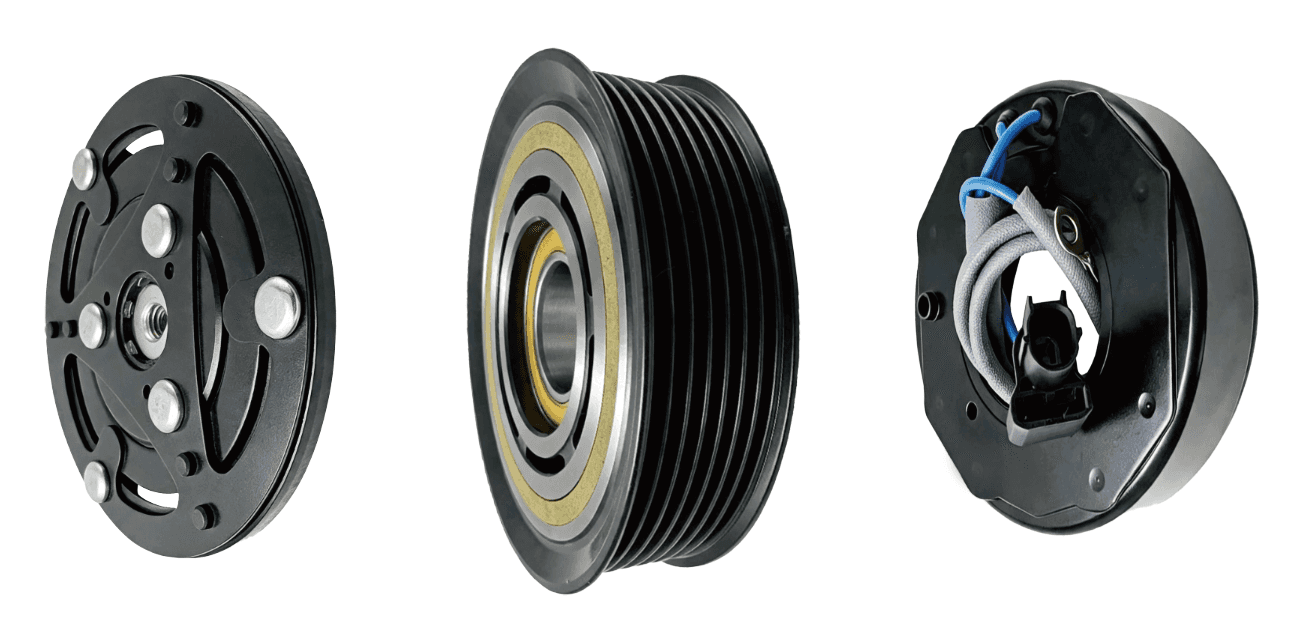
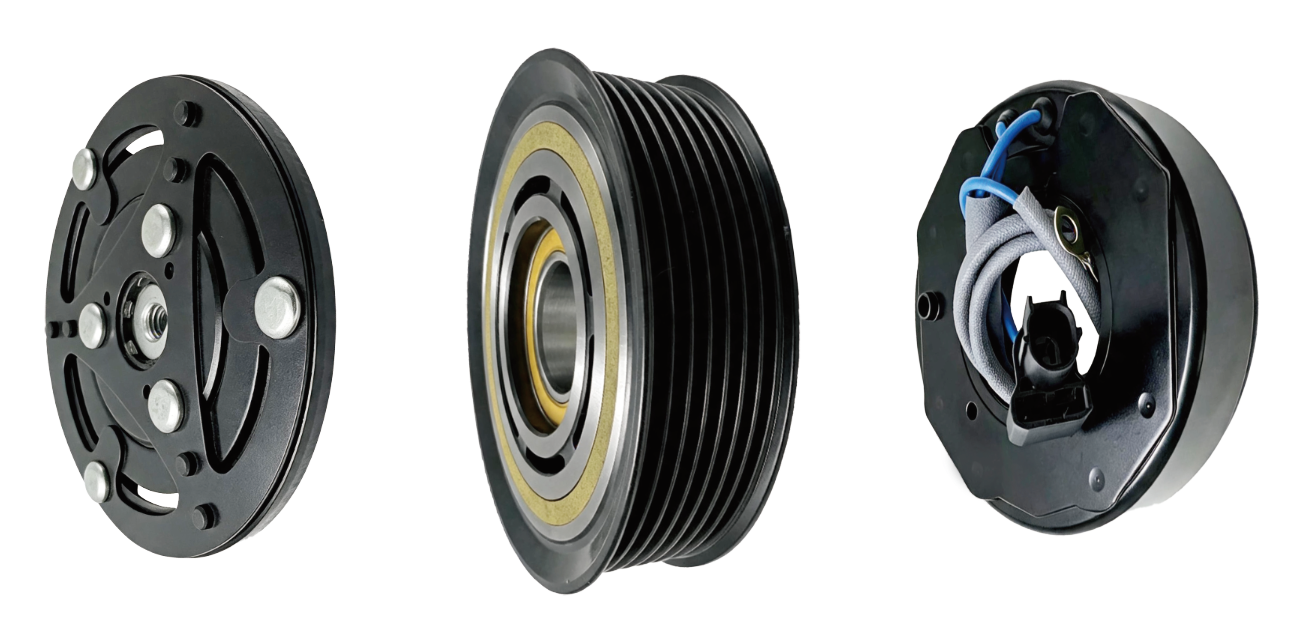
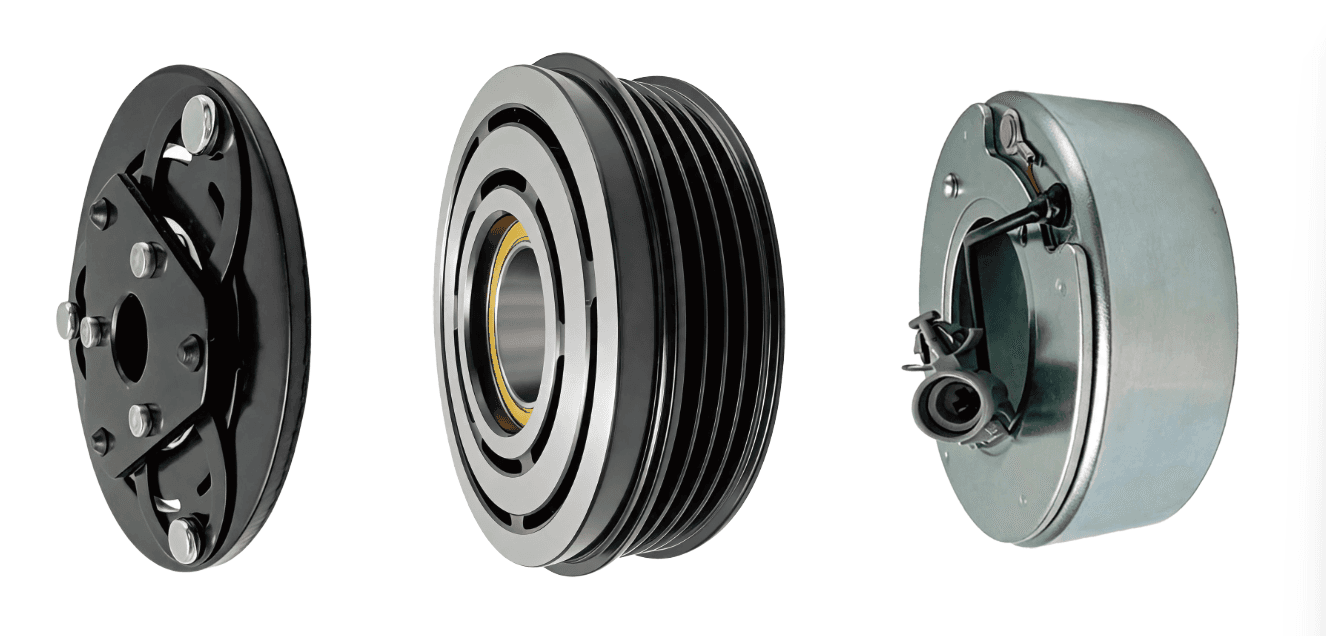
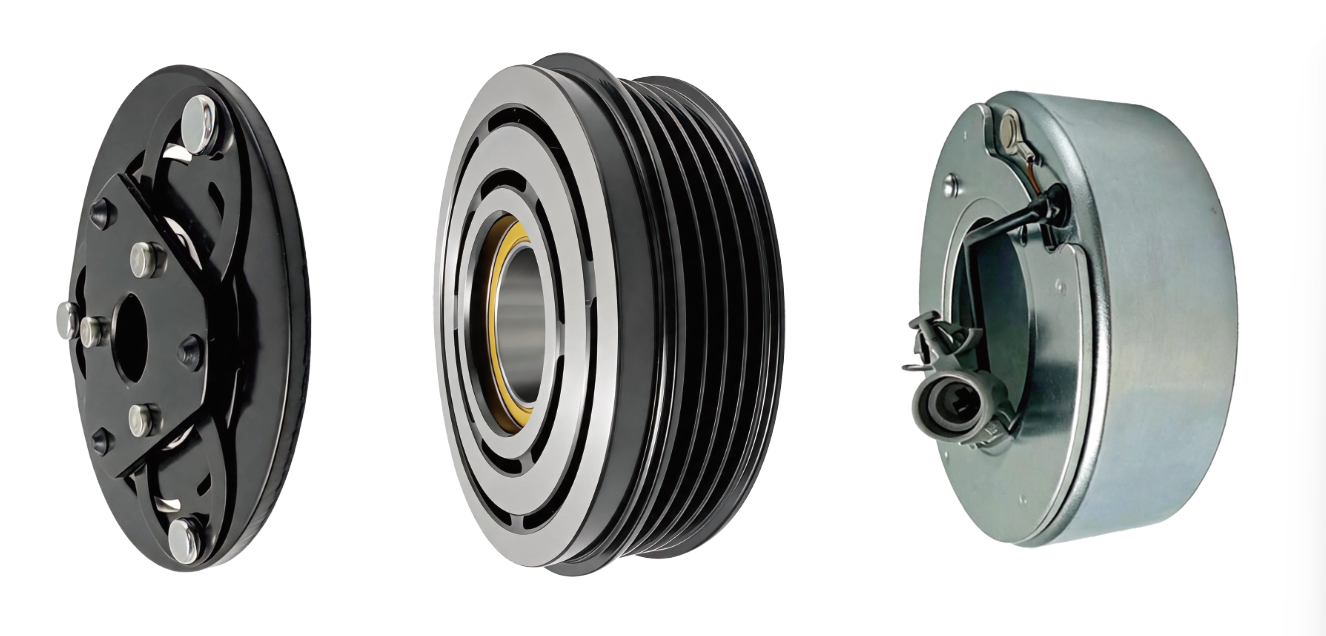
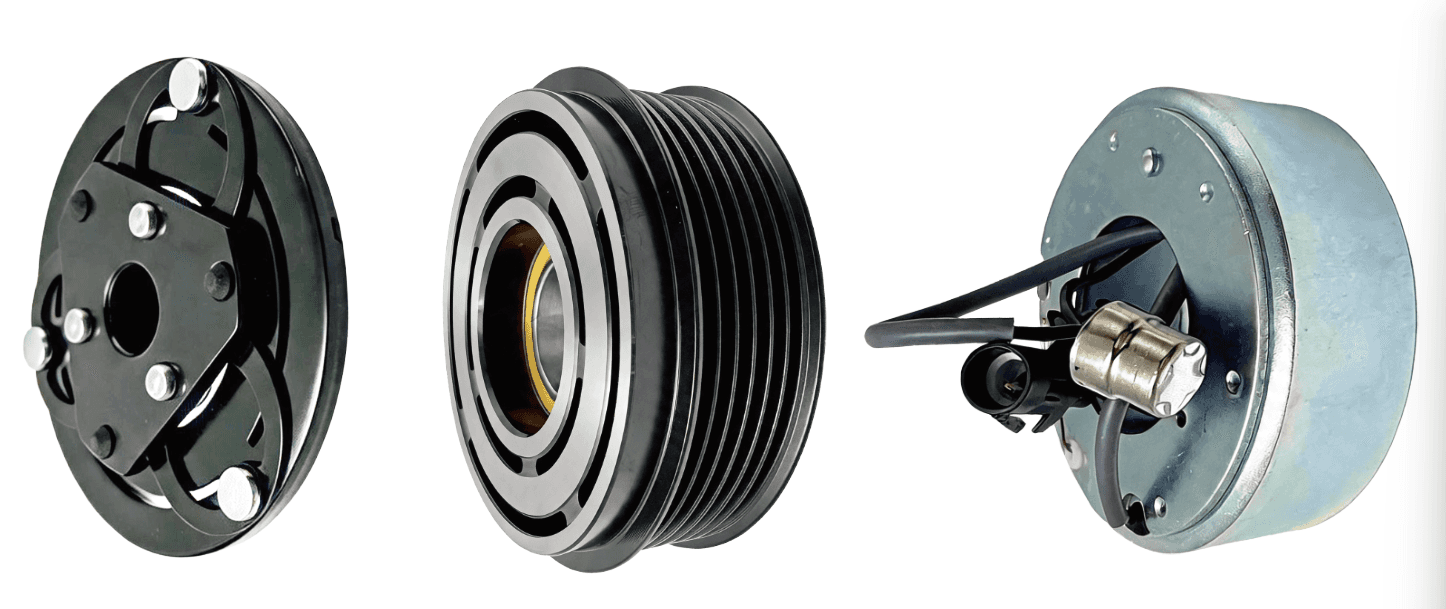
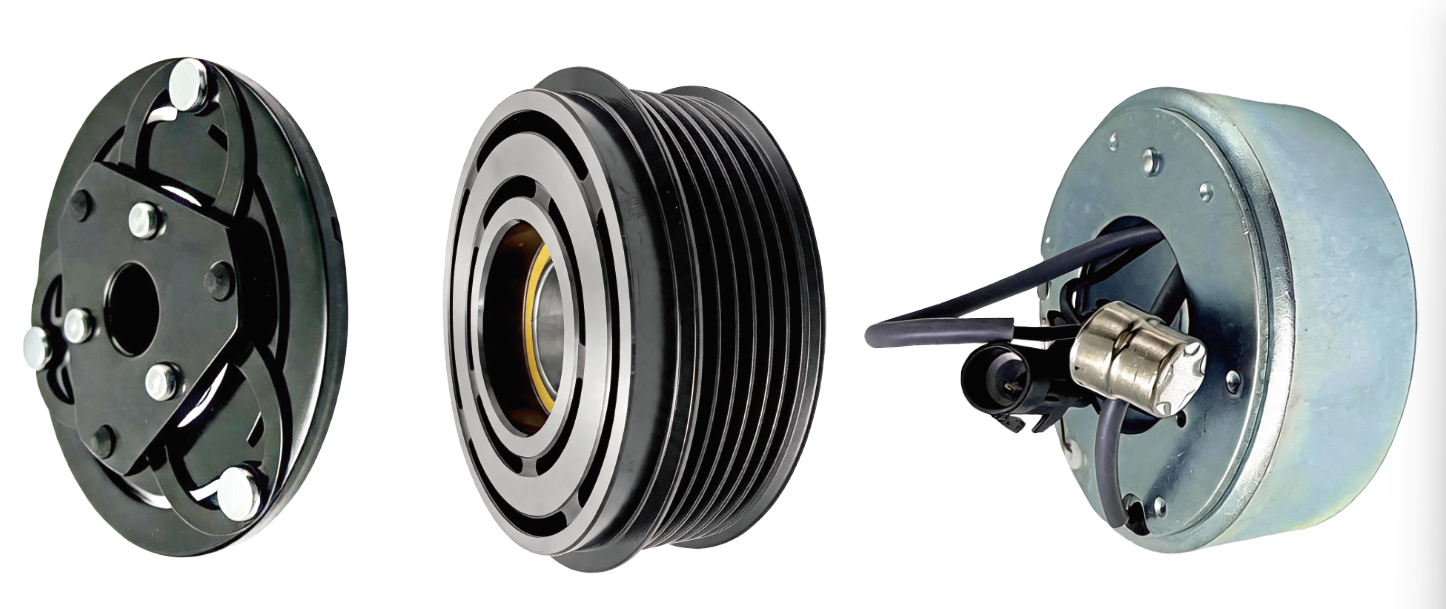
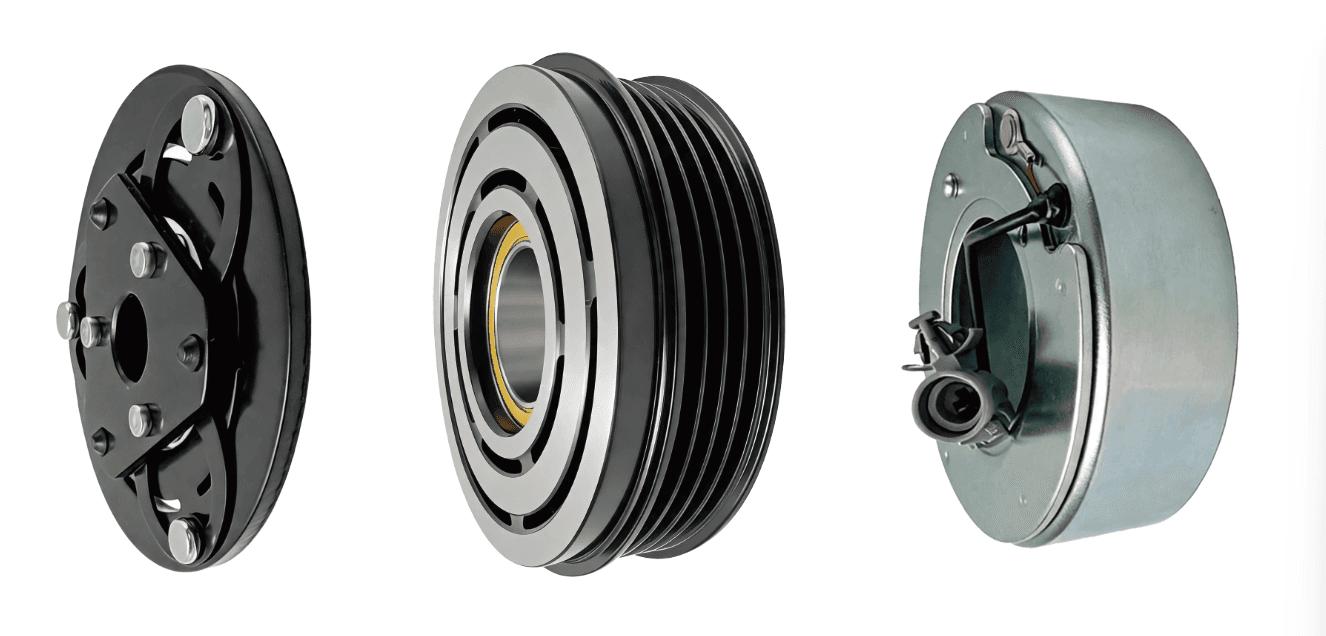
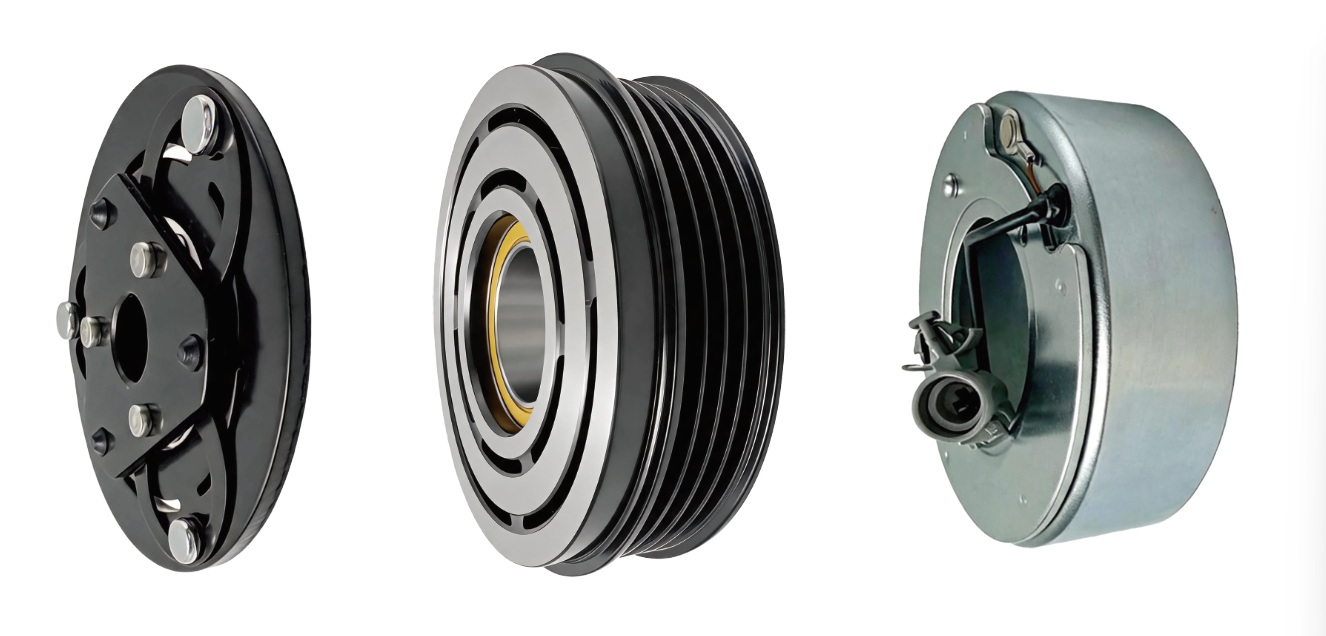
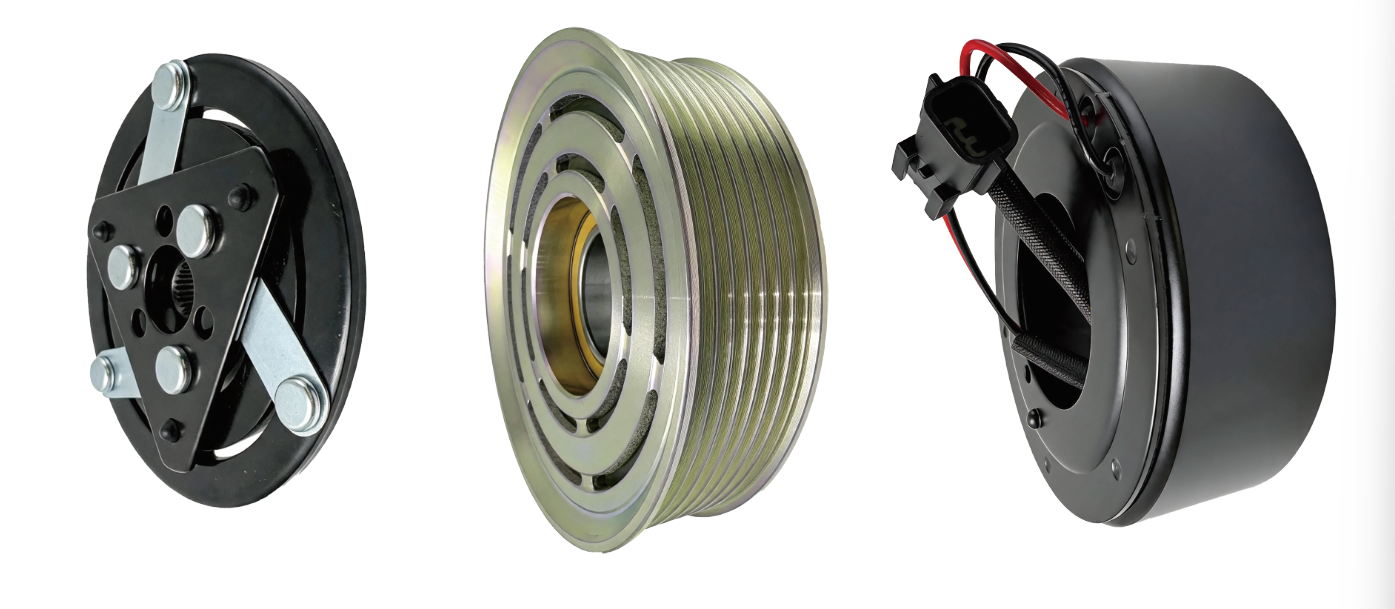
The product data provided shows an industrial electromagnetic clutch/pulley assembly with circular, coaxial construction, machined pulley surfaces, a central bore, and an electrical lead with connector. Those visible features match the working principle of an electromagnetic AC clutch used in compressor drive systems and similar rotating equipment. Because only image-based details are available, exact specifications such as voltage, torque, groove count, and application fit cannot be confirmed here.
Product Structure and Visible Features
This assembly appears to include several functional elements commonly associated with an A/C clutch assembly: a pulley or rotor body, a hub or mounting section, and an electrically actuated coil connection. The center component shows laminated steel construction and a machined outer surface with multiple grooves or ridges. That design supports belt engagement and stable rotation in drive systems.
Other visible parts include a black-coated steel housing or flange, silver mounting arms or links, and fasteners for attachment. The right-side unit also shows insulated wiring and a connector, indicating electrical actuation rather than purely mechanical engagement. These are useful clues for replacement buyers who need to identify a compatible assembly or compare an aftermarket AC compressor clutch against an OEM-style part.
Key Functional Elements
Typical clutch function depends on three basic interactions: the pulley rotates with the belt, the electromagnet engages the drive face, and the hub transfers torque to the compressor shaft. In service, that means the unit must maintain concentric rotation, dependable coil response, and enough mechanical integrity to handle repeated start-stop cycles.
Materials, Surfaces, and Construction
Based on the visible assembly, the clutch uses stamped and machined metal parts with coated steel surfaces. The black finish may be used for corrosion resistance or identification, but the exact coating cannot be verified from the image alone. The laminated rotor structure suggests a stack-style metal build that can help manage magnetic behavior and structural rigidity.
For buyers evaluating an AC compressor clutch bearing or clutch/pulley subassembly, surface condition matters. Machined grooves, mounting holes, and bore alignment affect belt tracking and installation fit. Electrical insulation and connector condition also matter because coil performance depends on stable power delivery.
Manufacturing and Assembly Approach
The visible features point to a manufacturing route that may include stamping, machining, pressing, and final assembly. Disc-like parts are often formed from stamped or laminated steel components, while critical interfaces such as the bore, mounting face, and pulley running surface are machined. Fasteners and lead wires are then integrated during assembly.
This type of construction is common in belt-driven compressors, pumps, and accessory drives because it supports compact packaging and controlled engagement. A well-built air conditioning compressor clutch must preserve alignment and resist heat, vibration, and repeated cycling.
Applications and Buyer Use Cases
Although the image does not confirm a specific vehicle platform, the geometry and electrical actuation are consistent with compressor drive systems used in automotive and industrial environments. Potential uses include automotive HVAC equipment, belt-driven compressors, pumps, and other machinery requiring remote engagement.
For vehicle maintenance teams, the part category aligns with car AC compressor clutch replacement work, especially when the original clutch has worn friction surfaces, a damaged coil, or bearing noise. It may also be relevant when sourcing an AC compressor clutch for car, an SUV AC compressor clutch, or a truck AC compressor clutch, provided the mounting and electrical requirements match.
Customization and Compatibility Checks
If you are sourcing a compatible AC compressor clutch, compare the visible and measurable features before ordering. Check pulley diameter, groove profile, hub shape, mounting pattern, shaft bore, connector style, and coil fit. Those details often determine whether the part is suitable as an OEM AC compressor clutch match or an AC compressor clutch kit substitute.
For repair planning, buyers often need the clutch, pulley, hub, and bearing as a matched set. In that case, a compressor clutch replacement decision should be based on actual wear points rather than replacing only one component. If the coil lead or bearing is damaged, a full AC compressor clutch repair strategy may be more practical than partial service.
Quality Control Considerations
Because this is a rotating electromechanical part, quality checks usually focus on fit, rotation, and electrical continuity. Common inspection points include concentricity, fastener security, surface finish, connector integrity, and assembly alignment. For a buyer, these factors are more useful than marketing language because they influence real installation success.
When reviewing an air conditioning compressor clutch, ask for confirmed dimensional data, coil voltage, and application references. If the part will be used in a harsh environment, confirm heat resistance and corrosion protection with the supplier rather than assuming performance from appearance alone.
How to Evaluate the Right Part
Before purchasing, define the system first: compressor model, belt layout, voltage, mounting style, and connector type. Then compare the clutch geometry with the existing unit. For replacement buyers, the most important decision factors are physical compatibility, electrical match, and serviceability. If the clutch is part of a broader compressor issue, inspect the pulley bearing, hub face, and coil lead together.
If you need help identifying a match or selecting an assembly for a specific drive system, provide the compressor model, photos, and measurements. That information makes it easier to confirm the correct A/C clutch for compressor application and avoid installation errors.
Request Support
Send your part number, dimensions, or installation photos to confirm fit and discuss a suitable clutch assembly option. Clear identification at the start helps reduce downtime and supports faster sourcing for replacement or production use.