

Air Conditioning Clutch Assembly for Belt-Driven Compressor Applications
An air conditioning clutch assembly helps solve a common vehicle service problem: the compressor must turn on and off without running all the time with the engine belt. By engaging the compressor only when cooling is needed, the part supports HVAC operation, reduces unnecessary drag, and allows a worn or failed clutch system to be replaced as a serviceable unit. For repair shops and parts buyers, the main value is straightforward fitment replacement at the clutch-and-pulley level rather than replacing the entire drive system.
Product Overview
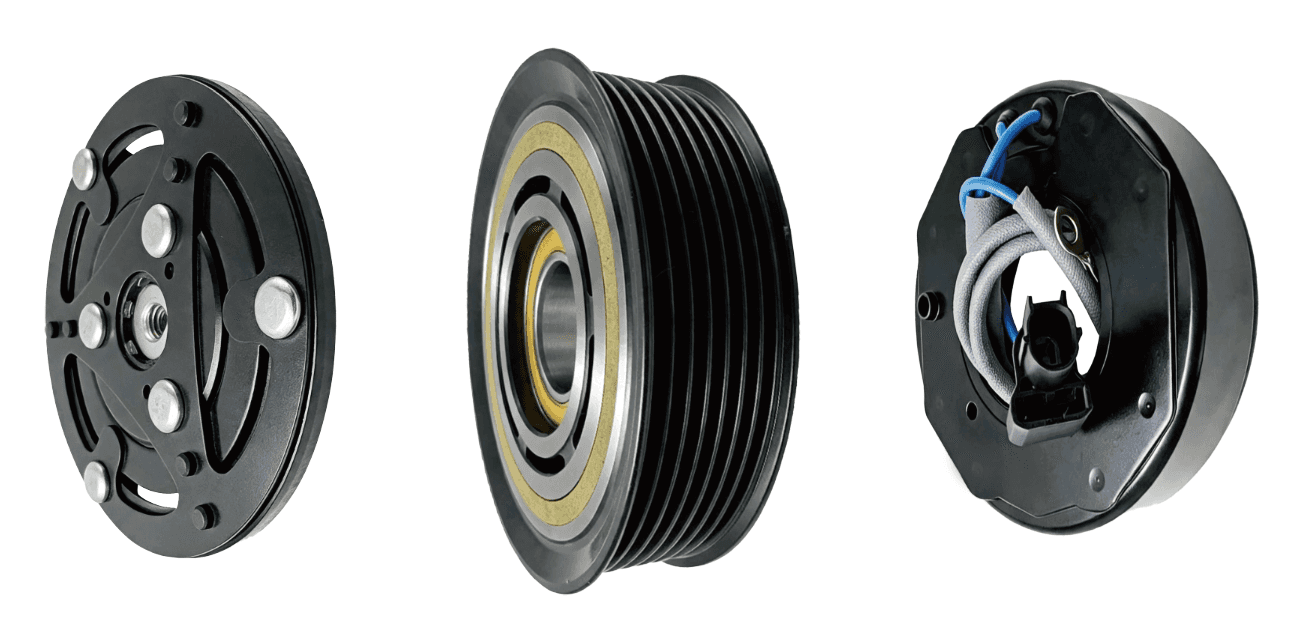
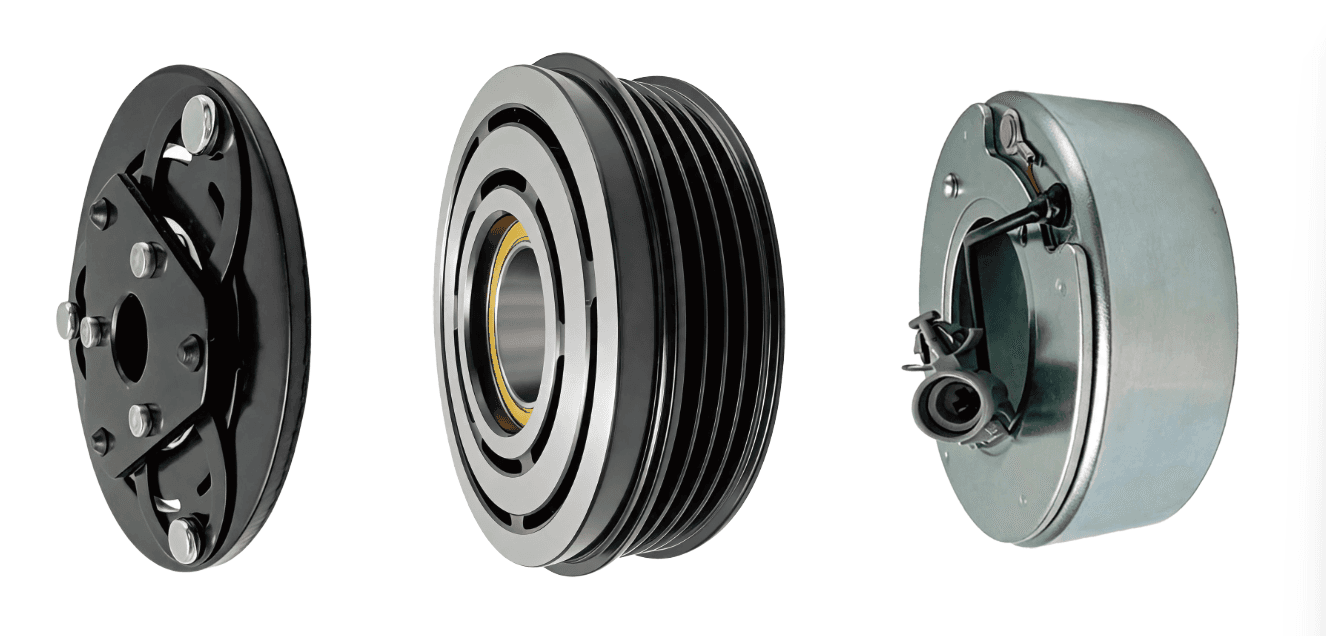
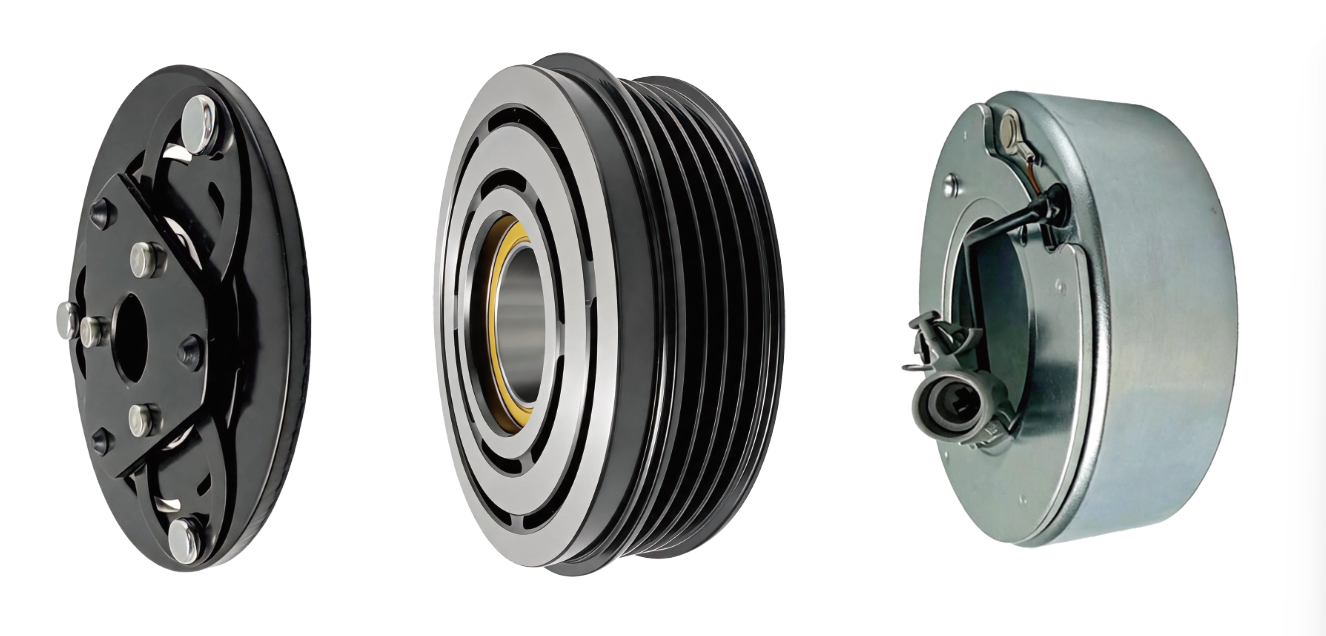
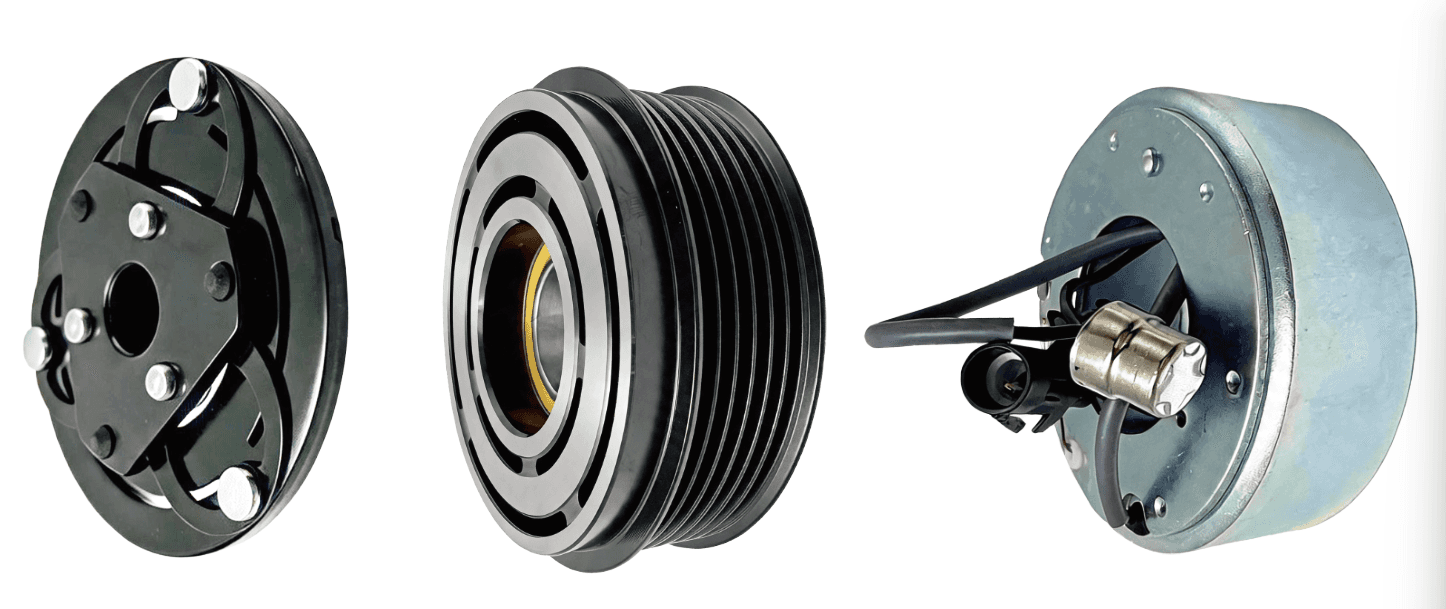
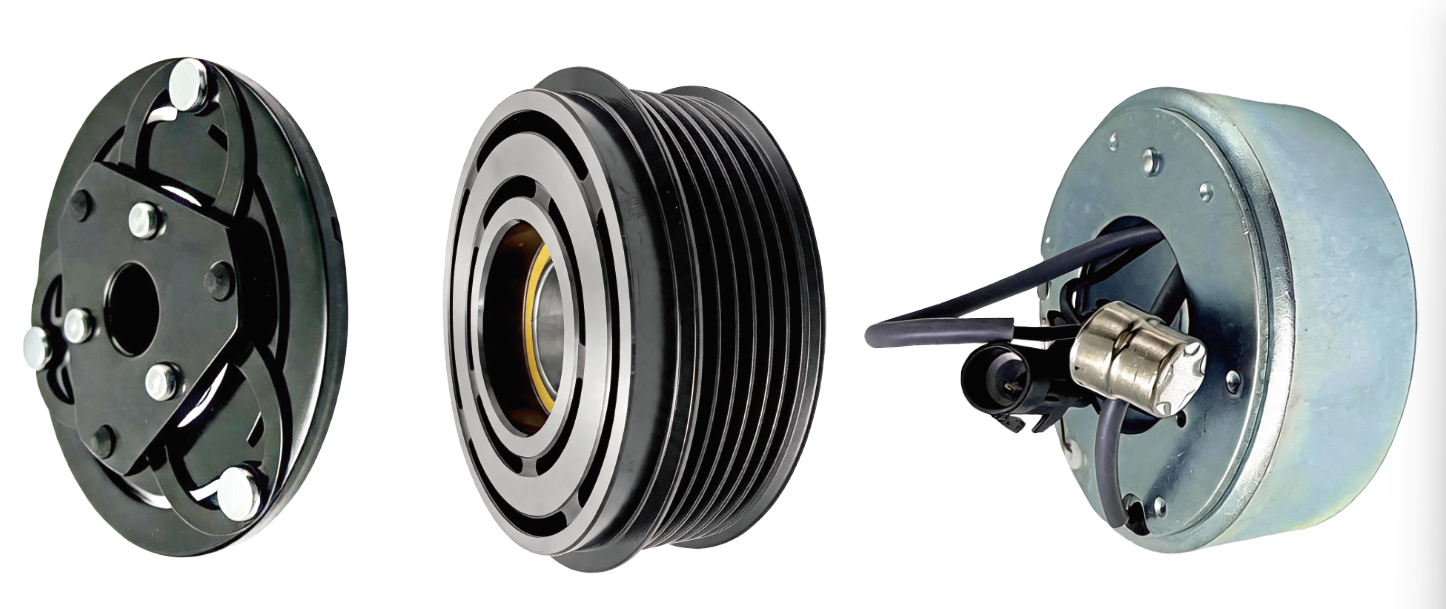
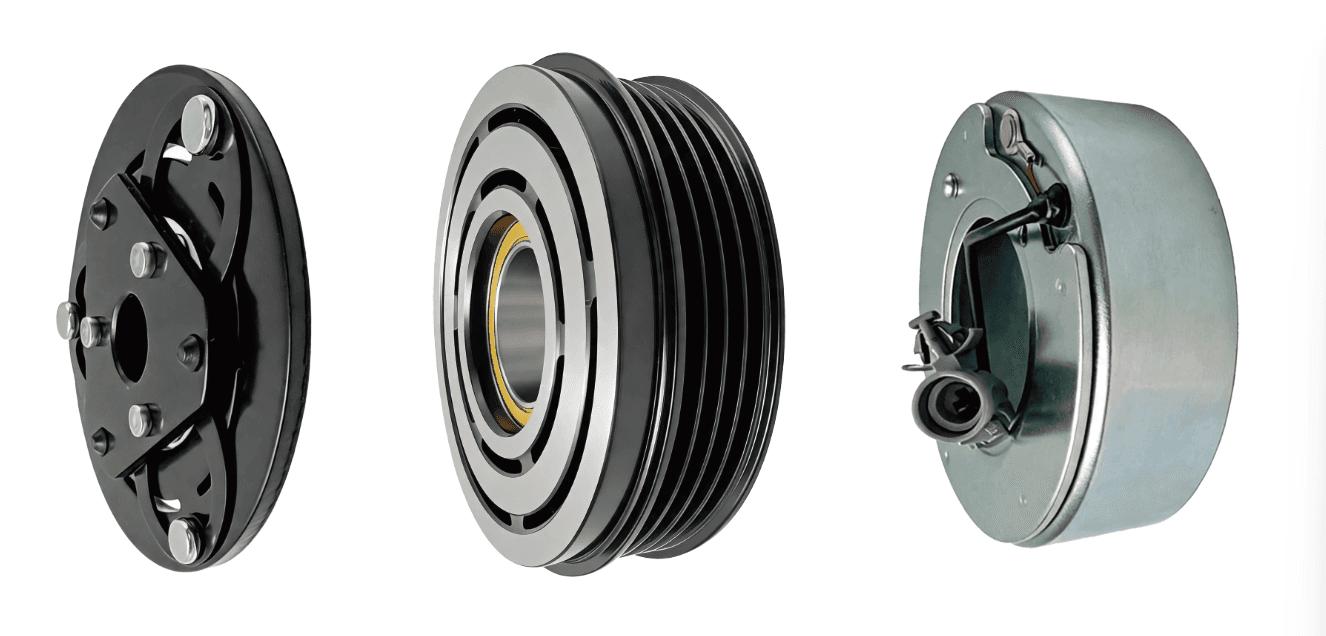
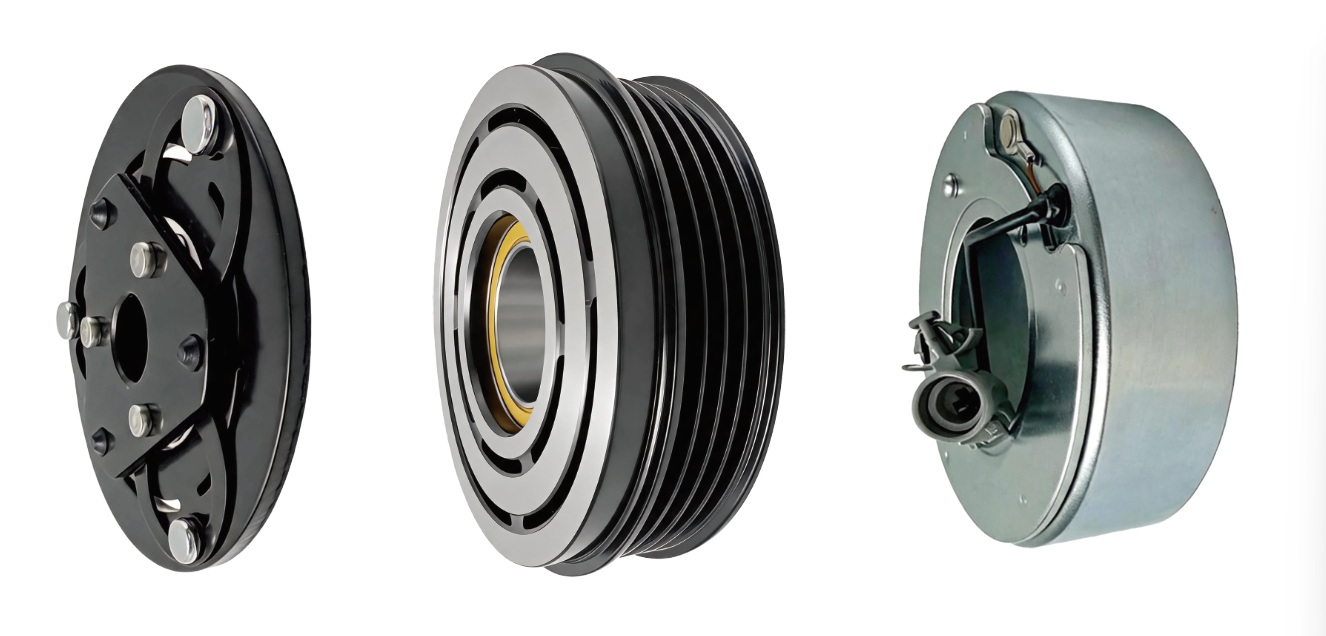
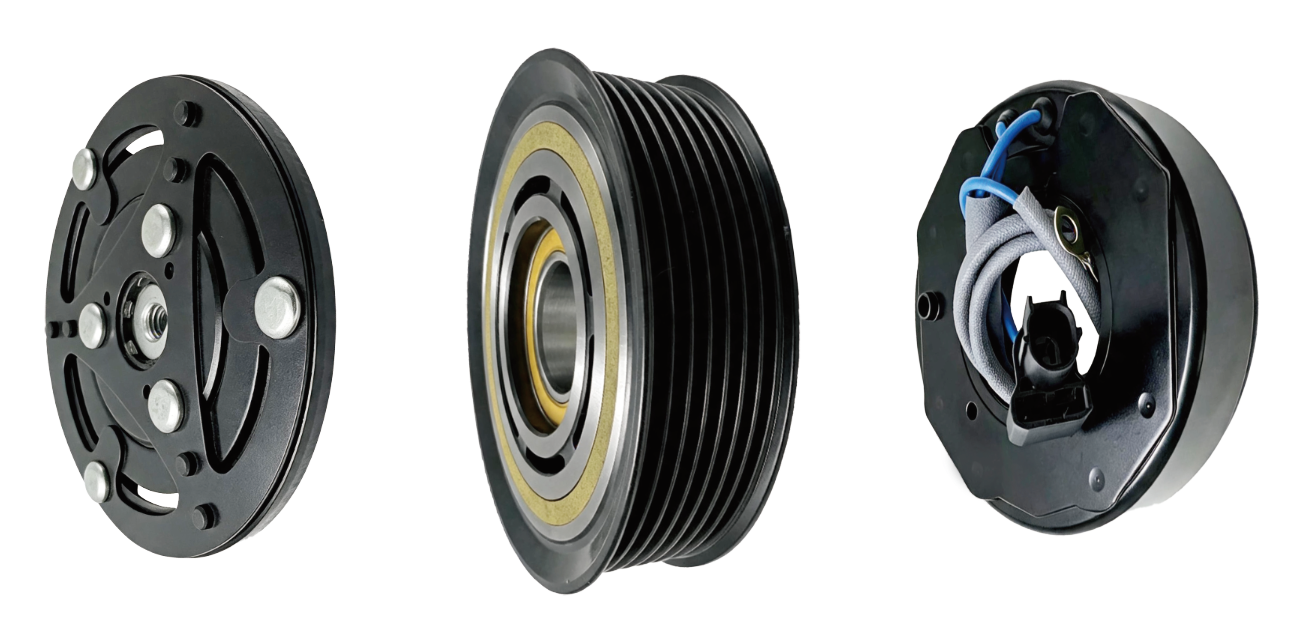
This AC clutch assembly is an automotive-style electromagnetic compressor clutch unit with a visible front clutch face, grooved pulley, central bearing, and rear coil/electrical section. The structure suggests a belt-driven accessory design used in compressor service or a similar rotating accessory application. Visible features include a black-coated metal housing, steel fasteners and poles, a multi-rib pulley, and insulated electrical leads with a braided sleeve. Because the image shows a complete assembled unit from multiple angles, it is useful as a reference for sourcing replacement components or comparing service parts.
What the assembly typically does
In an HVAC system, the clutch transfers engine belt power to the compressor when energized and disconnects when cooling demand drops. That function is central to stable air conditioning performance. When the clutch slips, the bearing becomes noisy, or the coil fails, the compressor may not engage correctly. In those cases, buyers often look for an AC compressor clutch replacement or a matching clutch bearing assembly rather than replacing the full compressor.
Visible Construction and Key Capabilities
The unit appears to combine several functional elements in one package: a front drive plate, a compressor clutch pulley, a bearing-supported rotating section, and a rear electromagnetic coil subassembly. The pulley surface is grooved for a serpentine belt, which indicates compatibility with multi-rib belt drive systems common in modern vehicles. The rear electrical section includes wiring and a connector-style lead, showing that the clutch is designed for electrical engagement rather than purely mechanical actuation.
Core visible components
Front clutch plate for engagement with the driven face
Grooved pulley for belt transmission
Central bearing area for rotation support
Electromagnetic coil and wiring section for activation
Black-coated metal body and steel hardware for structural support
Materials and Finish Options
From the visible details, the assembly uses coated metal housing parts, steel fasteners, and a bearing race in the pulley center. The electrical leads are insulated and protected with a grey braided sleeve and blue wiring. A gold- or brass-colored ring is visible near the bearing area, though its exact material and role cannot be confirmed from the image alone. For buyers, the practical takeaway is that this type of magnetic AC clutch assembly depends on both mechanical wear parts and electrical integrity, so material quality and assembly precision matter during sourcing.
Manufacturing and Assembly Considerations
Although the exact process cannot be confirmed from the image, a product like this usually combines precision machining, stamping, bearing installation, coil winding or coil module integration, and final electrical/mechanical assembly. The pulley must run concentrically, the bearing must support belt loads smoothly, and the clutch face needs reliable engagement behavior. For an A/C clutch kit supplier, consistency in fit, alignment, and connector details is often as important as the raw materials themselves.
Typical Applications
An A/C compressor clutch kit is commonly used in automotive HVAC service, compressor repair, and aftermarket replacement sourcing. Depending on the exact compressor design, it may also be applied in similar belt-driven accessory systems where an electromagnetic clutch is needed to connect and disconnect rotation. Common buyer scenarios include workshop repairs, fleet maintenance, and parts distribution for compressor service.
Quality Control Factors Buyers Should Review
When evaluating an electromagnetic clutch assembly, buyers usually check pulley rotation smoothness, bearing condition, electrical lead protection, coil continuity, and visible machining consistency. Fitment remains the first decision point, since compressor family and vehicle compatibility determine whether the part can be used. A clutch control module may be part of the broader system in some applications, so electrical matching should also be confirmed during procurement.
Customization and Sourcing Guidance
If you are sourcing an AC clutch pulley assembly for repair or resale, verify the belt profile, connector style, mounting pattern, and compressor model before ordering. For replacement programs, it is also wise to confirm whether the buyer needs the complete assembly or only a subset such as the clutch bearing assembly, pulley, or coil. Photographic comparison, part number matching, and connector verification can reduce installation issues.
Buyer Decision Factors
Choose based on visible construction quality, service completeness, and compatibility with the target compressor. The most important questions are whether the clutch engages cleanly, whether the pulley matches the belt system, and whether the electrical interface fits the vehicle harness. If the goal is a full-service replacement, a complete A/C clutch assembly is usually more convenient than piecing together individual components.
Request Sourcing Support
If you are comparing an air conditioning clutch assembly for OEM or aftermarket supply, send the compressor model, connector photo, and pulley details for review. Clear reference data helps match the correct AC clutch assembly and reduces the risk of ordering the wrong service part.