

AC Compressor Clutch Overview
An AC Compressor Clutch is the component that lets a belt-driven compressor connect and disconnect from engine power when cooling is needed. For buyers, the main problem it solves is simple: the compressor does not need to run all the time, but it must engage reliably when the air conditioning system calls for it. In repair, replacement, or equipment integration, this part helps restore controlled rotation, reduce unnecessary drag, and keep the accessory drive operating correctly.
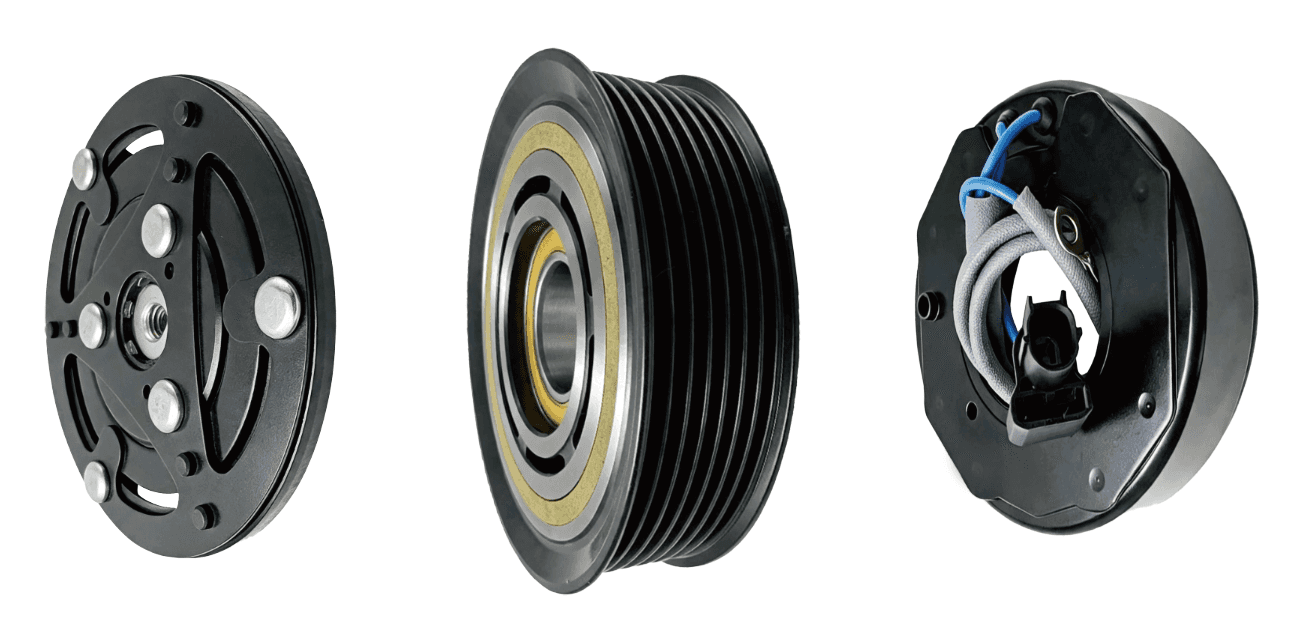
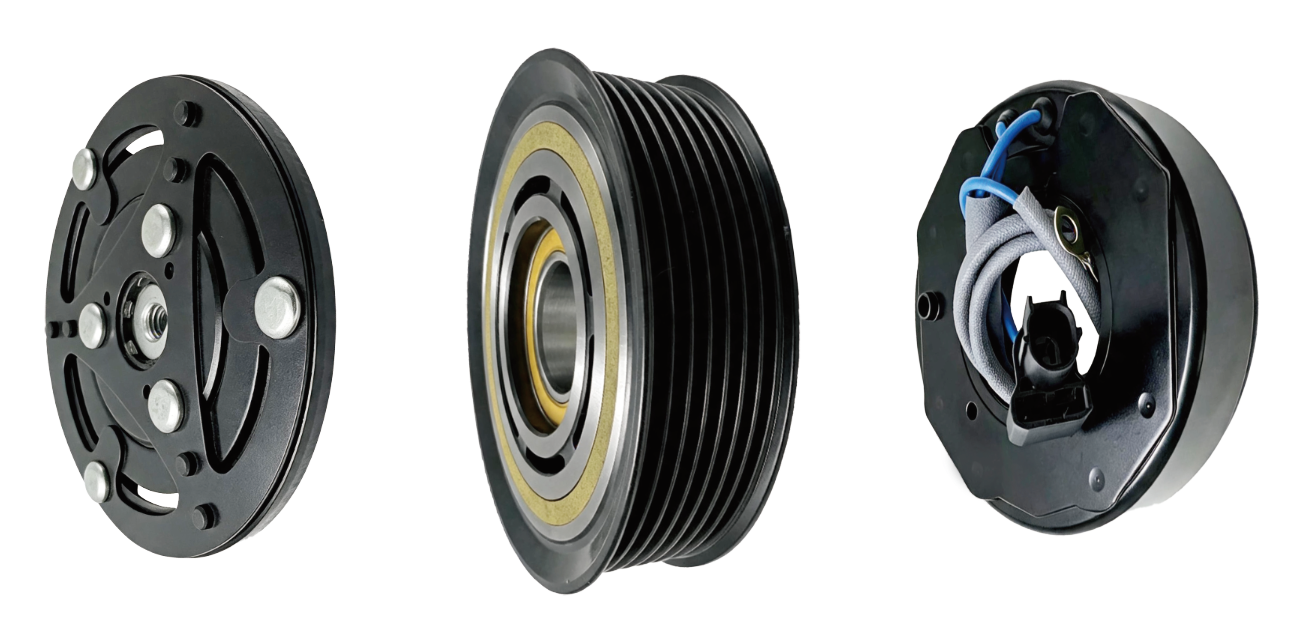
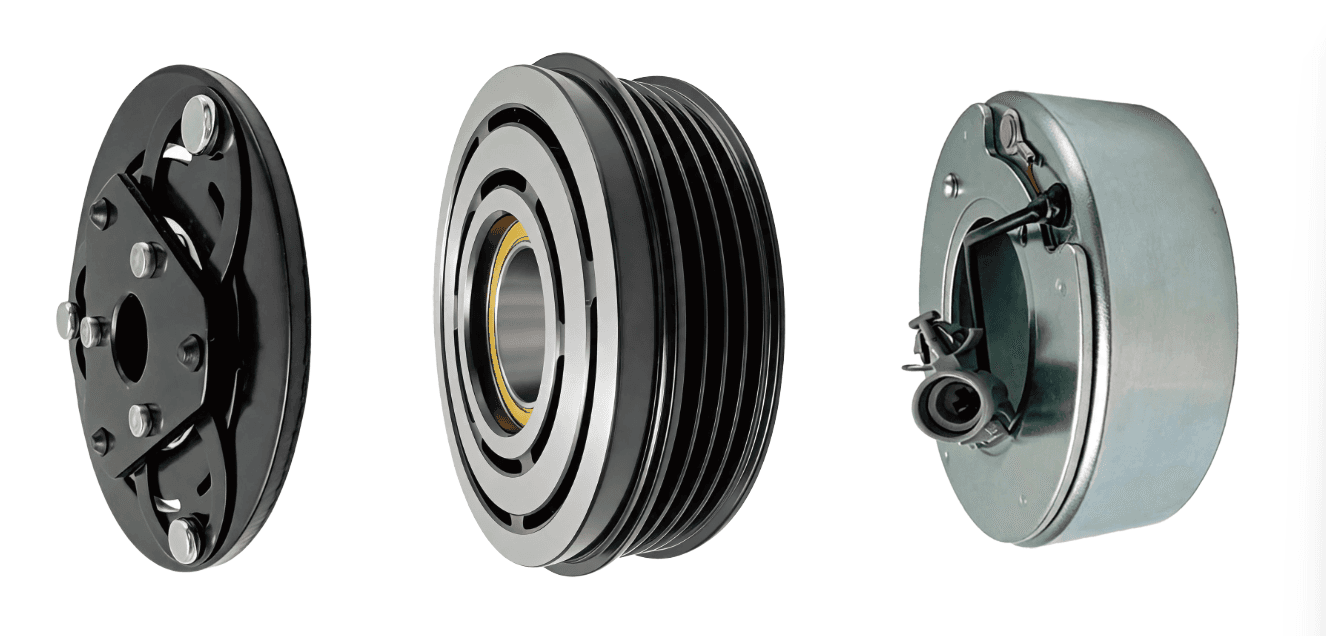
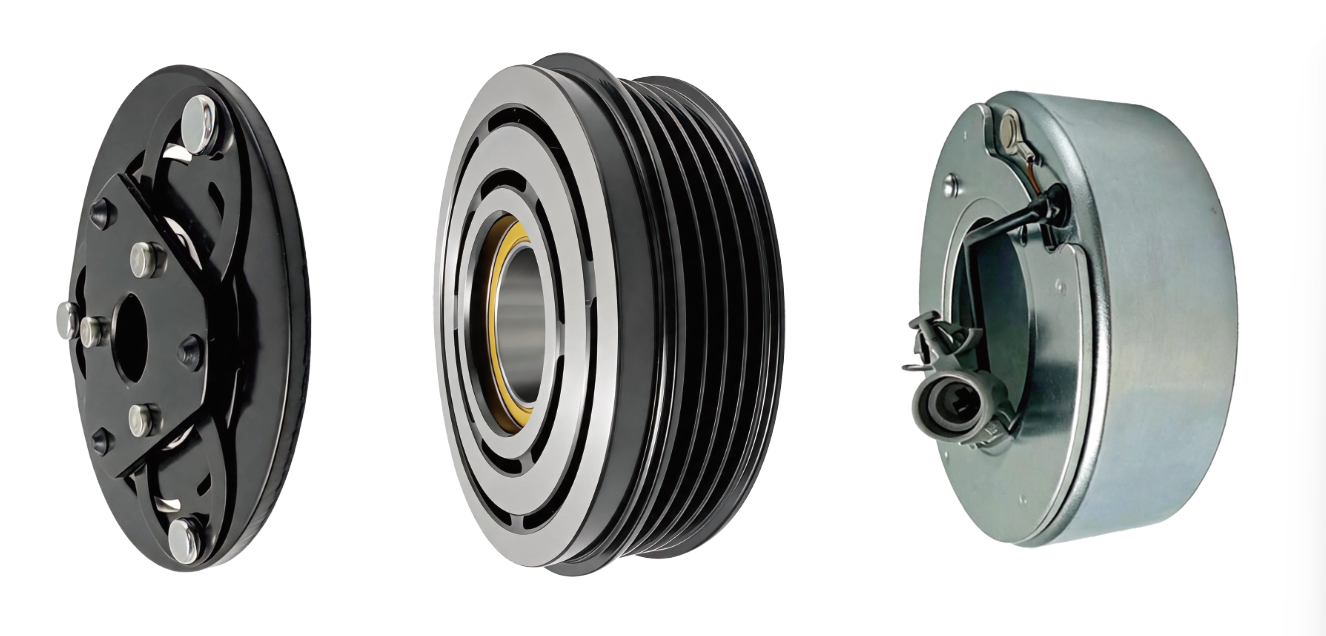
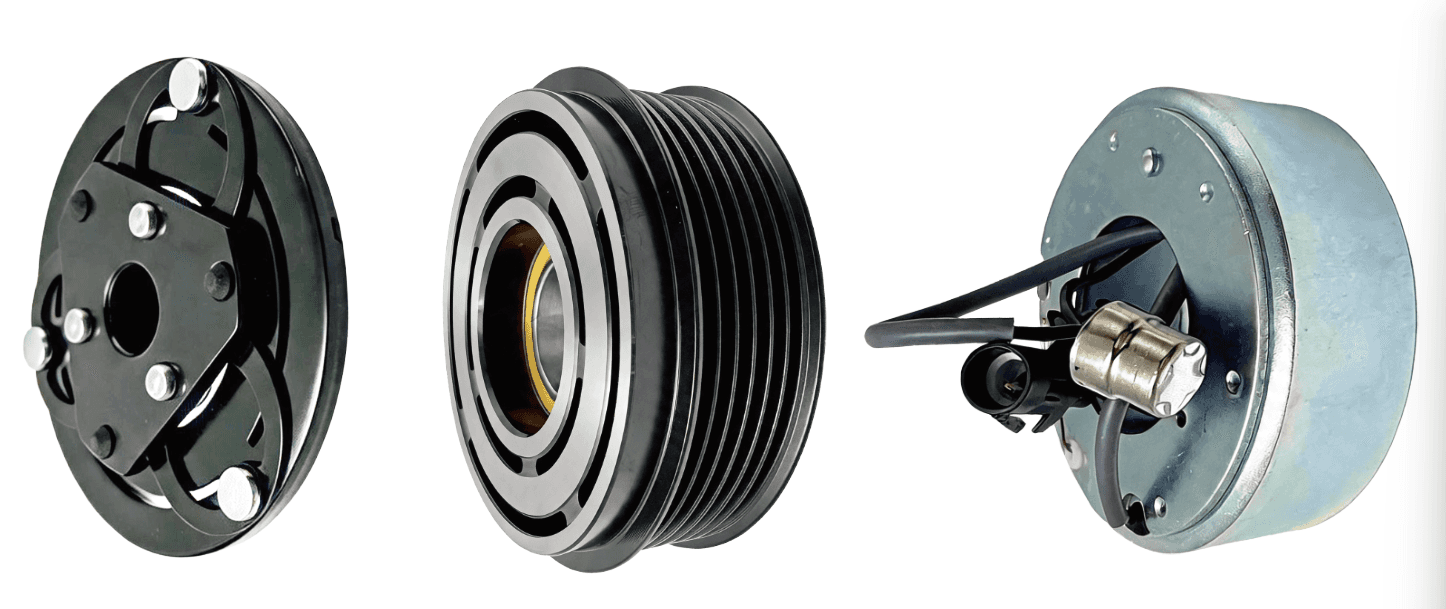
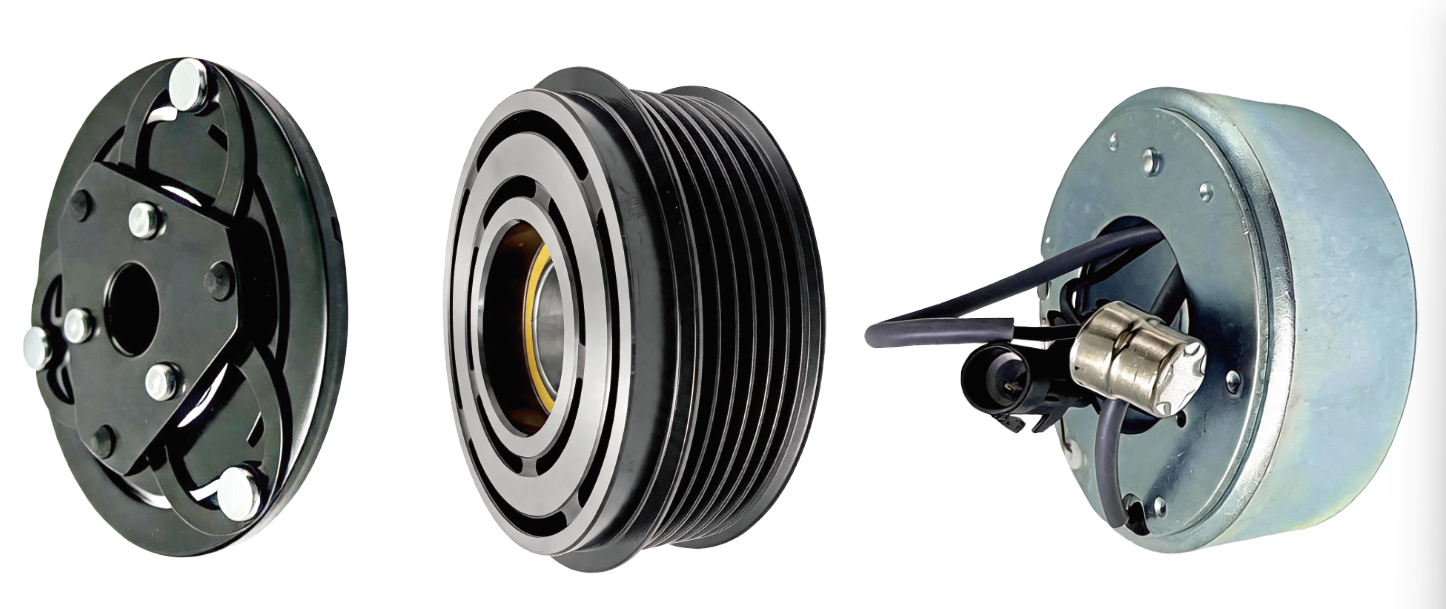
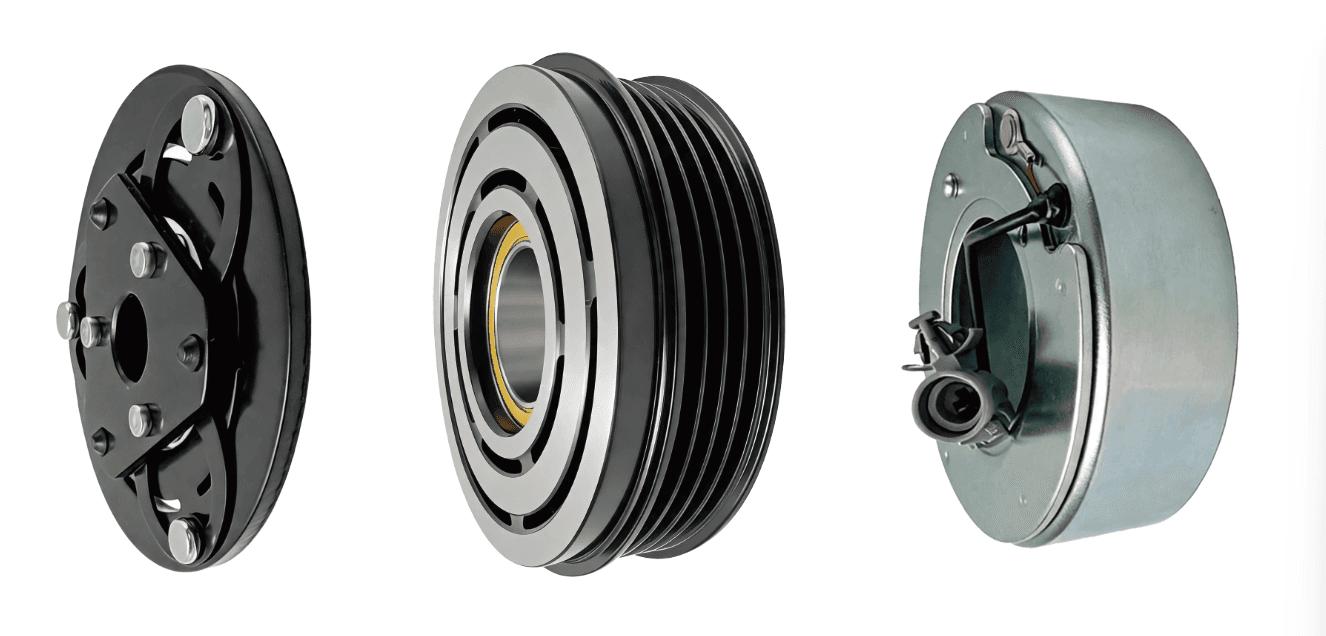
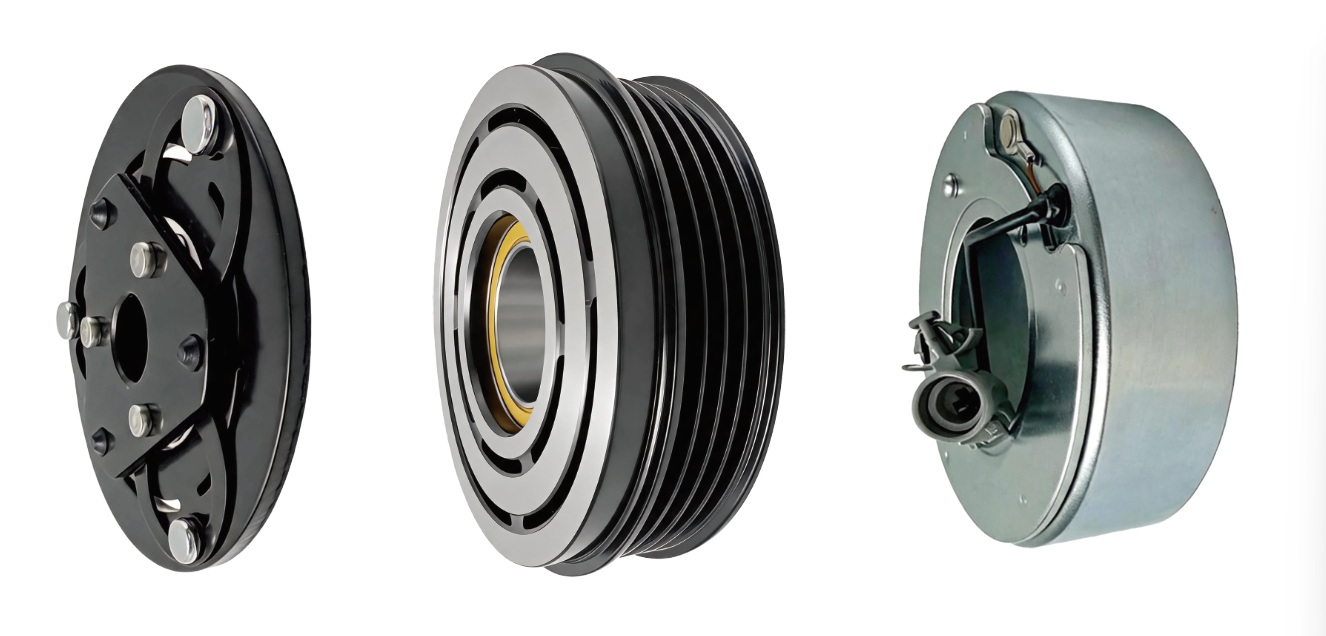
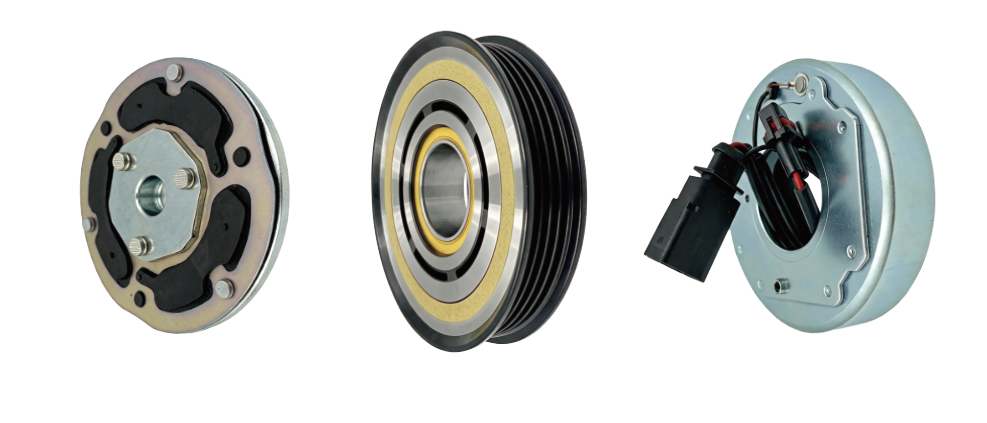
The product shown is a circular electromagnetic clutch assembly with a grooved pulley, electrical connector, coil lead, and central bore. That visible structure is typical of an air conditioner compressor clutch or related belt-driven accessory clutch. Because the exact vehicle or machine application is not provided, this page describes the assembly in practical terms rather than assigning a specific compatibility claim.
Product Structure and Visible Features
The assembly includes several elements that are useful to buyers evaluating a clutch for AC compressor service. The outer section appears to be a multi-rib compressor clutch pulley, designed to track the serpentine belt. The center portion shows a hub, mounting fasteners, and a friction interface where engagement occurs. A rear-side electrical connector and coil lead indicate electromagnetic actuation. Black insulating or damping components are also visible, which are commonly used to support the clutch structure and manage vibration.
Key visible characteristics
• Circular compressor clutch assembly form factor
• Grooved pulley for belt drive engagement
• Central shaft bore for mounting alignment
• Electrical connector and coil routing for energized operation
• Stamped and machined metal construction with coated surfaces
How the Electromagnetic Clutch Works
When the coil is energized, the magnetic field pulls the clutch plate into contact with the driven pulley or mating surface. That contact transfers rotational power from the belt to the compressor shaft. When power is removed, the clutch disengages and the pulley can rotate independently. This on-off behavior is why an electromagnetic compressor clutch is widely used in vehicle HVAC systems and other accessories that should cycle rather than run continuously.
Materials and Surface Finishes
From the visible product details, the assembly uses stamped and machined metal parts with a silver-toned plated housing or plate, a darker coated pulley or hub surface, and a yellow-gold spacer or friction-related ring in the center area. Those finishes are commonly selected to support corrosion resistance, wear control, and dimensional stability during repeated engagement cycles.
Depending on the final build, buyers may also see black rubber, polymer, or insulated components used for damping, electrical isolation, or connector protection. If you need an AC compressor clutch replacement for a service environment with road splash, heat, or vibration, finish selection matters as much as geometry.
Manufacturing and Assembly Considerations
A compressor clutch assembly usually combines metal stamping, precision machining, winding of the electromagnetic coil, press fitting, bearing installation, and final assembly. The pulley and hub surfaces must align accurately so the clutch plate runs true and the belt tracks correctly. The connector and lead routing also need to be secure so vibration does not damage the electrical path.
For buyers sourcing a magnetic clutch for A/C compressor applications, manufacturing consistency is important because small alignment errors can lead to noise, belt wear, or poor engagement. A well-built electromagnetic compressor clutch should feel solid, mount cleanly, and allow the driven section to engage without obvious interference.
Typical Application Scenarios
This type of part is commonly used in automotive HVAC systems, but similar clutch architectures can appear in industrial belt-driven equipment as well. Buyers often look for a compressor clutch assembly when replacing worn bearings, a damaged clutch plate, a failed coil, or a pulley that no longer runs smoothly.
Common use cases include:
• OEM or aftermarket air conditioner compressor clutch service
• AC compressor clutch replacement in repair workshops
• Retrofit or maintenance of belt-driven accessory systems
• Equipment requiring controlled engagement and disengagement
Quality Control Points Buyers Should Check
When selecting an AC compressor clutch kit or individual clutch components, focus on measurable fit and build factors. The most important checks are bore size, pulley groove profile, connector style, mounting pattern, and overall assembly alignment. Because the exact electrical and torque specifications are not provided here, those values should be confirmed against the target compressor or machine before purchase.
For procurement teams, the practical decision factors are compatibility, coil and connector match, bearing condition, surface finish, and whether the clutch is supplied as a complete unit or as separate service parts such as the pulley, coil, or AC clutch plate.
Customization and Ordering Guidance
If you are sourcing a clutch for AC compressor integration, ask for drawings, dimensional confirmation, connector photos, and pulley groove details before approving production or replacement. For an A/C compressor clutch kit for cars, match the kit to the exact compressor family rather than relying only on external appearance. If your application is not automotive, a universal AC compressor clutch may still be possible, but shaft interface, power rating, and mounting design must be verified.
Customization can include connector configuration, pulley profile, housing finish, coil lead routing, and mounting details, depending on the manufacturing capability and the target machine.
Request Technical Support
If you need help identifying the right AC compressor clutch, comparing a replacement part, or confirming whether this compressor clutch pulley and coil layout matches your system, send the technical drawing, photos, or sample part details. Clear input at the start reduces mismatch risk and helps ensure the clutch assembly fits the intended compressor or drive unit.