
Air Conditioning Flush Kit Overview
An Air Conditioning Flush Kit helps technicians remove old oil, debris, and contamination from automotive A/C lines and related components before reassembly, replacement, or retrofit work. When a compressor fails or a system has been opened for service, leftover residue can shorten the life of the new parts and interfere with refrigerant flow. Using an AC Flush Kit gives the repair team a controlled way to clean the refrigerant path instead of leaving contamination inside the system.
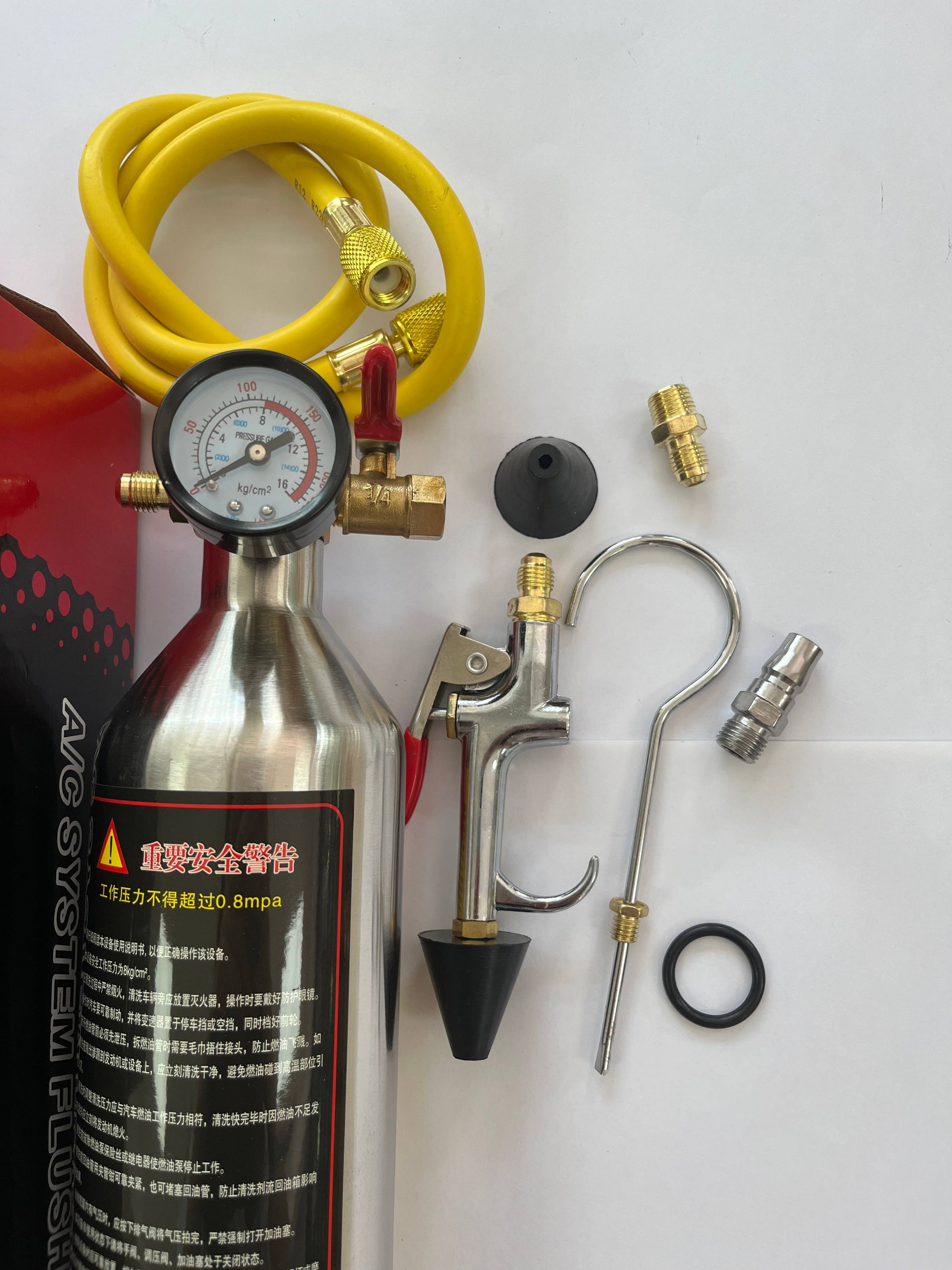
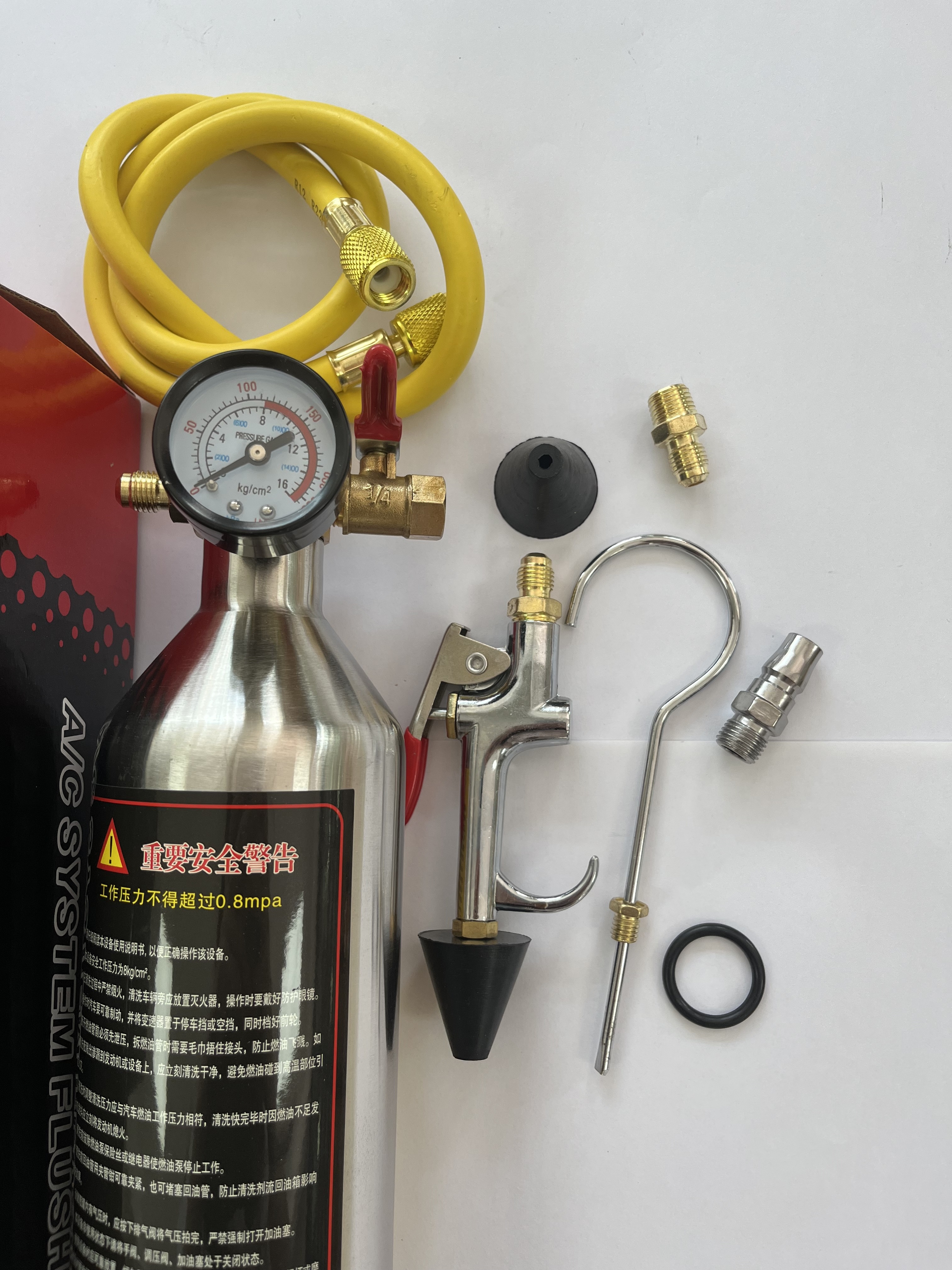
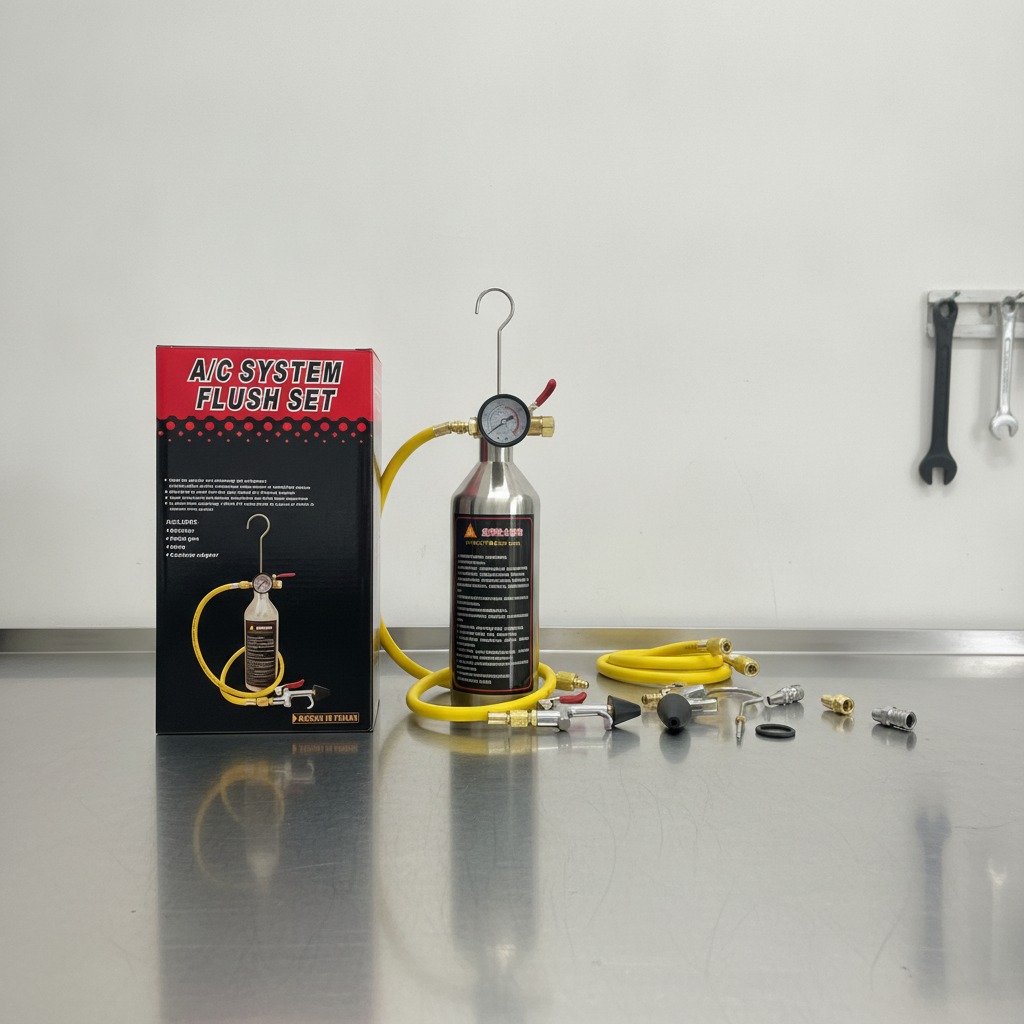
This type of kit is built for workshops that need a practical service tool for routine HVAC cleaning. The visible product configuration includes a flush canister, pressure gauge, hose, flush gun, adapters, and small sealing accessories. The set is shown as an AC System Flush Kit with “A/C SYSTEM FLUSH SET” printed on the packaging, which makes its purpose easy to identify at the workbench.
What the Kit Is Designed to Do
An Automotive AC Flush Kit is used to push a cleaning agent through refrigerant passages so contaminants can be carried out of the system. In day-to-day repair work, that means clearing compressor residue, sludge, and loose particles from lines, condensers, and other accessible components before the system is closed back up.
The main buyer problem it addresses is simple: a repaired A/C system may still fail if dirt or degraded oil remains inside. By introducing a flushing step, the technician reduces the risk of blockage, poor cooling performance, and repeat service calls. For many repair environments, that makes an AC System Cleaning Kit a necessary part of pre-charge preparation.
Key Components and Visible Features
Flush canister
The canister/body appears to be a metal vessel with a brushed or satin finish. It has a cylindrical shape, a top-mounted gauge, and a hanging hook for storage or bench use. A warning label is visible on the body, which suggests pressure-sensitive operation and the need to follow service instructions carefully.
Gauge, hose, and trigger tool
The top gauge allows the operator to monitor pressure during flushing. A bright yellow flexible hose with brass fittings connects the canister to the service point, while the hand-operated flush gun/trigger tool gives the technician a simple way to control flow. In practical workshop use, that control matters when cleaning different line sizes or flushing individual components.
Adapters and sealing parts
Small adapters, an O-ring, and a rubber cap/plug are visible in the kit. These parts support connection and sealing at the service point. Because the exact thread sizes and compatibility range are not readable from the image, buyers should verify their required fittings before purchase.
Materials and Finish Options
Based on the visible product, the main body looks like stainless steel or plated metal, the hose is a yellow rubber or reinforced polymer, and the fittings appear to be brass. The gauge housing seems to be black plastic or painted metal with a glass face. These material choices are typical for an A/C Line Flush Kit because the kit must handle repeated workshop use and contact with service fluids.
Surface finish is functional rather than decorative. The metal canister has a clean satin look, which is suitable for shop handling and easy inspection. Buyers evaluating an HVAC Flush Kit should consider corrosion resistance, hose flexibility, and the durability of the fittings, especially if the tool will be used frequently.
How the Flushing Process Typically Works
For a general service workflow, the technician first disconnects the A/C component or line that needs cleaning. Next, the flush medium is added to the canister according to the service method used in the shop. The hose and adapters are then connected to the section being cleaned. After checking the setup, the operator uses the flush gun to direct flow through the circuit.
During the process, contaminated fluid exits the system and should be collected and disposed of according to workshop practice. Once the passage is clean, the technician allows the lines to dry fully before reassembly. That drying step is important because trapped cleaner or moisture can affect the new charge.
Common Applications
This Car Air Conditioning Flush Kit is suited to auto repair shops, A/C technicians, and rebuild work where the system must be cleaned before new parts are installed. It is especially useful after compressor failure, condenser replacement, line service, or system retrofitting. Shops that handle passenger vehicles, light commercial vehicles, or general HVAC service tasks may also use a similar tool set for refrigerant line cleaning.
In many workshops, the Refrigerant Line Flush Kit is used as a preparation tool rather than a final repair item. Its job is to support clean reassembly and help the technician start the next phase with a cleaner internal circuit.
Quality Control and Buyer Checks
The visible packaging indicates “DESIGN IN TAIWAN,” but the image does not confirm exact testing data, pressure rating, or certification. Buyers should check the following before ordering: canister capacity, working pressure range, hose length, adapter thread sizes, and whether the included pieces match the system types they service. For a Car Air Conditioning Flush Kit, those details are more important than general appearance.
Also confirm what is actually included in the box. The packaging text mentions a canister, flush gun, hose, and canister adapter, while the image shows extra accessories. If your shop depends on specific connectors, ask for a full parts list before purchase.
How to Choose the Right Kit
Start with the vehicles and systems you service most often. If your work is focused on automotive repair, an Automotive AC Flush Kit may be the right fit. If you need a broader service tool for multiple line-cleaning tasks, look for a kit with a versatile adapter set and a durable metal canister. If frequent use is expected, prioritize hose quality, gauge readability, and brass fittings that can tolerate repeated connection cycles.
For shops that value practical maintenance tools, an AC System Flush Kit should be selected for fit, control, and reliability—not just appearance. Matching the kit to your service workflow saves time and reduces rework.
Need Help Selecting a Flush Set?
If you need a dependable Air Conditioning Flush Kit for shop use, review the included components, connection sizes, and service compatibility first. Send your application details or vehicle range, and we can help you confirm whether this flush set matches your repair process.