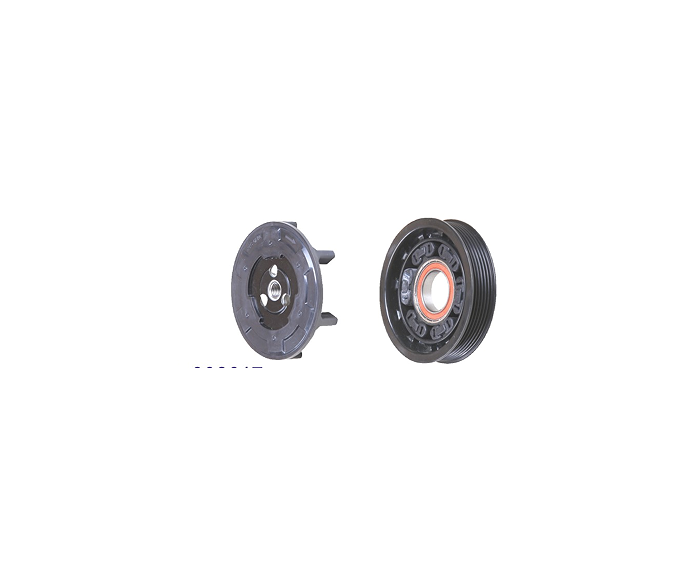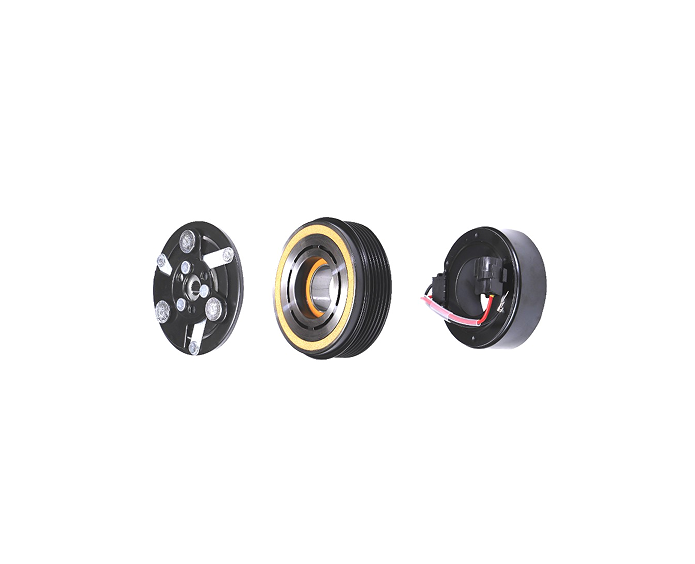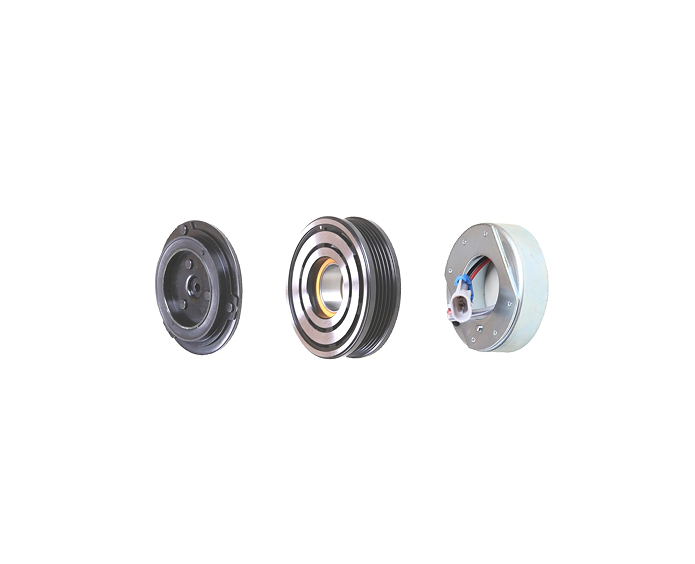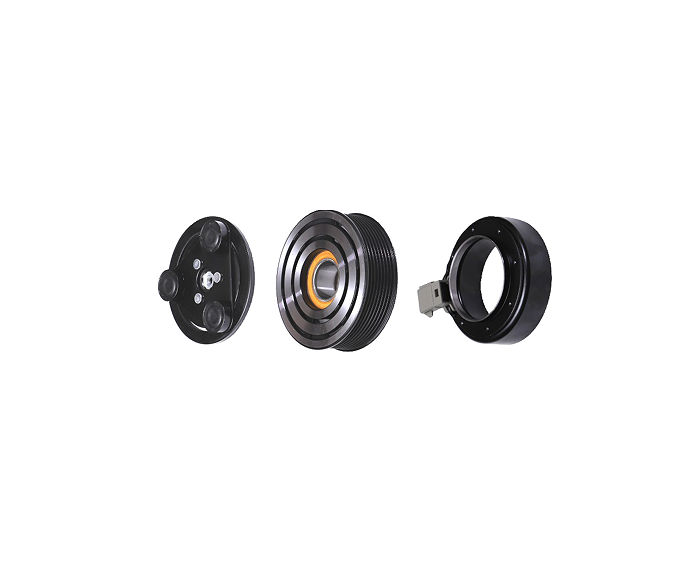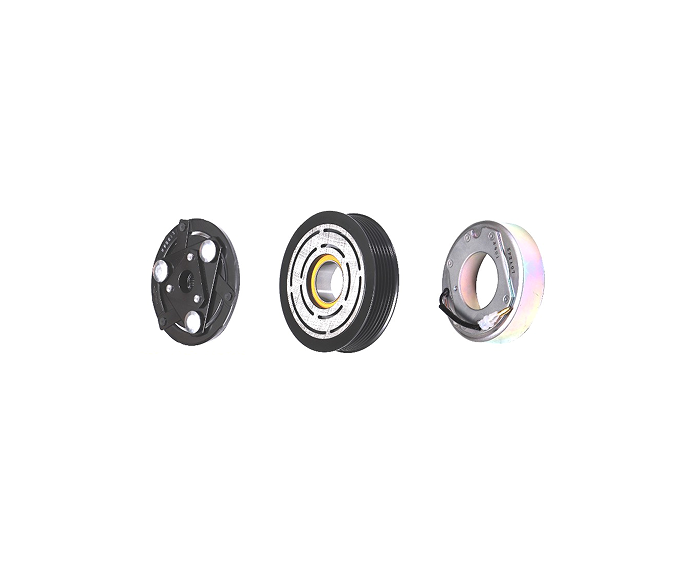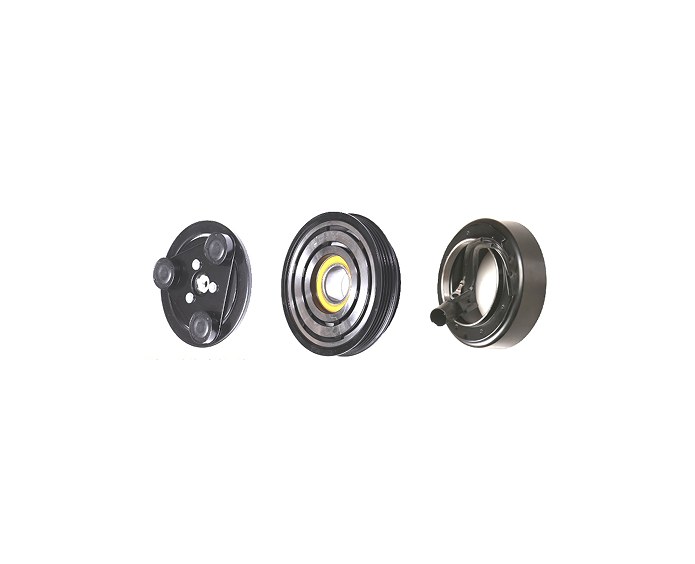

The clutch—the "master switch" of a car's power system.
The core structure of a clutch: four components working together
Transmission components : These include the flywheel, clutch cover, and pressure plate. The flywheel is rigidly connected to the engine crankshaft, rotates with the engine, and stores the power output from the engine. The clutch cover is fixed to the flywheel and drives the pressure plate to rotate synchronously, serving as the "starting point" for power transmission.
Driven component : Its core parts are the driven disc (commonly known as the clutch plate) and the driven shaft. The driven disc is sandwiched between the flywheel and the pressure plate, and its surface is covered with friction plates with a high coefficient of friction. The central part is connected to the driven shaft via splines, and the driven shaft is directly connected to the gearbox, acting as a "relay baton" for power transmission.
Pressure mechanism : mostly diaphragm springs (some older models use coil springs). The diaphragm spring is disc-shaped and installed between the clutch cover and the pressure plate. In its natural state, the diaphragm spring presses the pressure plate firmly against the driven plate, ensuring tight power transmission.
Operating mechanism : Consists of clutch pedal, release fork, release bearing, etc. When the driver depresses the pedal, the release bearing is pushed through mechanical or hydraulic transmission, thereby controlling the deformation of the diaphragm spring and realizing the "disengagement" and "engagement" of the clutch.
In-depth analysis of the working principle: the operational logic of three working conditions
Engagement state: Smooth power transmission (during normal driving)
Disengaged from the state: Temporary power off (before shifting gears/starting).
Common clutch types: compatibility selection for different car models
Friction clutch : The most common type of clutch, accounting for over 90% of passenger car clutches. It transmits power through friction between the driven plate and the flywheel, featuring a simple structure, high reliability, and low maintenance costs. Friction clutches are further divided into diaphragm spring type and coil spring type. Among them, the diaphragm spring clutch is widely used in modern cars due to its compact structure, uniform pressure, and ease of operation.
Other special types include hydraulic clutches (controlled by hydraulic transmission, making transmission less strenuous and more efficient) and dual clutches (specifically for dual-clutch transmissions, with two sets of clutches controlling odd and even gears respectively, resulting in faster gear shifting speeds), mainly used in high-performance or automatic transmission vehicles.
Routine Use and Maintenance: Key to Extending Clutch Life
Be alert to common fault signals
Clutch slippage: When accelerating, the vehicle speed cannot be increased, but the engine speed soars. This is mostly caused by excessive wear of the friction plates.
Difficulty shifting gears: If there is jamming or gear collision noise when shifting gears, it may be due to incomplete disengagement of the operating mechanism or a malfunction.
Abnormal pedal feel: The pedal is too soft, too hard, or has a longer travel, which may be due to hydraulic oil leakage or wear of the release bearing.
Starting vibration: The vehicle vibrates noticeably when the pedal is released, which may be due to uneven wear of the driven plate or deformation of the pressure plate.
Practical maintenance tips
Avoid bad driving habits: Do not drive in a semi-trailer position for a long time, do not coast with the clutch depressed, and release the pedal promptly after shifting gears.
Regular checks: Check the clutch pedal free travel and hydraulic oil level every 20,000 kilometers, and adjust them promptly if any abnormalities are found.
Replace worn parts promptly: When the friction plate is worn to its limit (usually less than 3mm thick), it needs to be replaced in time to avoid damaging the flywheel and pressure plate.
Pay attention to driving details: When starting on a slope, use the handbrake to reduce the time spent in half-gear; avoid suddenly releasing the clutch when the vehicle is overloaded.