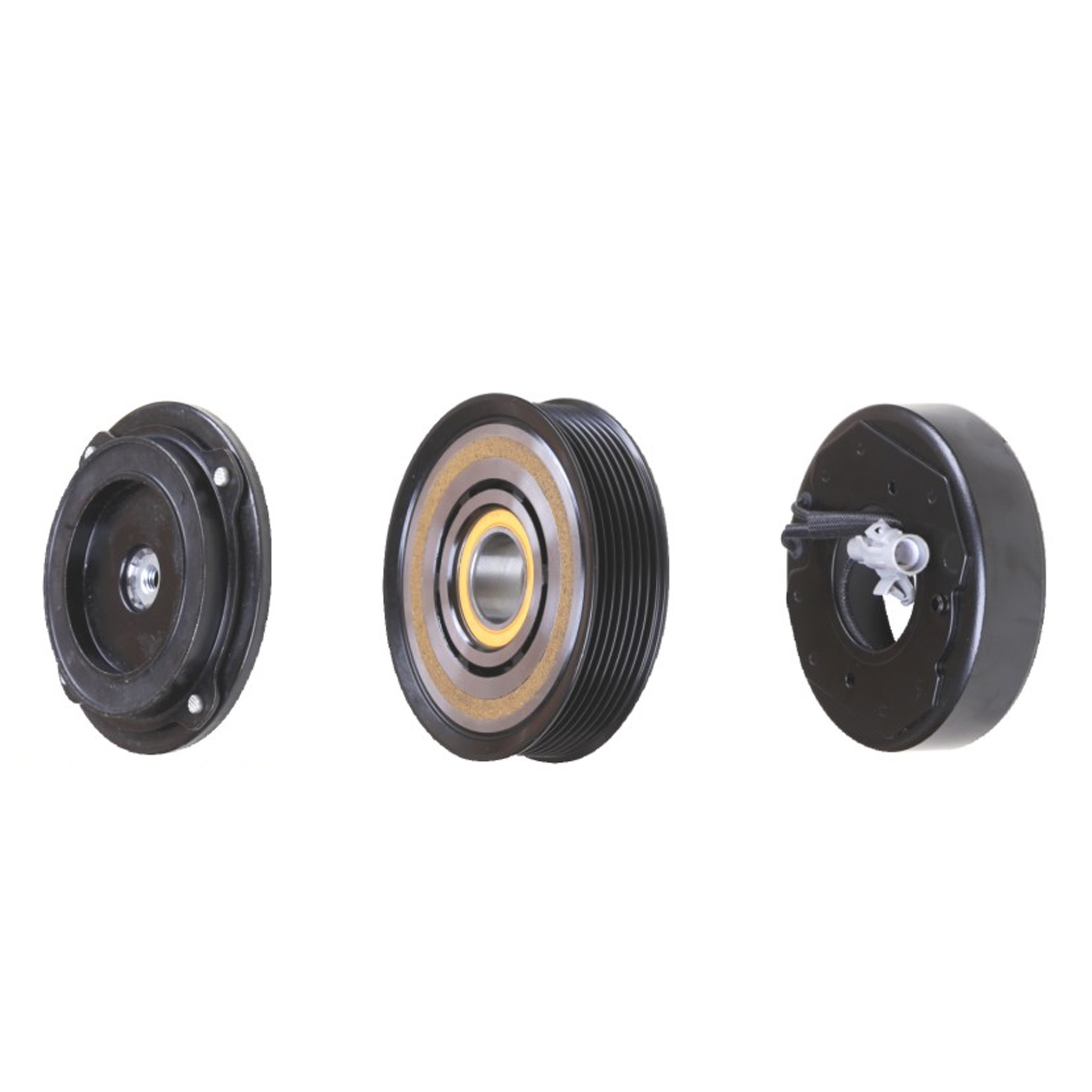


Automotive Compressor Parts: Engineering Integration for Efficient and Durable Cooling Systems
System-Level Thinking Behind Every Component
Modern automotive air-conditioning systems rely on precise mechanical and electromagnetic coordination. The compressor acts as the central actuator—but its efficiency, noise level, and durability all depend on the quality of the parts that compose it.
Unlike fragmented aftermarket replacements, KASEN develops and supplies complete component sets engineered to work in perfect harmony, ensuring that every coil, pulley, and hub operates within exact performance tolerances. This system-level approach guarantees consistent cooling, reduced mechanical wear, and higher energy utilization rates.
Precision Alignment and Dynamic Balancing
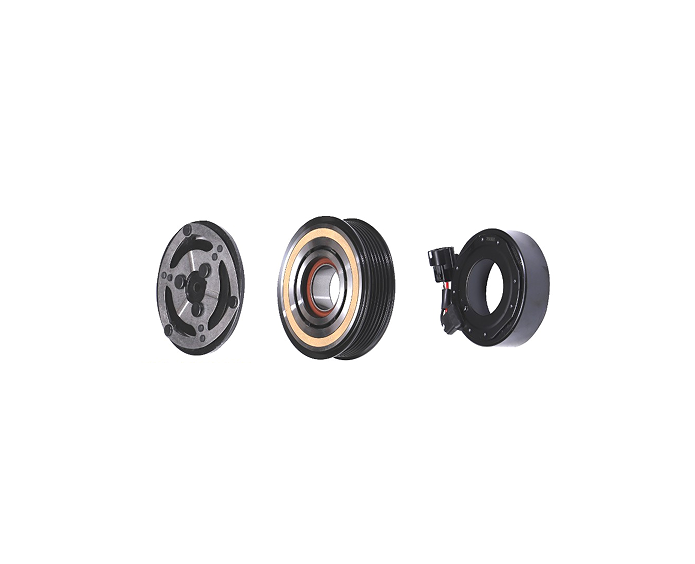
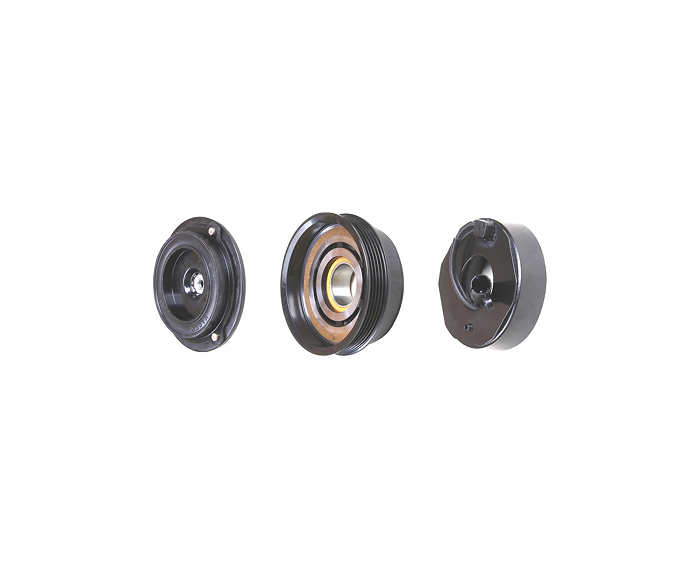
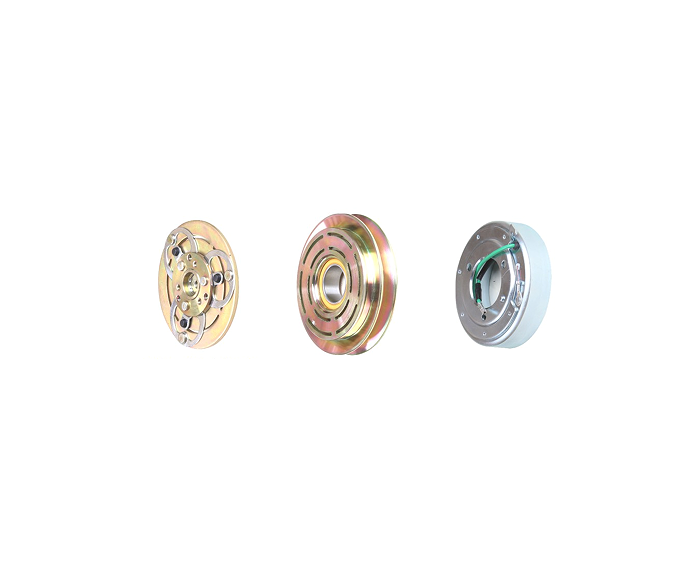
At the mechanical core of the compressor lies the clutch assembly, integrating the pulley, hub, and coil. Dynamic alignment among these elements is crucial for maintaining torque stability and reducing belt vibration.
KASEN uses automated balancing equipment capable of detecting micro-deviation within 0.02 mm, ensuring that the pulley rotation remains steady at speeds up to 6,000 RPM.
Each pulley undergoes:
-
High-speed spin testing for vibration and resonance mapping
-
Friction coefficient calibration under variable load
-
Belt tension analysis to reduce mechanical losses
The result is a clutch system that achieves a smoother engagement curve and minimizes NVH (Noise, Vibration, Harshness) across all driving conditions.
Electromagnetic Efficiency and Power Control
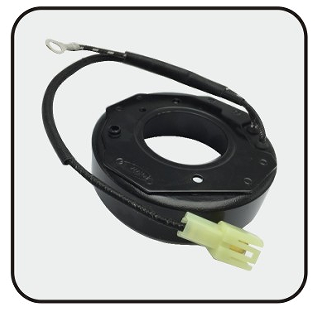
The A/C clutch coil transforms electrical current into magnetic force, dictating compressor engagement timing.
KASEN’s latest-generation coils integrate:
-
High-purity copper winding with resistance uniformity under ±1.5%
-
Class H insulation system rated for 180 °C continuous operation
-
Encapsulated epoxy coating for superior thermal transfer and moisture protection
-
Reduced current draw design lowering alternator load by up to 8%
This results in faster magnetic response (<0.05 s) and lower power consumption, directly improving vehicle fuel efficiency while maintaining consistent cooling output.
Fluid Control and Internal Efficiency
Beyond the clutch system, the internal compressor parts—including pistons, valve plates, and reed valves—determine how efficiently refrigerant gas is compressed and circulated.
KASEN employs precision-machined components that balance lightweight design with strength:
| Component | Material / Process | Function |
|---|---|---|
| Piston & Cylinder | Aluminum alloy, CNC ground | Compress refrigerant under high pressure |
| Valve Plate | Hard-anodized aluminum | Controls refrigerant flow timing |
| Reed Valves | Stainless spring steel | Regulate gas intake and discharge |
| Shaft Seal | NBR / Viton composite | Prevents refrigerant leakage |
| Bearing Unit | High-carbon steel | Reduces friction at high rotational speed |
Each component is coated, machined, and assembled with strict dimensional control to maintain consistent pressure ratio and volumetric efficiency across compressor cycles.
Advanced Testing and Lifecycle Verification
Reliability in real-world automotive environments requires rigorous validation.
KASEN’s quality assurance protocol integrates both in-process testing and post-assembly endurance validation:
-
Torque and current draw simulation under 10,000+ engagement cycles
-
Temperature endurance test from −30 °C to +120 °C
-
Corrosion testing (500-hour salt spray) for all exposed components
-
Noise spectrum analysis at full load
-
Dynamic magnetic pull consistency check
This multi-level testing guarantees OEM compliance and drastically reduces warranty claims for global distributors and vehicle manufacturers.
OEM Value and Application Versatility
KASEN’s automotive compressor parts are designed for modular adaptability—a single platform can support multiple compressor models used in passenger vehicles, light trucks, and commercial fleets.
OEM partners benefit from:
-
Unified supply chain — coils, pulleys, and seals from one ISO/TS 16949-certified facility
-
Custom voltage and torque configurations (12V / 24V systems)
-
Material optimization for regional climates (tropical or cold-weather performance)
-
Batch traceability system for long-term maintenance tracking
This level of engineering integration enables customers to scale production without compromising reliability or cost efficiency.
KASEN’s Commitment to Sustainable Manufacturing
Energy efficiency in compressor parts is not only a product feature—it’s a sustainability goal.
KASEN implements:
-
Closed-loop metal recycling during machining processes
-
Lead-free coating materials compliant with RoHS and REACH
-
Low-energy curing systems reducing epoxy polymerization emissions
-
Digital process optimization for reduced production waste
These practices support OEM sustainability initiatives while improving lifecycle value and brand reputation.
Partner with KASEN for Integrated Compressor Solutions
From design to production, KASEN integrates magnetic, mechanical, and thermal engineering to deliver compressor components that meet global standards of precision and durability.
With proven expertise across coil design, clutch mechanics, and valve assembly, KASEN continues to empower automotive OEMs with cost-effective, performance-driven solutions.
For technical specifications, application consultation, or bulk orders, visit the KASEN homepage or contact the engineering team directly via the contact page.
FAQ: Automotive Compressor Parts
Q1. What sets KASEN’s compressor parts apart from other suppliers?
Integrated production, automated balancing, and advanced materials ensure superior efficiency and lifespan compared with standard aftermarket parts.
Q2. Do KASEN parts support both R134a and R1234yf refrigerants?
Yes. All sealing and valve materials are validated for compatibility with both refrigerants.
Q3. Can KASEN customize compressor components for heavy-duty vehicles?
Absolutely. Reinforced clutch assemblies and 24V coil systems are available for buses, trucks, and machinery.
Q4. How long do KASEN compressor parts typically last?
Each component is designed for 300,000+ engagement cycles, equivalent to 8–10 years of vehicle use under standard conditions.