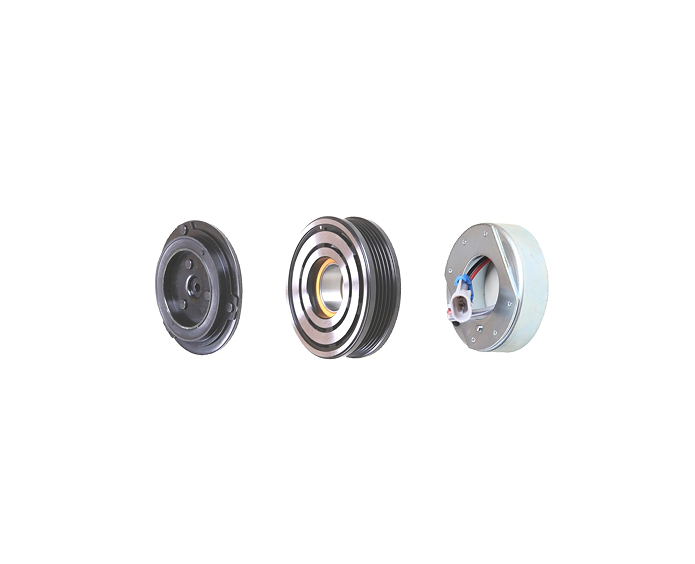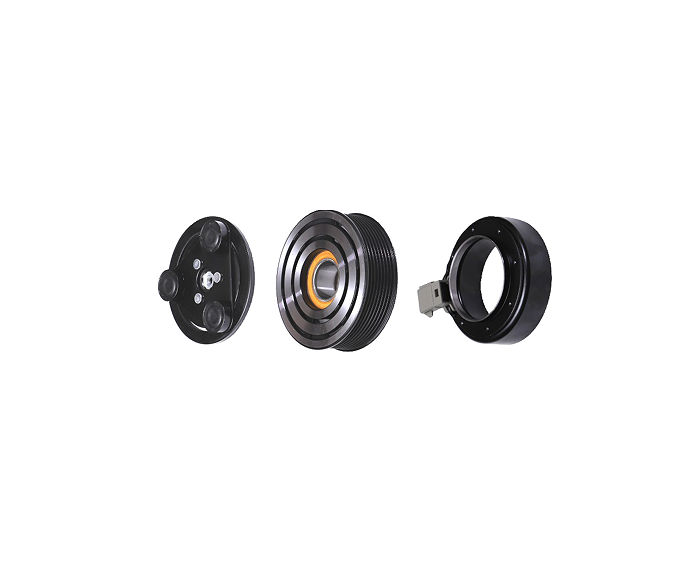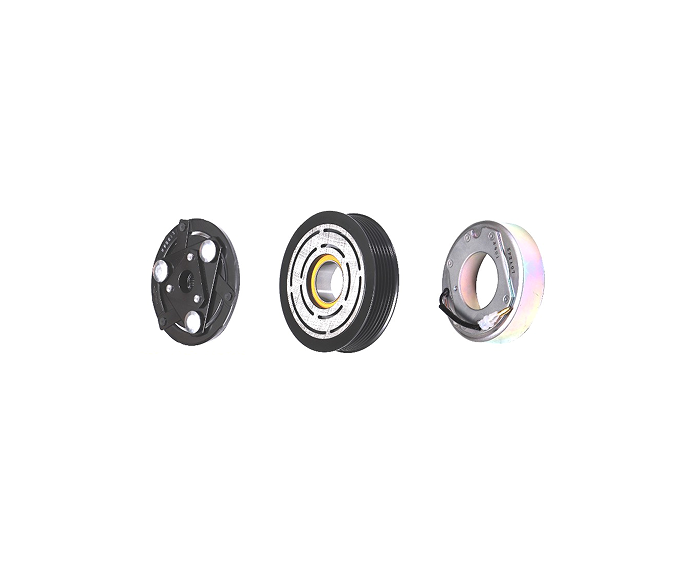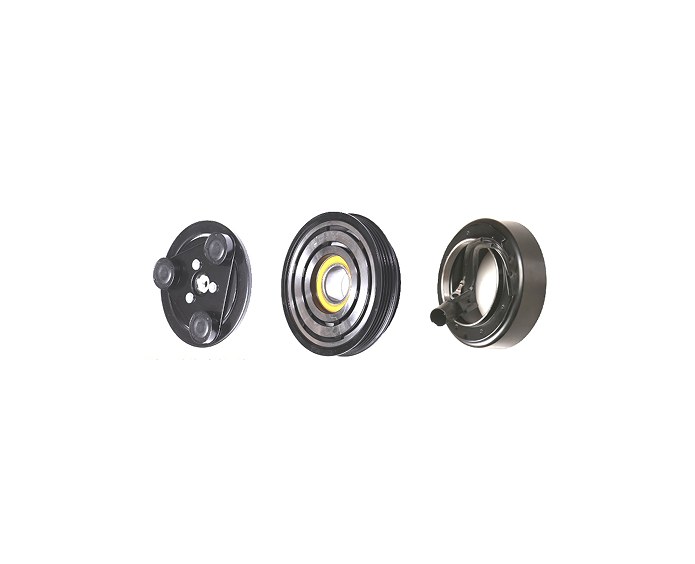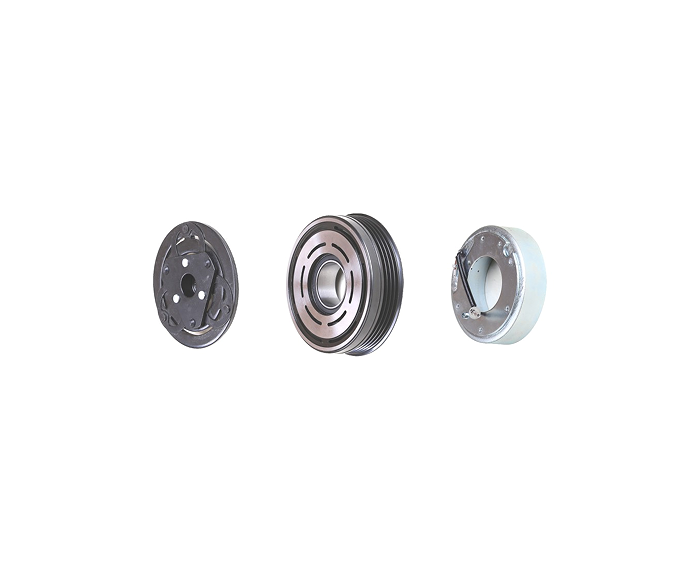

In every automotive air conditioner clutch, the pulley assembly plays a structural and dynamic role. While the electromagnetic coil triggers engagement, the pulley governs rotational stability, bearing integrity, and torque alignment.
A compromised pulley assembly does not just affect rotation. It alters air gap precision, increases vibration, and accelerates friction wear.
Understanding its structure is essential for OEM manufacturers and aftermarket distributors alike.
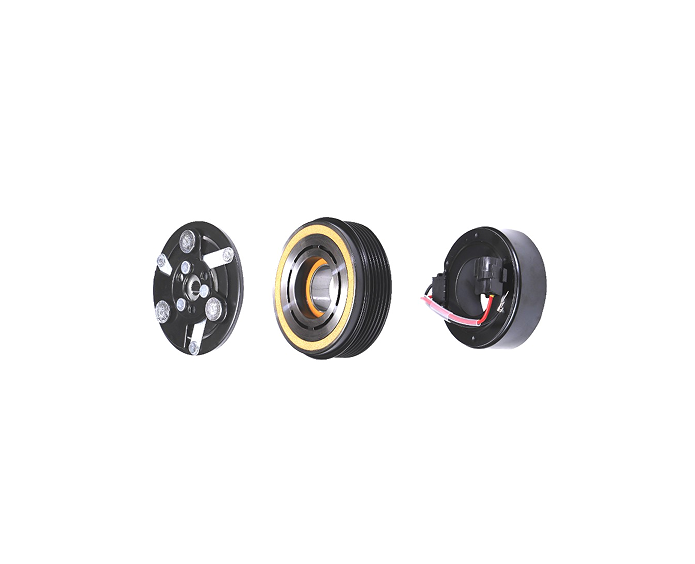
Main Structural Components Inside the Pulley Assembly
1. Pulley Body
The pulley body:
- Rotates continuously with engine belt drive
- Houses the bearing
- Transfers torque during engagement
Material strength and concentricity tolerance determine long-term stability of the automotive air conditioner clutch.
Precision CNC machining minimizes imbalance and vibration.
2. Bearing Unit
The bearing is the most stressed rotating component.
Key functions:
- Support continuous rotation
- Absorb radial and axial load
- Maintain pulley alignment
Heavy-duty sealed bearings reduce contamination and extend lifecycle.
Bearing degradation is one of the most common causes of automotive air conditioner clutch failure.
3. Rotor Interface Surface
The rotor surface forms the magnetic pathway.
It must:
- Maintain flatness
- Resist deformation under heat
- Support uniform magnetic flux distribution
Surface deviation leads to inconsistent engagement and torque loss.
4. Snap Ring and Retention Hardware
Often overlooked, retention components:
- Secure bearing placement
- Maintain structural stability
- Prevent axial drift
Improper retention increases vibration risk.
How Pulley Design Influences Engagement Precision
The automotive air conditioner clutch relies on precise air gap calibration.
Pulley misalignment affects:
- Magnetic pull efficiency
- Friction surface contact
- Engagement timing
Even a minor deviation in pulley concentricity alters clutch performance.
Engineering control of dimensional tolerance directly improves durability.
Thermal and Mechanical Stress Considerations
The pulley assembly operates under:
- Constant belt tension
- High engine RPM
- Elevated engine bay temperature
Stress factors include:
- Friction-generated heat
- Bearing lubrication breakdown
- Thermal expansion
High-quality materials and heat-treated steel significantly improve lifespan.
Learn more about our manufacturing standards here:
https://www.gzkasen.com/about-us
Commercial and Aftermarket Implications
For distributors and fleet operators:
A durable pulley assembly ensures:
- Reduced vibration complaints
- Lower return rates
- Stable cooling output
- Lower warranty exposure
You can explore our full automotive air conditioner clutch range here:
https://www.gzkasen.com/products
For technical clarification and installation guidance, visit:
https://www.gzkasen.com/faqs
Common Failure Symptoms Linked to Pulley Assembly
Pulley-related issues often present as:
- Grinding noise
- Belt misalignment
- Irregular clutch cycling
- Cooling fluctuation
Accurate diagnosis prevents unnecessary compressor replacement.
In many cases, servicing the pulley assembly restores the entire automotive air conditioner clutch system.
Conclusion: Structural Precision Defines Clutch Reliability
The pulley assembly is not just a rotating component. It is a structural stabilizer within the automotive air conditioner clutch.
From bearing durability to concentricity control and thermal resistance, each detail determines engagement consistency and long-term performance.
A properly engineered automotive air conditioner clutch pulley assembly ensures:
- Smooth rotation
- Stable magnetic engagement
- Reduced vibration
- Extended lifecycle
To explore our precision-engineered automotive air conditioner clutch solutions, visit:
https://www.gzkasen.com/
For OEM inquiries and bulk orders:
https://www.gzkasen.com/contact-us/