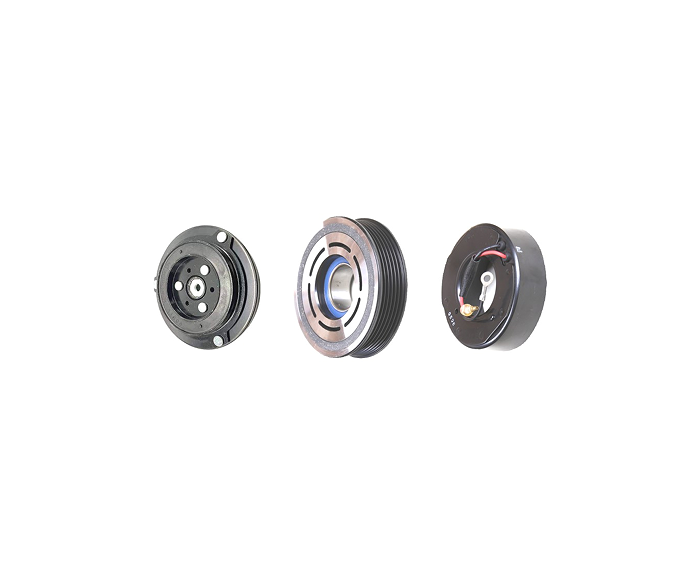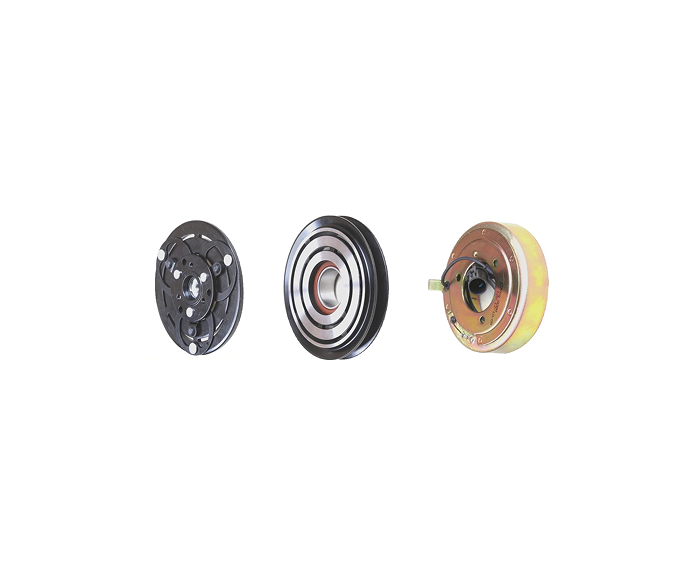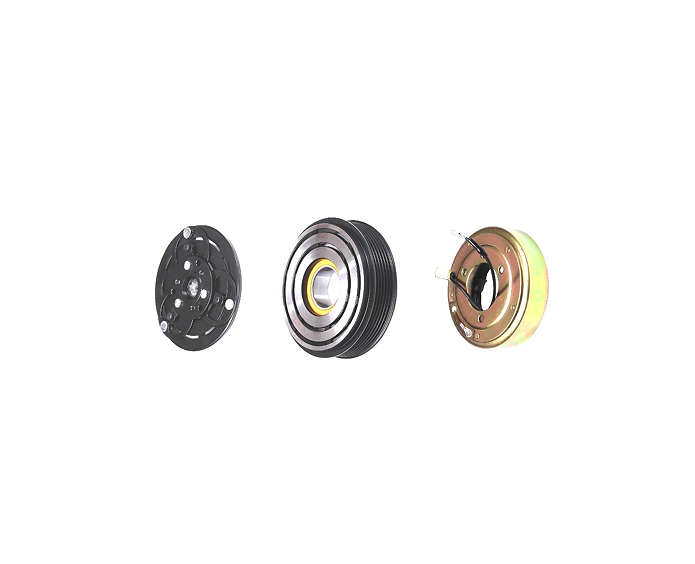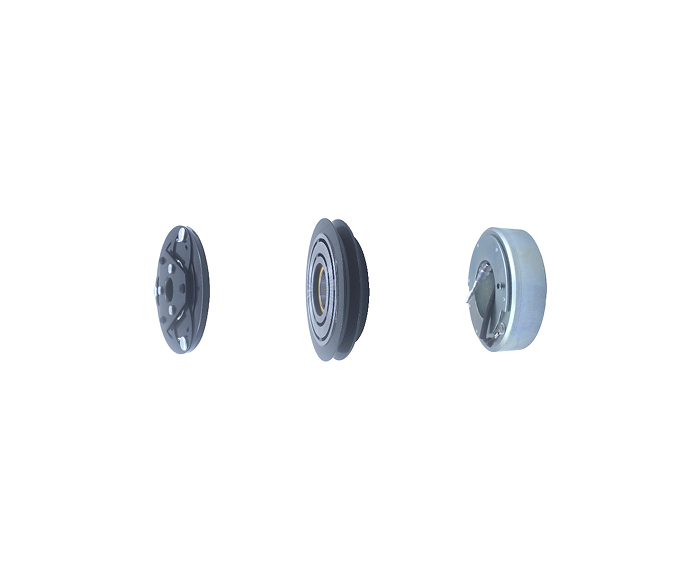

The main purpose of an auto AC compressor clutch is to transfer engine power to the compressor when cooling is required.
When the AC system is activated, the clutch coil creates electromagnetic force, pulling the hub plate toward the rotating pulley. The friction surfaces then engage and transmit torque to the compressor shaft.
For an automotive air conditioner clutch, efficient torque transmission determines whether the compressor can operate smoothly and maintain stable cooling performance.
If torque transfer is insufficient, the clutch may slip, generate excessive heat, wear faster, and reduce AC system efficiency.
For importers, distributors, and repair businesses, understanding torque transmission helps evaluate product quality and avoid premature failures.
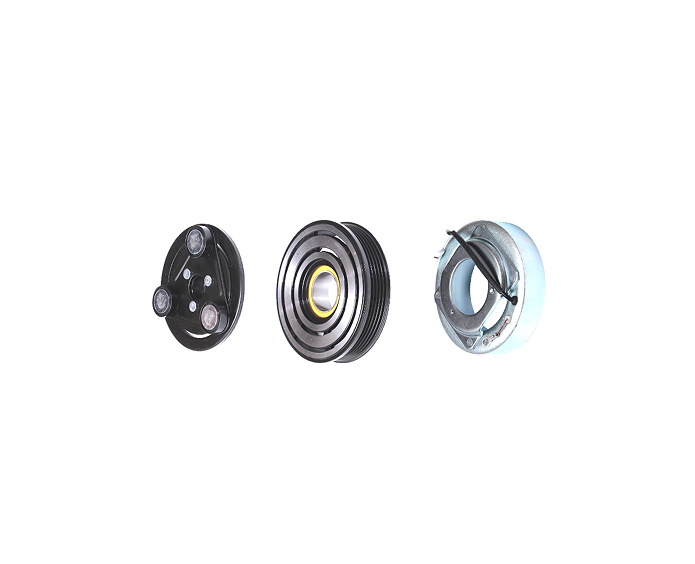
The Basic Physics Behind AC Clutch Torque Transfer
Torque transmission in an AC clutch depends on several physical factors working together.
The clutch does not transfer power through direct mechanical connection alone. It relies on:
- Electromagnetic attraction
- Contact pressure
- Friction force
- Surface interaction
- Component alignment
A reliable automotive air conditioner clutch must maintain the correct balance between these forces.
Step 1: Electromagnetic Force Creates Engagement
The torque transfer process starts with the clutch coil.
When electrical current flows through the coil:
- A magnetic field is generated
- The hub plate is pulled toward the pulley
- Contact pressure increases between surfaces
- Friction allows torque transfer
The strength of this magnetic force affects whether the clutch can maintain engagement under compressor load.
Poor magnetic performance may cause:
- Delayed engagement
- Partial contact
- Slipping
- Weak compressor operation
- Excessive friction heat
This is why coil design, resistance, voltage matching, and insulation quality are important in an automotive air conditioner clutch.
Step 2: Friction Force Transfers Torque
After engagement, friction becomes the key factor that transfers torque.
The pulley rotates with the engine belt. The friction plate and hub plate create contact, allowing rotational force to move from the pulley to the compressor shaft.
A stable friction system requires:
| Factor | Effect on Torque Transfer |
|---|---|
| Friction Coefficient | Controls grip strength |
| Contact Pressure | Determines force between surfaces |
| Surface Finish | Influences contact consistency |
| Material Formula | Affects heat and wear stability |
| Air Gap | Controls engagement response |
If friction is too low, the clutch slips. If friction is unstable, heat and wear increase.
Step 3: Pressure Distribution Controls Contact Efficiency
Torque transfer depends not only on friction material but also on how pressure is distributed across the friction surface.
Uneven pressure may create:
- Local overheating
- Uneven wear
- Surface glazing
- Vibration
- Reduced torque capacity
A well-designed automotive air conditioner clutch should maintain balanced pressure across the contact area.
This helps achieve:
- Smooth engagement
- Stable torque output
- Reduced wear
- Lower noise
- Longer service life
Step 4: Material Performance Supports Torque Capacity
The friction material must handle repeated torque transfer under heat and pressure.
Important material factors include:
| Material Factor | Performance Impact |
| Resin System | Maintains bonding strength |
| Fiber Reinforcement | Improves structural durability |
| Fillers | Adjust heat and wear behavior |
| Friction Modifiers | Control grip stability |
| Surface Treatment | Improves wear resistance |
Poor material selection can reduce torque capacity and increase slipping risk.
How Torque Loss Happens in an AC Clutch
A clutch may lose torque transmission ability for several reasons.
| Problem | Effect |
| Low Friction Coefficient | Reduced grip |
| Worn Friction Plate | Less contact strength |
| Weak Magnetic Force | Incomplete engagement |
| Incorrect Air Gap | Poor contact pressure |
| Overheating | Material degradation |
| Bearing Problems | Pulley instability |
| Surface Damage | Uneven torque transfer |
These problems can cause poor cooling performance and increase repair frequency.
Torque Transmission Under Different Vehicle Conditions
Different applications create different torque demands.
| Application | Torque Requirement |
| Passenger Cars | Smooth engagement and quiet operation |
| Buses | Stable torque under long operation |
| Heavy Trucks | High load and vibration resistance |
| Commercial Vehicles | Repeated cycling durability |
| Hot Climate Markets | Torque stability under heat |
For buyers, selecting the correct clutch depends on vehicle usage, operating environment, and expected load conditions.
Common Symptoms of Poor Torque Transfer
When torque transmission is unstable, users may experience:
- AC blows warm air
- Compressor does not engage properly
- Clutch slips during operation
- Burning smell near compressor
- Excessive friction noise
- Vibration during engagement
- Reduced cooling efficiency
- Shorter clutch service life
These symptoms may increase warranty claims and customer complaints for distributors.
Buyer Checklist: What to Confirm Before Ordering
Before sourcing auto AC compressor clutch products, buyers should evaluate torque-related factors.
| Check Item | Why It Matters |
| OE Number | Confirms correct replacement model |
| Compressor Model | Ensures clutch compatibility |
| Coil Design | Determines magnetic engagement force |
| Friction Material | Affects torque capacity |
| Hub Plate Design | Influences contact stability |
| Surface Finish | Controls friction consistency |
| Air Gap | Affects engagement pressure |
| Pulley Design | Supports rotation stability |
| Bearing Quality | Maintains alignment |
| Vehicle Application | Matches torque requirements |
A clutch may physically fit the compressor but still fail if torque transmission performance is insufficient.
View gzkasen product categories here:
https://www.gzkasen.com/products
Why Torque Transmission Matters for B2B Buyers
For B2B buyers, torque transmission quality directly affects product reliability and customer satisfaction.
Poor torque performance may result in:
- More returns
- Warranty pressure
- Repair shop complaints
- Increased replacement frequency
- Reduced distributor confidence
Choosing a reliable automotive air conditioner clutch helps buyers:
- Improve cooling reliability
- Reduce slipping problems
- Support heavy-duty applications
- Lower after-sales costs
- Build stronger customer relationships
- Increase repeat orders
For aftermarket distributors, stable torque performance is an important quality advantage.
How gzkasen Supports Auto AC Clutch Buyers
gzkasen supplies automotive air conditioning parts, including compressor clutches, compressors, electric compressors, valves, bearings, sensors, and related components.
For buyers sourcing automotive air conditioner clutch products, gzkasen can support:
- Product matching by OE number
- Compressor model verification
- Sample and drawing confirmation
- Clutch assembly, coil, pulley, bearing, and hub plate supply
- OEM and customized requirements
- Passenger car, bus, truck, and commercial vehicle applications
- Aftermarket replacement solutions
Learn more about gzkasen here:
https://www.gzkasen.com/about-us
Visit the gzkasen homepage here:
https://www.gzkasen.com/
When Should Buyers Contact gzkasen?
Contact gzkasen when you are:
- Looking for high-torque AC clutch solutions
- Replacing slipping clutch models
- Preparing summer repair inventory
- Serving commercial vehicle markets
- Developing private-label auto AC parts
- Comparing supplier performance
Provide:
- OE number
- Compressor model
- Vehicle model
- Product photo
- Sample
- Drawing
- Target market
- Order quantity
With complete information, gzkasen can help confirm the correct automotive air conditioner clutch model.
FAQ
1. What is torque transmission in an auto AC compressor clutch?
Torque transmission is the process of transferring rotational force from the pulley to the compressor shaft through clutch engagement.
2. Why is friction important for AC clutch torque transfer?
Friction allows the pulley and hub plate to transfer rotational power. Without stable friction, the clutch may slip.
3. Can weak magnetic force affect torque transmission?
Yes. Weak magnetic force may prevent full engagement and reduce the clutch’s ability to transfer torque.
4. How does friction material affect torque capacity?
Friction material affects grip, heat resistance, wear performance, and the ability to transfer torque without slipping.
5. Why is torque transmission important for trucks and buses?
Heavy-duty vehicles require stronger torque performance because their AC systems operate longer and under higher loads.
6. What information should buyers provide to gzkasen?
Buyers can provide OE number, compressor model, vehicle model, voltage, pulley size, product photo, sample, or drawing for accurate matching.
Conclusion
Torque transmission is the foundation of auto AC compressor clutch operation. Electromagnetic force, friction contact, pressure distribution, material performance, and component alignment all determine whether the clutch can drive the compressor effectively.
For importers, distributors, and repair businesses, choosing a reliable automotive air conditioner clutch requires evaluating torque capacity, friction materials, coil performance, bearing quality, and application conditions.
gzkasen helps buyers select suitable auto AC compressor clutch solutions based on OE number, compressor model, vehicle application, sample, or technical requirements.
Contact gzkasen today to discuss your automotive air conditioner clutch requirements and receive professional product matching support.