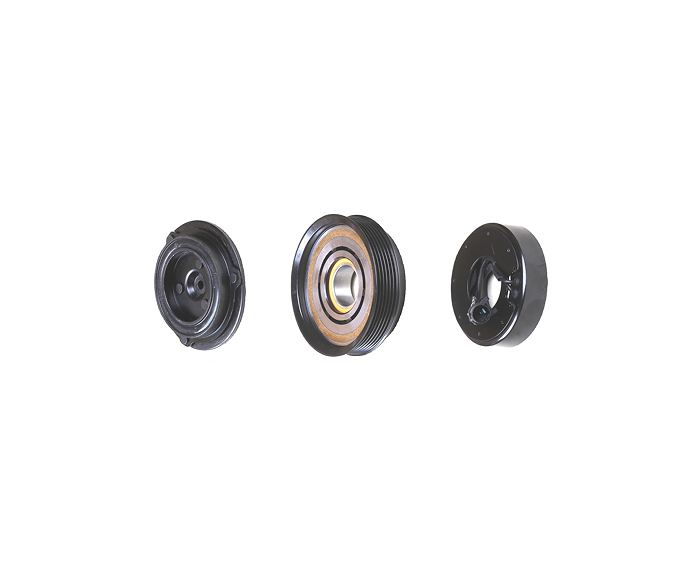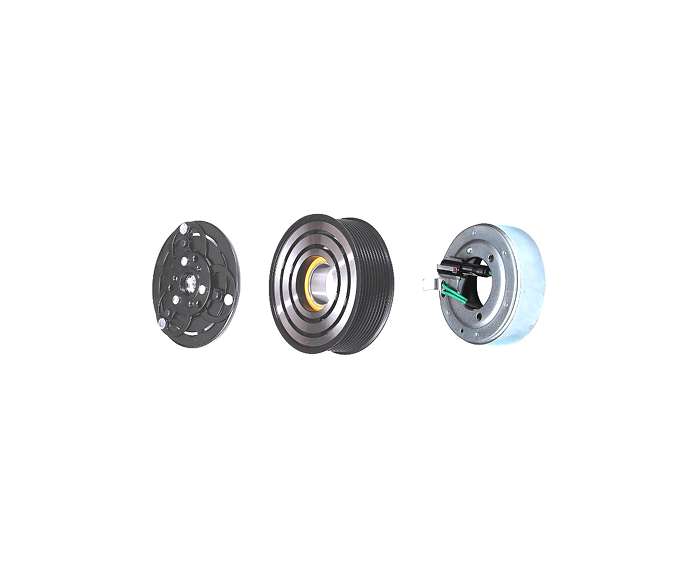

In belt-driven air conditioning systems, the AC compressor pulley operates continuously whenever the engine runs.
While many discussions focus on the compressor or the automotive air conditioner clutch, the pulley is the mechanical interface that transmits engine rotation to the clutch assembly.
If the pulley fails, even a high-quality automotive air conditioner clutch cannot perform properly.
Pulley stability directly affects:
- Clutch engagement precision
- Bearing durability
- Noise levels
- Vibration control
- Compressor shaft alignment
In practical terms, the pulley determines how smoothly the entire AC system operates.
How the AC Compressor Pulley Works
Continuous Rotation Mechanism
The pulley is driven by the serpentine belt and rotates freely on a bearing when the clutch is disengaged.
Engagement sequence:
- Engine drives belt
- Pulley rotates
- Electromagnetic coil activates
- Automotive air conditioner clutch engages
- Torque transfers to compressor shaft
Even when cooling is not required, the pulley remains in motion. That means the bearing inside the pulley experiences constant load and temperature variation.
Structural Components of the Pulley Assembly
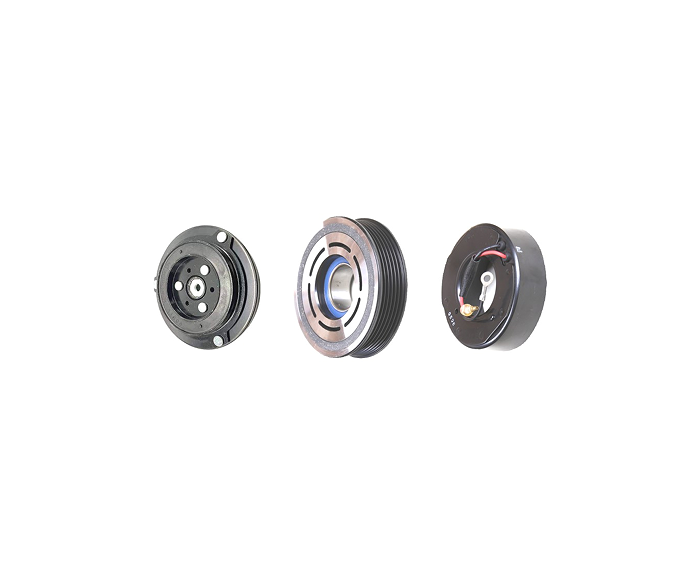
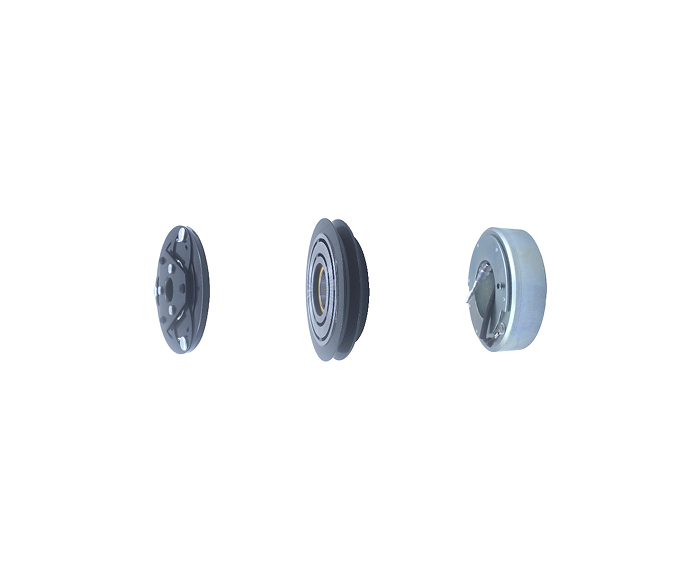
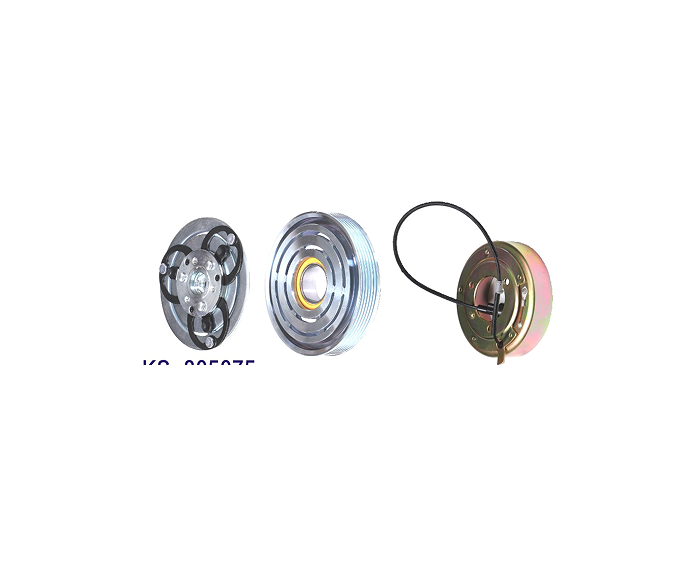
A standard AC compressor pulley includes:
- Pulley housing
- Bearing
- Friction surface
- Dust seals
Bearing Core
The bearing supports radial and axial loads.
According to ISO 281 (Rolling Bearing Dynamic Load Rating Standard), bearing lifespan depends on load magnitude and lubrication quality.
Poor bearing quality causes:
- Radial runout
- Wobble
- Increased friction heat
- Premature failure of the automotive air conditioner clutch
How Pulley Condition Affects Automotive Air Conditioner Clutch Performance
The automotive air conditioner clutch depends on concentric alignment between the pulley and armature plate.
If pulley wobble exceeds tolerance:
- Engagement becomes uneven
- Friction surfaces wear irregularly
- Magnetic air gap fluctuates
- Heat concentration increases
Over time, this accelerates clutch plate degradation.
Thus, pulley precision is not secondary — it directly determines clutch longevity.
Common Pulley Failure Symptoms
Recognizing early signs prevents system-wide damage.
1. Grinding or Whining Noise
Often indicates bearing degradation.
2. Pulley Wobble
Visible misalignment suggests internal bearing wear.
3. Burning Smell
Excessive friction may overheat the automotive air conditioner clutch interface.
4. AC Not Cooling Properly
If pulley fails to rotate freely, clutch engagement may become inconsistent.
Maintenance Best Practices
1. Regular Inspection
Check for:
- Excessive play
- Noise
- Rough rotation
2. Replace Bearing Before Clutch Damage Occurs
Often, replacing the pulley bearing early prevents full automotive air conditioner clutch replacement.
3. Monitor Belt Tension
Excessive belt tension increases bearing load.
4. Ensure Proper Alignment
Misaligned belt drives create uneven load distribution.
Preventive maintenance extends system lifespan significantly.
OEM Manufacturing Considerations
For manufacturers and distributors, pulley quality should meet:
- High-carbon steel material standards (SAE 52100 equivalent)
- Hardened raceways (≥ HRC 60)
- Double-lip sealed bearings
- High-temperature grease compatibility
Thermal endurance testing is critical, especially for vehicles operating in hot climates.
A durable pulley design protects the automotive air conditioner clutch from secondary stress.
Lifecycle Economics: Small Component, Large Cost Impact
Replacing a bearing or pulley is significantly cheaper than replacing an entire compressor or clutch assembly.
Fleet operators often prioritize high-quality pulley and automotive air conditioner clutch assemblies to reduce downtime.
Preventive component selection reduces:
- Warranty claims
- Service interruptions
- Customer dissatisfaction
Quality upstream decisions prevent downstream expenses.
Frequently Asked Questions
Q1: Can I replace just the pulley without replacing the clutch?
Yes, if the clutch friction surface remains intact. However, inspection of the automotive air conditioner clutch is recommended.
Q2: How long should a pulley bearing last?
Under proper design and lubrication, 80,000–120,000 km is typical.
Q3: What causes repeated clutch failure?
Often, the root cause is pulley misalignment or bearing degradation rather than the clutch coil itself.
Conclusion: Pulley Integrity Protects the Entire System
The AC compressor pulley operates continuously, silently supporting the cooling system.
While the automotive air conditioner clutch receives more attention, pulley precision and bearing durability determine how long that clutch will last.
For OEM manufacturers and distributors seeking durable pulley and clutch assemblies engineered for long-term reliability, explore:
https://www.gzkasen.com/
For technical consultation or quotation inquiries:
https://www.gzkasen.com/contact-us/