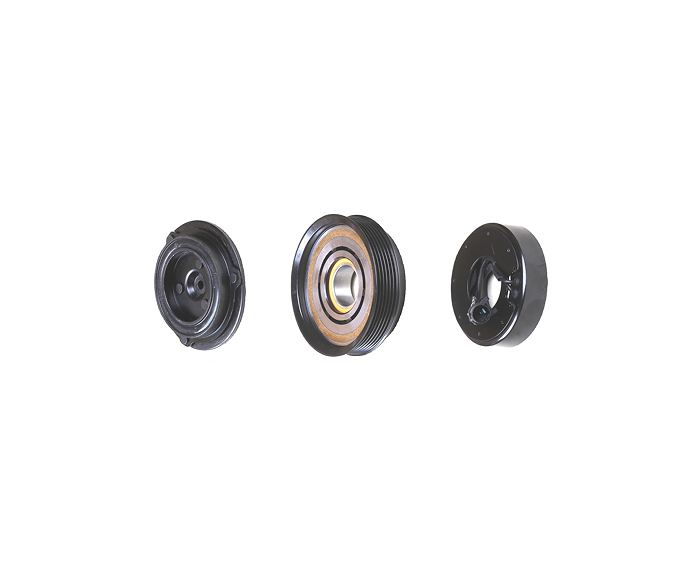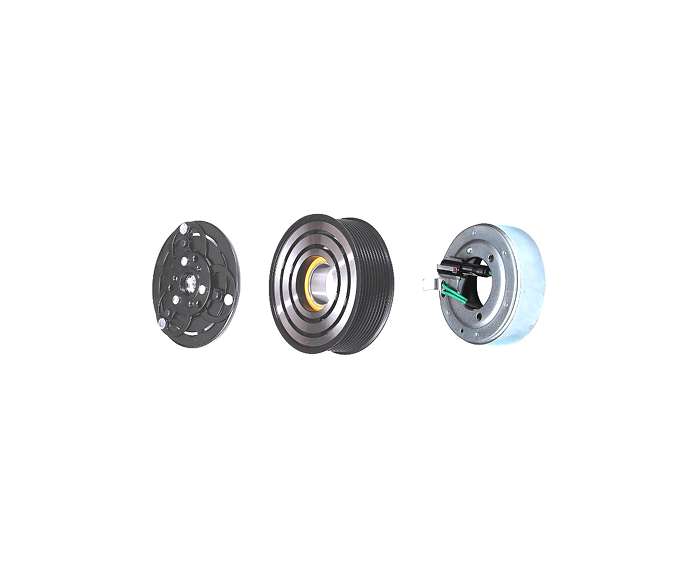


Testing and Quality Verification for A/C Compressor Clutch: How KASEN Ensures Consistent Performance in Every Unit
Why Testing Defines Long-Term Reliability
The performance of an A/C compressor clutch depends on more than materials or assembly—it relies on controlled precision validated through testing.
Each clutch experiences thousands of engagement cycles, fluctuating temperatures, and continuous torque loads. Without proper validation, small deviations in coil resistance or air gap alignment can lead to noise, overheating, or system failure.
KASEN’s A/C compressor clutch quality assurance framework ensures every unit undergoes comprehensive mechanical, electrical, and environmental testing before shipment, guaranteeing consistency across all OEM and aftermarket models.
1. Electrical and Magnetic Performance Testing
Electrical stability forms the foundation of clutch reliability. KASEN’s test benches replicate real-world current and voltage fluctuations to assess the electromagnetic coil’s performance.
| Parameter | Test Method | Standard / Result |
|---|---|---|
| Coil Resistance | Four-wire ohmic measurement | 3.8–4.2 Ω @ 20°C |
| Insulation Strength | 1500V dielectric test | No leakage or breakdown |
| Magnetic Pull Force | Gaussmeter with load cell | 350–480 N |
| Current Draw | Controlled 12V supply | 3.5–4.0 A steady-state |
| Magnetic Lag Time | Hall sensor timing test | ≤0.05 seconds |
These measurements ensure that every clutch coil generates consistent magnetic engagement strength with minimal electrical loss—critical for modern ECUs and hybrid vehicle systems.
2. Torque and Mechanical Endurance Testing
To validate the clutch’s ability to handle repetitive load cycles, KASEN uses automated torque dynamometers that simulate belt-driven operation at 6,000 RPM under various loads.
Mechanical Validation Includes:
-
Torque Holding Test: Verifies constant transfer under rated load (25–45 N·m).
-
Cycle Endurance Test: Over 300,000 engagement cycles with continuous magnetic actuation.
-
Slippage Detection: Measures friction plate performance during overload conditions.
-
Air Gap Stability Check: Ensures deviation remains ≤0.02 mm after full endurance cycle.
After every test batch, torque retention is measured again to confirm zero performance degradation—a key requirement for OEM supply contracts.
3. NVH (Noise, Vibration, Harshness) Analysis
Comfort and acoustics play a vital role in end-user experience.
KASEN performs NVH testing in a semi-anechoic chamber, where the clutch is mounted on an operating compressor system to detect vibration resonance and acoustic peaks.
NVH Quality Indicators:
-
Engagement sound level ≤ 58 dB.
-
Vibrational amplitude ≤ 0.5 mm/s (ISO 2372).
-
Dynamic runout of pulley ≤ 0.02 mm.
-
Bearing noise index ≤ 30 phon.
These results guarantee smooth, silent operation, preventing belt resonance or cabin vibration often observed in low-quality aftermarket parts.
4. Thermal Cycling and Heat Resistance Tests
Thermal stress is a leading cause of clutch failure—especially in high-humidity and high-temperature markets.
KASEN’s thermal chamber testing subjects clutches to rapid temperature shifts between −30°C and +180°C to simulate long-term vehicle exposure.
Testing Procedure:
-
500 continuous thermal cycles (−30°C to +180°C).
-
Real-time coil resistance and magnetic strength monitoring.
-
Friction material inspection for glaze or delamination.
-
Torque verification post-test to ensure no magnetic decay.
Results consistently show Kasen’s epoxy-sealed coils and friction surfaces retain 95% of initial torque output after full thermal testing—proving material integrity under harsh environmental stress.
5. Corrosion and Environmental Validation
To ensure long-term stability in diverse climates, KASEN performs salt spray and humidity tests per ASTM B117 and ISO 9227.
| Test Type | Condition | Result |
|---|---|---|
| Salt Spray Test | 500 hours at 35°C, 5% NaCl | No visible rust or pitting |
| Humidity Test | 95% RH at 40°C for 240 hours | No electrical resistance drift |
| UV Exposure Test | 300-hour xenon lamp exposure | Coating integrity maintained |
These tests replicate years of real-world exposure, ensuring Kasen clutches remain corrosion-free even in tropical, coastal, or winter-salted road environments.
6. Bearing and Alignment Validation
Bearing stability directly determines the clutch’s operational lifespan.
KASEN conducts bearing endurance and radial runout tests using vibration sensors and high-speed video inspection:
-
Continuous operation at 8,000 RPM for 500 hours.
-
Temperature rise limited to ≤15°C over baseline.
-
Axial displacement ≤0.03 mm.
-
No noise escalation across test duration.
By verifying both internal alignment and lubricant performance, KASEN ensures every clutch maintains optimal balance and low-friction engagement.
7. Data Traceability and Batch Certification
Each clutch unit is laser-marked with a unique serial ID, enabling complete traceability through KASEN’s ERP-based quality management system.
-
Batch data includes torque, resistance, and inspection results.
-
Digital records stored for up to five years for warranty validation.
-
Certificates of conformity (CoC) available for OEM and export documentation.
This transparent system allows distributors and OEM clients to verify test data for every shipment—enhancing trust and accountability across the supply chain.
8. Continuous Improvement Through Field Feedback
Quality verification doesn’t stop at the factory.
KASEN collects field data from global distributors and repair centers to refine product specifications.
Performance metrics—such as coil failure rates, NVH trends, or corrosion behavior—are fed back into R&D for iterative improvement.
This real-world validation cycle ensures KASEN clutches continue to evolve with changing vehicle technologies and regional conditions.
KASEN’s Commitment to Measurable Quality
Through a combination of mechanical precision, scientific testing, and rigorous documentation, KASEN guarantees that every A/C compressor clutch meets global OEM expectations.
From torque accuracy to environmental resilience, each product embodies the brand’s engineering credibility and performance consistency.
For technical datasheets, quality certifications, or OEM partnership inquiries, visit the KASEN homepage or contact our engineering team via the contact page.
FAQ: A/C Compressor Clutch Testing and Quality
Q1. What is the most important test for clutch reliability?
Torque and thermal endurance testing—these verify long-term performance under continuous cycling and heat exposure.
Q2. How does Kasen ensure every unit passes the same standard?
Each batch is automatically logged, inspected, and compared to reference test data through ERP-linked quality control.
Q3. Do Kasen clutches undergo 100% inspection or sampling?
Every single clutch is tested for coil resistance, torque, and balance before shipment.
Q4. Can testing reports be provided for OEM customers?
Yes, Kasen provides full test data, inspection records, and conformity certificates upon request.