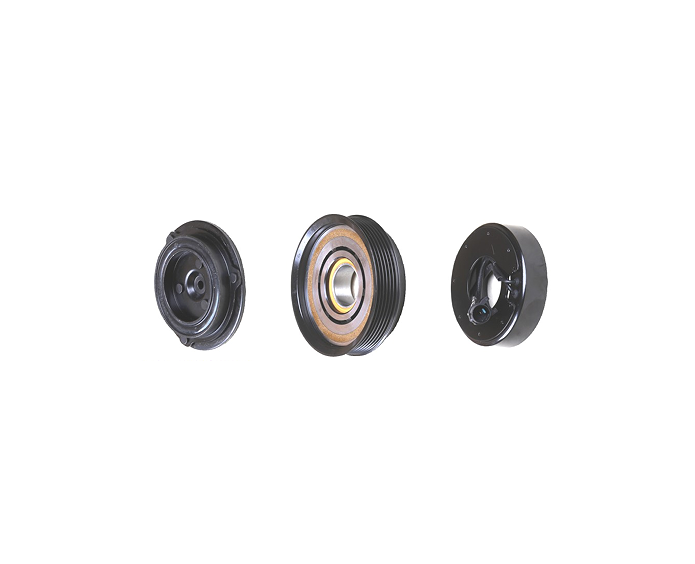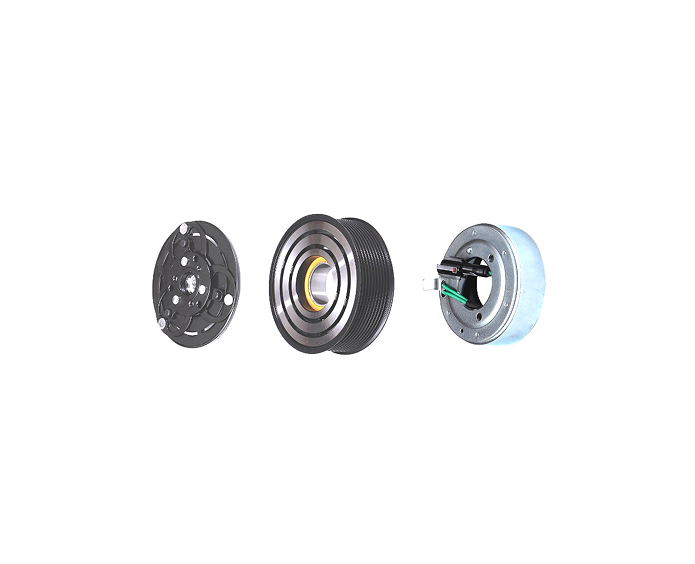

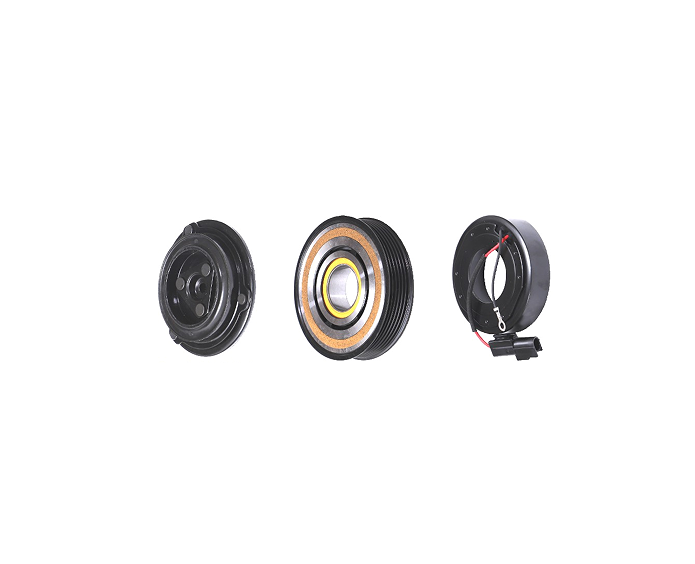
A/C Compressor Clutch Engineering: Material Strength, Heat Control, and Efficiency in One Assembly
Precision Assembly Defines Cooling Efficiency
In modern automotive systems, the A/C compressor clutch determines how efficiently engine power converts to cooling performance. Beyond magnetic response, its stability depends on structural precision and heat control. Every rotation subjects the clutch to torque loads exceeding 100 N·m, making material integrity and dimensional alignment critical.
At KASEN, every clutch assembly is engineered with micron-level tolerance control and thermally balanced construction, ensuring smooth torque transmission even under heavy-duty cycles.
Advanced Materials and Surface Treatments for Endurance
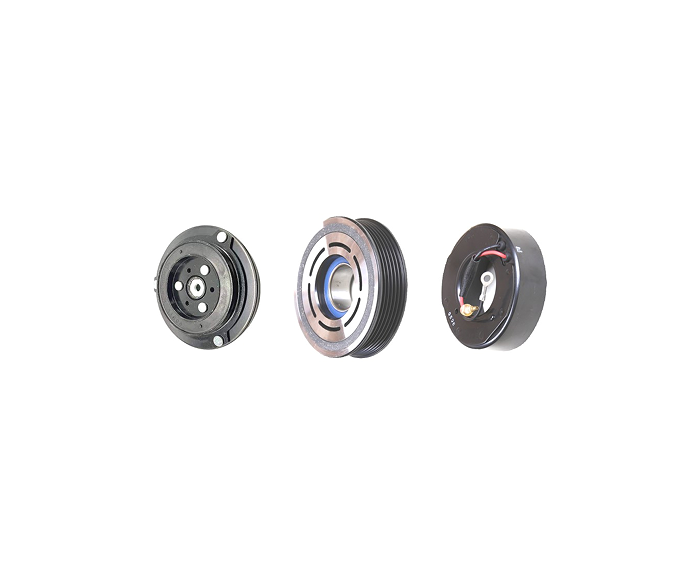
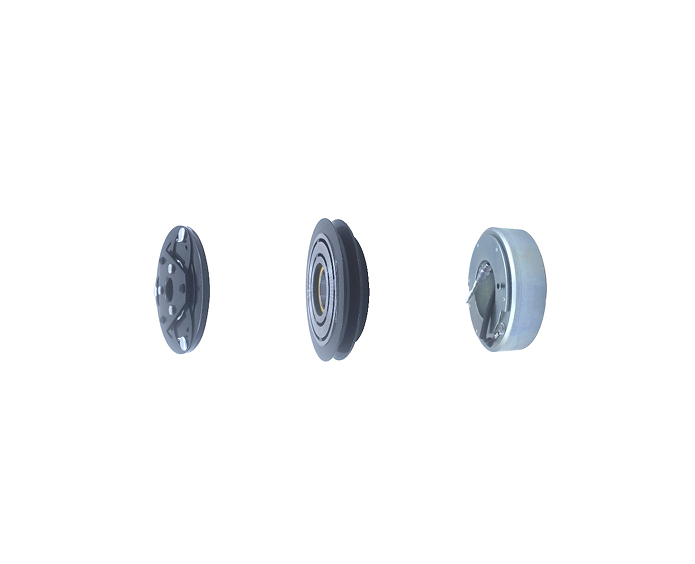
Durability begins with material selection. KASEN uses high-carbon steel for pulleys and wear-resistant alloys for hub plates, ensuring low deformation under high friction temperature.
Each part undergoes a multi-step heat treatment and surface coating process:
-
Pulley: Black electrophoretic coating for anti-rust protection (>500-hour salt spray)
-
Hub plate: Induction-hardened surface to maintain grip under high torque
-
Bearing seat: Precision-machined grooves for reduced vibration and extended bearing life
-
Coil housing: Glass-fiber reinforced resin with insulation rating up to Class H (180 °C)
These material optimizations improve wear resistance and reduce thermal fatigue over long-term operation.
Thermal Management and Magnetic Stability
Heat buildup remains the main threat to clutch performance. Over time, excessive temperature weakens coil magnetism and accelerates bearing wear.
KASEN mitigates this through three integrated engineering measures:
-
Thermal ventilation channels around the pulley hub improve airflow and lower surface temperature by up to 12 °C.
-
Low-resistance coil winding reduces current draw, minimizing energy loss.
-
High-grade bearing grease formulated for −30 °C to +180 °C ensures stable lubrication across climate extremes.
Together, these improvements extend operational life and maintain steady engagement torque, even under rapid cycling.
Balancing Accuracy and Vibration Reduction
Clutch imbalance can cause belt slippage, noise, and compressor vibration. KASEN implements full dynamic balancing with ≤0.02 mm tolerance, verified via high-speed rotational testing.
Each clutch’s pulley and hub are assembled using CNC alignment fixtures and laser calibration. The result:
-
Noise level ≤58 dB
-
Axial runout ≤0.03 mm
-
Engagement delay <0.05 s
Such stability not only improves comfort but also reduces energy waste and long-term belt strain.
Economic Advantage Through Consistent Manufacturing
By automating key processes—coil winding, rotor pressing, and torque calibration—KASEN achieves repeatable production quality across large batches. This consistency minimizes inspection costs for OEM clients and reduces warranty returns for distributors.
Additionally, the modular design allows shared components (coil and pulley) across multiple compressor models, lowering inventory complexity.
For OEM projects, this translates to 30–40% faster assembly integration and measurable lifecycle cost savings.
Partner with KASEN for Global Reliability
KASEN provides A/C compressor clutches designed for high endurance, low noise, and energy efficiency. Each assembly meets ISO/TS 16949 standards and includes full traceability records, torque data sheets, and dimensional inspection reports.
Whether for OEM integration or aftermarket supply, KASEN delivers precision-built clutches that keep vehicles running smoothly in every climate.
Learn more about our engineering process on the KASEN homepage or contact our team directly via the contact page for detailed specifications and OEM cooperation opportunities.
Technical FAQ: A/C Compressor Clutch
Q1. What materials are used in KASEN’s clutch assemblies?
Pulley and hub components use high-strength steel alloys with electrophoretic coatings, ensuring corrosion resistance and long wear life.
Q2. How does KASEN manage coil temperature rise?
Through low-resistance copper winding, ventilation grooves, and thermally conductive epoxy, reducing internal heating during long engagement cycles.
Q3. Can the clutch be adapted for both 12 V and 24 V systems?
Yes. KASEN offers dual-voltage variants with customized connectors and coil resistance calibration.
Q4. How is torque consistency maintained?
Automated assembly and laser-calibrated magnetic pull testing guarantee torque uniformity within ±2% across batches.