


Refrigerant Recovery Machine Overview
Compatible Refrigerants: R22 / R32 / R134a / R410a
Voltage/Frequency: 100–240V, 50–60Hz
Gross Weight: 15 kg
Dimensions: 400 × 250 × 360 mm
High-Pressure Protection: 38.5 bar / 3850 kPa
Motor: 1 HP
A Refrigerant Recovery Machine helps HVAC and refrigeration technicians remove refrigerant from a system and transfer it into a recovery cylinder for later reuse, recycling, or proper handling. That solves a common service problem: when a unit must be repaired, replaced, or evacuated, refrigerant cannot simply be vented to atmosphere. A portable recovery unit gives technicians a controlled way to capture refrigerant during maintenance, leak repair, retrofit work, and decommissioning.
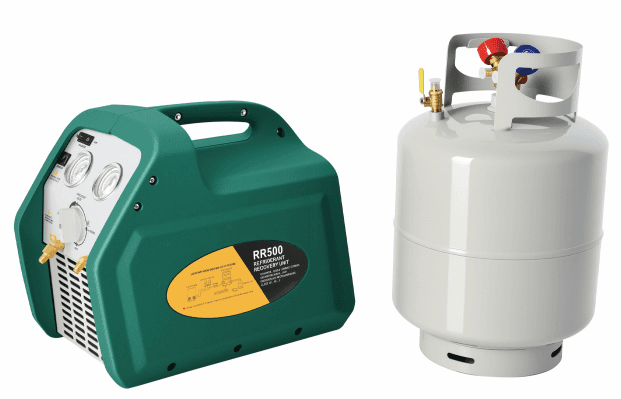
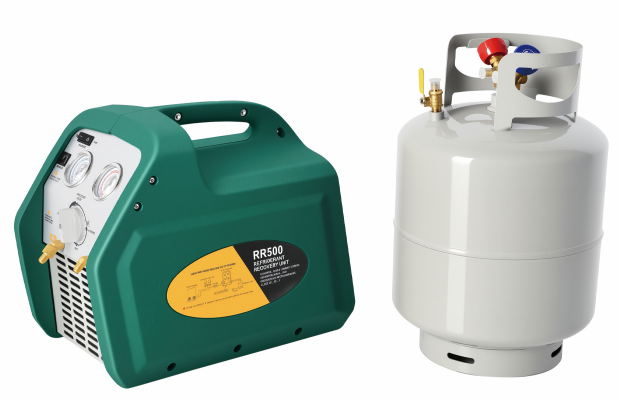
The unit shown here is a compact, carry-style recovery machine paired with a refrigerant recovery cylinder. The portable housing, front controls, dual analog gauges, and multiple hose connection points make it suitable for field service work, especially when a technician needs to move between job sites or keep equipment organized in a service truck.
Product Structure and Visible Features
The left-side machine appears to be an electrically powered recovery unit with a molded handle for transport, a rounded rectangular enclosure, and ventilation openings for internal airflow. The front panel includes two analog gauges, a selector or control knob, and connection ports for hoses. These visible details suggest a design focused on quick setup and operator monitoring during refrigerant transfer.
Next to it is a standard metal cylinder or tank used for recovered refrigerant storage. It has a protective top guard around the valve assembly and a base ring for stability. In practical use, the machine and cylinder work together as part of a recovery workflow: refrigerant is pulled from the HVAC or refrigeration circuit, routed through the machine, and stored in the recovery tank.
Key Capabilities Buyers Look For
Portable service use
A compact recovery machine is easier to carry into tight mechanical rooms, rooftops, and residential service areas. Portability matters when technicians need a unit that can travel with other diagnostic and recovery tools.
Monitoring during operation
Dual gauges provide a basic visual reference for pressure conditions during recovery. While exact performance data is not visible here, pressure monitoring is an important part of safe and controlled refrigerant handling.
Multi-port hose connection
The visible front ports allow the machine to connect to service hoses and a recovery cylinder. This setup supports common recovery and transfer steps used in HVAC maintenance and refrigeration repair.
Materials and Finish Appearance
From the image, the recovery unit appears to use a painted or molded green enclosure with black base components and a white front face. The finish looks practical rather than decorative, which is typical for service tools that need to withstand frequent handling. The cylinder appears to be a light gray coated metal tank with a protective top ring and a stable bottom base.
Actual internal materials, compressor design, seals, and pressure-rated components are not visible and should be confirmed from the manufacturer’s technical documentation before purchase.
Manufacturing and Working Principle
Although the internal structure is not shown, a Refrigerant Recovery Machine generally uses an internal pump or compressor mechanism to move refrigerant vapor and, in some workflows, liquid refrigerant from the system into a recovery cylinder. The technician connects service hoses, selects the operating mode, and monitors the gauges while refrigerant is captured under controlled conditions.
In a service environment, the machine must be matched with the correct hoses, cylinder type, and operating procedure for the refrigerant and system being serviced. That is why visible connection layout and ease of access are important buyer considerations.
Typical Application Scenarios
This type of equipment is commonly used in HVAC maintenance, air conditioning repair, refrigeration service, refrigerant reclamation workflows, and system evacuation or recovery tasks. It is also useful for contractors working from a van or service truck, where portability and fast setup can save time on site.
Applications may include scheduled preventive maintenance, compressor replacement, leak repairs, system removal, and retrofit projects where refrigerant must be collected before opening the circuit.
Quality Control and Buyer Checks
Because exact certifications, pressure ratings, and supported refrigerant types are not provided here, buyers should verify those points before placing an order. Useful checks include gauge readability, hose-port compatibility, enclosure durability, service access, and whether the unit matches the intended refrigerant handling workflow.
For the cylinder, confirm capacity, valve configuration, and compliance requirements based on local regulations and jobsite practice. For the machine, ask for the electrical specification, recovery method, maintenance requirements, and recommended operating limits.
Customization and Ordering Guidance
If you are sourcing this product for a service team or distributor program, customization may involve enclosure color, branding, labeling, hose fitting configuration, packaging, or accessory bundles. Buyers should also decide whether they need only the recovery unit, only the tank, or a matched set for field deployment.
When evaluating options, compare portability, control layout, gauge visibility, connection style, and overall service convenience. Those practical details often matter more than appearance in day-to-day HVAC work.
Contact for Specification Support
If you need a Refrigerant Recovery Machine for HVAC or refrigeration service, share your target application, refrigerant handling needs, and preferred accessories. We can help you review the visible configuration and identify the right setup for your workflow.