

Car Air Conditioning Clutch Overview
A car air conditioning clutch is the component that lets the compressor connect to and disconnect from the engine drive when cooling is needed. For buyers, the main problem it solves is simple: the air conditioning system should cool on demand without forcing the compressor to run all the time. In a belt-driven system, that controlled engagement helps reduce unnecessary wear, manage engine load, and keep the compressor operating only when the system calls for it.
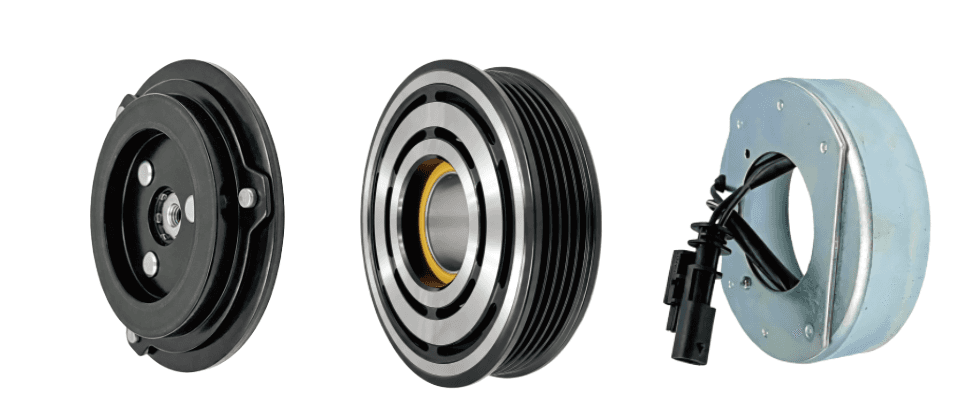
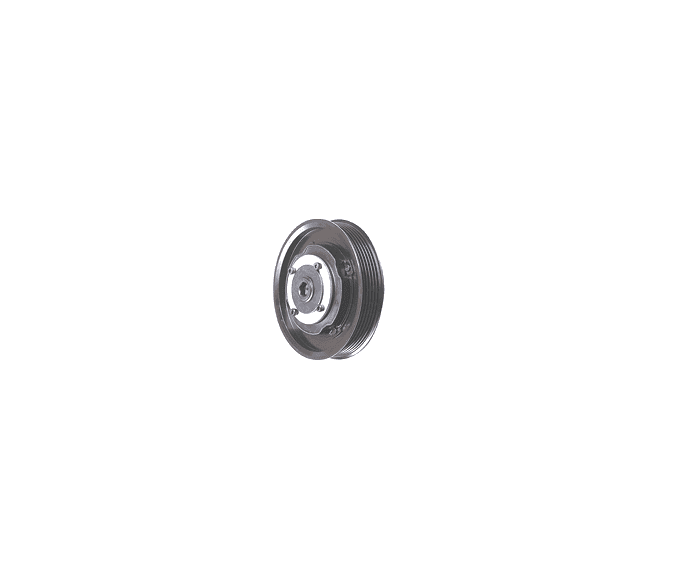
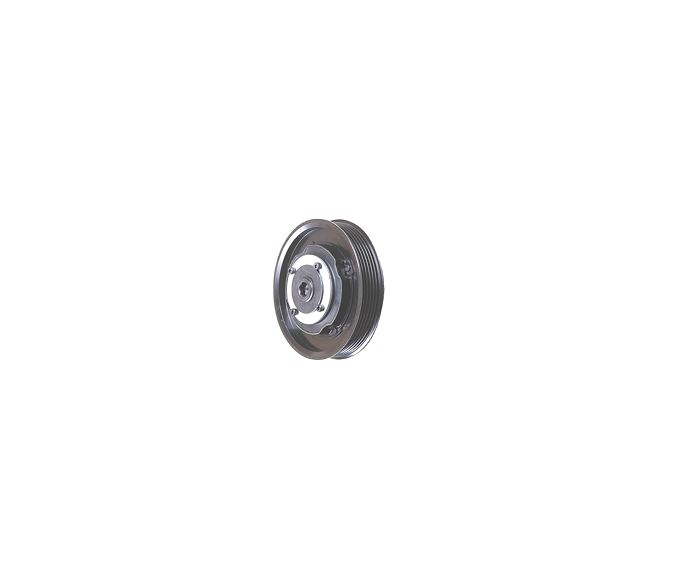
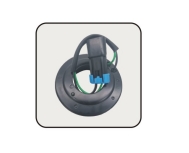
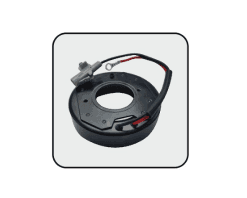
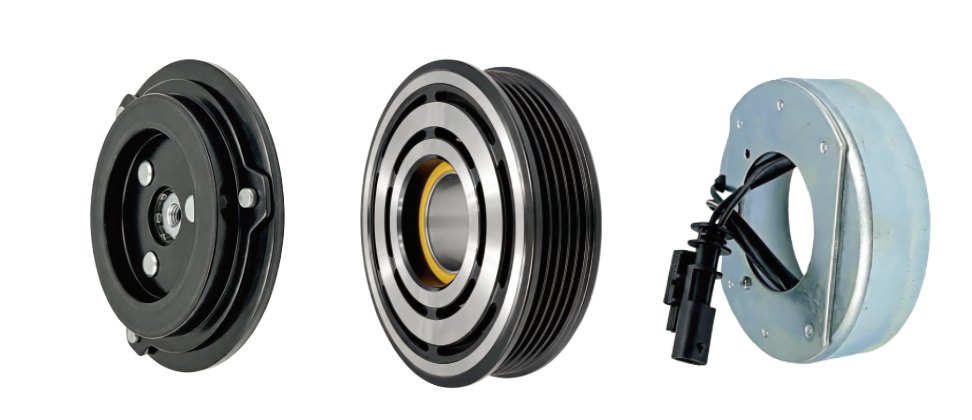
The parts shown here appear to be electromagnetic clutch components used in an AC compressor drive or a similar rotating machine. Visible features include a clutch hub or pulley assembly, a multi-groove pulley, and a coil housing with a lead wire and connector. That makes this product category relevant not only for automotive service, but also for other compressor or accessory drive applications where controlled coupling is required.
Product Structure and Functional Role
In a typical air conditioning compressor clutch system, the pulley turns with the belt whenever the engine is running. The electromagnetic coil creates a magnetic field when energized, pulling the clutch plate into engagement so the compressor shaft begins rotating. When power is removed, the drive disconnects and the compressor stops loading the engine. This on/off behavior is the basic operating principle behind a car A/C compressor clutch.
Based on the visible parts, the assembly includes:
- A pulley section with multiple belt grooves for belt engagement
- A central hub or drive face with a machined silver finish
- A coil/field assembly with lead wire and plug connector
- Retention and mounting features around the center bore
Because only visual information is available, the exact vehicle model, voltage, bearing type, and torque rating should be verified before ordering.
Key Specifications and Visible Capabilities
For buyers comparing an AC clutch for car applications, several practical details matter during selection and replacement. The visible product characteristics point to a compact axial assembly with precision-machined circular geometry and layered housing sections. The multi-groove profile suggests compatibility with belt-driven accessory systems that use V-belt or serpentine belt routing.
Useful specification checkpoints include:
- Pulley groove count and belt profile
- Center bore size and shaft interface
- Coil connector style and lead length
- Mounting and retention pattern
- Hub depth and overall stack height
- Surface finish on friction and rotating faces
These details are important when matching a replacement part to an existing compressor or drive unit. Even when the outer appearance looks similar, small differences in bore size, connector type, or pulley offset can prevent proper fitment.
Materials and Finish Options
The visible units appear to use mostly metal construction with dark coated or painted outer surfaces and polished silver contact faces. That is common in clutch assemblies because the rotating parts need dimensional stability, while the engagement surfaces need clean contact and repeatable wear behavior. The coil housing is shown with an electrical lead and connector, which indicates the electromagnetic side of the system.
In this category, buyers often evaluate:
- Machined steel or stamped steel components
- Protective coatings for corrosion resistance
- Friction face finishing for smoother engagement
- Connector and lead protection on the coil side
Manufacturing and Assembly Considerations
An air conditioning compressor clutch assembly usually involves precision machining, stamping, winding, and final assembly. The pulley must run concentrically, the bearing interface must support belt load, and the coil must produce a stable magnetic response when energized. The assembled unit also needs reliable retention of the hub, pulley, and field components.
For procurement teams, the key point is not just whether the part looks similar, but whether the geometry and electrical interface match the original system. A well-made AC compressor clutch assembly should align correctly, engage cleanly, and maintain stable belt tracking under service conditions.
Typical Applications
This type of component is used in vehicle and equipment systems that need controlled rotational drive. Common use cases include:
- Passenger car and light truck air conditioning systems
- Compressor drive systems for repair and maintenance
- Belt-driven accessory assemblies
- HVAC or industrial compressor equipment using electromagnetic coupling
For maintenance teams, vehicle AC clutch replacement is often considered when the clutch slips, fails to engage, makes abnormal noise, or shows visible wear at the pulley or friction face. In many service scenarios, the coil or pulley may be replaced as part of a repair strategy, depending on the assembly design.
Quality Control and Buyer Decision Factors
When sourcing an OEM AC clutch or replacement clutch assembly, focus on fit, electrical compatibility, and mechanical alignment. Useful checks include dimensions, connector style, belt groove profile, bearing smoothness, and the condition of the contact surfaces. If the part is sold as a kit, confirm which components are included before purchase.
For compressor clutch troubleshooting, buyers should compare the failed part against the replacement in these areas:
- Matching pulley diameter and groove pattern
- Correct coil connector and lead configuration
- Proper center bore and mounting interface
- Consistent assembly depth and face alignment
Customization and Replacement Guidance
If you need a universal AC clutch or a custom replacement configuration, the most important input data are the compressor model, shaft interface, pulley profile, and electrical connector requirements. For engineers and service buyers, photos and measurements of the old part are often the fastest way to narrow the match. When in doubt, treat the clutch pulley for A/C compressor as a fit-critical part rather than a generic accessory.
Share the existing part number, dimensions, connector photo, and mounting details to confirm compatibility before ordering.
Request a Matching Solution
If you are sourcing an AC compressor clutch kit or a replacement electromagnetic clutch component, send your sample details, photos, and dimensional requirements. A correct match helps reduce downtime, avoid rework, and improve the reliability of the repaired compressor drive.