

Auto AC Vacuum Pump Overview
MFP-86CC | 28 L/min | Pressurizing a passenger car A/C system to 20 bar takes just 2 minutes.
An Auto AC Vacuum Pump is used to remove air and moisture from an automotive air conditioning system before charging refrigerant. That step helps prevent poor cooling, unstable pressure, and internal corrosion. For buyers, the real problem is simple: if a system is not evacuated correctly, repairs can fail even when other parts are new. A reliable pump supports cleaner service work, more consistent evacuation, and fewer comebacks.
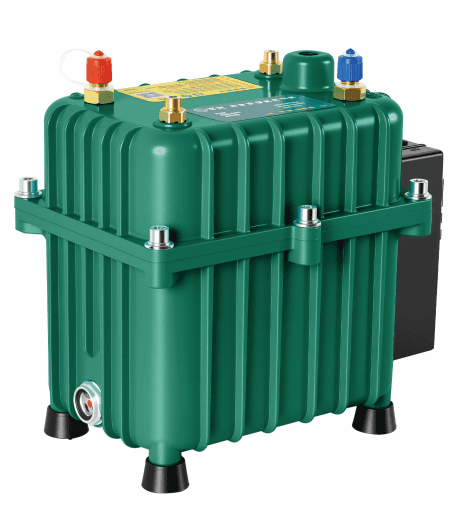
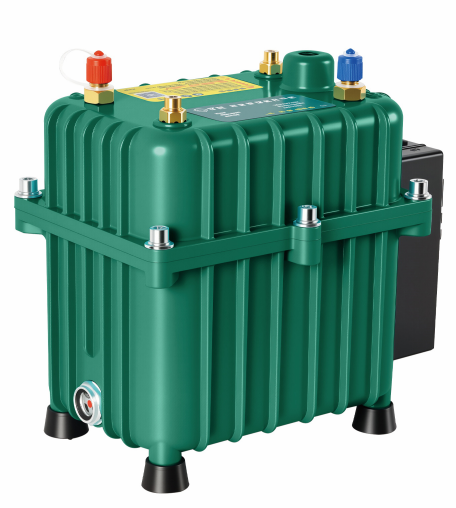
In the product data provided, the visible unit does not match a typical handheld vacuum pump. It appears instead to be an industrial rectangular tank/reservoir assembly with multiple fittings and a molded housing. Because the exact function cannot be verified from the image alone, this page treats it as a general fluid-handling component and avoids unsupported claims. If you are looking for an Auto AC Vacuum Pump specifically, confirm the actual product type before purchasing.
Product Overview
The visible assembly has a compact rectangular footprint, a green ribbed outer shell, black corner feet, and several top-mounted connection points. The structure suggests a manufactured tank body designed for integration into a larger system. Brass-colored fittings, capped red and blue ports, and a side-mounted auxiliary component indicate multiple connection options for fluid or pressure management.
From a buyer’s standpoint, this kind of layout is useful where space is limited but service access matters. The raised feet provide clearance under the body, while the ribbed housing adds stiffness to the shell. In systems that need buffering, containment, or pressure stabilization, a design like this can simplify installation and routing.
Visible Specifications and Capabilities
Structural features
Visible and verifiable features include a rectangular form factor, molded or coated exterior shell, multiple top ports, one lower side fitting, and a side-mounted black module whose purpose is not clear from the image. The overall arrangement suggests a unit built for plumbing into a larger fluid or air circuit.
Connection layout
The top surface shows several brass-colored fittings/ports, two color-coded capped connections or valves, and a central opening. This multi-port layout can be useful when a system needs inlet, outlet, vent, drain, or service access points. The exact port function should be confirmed from drawings or samples.
Materials and Finish Options
The outer housing appears to be plastic or a coated composite shell, though the exact resin or laminate is not verifiable. Brass-colored metal fittings are visible on the top, and black feet support the base. For similar products, common finish choices may include molded color bodies, protective coatings, or corrosion-resistant metal inserts, depending on the fluid environment and mounting requirements.
Manufacturing Process
Based on visual cues, the shell likely involves molding, while the ports and hardware are assembled afterward through machining, threading, sealing, or fastening. That combination is common in tank and reservoir products because it balances shape control with reliable connection points. However, the exact process for this unit is not confirmed and should not be assumed without production data.
Application Scenarios
Components with this type of layout are commonly used in fluid handling systems where storage, expansion, or pressure buffering is needed. Possible application areas include water systems, HVAC equipment, pumping systems, industrial liquid circulation, or other serviceable assemblies. If the product is intended for refrigerant service or automotive maintenance, the buyer should verify compatibility with the system medium and service conditions.
For an Auto AC Vacuum Pump application, the key buying need is evacuation performance. For a tank or reservoir assembly, the key need is stable integration into the line, dependable ports, and enough physical clearance for maintenance. Those are different products, so confirming the actual function is important.
Quality Control Considerations
Because the exact grade and rating are not supplied, quality evaluation should focus on visible build cues and supplier documentation. Buyers should ask for dimensional drawings, port thread details, material identification, pressure or vacuum ratings if relevant, and leak-test methods. If the unit will be used in a pressurized or regulated environment, documentation matters as much as appearance.
Customization Guidance
When ordering this type of assembly, useful customization points usually include port location, fitting thread type, shell color, base height, mounting method, and auxiliary module placement. If the unit is being adapted for an automotive service or HVAC workflow, buyers may also need specific connector standards, labels, or access geometry for easier maintenance.
Buyer Decision Factors
Before placing an order, verify the actual product category, the medium it handles, the connection standard, and whether the side-mounted component has an active function. Check the overall footprint against the available installation space and confirm that the port arrangement matches the intended circuit. If the application is automotive AC evacuation, make sure you are sourcing a true Auto AC Vacuum Pump rather than a reservoir or accumulator-type assembly.
Request a Quote or Technical Confirmation
If you need a vacuum-related service component, a fluid tank assembly, or help identifying this exact unit from the image, send the drawing, target application, and required connection details. Clear technical information will help match the right product to the system and avoid costly mismatch errors.