



Auto AC Refrigerant Recovery Machine Overview
Applicable Refrigerants: R134a / R1234yf
Temperature Range: 5–50°C
Max. Pressure: 18 Bar
Voltage/Frequency: 220V / 50Hz
Gross Weight: 95 kg
Dimensions: 55 × 70 × 105 cm
High/Low Pressure Gauges: 80 mm / Class 1.0
Cylinder Pressure Gauge: 40 mm / Class 1.0
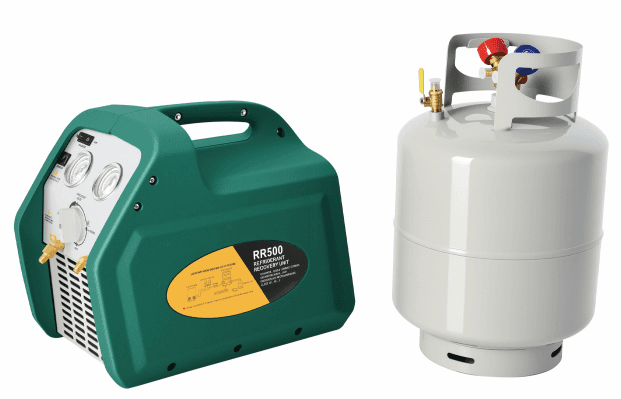
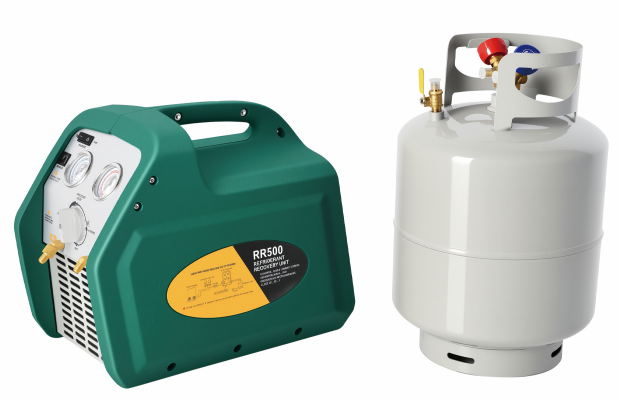
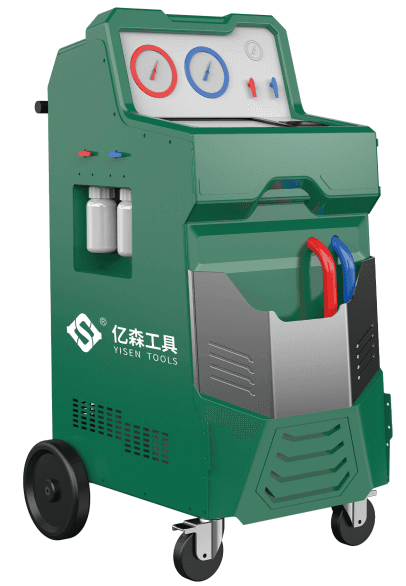
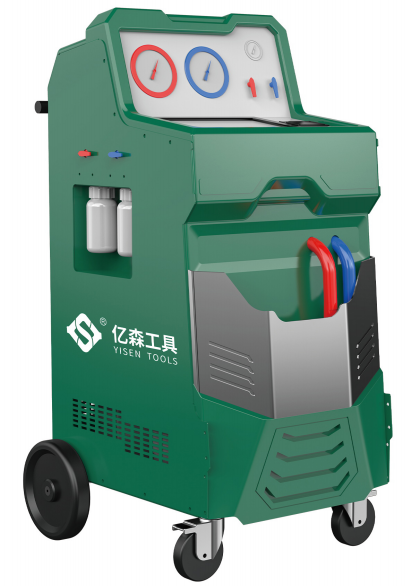
An Auto ac Refrigerant Recovery Machine helps workshops handle vehicle air-conditioning service without releasing refrigerant into the workspace. For repair shops, fleet operators, and mobile HVAC technicians, the main problem is simple: how to recover, manage, and recharge refrigerant in a controlled way while keeping the job organized and efficient. The unit shown is a mobile, cabinet-style service machine with gauges, hose connections, and transport wheels, designed for automotive A/C maintenance tasks.
Because the exact internal system cannot be confirmed from the image alone, this page describes the visible structure and the likely service role based on standard industry use. It is best understood as a refrigerant handling station for evacuation, recovery, recharge, and related diagnostic work in vehicle HVAC service.
Product Overview
This machine uses a wheeled metal enclosure with a green painted body and dark lower panels. The layout suggests a workshop tool that can be moved between service bays or loaded for mobile work. On the front, two large gauges provide immediate visual monitoring, while the colored hose section makes port identification easier during fast-paced service operations.
The enclosed cabinet design also helps protect internal components from dust, impact, and accidental contact. For busy automotive environments, that matters: tools need to be easy to move, easy to read, and easy to keep organized.
Visible Structure and Key Features
Mobile chassis
The base appears to use a practical transport setup with rear wheels and front swivel casters. That arrangement supports stable positioning during use and easier steering through a shop floor or service lane.
Control and monitoring area
The upper panel includes two large round gauges/meters and several smaller indicators. In an HVAC service setting, that type of front-facing layout is typically used to monitor operating conditions during refrigerant handling and system service.
Hose storage and access
Color-coded red and blue hoses are visible in the front compartment, which helps reduce connection mistakes. Side recesses also appear to hold cylindrical canisters or bottles, supporting a more compact work area.
Materials and Finish Options
The visible housing appears to be fabricated from sheet metal with a painted finish. This is a common choice for industrial service equipment because it offers a rigid structure, supports panel access doors, and can withstand repeated workshop use. The green exterior and dark lower panels give the machine a straightforward industrial appearance, while ventilation slots suggest attention to heat dissipation.
For buyers, finish options on this type of equipment often focus on paint color, panel layout, labeling style, and corrosion-resistant treatment. Exact options would need to be confirmed with the supplier or manufacturer.
Manufacturing and Assembly Characteristics
Based on the visible construction, the machine appears to be a fabricated service cart or enclosed equipment cabinet assembled from formed sheet-metal panels, mounted hardware, and external service components. Typical production steps for this type of product include panel cutting, bending, welding or fastening, surface finishing, and final assembly of gauges, hoses, wheels, and access covers.
That kind of structure is suited to industrial maintenance equipment because it balances durability with serviceability. Access seams and compartments suggest that internal parts may be designed for inspection or maintenance, although the internal configuration is not visible here.
Application Scenarios
This type of machine is commonly used in automotive repair shops, fleet maintenance garages, and mobile vehicle service operations. It is relevant wherever technicians need to manage vehicle A/C systems in a controlled way. Typical use cases may include refrigerant recovery, system evacuation, recharge support, and service diagnostics, depending on the final internal configuration.
For a workshop, the value is not only in the function itself but in workflow. A wheeled, self-contained unit reduces clutter, keeps hoses and fittings in one place, and makes the service station easier to relocate between vehicles.
Quality Control Considerations
When evaluating an Auto ac Refrigerant Recovery Machine, buyers usually look at build rigidity, gauge readability, hose routing, wheel stability, cabinet access, and the clarity of the control interface. For equipment like this, reliable assembly is important because refrigerant service depends on safe connections and repeatable operation.
Since exact performance data is not provided here, buyers should confirm operating pressure range, supported refrigerant types, pump or compressor specifications, power requirements, and any applicable compliance documents before purchase.
Customization Guidance
If you are sourcing this kind of equipment for a shop or distribution program, customization often starts with the service workflow. Consider cabinet color, label language, gauge layout, hose length, wheel type, storage compartment arrangement, and whether the machine needs to fit a mobile van or a fixed repair bay. If the unit will be used in fleet service, ease of movement and fast access to fittings may matter more than compactness alone.
Buyer Decision Factors
Before choosing a unit, compare the following:
• Mobility and floor handling
• Visibility of gauges and controls
• Hose organization and port identification
• Cabinet durability and service access
• Compatibility with your refrigerant service workflow
• Space available in the shop or service vehicle
These factors often determine whether the machine feels efficient in daily use or becomes another piece of equipment that slows down the job.
Request More Details
If you are looking for an Auto ac Refrigerant Recovery Machine for automotive HVAC service, contact us with your required refrigerant type, preferred workflow, and workshop setup. We can help you match the right configuration to your service needs and request the specific technical details needed for your project.