

AUTO AC Refrigerant Recovery Machine for Mobile HVAC Service
Applicable Refrigerants: R134a / R1234yf
Temperature Range: 5–50°C
Max. Pressure: 18 Bar
Voltage/Frequency: 220V / 50Hz
Gross Weight: 95 kg
Dimensions: 60 × 65 × 115 cm
High/Low Pressure Gauges: 80 mm / Class 1.0
Cylinder Pressure Gauge: 40 mm / Class 1.0
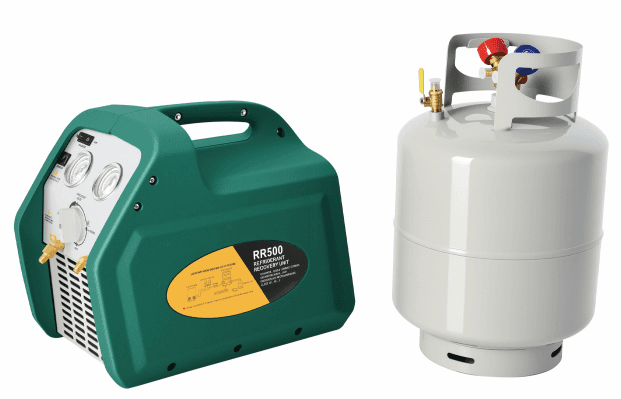
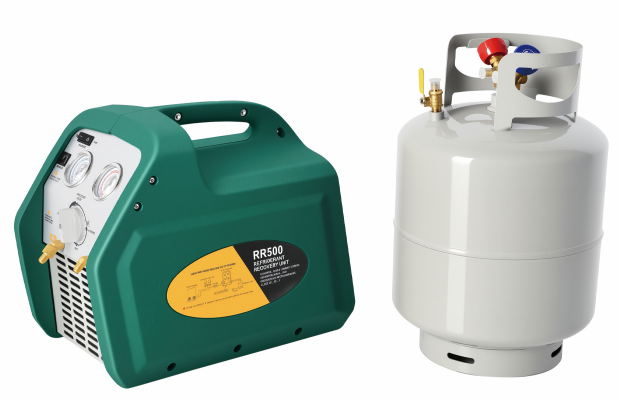
An AUTO AC Refrigerant Recovery Machine helps technicians handle one of the most common bottlenecks in vehicle air-conditioning work: moving refrigerant safely and efficiently during service. For workshops that need to recover, evacuate, and recharge AC systems, a mobile unit reduces hose handling, organizes gauges and fittings, and keeps the service process in one cart instead of multiple loose tools.
Product Overview
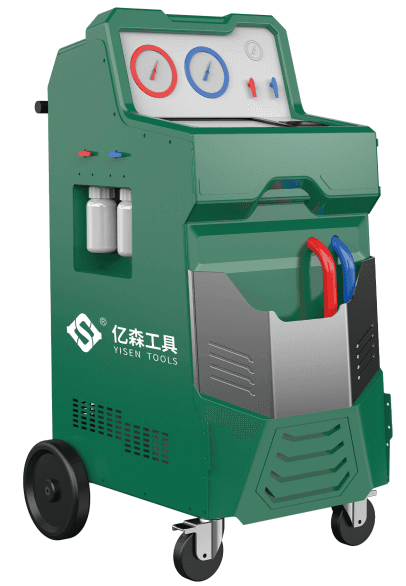
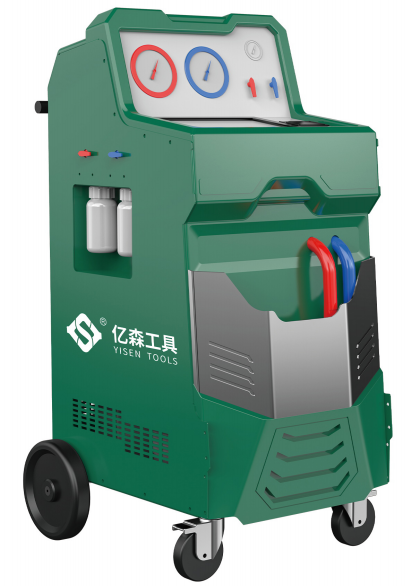
This unit appears to be a portable wheeled service cart designed for automotive refrigerant recovery and charging operations. The enclosed cabinet-style body, dual gauge faces, colored hose connections, and integrated cylinder storage indicate a workshop-oriented layout built for frequent movement between service bays. The chassis uses larger rear wheels and front caster wheels, which supports repositioning across a repair floor or into a field service environment.
The visible branding on the front includes “YISEN TOOLS” and Chinese characters. Based on the layout, the machine is intended for vehicle air-conditioning service, refrigerant charge/discharge handling, and routine maintenance work where technicians need a compact station that can travel with the job.
Visible Specifications and Design Features
Mobility and cabinet structure
The body is an enclosed cabinet with side panels and a front compartment. The wheeled base includes larger transport wheels and small caster wheels, which helps the machine stay maneuverable while still supporting a service cart format. An integrated handle or cutout section also suggests that the unit is meant to be pushed and repositioned by one operator.
Control and connection layout
On the upper front panel, two round gauge-style dials are visible. Red and blue hose fittings or hose lines are also visible, which is typical of refrigerant service stations where technicians need clear separation between pressure sides or line functions. A side recess appears to hold two metal cylinders or canisters, adding storage for service accessories or connected containers.
Materials and Finish Options
The visible exterior appears to use molded sheet-metal or plastic panels with a green finish and a gray front compartment. Because internal parts are not visible, the exact material specification cannot be confirmed from the image alone. In practice, units in this category are often built with a painted metal cabinet, polymer covers, or a mixed enclosure to balance durability, weight, and service access.
For buyers, common finish considerations include scratch resistance, corrosion resistance around hoses and fittings, easy-clean surfaces, and clear labeling on the control panel. If the machine will be used in a busy workshop, a finish that tolerates oil, dust, and repeated movement is worth prioritizing.
Manufacturing and Service Use
As a refrigerant handling machine, the core manufacturing focus is usually on cabinet fabrication, gauge mounting, hose routing, wheel assembly, and the integration of internal service components. The exact internal functions are not visible, so compressor presence, vacuum capability, or automatic sequencing should not be assumed without product confirmation.
In use, a technician would typically connect the unit to a vehicle AC system, manage refrigerant transfer through the hose set, monitor the gauges, and then store accessories in the cabinet. The mobile format makes it practical for workshop maintenance, fleet service, dealership bays, and any operation that needs refrigerant equipment to move from vehicle to vehicle.
Typical Application Scenarios
- Automotive air-conditioning service in repair shops
- Refrigerant recovery and recharge during AC maintenance
- Fleet maintenance where multiple vehicles are serviced daily
- Mobile field service for technicians working between bays or locations
- General workshop refrigerant handling and accessory storage
Quality Control and Buyer Decision Factors
When comparing an AUTO AC Refrigerant Recovery Machine, buyers should look at gauge readability, hose organization, wheel durability, cabinet access, and how clearly the service connections are laid out. Since the visible data does not confirm performance ratings, it is important to request the exact refrigerant compatibility, pressure limits, power requirements, tank size, and internal component configuration before purchase.
Quality control for this type of equipment usually focuses on panel fit, leak-tight connections, secure mounting of gauges and fittings, smooth wheel movement, and safe storage of cylinders or tools. If the unit will be moved often, the stiffness of the frame and the protection around exposed fittings become especially important.
Customization and Purchasing Guidance
Before ordering, confirm whether the unit needs to match a specific refrigerant workflow, workshop layout, or service standard. Buyers may also want to ask about hose length, gauge style, accessory storage, labeling, and whether the machine can be configured for different operational requirements. If your workshop handles multiple vehicle types, the connection set and cabinet arrangement should match your daily service routine rather than just the catalog image.
If you need a mobile refrigerant service station for automotive AC work, this style of machine is worth reviewing as a compact, organized solution. Contact us with your service requirements so we can help match the configuration to your workshop or field application.