

|
款号 |
KS-820068 |
|
|
适用车型 |
Usual vehicle style |
众泰Zotye |
|
额定电压(V) |
Rated Volatge |
12V |
|
皮带槽楼X根数 |
Belt Groove Type Number |
5PK |
|
轴承规格 |
Bearing Size |
355220 |
Auto AC Assembly Overview
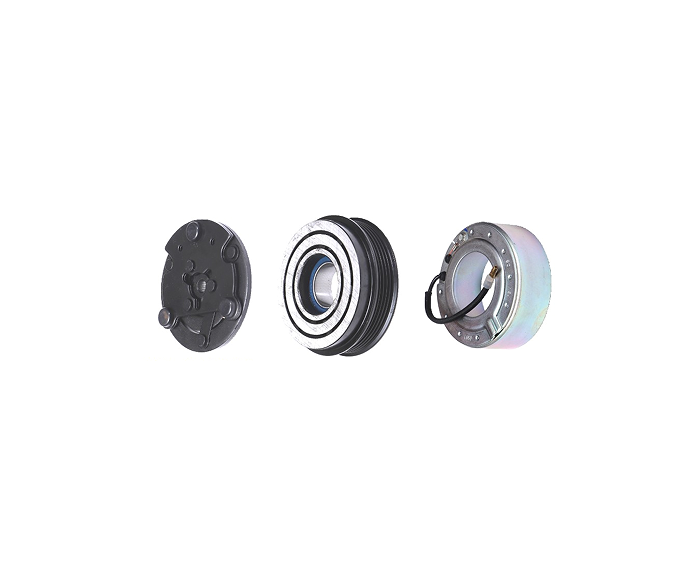
This auto AC assembly is a visible set of electromagnetic clutch components that may be used to connect an engine- or motor-driven belt system to an air-conditioning compressor. The assembly addresses a common buyer problem: replacing a worn clutch without automatically replacing the entire compressor. Based on the supplied image, the product appears to include an armature plate, a multi-ribbed pulley or rotor, and a stationary field-coil housing. The automotive HVAC application should be confirmed against the applicable compressor, vehicle, and service documentation before ordering.
An electromagnetic clutch normally engages when its coil is energized. The field coil creates a magnetic force that draws the armature plate into engagement with the rotating pulley, allowing torque to reach the compressor shaft. When the coil is de-energized, the compressor can remain disengaged while the belt and pulley continue to rotate. The exact operating voltage, engagement gap, torque capacity, and compressor compatibility are not visible in the provided product information and must be verified from technical drawings or a supplier confirmation.
Visible Product Configuration
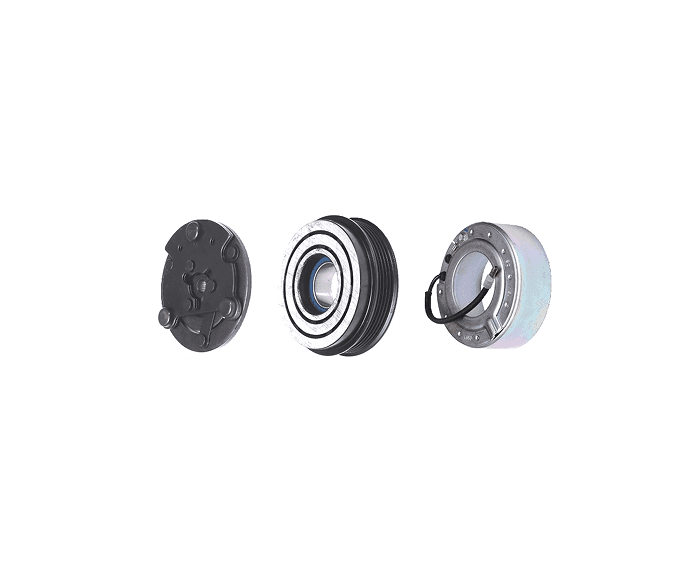
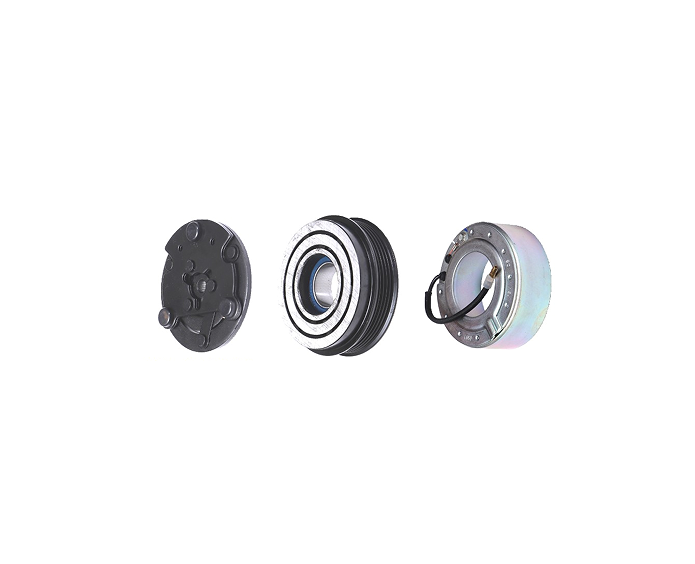
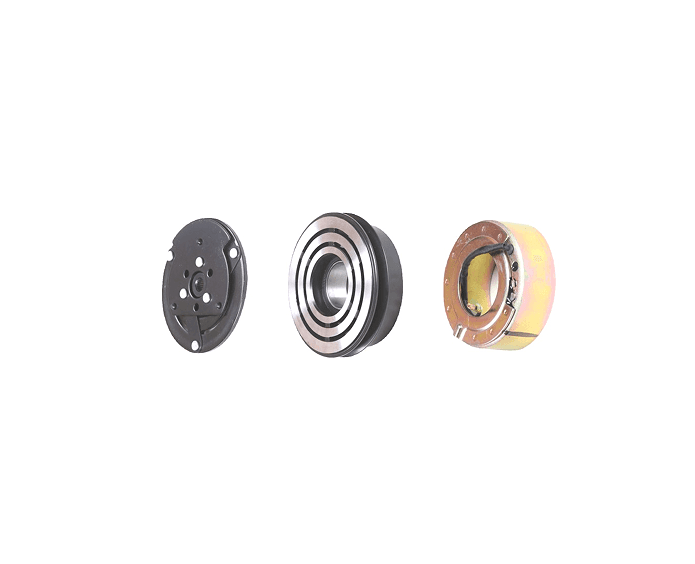
The image shows three separate, coaxial components arranged around a common compressor nose or shaft interface:
- Armature plate: A dark-coated circular steel-looking component with a central hub or drive interface. Several visible fasteners, slots, or formed features appear to support its engagement and attachment arrangement.
- Pulley or rotor: A black, multi-ribbed component with concentric machined faces and a central bearing bore. The ribs appear consistent with a serpentine-belt drive, although the exact belt profile and groove count require confirmation.
- Field-coil housing: A stationary circular housing with mounting features and an electrical lead. Its light silver-blue appearance may indicate zinc or a similar protective plating, but the coating cannot be identified from the image alone.
The supplied image does not confirm whether these parts are sold as a complete matched clutch, as individual replacement components, or as part of a broader compressor repair program.
Key Specifications and Capabilities to Confirm
For purchasing and engineering review, the most important specifications are the compressor interface and the electrical characteristics. Buyers should request the pulley outside diameter, groove count, belt standard, bearing dimensions, shaft size, hub geometry, mounting pattern, and armature-to-pulley engagement requirements. Electrical data should include the rated voltage, coil resistance, connector or lead configuration, current draw, and allowable operating conditions.
Mechanical performance also depends on torque transmission, rotational speed, engagement frequency, bearing load, and thermal exposure near the compressor. None of these values are supplied here. A product drawing, inspection report, or matched part reference is therefore necessary before confirming interchangeability. If the intended use is an A/C compressor repair assembly, the replacement clutch should be checked against both the compressor model and the vehicle's belt routing.
Materials and Finish Considerations
The armature plate and pulley appear to use formed or machined ferrous components, while the field-coil housing is metallic with a light protective-looking surface. The dark appearance of the armature and pulley may result from a coating, treatment, or manufacturing finish; the exact material grades and surface processes are not provided. Possible industry approaches include stamped steel for formed clutch plates, machined steel for bearing and pulley interfaces, copper-based coil windings, and plated housings for environmental protection. These are general manufacturing possibilities, not confirmed specifications for this product.
When requesting a quotation or replacement, ask whether the finish is intended to resist corrosion, whether the bearing is pre-installed, and whether any uncoated machined surfaces require protective handling. The finish should not be judged by color alone. Coating type, thickness, corrosion performance, and compatibility with the vehicle environment should be documented if they are important to the application.
Manufacturing and Assembly Process
A typical electromagnetic clutch production route may include steel blanking or stamping, forming of the armature features, machining of pulley faces and bearing seats, coil winding, housing preparation, surface treatment, bearing installation, and final assembly. Assembly normally requires controlled alignment of the pulley, field coil, armature, bearing, and compressor shaft interface. The actual process used for the pictured parts is not confirmed.
For a replacement program, process consistency matters because small differences in bearing seating, hub position, or engagement geometry can affect noise, belt alignment, and clutch operation. Suppliers should be asked whether the components are assembled and tested as a matched set or supplied for workshop assembly.
Application Scenarios
Potential uses include replacement of a failed compressor clutch, workshop repair of automotive HVAC systems, compressor remanufacturing, and aftermarket distribution to vehicle service centers. The pulley and electrical lead suggest a belt-driven, electrically actuated compressor interface, but the vehicle platform and compressor family are unknown.
This component should not be confused with an automotive AC expansion valve assembly, which regulates refrigerant flow rather than transmitting mechanical drive. It is also different from a compressor mount bracket assembly, whose purpose is to position and support the compressor on the engine or accessory drive. A/C compressor coupling assembly may be used as a related purchasing description, but the exact naming should follow the supplier's drawing and part identification.
Quality Control and Inspection
Before installation, a buyer or service provider can inspect the pulley for groove damage, runout, bearing roughness, and correct rotation. The armature should be checked for distortion, contact wear, and hub fit. The field-coil housing requires visual inspection of the electrical lead, mounting points, insulation, and connector condition. Dimensional checks should cover the shaft interface, bearing seat, pulley position, and mounting geometry.
Electrical verification may include continuity and resistance testing, provided the test method and acceptable values are defined by the approved technical documentation. Engagement testing should use the specified voltage and a safe test fixture. Do not infer coil resistance, operating voltage, torque, or service life from the image. Any supplied inspection record should identify the measured feature, equipment used, acceptance criteria, and part traceability where required.
Customization and Ordering Guidance
For a correct match, provide the compressor manufacturer and model, vehicle application if known, original part number, pulley dimensions, belt information, shaft and hub details, electrical connector photographs, and mounting measurements. If the original part is available, clear images from multiple angles can help with preliminary identification, but they should not replace dimensional verification.
Ask whether the requested item is a complete automotive air conditioning assembly or a set of separate clutch elements. Confirm packaging, bearing inclusion, coil lead length, finish requirements, and whether workshop installation is expected. If the application is intended for an A/C compressor coupling assembly replacement, the supplier should confirm the complete interface rather than matching only the visual appearance.
Buyer Decision Factors and Next Step
The main purchasing factors are verified compressor compatibility, belt alignment, electrical matching, bearing condition, dimensional accuracy, documented inspection, and availability of replacement components. Cost should be evaluated together with installation risk: an apparently similar pulley or coil may still be unsuitable if its shaft depth, belt geometry, or electrical characteristics differ.
For technical review, send the compressor or clutch identification, required quantity, application details, and available measurements. Request a dimensional drawing, material and finish description, electrical data, inspection scope, and confirmation of whether the parts are supplied individually or as a matched set. These details allow the product to be evaluated as a practical replacement option without relying on assumptions from the image alone.