

|
款号 |
KS-806060 |
|
|
适用车型 |
Usual vehicle style |
起亚K3KIA |
|
额定电压(V) |
Rated Volatge |
12V |
| 皮带槽楼X根数 | Belt Groove Type Number | 6PK |
|
轴承规格 |
Bearing Size |
355222 |
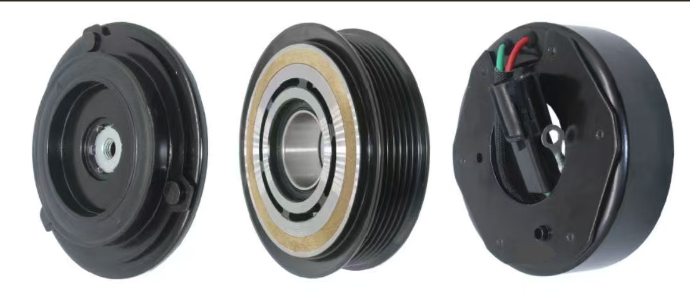
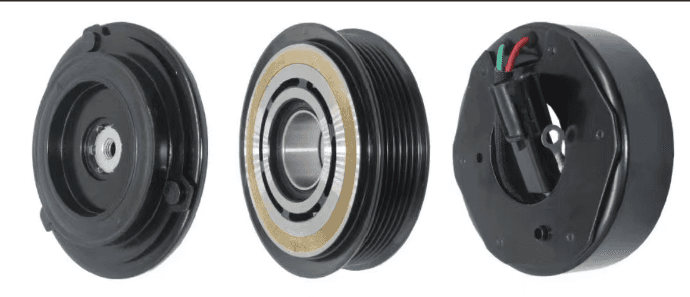
A/C Compressor Clutch Overview
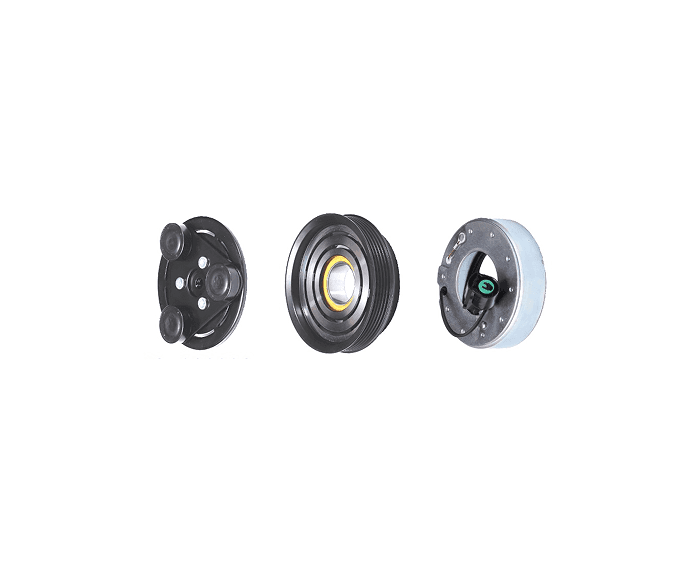
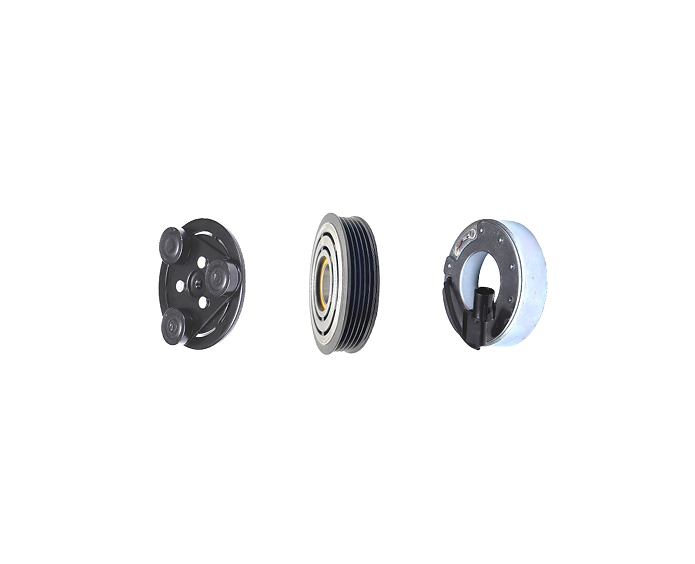
An A/C compressor clutch is an electromagnetic drive assembly used to engage or disengage a belt-driven automotive air-conditioning compressor. It addresses a common repair problem: the vehicle accessory belt and compressor may remain mechanically serviceable while the clutch, pulley, bearing, coil, or armature has worn or failed. In suitable applications, replacing the clutch assembly can support compressor repair without automatically replacing the complete compressor. The product shown appears to be a separated clutch assembly intended for identification, servicing, or installation.
Product Construction and Operating Principle
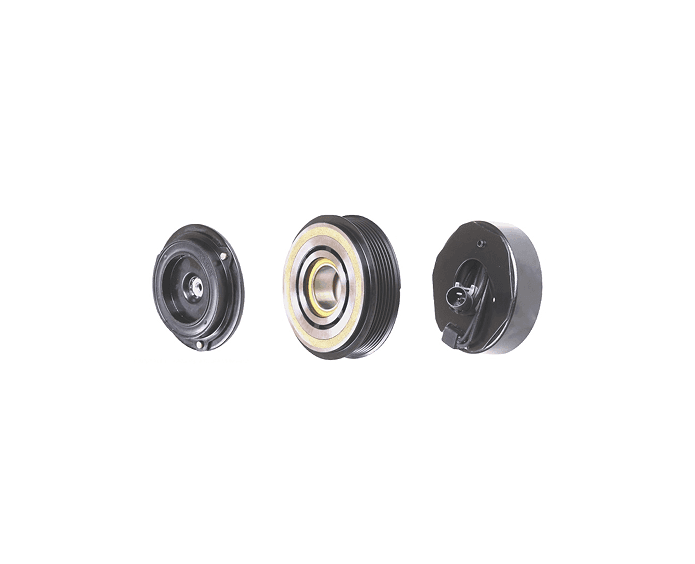
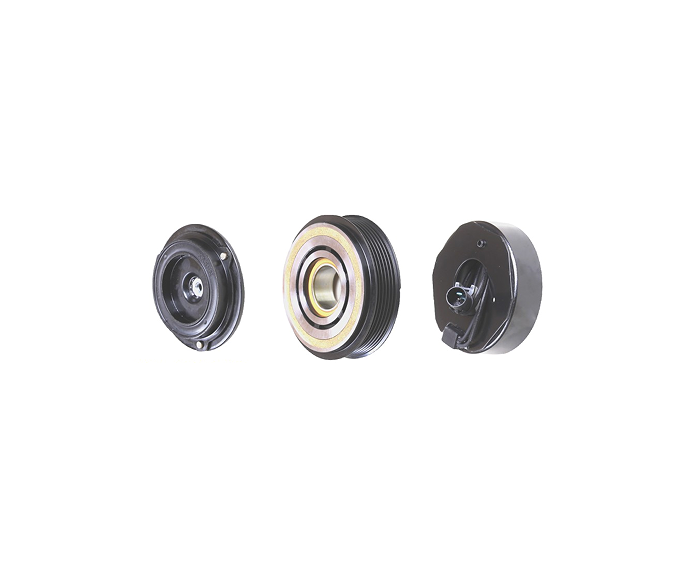
The assembly uses a multi-ribbed outer pulley, a central hub or drive interface, a front armature plate, and a rear electromagnetic coil housing. The pulley is designed to rotate with the engine accessory belt. When the coil is energized, magnetic force draws the armature toward the friction surface, allowing the pulley to transmit rotation to the compressor shaft. When electrical power is removed, the friction connection releases and the compressor is disengaged.
The visible design is circular and coaxial, with a grooved pulley surrounding the central shaft interface. The front plate has a central fastener opening, while the rear coil housing includes several mounting or alignment holes. Red, green, and black electrical leads are visible. Their exact circuit function, polarity, and terminal arrangement should be confirmed against the intended vehicle or compressor documentation before installation.
Key Specifications and Capabilities
- Electromagnetic engagement for a belt-driven compressor system.
- Multi-ribbed pulley intended for an accessory or serpentine belt, with the exact rib count requiring measurement.
- Separate pulley, hub, armature, and coil components that may support service or replacement-part assembly.
- Concentric construction for alignment between the belt pulley, compressor shaft, and friction surfaces.
- Integrated electrical leads connected to the coil housing.
The supplied product data does not state the operating voltage, coil resistance, pulley diameter, shaft bore, bearing specification, torque capacity, engagement speed, maximum rotational speed, noise level, or environmental rating. These values should not be assumed from the image. Dimensional drawings, electrical test data, and application references are important when selecting an air conditioning compressor clutch for a specific vehicle or compressor model.
Materials and Finish Options
The visible components appear to use machined or formed steel and aluminum parts with a dark protective or painted finish. Friction and inner metallic surfaces remain exposed in the photographed assembly. The coil appears to contain copper wire enclosed in a dark housing, although the exact conductor, insulation, housing, and coating materials are not confirmed by the available information.
For production or replacement programs, buyers can request material-grade information, surface-treatment details, exposed friction-surface requirements, and corrosion-protection specifications. Any finish must preserve the required air gap and avoid contamination of the armature or pulley contact surfaces. Exact coating thickness and durability should be defined by the supplier through drawings or agreed inspection criteria rather than inferred from appearance.
Manufacturing and Assembly Considerations
A typical manufacturing route for this type of component may include turning or machining the hub and shaft interface, forming or machining the ribbed pulley, producing the armature plate, winding the electromagnetic coil, installing the bearing where applicable, attaching electrical leads, applying surface protection, and assembling the components concentrically. Final operations may include air-gap adjustment, rotation checks, electrical continuity testing, and engagement verification. The specific processes for this product are not verified from the image and should be confirmed with the manufacturer.
Assembly accuracy matters because radial runout, pulley misalignment, an incorrect shaft interface, or unsuitable friction clearance can affect belt tracking and clutch engagement. A replacement compressor clutch kit should therefore be evaluated as a matched mechanical and electrical assembly, not only by its outside appearance.
Application Scenarios
The primary use case is replacement of a worn or failed clutch on an automotive HVAC compressor. Repair workshops may use the assembly when diagnosing a non-engaging compressor, damaged pulley, failed coil, noisy bearing, or worn armature interface. Automotive parts distributors and compressor rebuilders may also require separated components for service inventory and remanufacturing work.
The assembly may be relevant to other belt-driven electromagnetic compressor systems, but compatibility is conditional. The pulley profile, shaft dimensions, mounting pattern, electrical characteristics, compressor family, and required clutch clearance must all match. A magnetic clutch for AC compressor applications should not be treated as universally interchangeable across vehicles or compressor brands.
Quality Control and Inspection
Incoming inspection can include pulley diameter and rib-profile measurement, shaft-bore verification, mounting-hole location, armature flatness, and visual examination of friction surfaces. Electrical checks may include coil continuity, resistance measurement, lead identification, insulation review, and a controlled engagement test using the specified system voltage. Mechanical checks can cover bearing rotation, axial play, pulley runout, hub alignment, and fastener fit.
Because no test results or certification information were supplied, buyers should request the applicable inspection record, drawing revision, electrical test conditions, and acceptance limits. If the part is supplied for a safety- or reliability-sensitive repair program, traceability for the coil, pulley, bearing, and final assembly can also be included in the purchasing specification.
Customization and Compatibility Guidance
Provide the compressor manufacturer and model, vehicle application, pulley rib count, pulley outside diameter, shaft diameter and interface, mounting-hole pattern, electrical voltage, connector or lead arrangement, and required armature clearance. Photographs help identify the general configuration, but they cannot establish hidden dimensions or electrical performance.
When reviewing A/C compressor clutch wiring, confirm lead length, insulation, connector style, polarity requirements, routing, and protection from belt contact or high-temperature surfaces. If the buyer needs a compressor clutch bearing, specify the bearing dimensions and load requirements separately rather than assuming that a visually similar component will fit.
Buyer Decision Factors
- Exact compressor and vehicle compatibility.
- Matching belt-rib profile, pulley dimensions, and shaft interface.
- Correct coil voltage and electrical resistance.
- Armature clearance, friction-surface condition, and pulley alignment.
- Availability of dimensional drawings and inspection documentation.
- Whether the requirement is a complete assembly, individual component, or replacement compressor clutch kit.
Buyers should also distinguish between a repair component and a complete compressor replacement. A clutch can address an engagement or pulley-related fault, but it may not resolve internal compressor damage. A qualified technician should verify the failure mode before ordering.
Request Technical Information
For sourcing, provide the compressor reference, application details, measured dimensions, belt information, electrical requirements, and expected quantity. Ask for a product drawing, compatibility confirmation, material and finish description, inspection scope, and sample approval procedure. This approach helps match the visible electromagnetic clutch structure to the actual service requirement while avoiding assumptions about unverified ratings or performance.