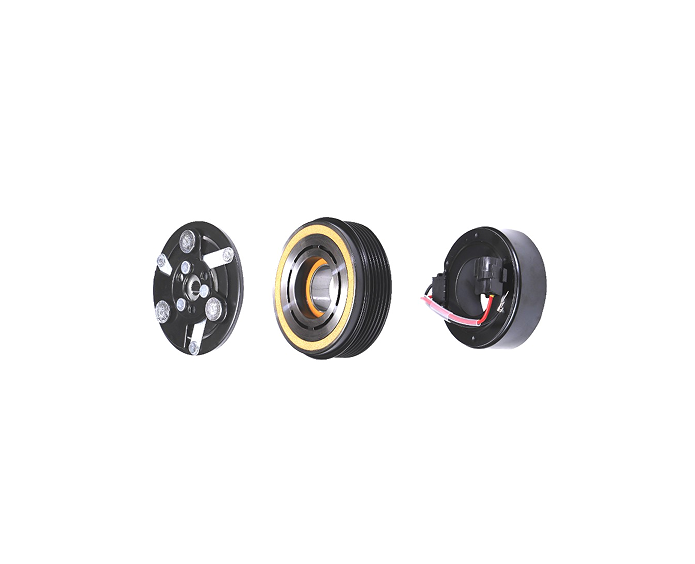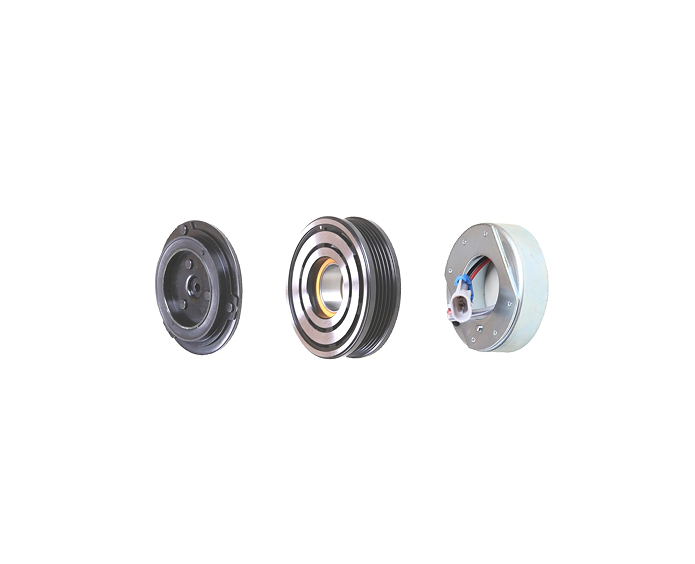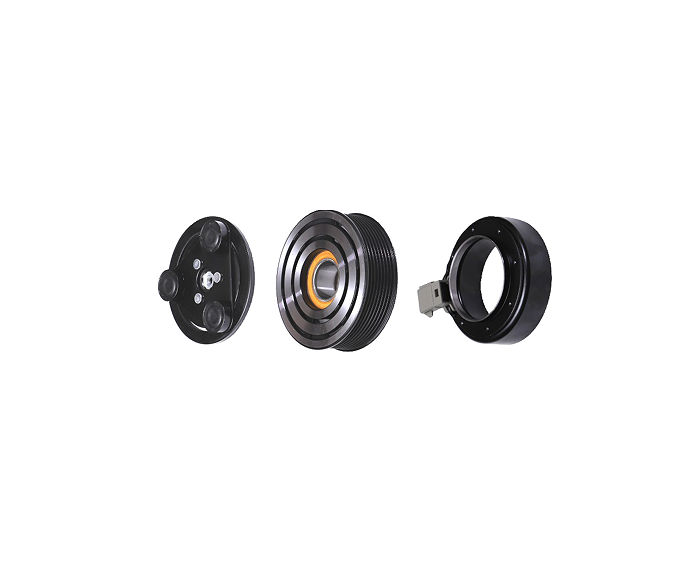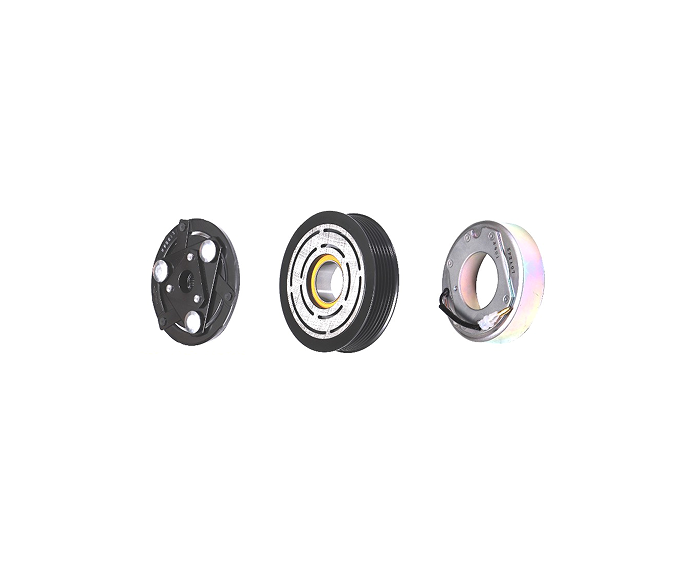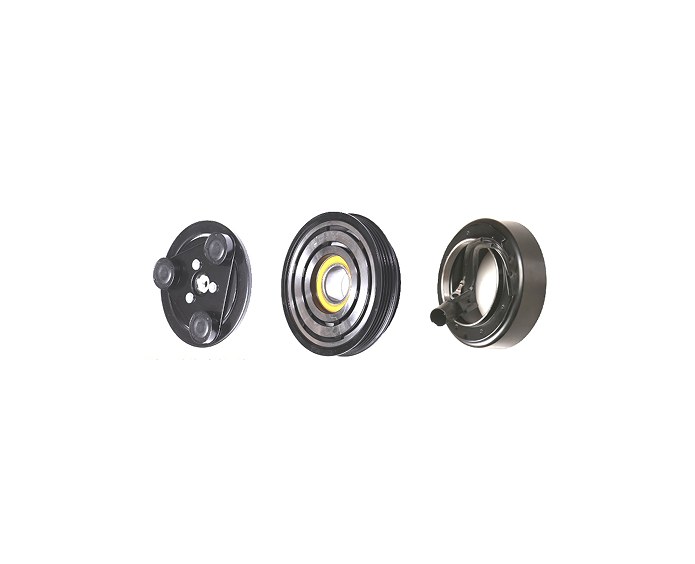

Nothing frustrates drivers and fleet operators more than an AC system that runs but fails to cool. In many cases, the issue is not the compressor itself — it is the automotive air conditioner clutch failing to engage.
When the clutch does not activate:
- The pulley spins freely
- The compressor shaft remains idle
- Refrigerant circulation stops
- Cabin temperature rises
This is not merely an inconvenience. It signals an electrical, mechanical, or alignment imbalance within the automotive air conditioner clutch assembly.
How the Engagement Mechanism Actually Works
Understanding failure starts with understanding function.
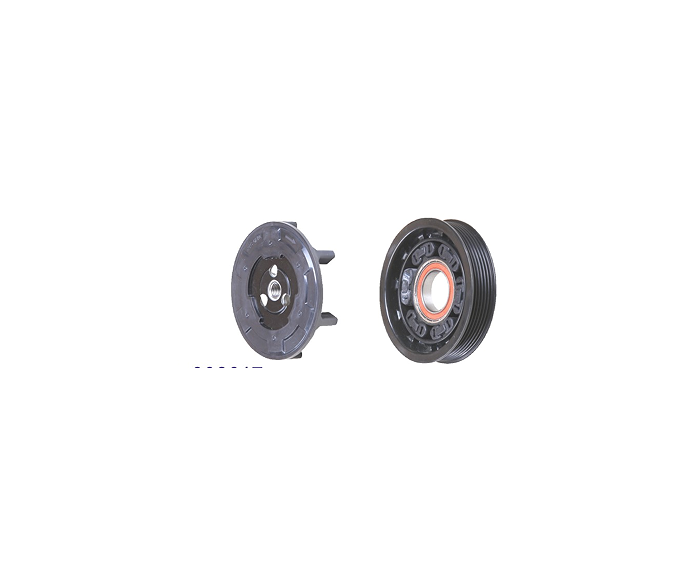
An automotive air conditioner clutch operates through electromagnetic force:
- Voltage is applied to the clutch coil
- Magnetic flux is generated
- The armature plate is pulled inward
- Torque transfers from pulley to compressor shaft
If any element in this chain breaks — voltage supply, coil integrity, air gap precision, or structural alignment — engagement fails.
Electrical vs Mechanical Failure: A Clear Distinction
Not engaging does not always mean the same problem.
Electrical Causes
- Blown fuse
- Faulty relay
- Damaged wiring
- Open or shorted coil
Mechanical Causes
- Excessive air gap
- Worn friction surface
- Bearing misalignment
- Seized compressor
Electrical issues prevent magnetic pull. Mechanical issues prevent torque transfer.
Correct diagnosis avoids unnecessary compressor replacement.
Step-By-Step Troubleshooting Strategy
Check Voltage Supply
With AC turned on:
- Measure voltage at the clutch connector
- Confirm stable 12V (or system voltage)
No voltage? Investigate fuse and relay first.
Measure Coil Resistance
Typical 12V system:
- 3–5 Ohms
Infinite resistance → open circuit
Zero resistance → short circuit
If the coil fails, the automotive air conditioner clutch cannot generate magnetic engagement.
Inspect Air Gap
Air gap typically ranges between 0.3–0.6 mm.
If excessive:
- Magnetic force weakens
- Engagement becomes incomplete
Precision calibration restores performance.
Examine Pulley and Bearing Condition
Spin pulley manually:
- Rough rotation indicates bearing failure
- Wobble alters air gap consistency
Mechanical imbalance prevents reliable engagement.
Why Quick Fixes Often Fail
Replacing only a fuse without identifying root cause may temporarily restore function. However:
- Coil insulation degradation
- Friction surface glazing
- Thermal fatigue
can reappear under load.
A high-quality automotive air conditioner clutch assembly reduces repeat failure.
Learn more about our manufacturing discipline here:
https://www.gzkasen.com/about-us
Explore available product configurations:
https://www.gzkasen.com/products
For common troubleshooting references:
https://www.gzkasen.com/faqs
Performance Advantages of Properly Engineered Clutches
A precision-built automotive air conditioner clutch provides:
- Stable electromagnetic pull
- Balanced pulley rotation
- Controlled air gap tolerance
- Extended engagement cycle durability
For fleet operators, this means lower downtime and predictable performance.
Application Scenarios
Non-engagement issues commonly occur in:
- High-mileage vehicles
- Heavy-duty trucks with prolonged AC use
- Vehicles exposed to extreme heat
- Fleet vehicles with frequent cycling
Selecting a durable automotive air conditioner clutch ensures operational stability in these demanding environments.
Selection Recommendations
When choosing replacement units, prioritize:
- Insulation class F/H coils
- Reinforced bearings
- Tested engagement cycle durability
- Corrosion-resistant surface treatment
A low-cost unit may pass initial testing but fail under sustained load.
Frequently Asked Questions
Q1: Can low refrigerant prevent clutch engagement?
Yes. Pressure switches may block activation if refrigerant levels are too low.
Q2: Should the compressor be replaced if clutch doesn’t engage?
Not always. Often the automotive air conditioner clutch alone is responsible.
Q3: How often should clutch function be inspected?
During routine AC service or every 50,000 km.
Conclusion: Diagnose First, Replace Strategically
A non-engaging automotive air conditioner clutch signals either electrical interruption or mechanical misalignment. Structured testing isolates the issue efficiently and prevents unnecessary compressor replacement.
Reliable clutch performance begins with disciplined manufacturing and validated durability standards.
To explore precision-engineered automotive air conditioner clutch solutions, visit:
https://www.gzkasen.com/
For technical support or bulk inquiries:
https://www.gzkasen.com/contact-us/