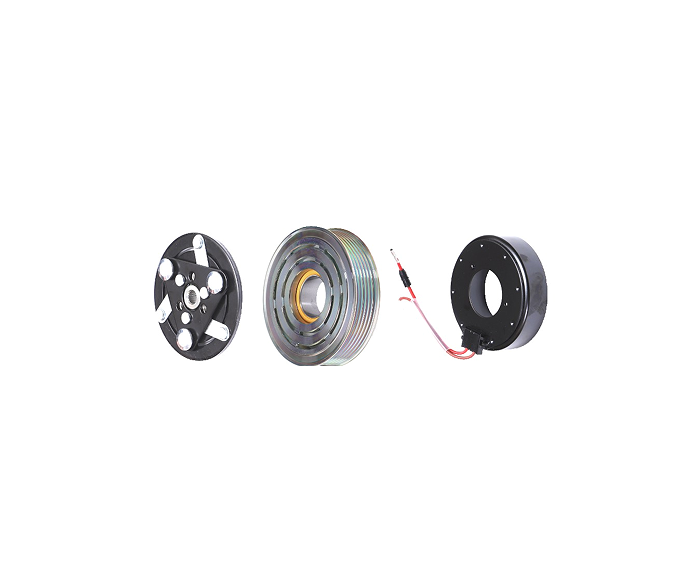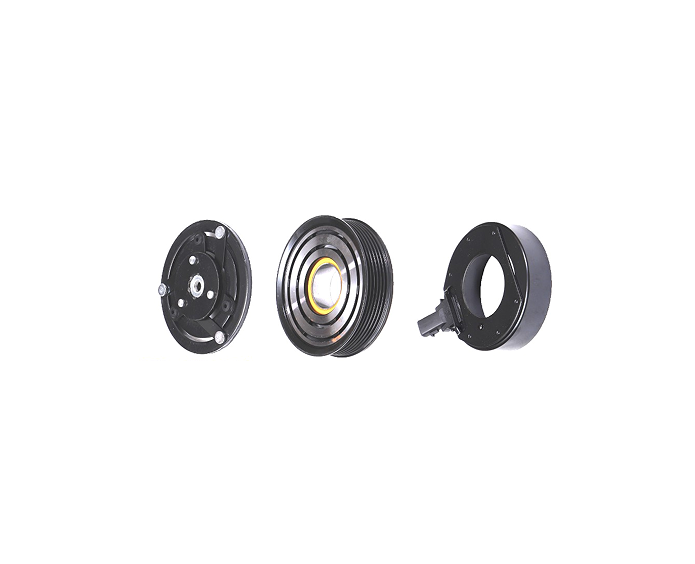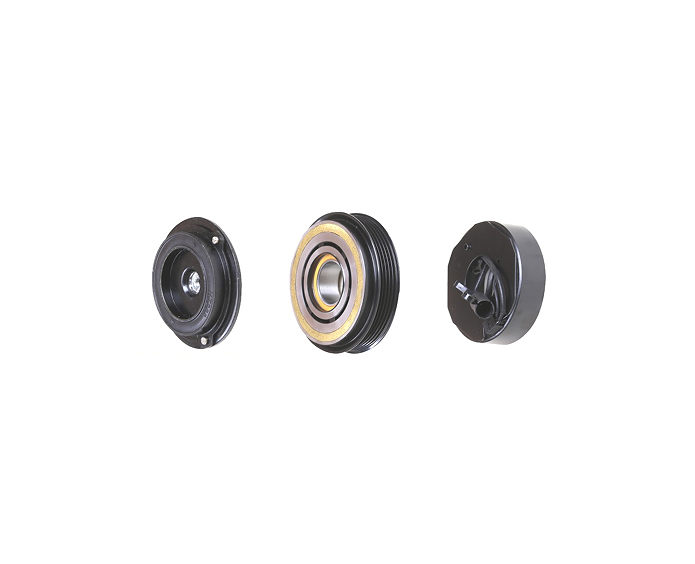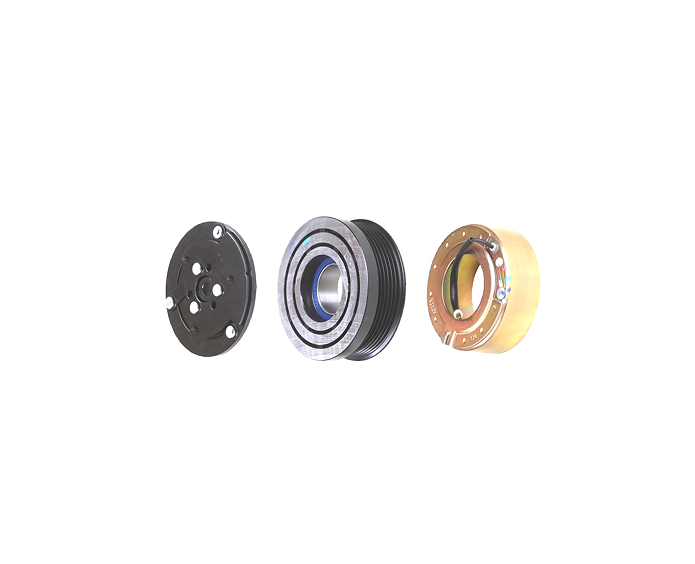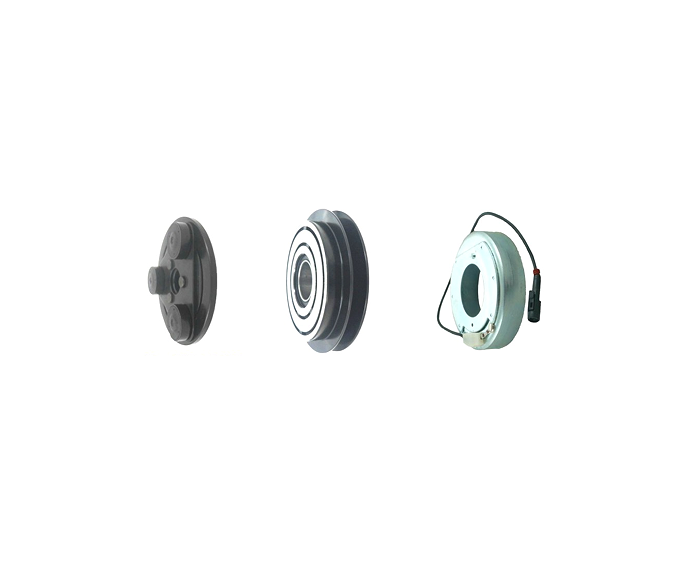

Temperature is one of the biggest challenges for auto AC compressor clutch performance. During summer, the air conditioning system works more frequently, the engine bay temperature rises, and the compressor clutch must engage and disengage many times under heat and load.
For an automotive air conditioner clutch, high temperature can affect the coil, friction surface, bearing, pulley, air gap, and torque transfer. If the clutch is not designed or selected properly, it may slip, overheat, become noisy, or fail earlier than expected.
For importers, distributors, and repair businesses, this is not only a technical issue. It directly affects customer complaints, product returns, warranty pressure, and repeat repair costs.
What Happens to an AC Clutch Under High Temperature?
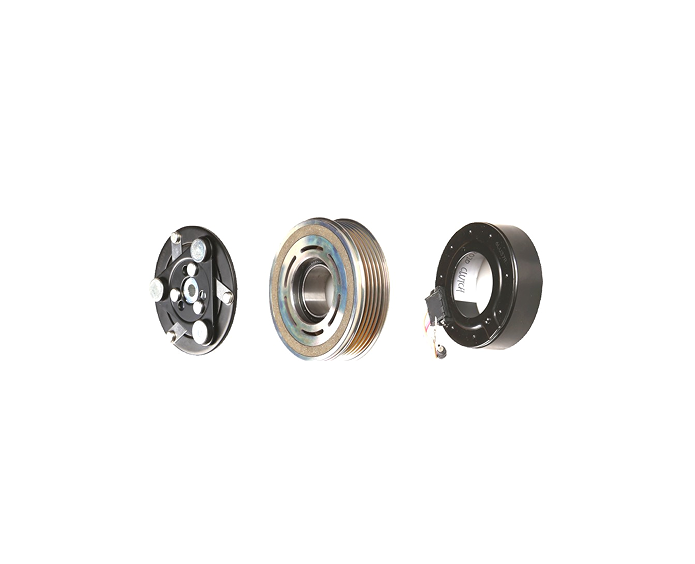
An auto AC compressor clutch works through electromagnetic engagement. When the AC system turns on, the clutch coil creates magnetic force, pulling the hub plate toward the rotating pulley. The friction surface then transfers torque to the compressor shaft.
Under high temperature, each step becomes more demanding.
| Clutch Area | Temperature Impact |
|---|---|
| Clutch Coil | Heat may reduce insulation life and magnetic stability |
| Friction Surface | Excessive heat may cause slipping, glazing, or fast wear |
| Bearing | High temperature may increase noise and reduce service life |
| Pulley | Heat and vibration may affect rotation stability |
| Air Gap | Thermal expansion may influence engagement response |
| Hub Plate | Uneven heat may affect contact and torque transfer |
A reliable clutch must remain stable even when the vehicle operates in hot climates, traffic congestion, long-distance driving, or heavy-duty service conditions.
Why AC Clutch Failures Increase in Summer
Summer is the peak season for auto AC repairs. Drivers use the AC system more often, and the compressor clutch cycles more frequently. This creates more heat, more surface contact, and more electrical load on the coil.
Common summer failure symptoms include:
- AC blows warm air
- Compressor clutch does not engage
- Clutch engages and disengages repeatedly
- Burning smell near the compressor
- Pulley bearing noise becomes louder
- Weak or unstable cooling
- Friction surface shows discoloration
- Clutch slips under high load
- Compressor works intermittently
For repair shops, these symptoms often lead to urgent replacement demand. For distributors, summer is the period when stocking reliable automotive air conditioner clutch models becomes especially important.
How Temperature Affects the Clutch Coil
The clutch coil is responsible for generating magnetic force. When current passes through the coil, heat is naturally produced. If the surrounding temperature is already high, the coil must work under greater thermal stress.
Poor coil quality may lead to:
| Coil Problem | Possible Result |
| Weak insulation | Short circuit or coil burnout |
| Unstable resistance | Reduced magnetic force |
| Overheating | Delayed or failed engagement |
| Poor voltage matching | Intermittent compressor operation |
| Low-quality winding | Shorter service life |
For buyers, coil voltage, resistance, connector type, and compressor model should be confirmed before ordering. A low-price clutch may look acceptable, but poor coil stability often appears only after real summer operation.
How Temperature Affects Friction and Torque Transfer
When the hub plate contacts the pulley, friction transfers torque to the compressor shaft. This contact creates heat. If the friction material cannot handle temperature changes, the clutch may slip.
Clutch slipping is a serious problem because it creates even more heat. Once this cycle starts, the friction surface may glaze, burn, wear quickly, or lose grip.
A durable automotive air conditioner clutch should have:
- Stable friction coefficient
- Heat-resistant friction surface
- Strong bonding structure
- Good wear resistance
- Accurate air gap control
- Smooth torque transfer
- Low risk of slipping under load
For buses, heavy trucks, and commercial vehicles, this matters even more because the AC system may run for long hours in high-temperature environments.
How Temperature Affects Bearings and Pulley Noise
The pulley bearing rotates whenever the engine belt is running, even if the compressor is not engaged. High temperature can affect grease performance, bearing clearance, and rotation smoothness.
If the bearing quality is poor, repair shops may hear abnormal noise near the compressor. In some cases, bearing wear may also affect pulley alignment and clutch engagement.
For distributors, bearing-related complaints are costly because the customer may believe the whole clutch or compressor is defective. This is why bearing quality should be part of the sourcing checklist.
Buyer Checklist: What to Confirm Before Ordering
Before sourcing auto AC compressor clutch products, buyers should check both fitment and temperature-related performance.
| Check Item | Why It Matters |
| OE Number | Helps confirm the correct replacement model |
| Compressor Model | Ensures clutch structure compatibility |
| Vehicle Application | Identifies passenger car, bus, truck, or commercial vehicle use |
| Voltage | Must match 12V or 24V vehicle systems |
| Coil Resistance | Affects heat generation and magnetic force |
| Friction Surface | Impacts slipping, wear, and heat stability |
| Bearing Quality | Affects pulley noise and service life |
| Air Gap | Controls engagement response and heat buildup |
| Pulley Size | Must match belt system and torque load |
| Product Photo or Sample | Helps confirm accurate replacement |
A clutch may fit physically but still fail if coil performance, friction stability, or heat resistance is not suitable for the application.
View KASEN product categories here:
https://www.gzkasen.com/products
Why Temperature Resistance Matters for B2B Buyers
For B2B buyers, temperature resistance is directly linked to business risk.
If a clutch fails after installation, the buyer may face product returns, repair disputes, labor cost complaints, and damage to customer trust. This is especially serious for distributors supplying repair shops during summer peak season.
Choosing a reliable automotive air conditioner clutch helps buyers:
- Reduce warranty claims
- Improve customer satisfaction
- Lower repeat repair risk
- Build stronger distributor reputation
- Support summer season sales
- Offer more dependable replacement parts
- Serve hot-climate markets with more confidence
Instead of focusing only on unit price, buyers should evaluate the real cost of product failure. A stable clutch can help reduce hidden after-sales costs.
How KASEN Helps Buyers Reduce Temperature-Related Failure Risk
KASEN supplies automotive air conditioning parts, including compressor clutches, compressors, electric compressors, valves, bearings, sensors, and related components.
For buyers sourcing auto AC compressor clutch products, KASEN can support:
- Product matching by OE number
- Compressor model verification
- Sample and drawing confirmation
- Clutch assembly, coil, pulley, bearing, and hub plate supply
- Mixed model orders for distributors
- OEM and customized requirements
- Applications for passenger cars, buses, trucks, and commercial vehicles
- Sourcing support for summer repair season demand
Learn more about KASEN here:
https://www.gzkasen.com/about-us
Visit KASEN homepage here:
https://www.gzkasen.com/
When Should Buyers Contact KASEN?
If you are preparing inventory for summer AC repair demand, replacing unstable supplier models, or developing a private label auto AC parts line, KASEN can help confirm suitable clutch products based on your market needs.
You can send:
- OE number
- Compressor model
- Vehicle model
- Product photo
- Sample
- Drawing
- Voltage requirement
- Target market information
- Estimated order quantity
The more complete the information, the faster KASEN can help confirm the right automotive air conditioner clutch model and provide sourcing support.
FAQ
1. How does temperature affect an auto AC compressor clutch?
High temperature can affect the clutch coil, friction surface, bearing, air gap, and torque transfer. This may lead to slipping, overheating, noise, or weak cooling.
2. Why do compressor clutch failures increase in summer?
In summer, the AC system runs more often, causing repeated clutch engagement, higher engine bay temperature, and more thermal stress on the clutch components.
3. Can high temperature cause clutch slipping?
Yes. Heat can reduce friction stability and cause the clutch surface to glaze or wear, which may lead to slipping and weak compressor performance.
4. What should buyers check before ordering an automotive air conditioner clutch?
Buyers should confirm OE number, compressor model, voltage, coil resistance, pulley size, bearing quality, air gap, friction surface, product photo, sample, or drawing.
5. Why is temperature resistance important for distributors?
Temperature-resistant clutch products help reduce returns, warranty claims, repair complaints, and customer dissatisfaction during the summer AC repair season.
6. Does KASEN support product matching for different vehicle applications?
Yes. KASEN can help match compressor clutch products for passenger cars, buses, trucks, commercial vehicles, and aftermarket replacement needs based on OE numbers, samples, photos, or drawings.
Conclusion
Temperature has a major influence on auto AC clutch performance. It affects coil stability, friction surface durability, bearing noise, air gap response, torque transfer, and overall service life.
For importers, distributors, and repair businesses, choosing a temperature-resistant automotive air conditioner clutch is not just a technical decision. It is a way to reduce after-sales risk, improve customer trust, and increase repeat orders during the summer AC repair season.
If you need reliable auto AC compressor clutch products for your market, KASEN can help match the right model by OE number, compressor model, vehicle application, product photo, sample, or drawing.
Contact KASEN today to discuss your automotive air conditioner clutch sourcing needs and get product matching support for your next order.