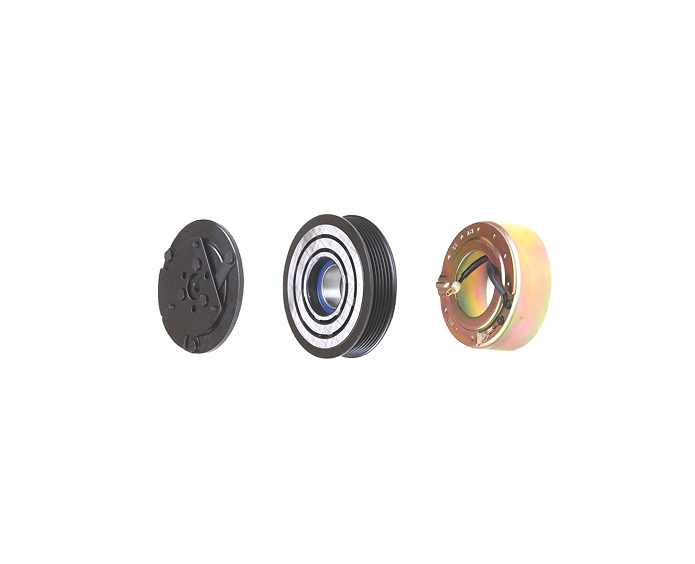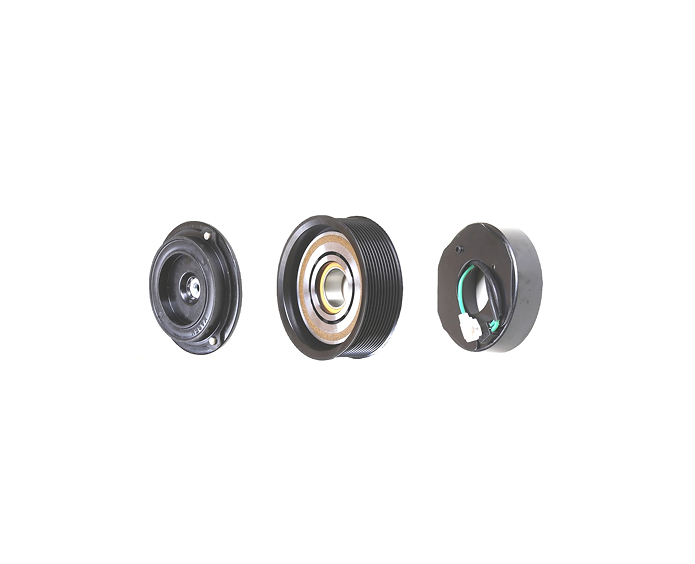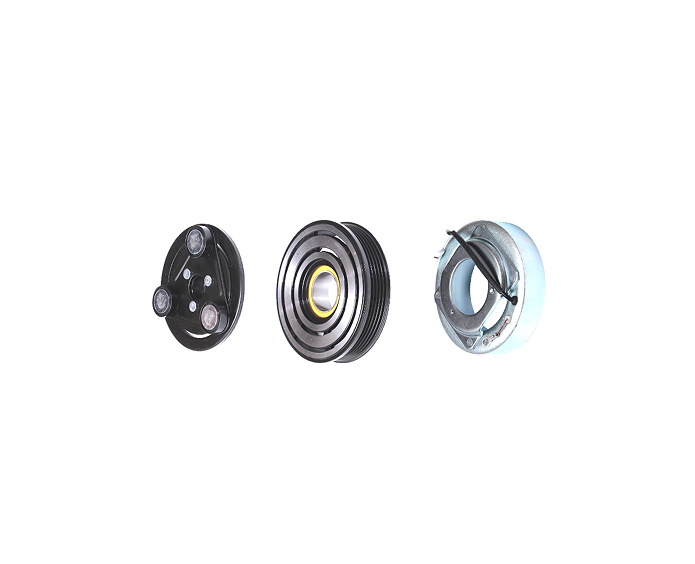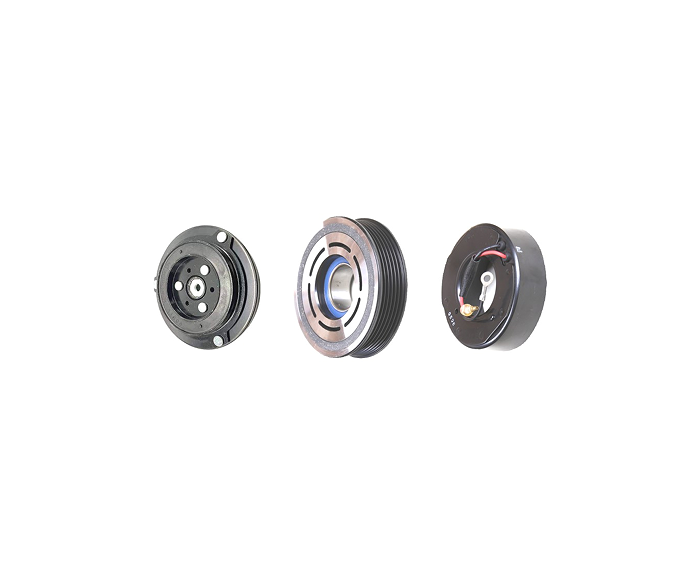

An auto AC compressor clutch is not made from a single material. It is a complex assembly that combines friction materials, metal components, electrical insulation, bearings, coatings, and precision-machined parts.
Each material must work together under conditions involving friction, heat, vibration, moisture, and repeated engagement cycles.
For an automotive air conditioner clutch, material compatibility determines whether components can maintain stable performance over time.
If materials are not compatible, problems may occur:
- Excessive wear
- Thermal stress
- Corrosion
- Noise and vibration
- Reduced torque transfer
- Shorter service life
For importers, distributors, and repair businesses, material compatibility is an important factor when evaluating supplier quality and reducing after-sales risks.
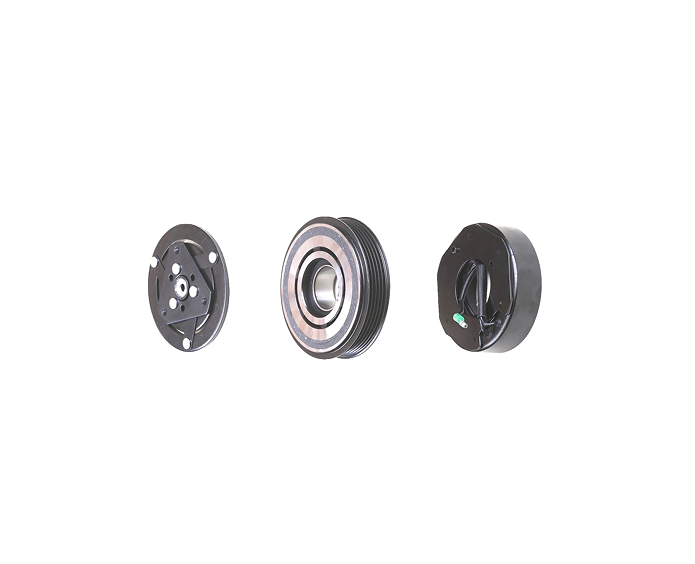
What Is Material Compatibility in an AC Clutch?
Material compatibility refers to how well different materials work together under real operating conditions.
In an AC clutch system, materials must have suitable:
| Compatibility Factor | Performance Impact |
|---|---|
| Thermal Compatibility | Prevents expansion differences and heat damage |
| Mechanical Compatibility | Supports load and movement between parts |
| Friction Compatibility | Maintains stable torque transfer |
| Chemical Compatibility | Prevents corrosion and material degradation |
| Electrical Compatibility | Protects coil and wiring performance |
| Surface Compatibility | Controls wear and contact quality |
A reliable automotive air conditioner clutch requires every material combination to be carefully selected.
Material Compatibility Between Friction Plates and Metal Surfaces
The friction plate is one of the most important areas where material compatibility matters.
During engagement, the friction material contacts the pulley and hub plate to transfer torque.
The friction material must work correctly with metal surfaces by providing:
- Stable friction coefficient
- Controlled wear
- Heat resistance
- Smooth engagement
- Low noise
- Reliable torque transmission
Poor compatibility may cause:
| Problem | Possible Cause |
| Excessive Wear | Friction material too aggressive for metal surface |
| Slipping | Poor friction balance |
| Surface Damage | Incorrect hardness matching |
| Noise | Unstable contact behavior |
| Overheating | Excessive friction energy |
A good material combination protects both the friction plate and metal components.
Metal Material Compatibility in AC Clutch Components
Metal components such as pulleys, hub plates, mounting parts, and fasteners must maintain strength and dimensional stability.
Important metal properties include:
- Hardness
- Thermal expansion behavior
- Corrosion resistance
- Surface strength
- Machining accuracy
Different metals may respond differently to temperature changes. Poor compatibility can create:
- Uneven expansion
- Surface stress
- Misalignment
- Corrosion problems
- Reduced service life
This is especially important in hot climate markets where temperature fluctuations are frequent.
Material Compatibility Between Bearings and Surrounding Components
The pulley bearing must operate smoothly with surrounding components.
The bearing interacts with:
- Pulley structure
- Lubrication system
- Shaft area
- Sealing components
Good compatibility helps maintain:
- Smooth rotation
- Low noise
- Stable clearance
- Heat resistance
- Long operating life
Poor compatibility may lead to:
| Bearing Issue | Possible Result |
| Poor Fitment | Pulley movement and vibration |
| Lubrication Problems | Heat and accelerated wear |
| Seal Incompatibility | Moisture intrusion |
| Material Wear | Noise and reduced lifecycle |
For distributors, bearing-related problems are common reasons for customer complaints.
Electrical Material Compatibility in Clutch Coils
The clutch coil requires careful material selection because it operates electrically under heat.
Important compatibility areas include:
| Component | Compatibility Requirement |
| Copper Wire | Stable electrical conductivity |
| Insulation Material | Heat and voltage resistance |
| Connector Material | Reliable electrical contact |
| Protective Coating | Moisture and corrosion resistance |
Poor electrical material compatibility may cause:
- Coil overheating
- Short circuits
- Weak magnetic force
- Intermittent engagement
- Complete clutch failure
A reliable automotive air conditioner clutch requires electrical materials that remain stable throughout the product lifecycle.
Thermal Compatibility and Expansion Control
During operation, clutch components heat up and expand.
Different materials may expand at different rates. If this is not properly controlled, it may affect:
- Air gap
- Friction contact
- Bearing clearance
- Pulley alignment
- Engagement stability
| Thermal Compatibility Issue | Possible Result |
| Different Expansion Rates | Dimensional stress |
| Poor Heat Resistance | Material degradation |
| Uneven Expansion | Misalignment |
| Thermal Fatigue | Cracking and wear |
Good material compatibility helps maintain stable performance across different temperatures.
Surface Treatment and Material Compatibility
Surface treatment improves how materials interact with each other.
It can help improve:
- Corrosion resistance
- Surface hardness
- Wear performance
- Friction stability
- Environmental durability
Examples include:
| Surface Improvement | Benefit |
| Anti-Corrosion Treatment | Protects metal components |
| Surface Hardening | Improves wear resistance |
| Precision Finishing | Improves contact quality |
| Protective Coating | Reduces environmental damage |
Surface treatment must be compatible with the base material to avoid cracking, peeling, or performance loss.
Common Failures Caused by Poor Material Compatibility
When material combinations are not properly matched, users may experience:
| Failure | Possible Cause |
| Clutch Slipping | Poor friction material compatibility |
| Noise | Bearing or surface mismatch |
| Vibration | Dimensional or thermal mismatch |
| Corrosion | Poor material protection |
| Coil Failure | Electrical insulation problems |
| Fast Wear | Incorrect material combination |
| Reduced Cooling | Unstable clutch engagement |
These failures increase maintenance costs and create after-sales pressure for distributors.
Why Material Compatibility Matters for Different Applications
Different applications require different material combinations.
| Application | Material Priority |
| Passenger Cars | Quiet operation and stable friction |
| Buses | Heat resistance and long lifecycle |
| Heavy Trucks | Strength, vibration resistance, durability |
| Commercial Vehicles | Repeated cycle performance |
| Tropical Markets | Corrosion and humidity resistance |
| High Temperature Areas | Thermal stability |
Choosing the right material combination helps ensure reliable performance in different environments.
Buyer Checklist: What to Confirm Before Ordering
Before sourcing auto AC compressor clutch products, buyers should evaluate material compatibility factors.
| Check Item | Why It Matters |
| OE Number | Confirms correct replacement model |
| Compressor Model | Ensures clutch compatibility |
| Friction Material | Determines wear and friction performance |
| Metal Component Quality | Affects strength and durability |
| Coil Insulation | Supports electrical reliability |
| Bearing Material | Determines rotation performance |
| Surface Treatment | Improves corrosion resistance |
| Thermal Stability | Supports high-temperature operation |
| Vehicle Application | Matches operating conditions |
| Product Sample | Confirms actual construction |
A clutch may look correct externally but fail if internal materials are not properly matched.
View gzkasen product categories here:
https://www.gzkasen.com/products
Why Material Compatibility Matters for B2B Buyers
For B2B buyers, material compatibility directly affects product reliability and total cost.
Poor material selection can create:
- Higher return rates
- Warranty claims
- Repair shop complaints
- Customer dissatisfaction
- Reduced supplier confidence
Choosing a reliable automotive air conditioner clutch helps buyers:
- Reduce premature failures
- Improve product consistency
- Serve different climate markets
- Support commercial vehicle applications
- Lower after-sales costs
- Build long-term customer relationships
For aftermarket distributors, material compatibility is an important supplier evaluation standard.
How gzkasen Supports Reliable AC Clutch Solutions
gzkasen supplies automotive air conditioning parts, including compressor clutches, compressors, electric compressors, valves, bearings, sensors, and related components.
For buyers sourcing automotive air conditioner clutch products, gzkasen can support:
- Product matching by OE number
- Compressor model verification
- Sample and drawing confirmation
- Clutch assembly, coil, pulley, bearing, and hub plate supply
- OEM and customized requirements
- Passenger car, bus, truck, and commercial vehicle applications
- Aftermarket replacement solutions
Learn more about gzkasen here:
https://www.gzkasen.com/about-us
Visit the gzkasen homepage here:
https://www.gzkasen.com/
When Should Buyers Contact gzkasen?
Contact gzkasen when you are:
- Looking for reliable AC clutch materials
- Replacing high-failure clutch models
- Serving hot or humid markets
- Developing private-label auto AC parts
- Comparing supplier manufacturing capability
Provide:
- OE number
- Compressor model
- Vehicle model
- Product photo
- Sample
- Drawing
- Target market
- Order quantity
With complete information, gzkasen can help confirm the correct automotive air conditioner clutch model.
FAQ
1. Why is material compatibility important in an auto AC compressor clutch?
Material compatibility ensures that friction materials, metals, electrical parts, and bearings work together reliably under heat, pressure, and vibration.
2. Can poor material compatibility cause clutch failure?
Yes. It may lead to excessive wear, corrosion, noise, overheating, slipping, or reduced service life.
3. Which materials need the most compatibility control in an AC clutch?
Friction materials, metal components, bearings, coil insulation, connectors, and surface treatments require careful compatibility.
4. Why is thermal compatibility important?
Different materials expand differently under heat. Proper compatibility helps maintain air gap, alignment, and stable engagement.
5. Does material compatibility affect commercial vehicle applications?
Yes. Trucks and buses experience longer operating hours and higher loads, making material durability especially important.
6. What information should buyers provide to gzkasen?
Buyers can provide OE number, compressor model, vehicle model, voltage, pulley size, product photo, sample, or drawing for accurate matching.
Conclusion
Material compatibility is a foundation of reliable auto AC compressor clutch design. Friction materials, metals, bearings, electrical components, and surface treatments must work together to maintain stable performance.
For importers, distributors, and repair businesses, choosing a reliable automotive air conditioner clutch requires evaluating not only specifications and price but also material compatibility, thermal stability, wear resistance, and application conditions.
gzkasen helps buyers select suitable auto AC compressor clutch solutions based on OE number, compressor model, vehicle application, sample, or technical requirements.
Contact gzkasen today to discuss your automotive air conditioner clutch requirements and receive professional product matching support.