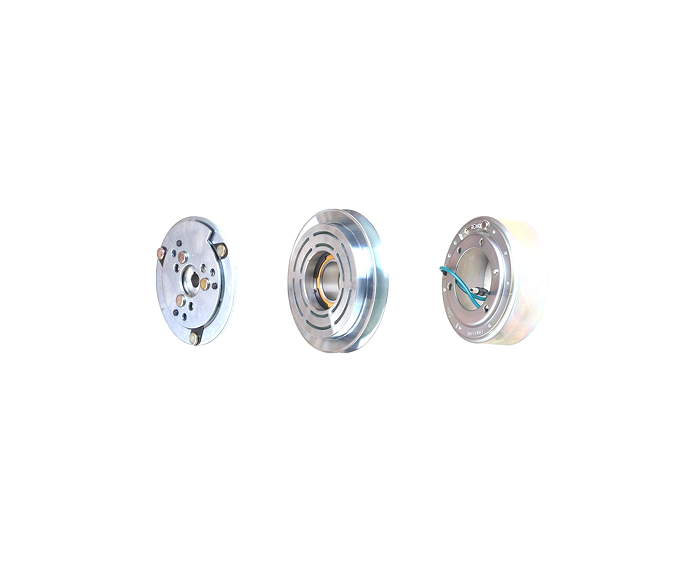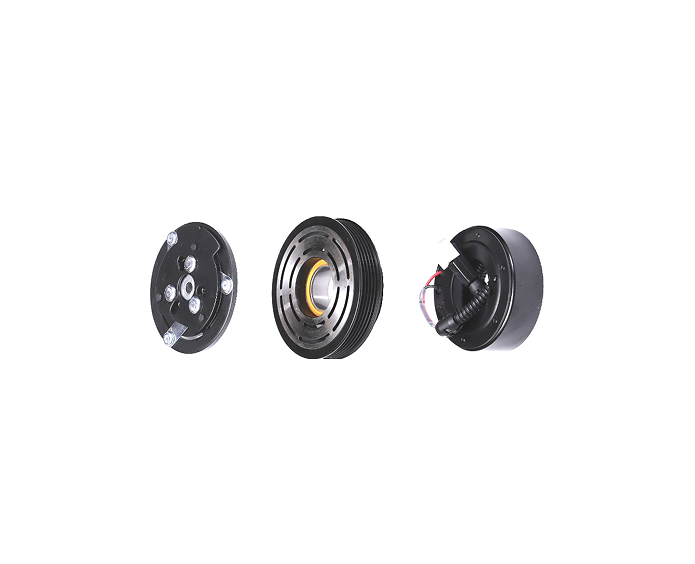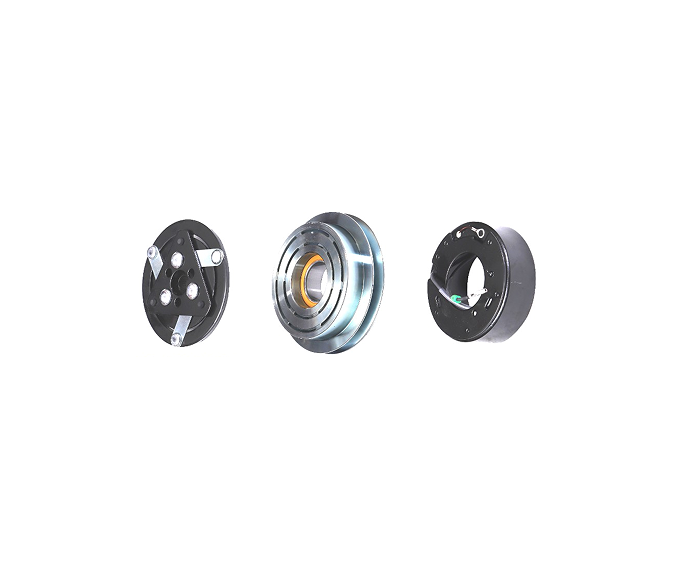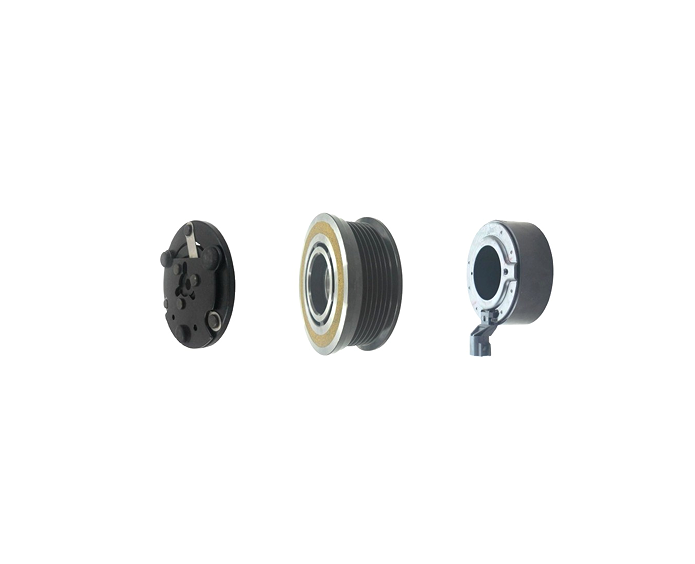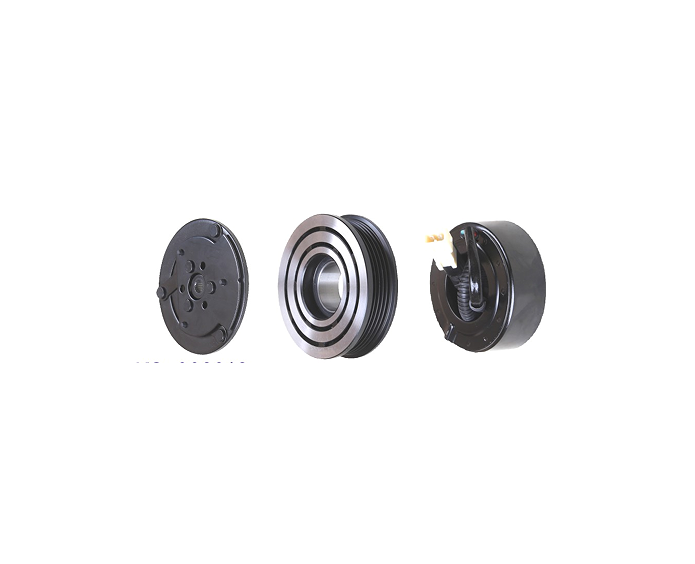

The coil is one of the most important parts of an auto AC compressor clutch. It creates the magnetic force that pulls the hub plate toward the pulley and allows the compressor to engage.
For an automotive air conditioner clutch, coil design affects engagement speed, magnetic holding force, heat generation, voltage stability, and long-term durability.
If the coil is poorly designed or incorrectly matched, the clutch may engage slowly, slip under load, overheat, or fail completely. For importers, distributors, and repair businesses, this can lead to product returns, warranty claims, and repair shop complaints.
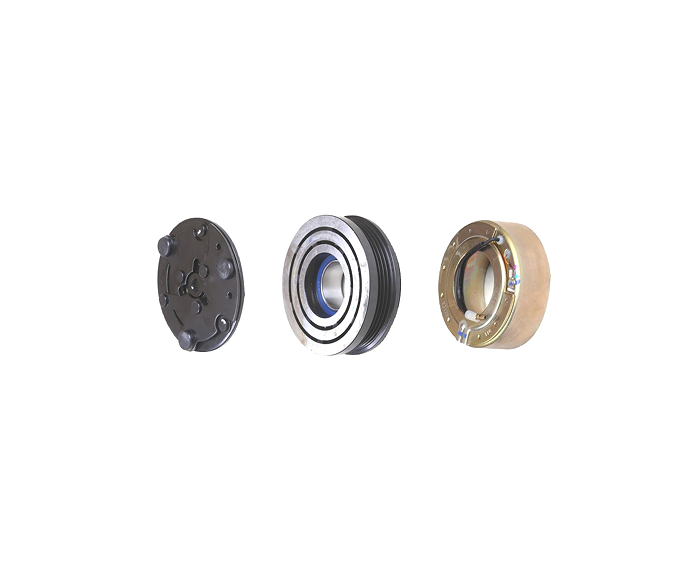
How the Coil Works in an Auto AC Compressor Clutch
When the AC system is turned on, electrical current flows through the clutch coil. This current creates a magnetic field. The magnetic force pulls the hub plate toward the rotating pulley. Once the hub plate contacts the pulley, torque is transferred to the compressor shaft.
| Working Stage | Coil Function |
|---|---|
| AC Signal On | Coil receives electrical power |
| Magnetic Field Forms | Coil generates electromagnetic force |
| Hub Plate Attraction | Magnetic force pulls the hub plate toward the pulley |
| Clutch Engagement | Friction contact transfers torque |
| Compressor Running | Compressor circulates refrigerant |
| Power Off | Magnetic field disappears and clutch disengages |
A reliable coil must provide stable magnetic force every time the AC system cycles.
Key Coil Design Factors That Affect Magnetic Performance
Coil performance is controlled by several design details. These details may not be visible from the outside, but they strongly affect real operation.
1. Coil Turns
The number of coil turns affects magnetic field strength. A properly designed coil can create enough attraction force to engage the clutch firmly.
If the coil design is weak, the hub plate may not be pulled in completely. This can cause slipping, delayed engagement, or intermittent compressor operation.
2. Wire Diameter
Wire diameter affects current flow, resistance, and heat generation. If the wire is too thin or poorly selected, the coil may overheat or lose performance under long operation.
3. Coil Resistance
Coil resistance must match the vehicle electrical system. Incorrect resistance can cause weak magnetic force, excessive heat, or unstable engagement.
4. Voltage Matching
Most auto AC clutch systems use 12V or 24V. If the voltage does not match the vehicle system, the clutch may fail to engage correctly or burn out.
5. Insulation Quality
The coil works in a hot engine bay. Good insulation helps prevent short circuits, heat damage, and early coil failure.
6. Connector and Wiring Stability
Poor connectors may cause unstable power supply. This can lead to intermittent engagement or clutch failure that is difficult for repair shops to diagnose.
What Happens When Coil Design Is Poor?
Poor coil design can cause several clutch performance problems after installation.
| Coil Problem | Possible Result |
| Weak Magnetic Force | Clutch does not engage firmly |
| Incorrect Resistance | Overheating or unstable operation |
| Poor Insulation | Coil burnout or short circuit |
| Wrong Voltage | Failed engagement or electrical damage |
| Low-Quality Wiring | Intermittent compressor operation |
| Heat Buildup | Reduced magnetic performance and shorter life |
For distributors, these issues are risky because the clutch may look correct but fail under real vehicle operation.
How Coil Design Affects Magnetic Holding Force
Magnetic holding force determines whether the clutch can stay engaged under load.
If the coil creates strong and stable magnetic force, the hub plate can remain firmly connected to the pulley. This supports smooth torque transfer and stable cooling.
If magnetic force is weak, the clutch may slip, especially under high temperature or compressor load.
A high-quality automotive air conditioner clutch should provide:
- Fast clutch engagement
- Stable magnetic holding force
- Correct voltage and resistance
- Heat-resistant coil insulation
- Lower risk of slipping
- Reliable compressor operation
- Longer service life
This is especially important for buses, trucks, commercial vehicles, and hot-climate markets where the AC system may work for long hours.
Coil Heat and Long-Term Reliability
Every coil generates heat during operation. In an auto AC compressor clutch, the coil also works near the engine, where ambient temperature is already high.
If the coil cannot manage heat properly, insulation may age faster and magnetic performance may become unstable.
Heat-related coil problems may include:
- Coil resistance change
- Reduced magnetic force
- Insulation failure
- Burning smell
- Intermittent engagement
- Complete coil burnout
For B2B buyers, heat resistance is a key quality point. A clutch with poor coil design may create higher after-sales costs even if the initial purchase price is low.
Buyer Checklist: What to Confirm Before Ordering
Before sourcing auto AC compressor clutch products, buyers should confirm both fitment and coil-related details.
| Check Item | Why It Matters |
| OE Number | Helps confirm correct replacement model |
| Compressor Model | Ensures clutch structure compatibility |
| Voltage | Must match 12V or 24V vehicle systems |
| Coil Resistance | Affects magnetic force and heat generation |
| Connector Type | Ensures correct electrical connection |
| Pulley Size | Must match belt and compressor system |
| Air Gap | Influences magnetic engagement response |
| Hub Plate Design | Affects torque transfer after engagement |
| Product Photo or Sample | Helps confirm accurate replacement |
| Vehicle Application | Helps evaluate passenger car, bus, truck, or commercial vehicle use |
A clutch may fit physically, but if coil design or voltage matching is wrong, the product may still fail during operation.
View gzkasen product categories here:
https://www.gzkasen.com/products
Why Coil Design Matters for B2B Buyers
For B2B buyers, coil design affects product reliability, after-sales cost, and customer satisfaction.
Repair shops often judge clutch quality by whether the compressor engages quickly and works consistently. If the coil fails or performs unstably, the distributor may face returns even if the rest of the clutch assembly looks correct.
Choosing a reliable automotive air conditioner clutch helps buyers:
- Reduce coil burnout complaints
- Lower return rates
- Improve repair shop trust
- Support summer peak demand
- Serve hot-climate markets
- Improve repeat order stability
- Reduce warranty pressure
For aftermarket distributors, stable magnetic performance can become an important selling point.
How gzkasen Supports Auto AC Clutch Buyers
gzkasen supplies automotive air conditioning parts, including compressor clutches, compressors, electric compressors, valves, bearings, sensors, and related components.
For buyers sourcing automotive air conditioner clutch products, gzkasen can support:
- Product matching by OE number
- Compressor model verification
- Sample and drawing confirmation
- Clutch assembly, coil, pulley, bearing, and hub plate supply
- Mixed model orders for distributors
- OEM and customized requirements
- Applications for passenger cars, buses, trucks, and commercial vehicles
- Product support for aftermarket and repair chain demand
Learn more about gzkasen here:
https://www.gzkasen.com/about-us
Visit gzkasen homepage here:
https://www.gzkasen.com/
When Should Buyers Contact gzkasen?
If you are sourcing compressor clutch products for summer repair demand, hot-climate markets, commercial vehicles, or private label auto AC parts, gzkasen can help confirm suitable models based on your requirements.
You can send:
- OE number
- Compressor model
- Vehicle model
- Product photo
- Sample
- Drawing
- Voltage requirement
- Coil resistance requirement
- Pulley size
- Target market information
- Estimated order quantity
With complete information, gzkasen can help confirm the right automotive air conditioner clutch model more efficiently.
FAQ
1. Why is coil design important in an auto AC compressor clutch?
Coil design affects magnetic force, engagement speed, heat generation, voltage stability, and clutch service life.
2. What happens if the clutch coil is weak?
A weak coil may fail to pull the hub plate firmly, causing delayed engagement, slipping, weak cooling, or intermittent compressor operation.
3. Why does coil resistance matter?
Coil resistance affects current flow, heat generation, and magnetic force. Incorrect resistance may cause overheating or unstable engagement.
4. Can wrong voltage damage an automotive air conditioner clutch?
Yes. If a 12V or 24V clutch is used in the wrong system, the coil may fail to engage correctly or become damaged.
5. What information should buyers provide to gzkasen?
Buyers can provide OE number, compressor model, vehicle model, voltage, coil resistance, pulley size, product photo, sample, or drawing for accurate matching.
6. Does gzkasen support custom compressor clutch coil requirements?
Yes. gzkasen can support product matching and customized supply based on OE numbers, samples, drawings, and customer requirements.
Conclusion
Coil design has a direct impact on auto AC clutch magnetic performance. Coil turns, wire diameter, resistance, voltage matching, insulation, connector stability, and heat control all affect clutch engagement and long-term durability.
For importers, distributors, and repair businesses, choosing a reliable automotive air conditioner clutch means checking more than size, appearance, and price. Coil performance, magnetic force, air gap, pulley structure, bearing quality, and compressor matching all matter.
If you need reliable auto AC compressor clutch products for your market, gzkasen can help match the right model by OE number, compressor model, vehicle application, product photo, sample, or drawing.
Contact gzkasen today to discuss your automotive air conditioner clutch sourcing needs and get product matching support for your next order.