
Why the air conditioning compressor clutch deserves more attention than it usually gets
An air conditioning compressor clutch is one of those parts people notice only when the cabin stops cooling or the belt system starts making a noise that should not be there. For repair shops, fleet teams, and aftermarket buyers, the part is small but the decision around it is not: replace the clutch, rebuild the compressor, or swap the whole unit. That choice affects labor, downtime, and how long the repair will actually hold.
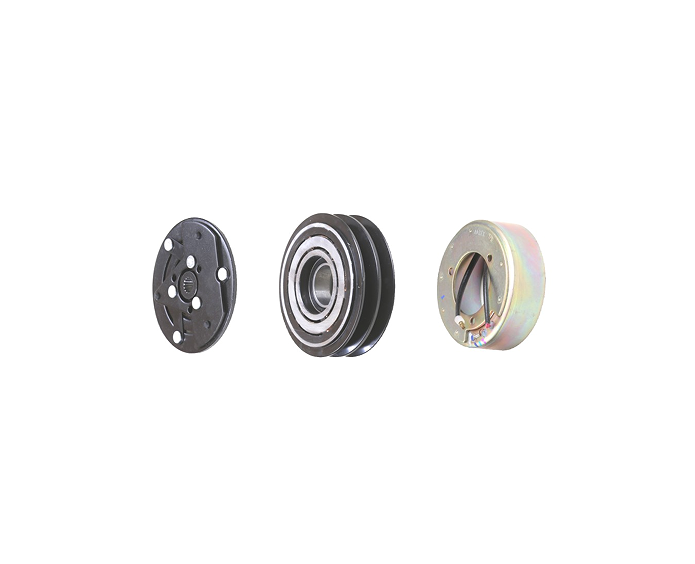
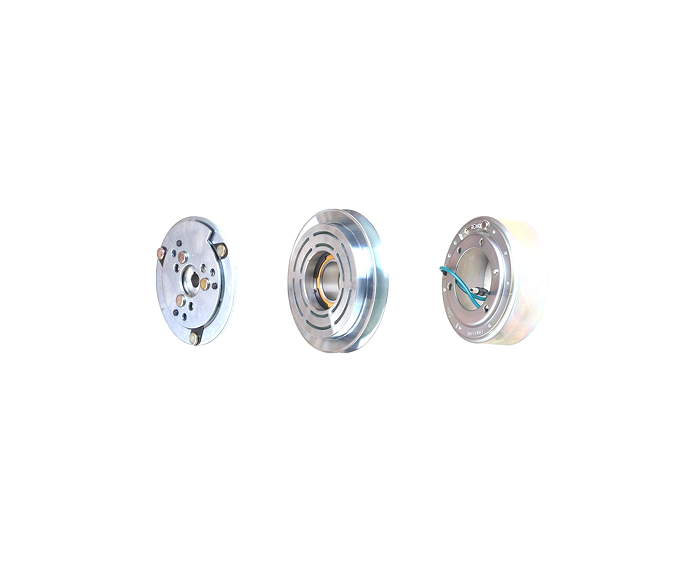
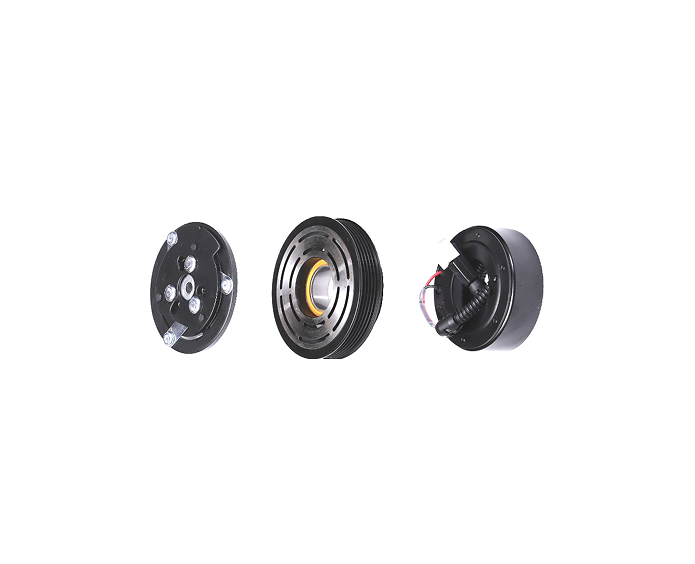
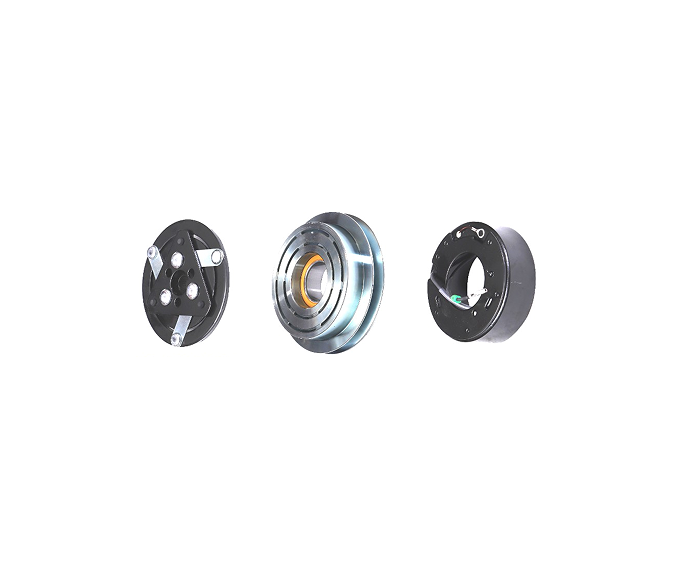
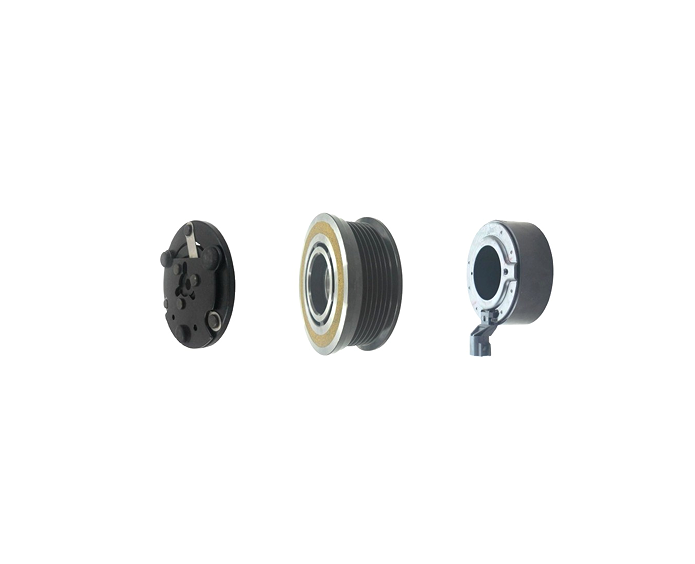
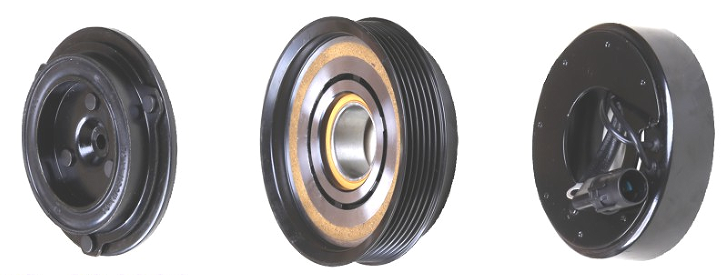
The visible assembly here looks like an automotive-style pulley and clutch set with a grooved outer pulley, a central bearing/race area, and a rear housing with an electrical lead. That combination tells you a lot. It is built to transfer belt drive into compressor engagement when commanded, and it relies on a clean mechanical interface and a stable electrical signal. If either side is weak, the system can fail in a way that looks like a refrigerant issue when it is really a drive issue.
What the part does in practical terms
The compressor clutch sits between constant belt rotation and intermittent compressor operation. When the clutch engages, the pulley assembly couples engine drive to the compressor shaft. When it disengages, the pulley can spin freely without loading the compressor. That simple on/off behavior is the reason the part matters so much in HVAC diagnosis: the system may look healthy on the refrigerant side, yet the compressor never receives drive because the clutch will not pull in.
In the field, technicians often hear about “the compressor” when the real fault is the clutch assembly, a worn bearing, a damaged coil, or a poor electrical connection. That is why the compressor clutch is worth inspecting separately before authorizing a larger repair.
What the visible design suggests
This type of assembly usually combines stamped and machined metal components. In the product image, the black-coated pulley and housing surfaces suggest a corrosion-resistant finish, while the shiny machined center area indicates a precision contact or bearing interface. The bronze- or gold-toned surface may be a friction or bearing-related feature, though it is best not to read too much into a photo alone.
One practical detail stands out: the rear section appears to include an electrical connector lead. That is a useful clue for buyers because it confirms this is not just a passive pulley. It is an electromechanical unit, and replacement should be treated as both a mechanical and electrical service job. A clean mounting face, correct connector condition, and proper belt alignment all matter more than many catalog listings admit.
Quick buyer comparison: replace the clutch or the full compressor?
There is no universal answer, but the decision usually comes down to the condition of the compressor body, the pulley bearing, the coil, and the rest of the HVAC system. If the compressor internals are healthy and the problem is isolated to the clutch or pulley, a clutch replacement can be the more economical route. If the compressor is noisy, contaminated, seized, or has been run with major system debris, a partial fix may be false economy.
That is the practical caution here: a clutch can be the visible failure while the compressor is the hidden one. Good diagnosis avoids paying twice for labor.
Selection criteria that matter to sourcing teams
When buying a replacement compressor clutch, fitment dominates everything else. Exact vehicle compatibility, compressor model, coil specification, hub depth, groove profile, and connector style all need confirmation. None of those details can be safely guessed from a photo, even when the part looks familiar.
For sourcing managers and distributors, the most useful checkpoints are usually these: is it a complete assembly or a service subcomponent, is the pulley bearing replaceable, does the rear housing match the original electrical interface, and does the mounting pattern line up with the compressor body. Those questions save time because a visually similar clutch can still be wrong in ways that only show up during installation.
Common mistakes to avoid
One common mistake is treating pulley noise as a belt-only issue. Another is assuming every compressor clutch shares the same electrical connector or mounting depth. A third is mixing up a clutch assembly with a compressor clutch pulley kit that omits other needed pieces. Small differences can stop the repair cold.
Process and service context
From a manufacturing standpoint, this kind of part is typically built from stamped and machined metal components assembled into an electromechanical unit. That is a sensible construction for automotive service because it balances cost, durability, and serviceability. The bearing-centered pulley design and multiple mounting holes visible on the face are consistent with a part intended for secure installation and repeated belt load.
In maintenance work, it is usually wise to inspect the belt condition, check for pulley wobble, confirm electrical continuity, and look for signs of heat damage around the clutch face. A replacement clutch will not fix a compromised belt system, and it will not survive long if the compressor itself is binding.
FAQ for buyers and technicians
Is this always the failed part when A/C stops cooling?
No. Refrigerant loss, electrical faults, pressure switch problems, and compressor damage can all produce similar symptoms.
Can the pulley bearing fail before the coil?
Yes. Mechanical wear and electrical failure do not always happen together, which is why diagnosis should cover both sides.
Should I stock compressor clutches as spare parts?
If you service a mixed fleet or handle common aftermarket repairs, it can make sense, but only if you can control fitment data carefully. Wrong-part returns are expensive and avoidable.
A practical next step
If you are evaluating an air conditioning compressor clutch for replacement or sourcing, start with fitment verification, connector match, and a careful check of the compressor’s overall condition. That sequence is usually faster than chasing symptoms one by one, and it reduces the chance of replacing a serviceable clutch on top of a failing compressor.
For buyers, the safest approach is to treat the clutch as part of a system, not a stand-alone commodity. The part may be small, but the installation decision is a system decision.